
Imagine playing cricket and facing a fast bowler delivering the ball at high speed. If the ball accidentally hits a sensitive part of the body, it can cause serious pain or injury. This is where the abdominal guard becomes essential. It is one of the most important protective items used in cricket, especially by batsmen and wicketkeepers.
For beginners, students, and sports enthusiasts, understanding the importance of an abdominal guard is very important. Many new players ignore this small piece of equipment, but it plays a critical role in safety and confidence during the game.
In this article, you will learn everything about the abdominal guard, including its definition, history, structure, types, usage, benefits, and importance in cricket. The content is written in simple and clear English so that anyone can easily understand and apply it in real-life situations.
What Is an Abdominal Guard in Cricket? Complete Guide for Beginners
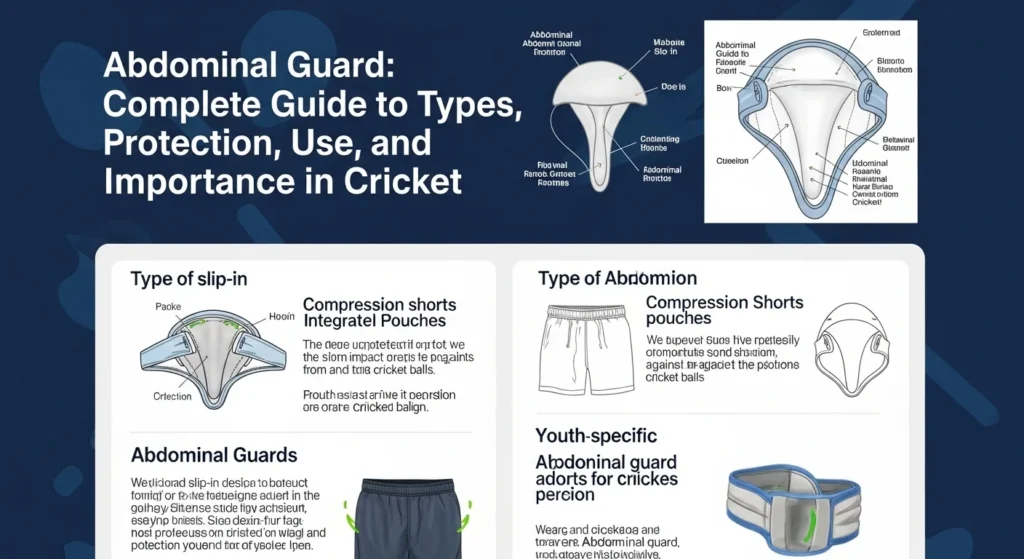
An abdominal guard, also known as a cricket box, box protector, or groin guard, is an essential piece of protective equipment worn by cricketers to protect the groin and lower abdominal area from injuries caused by fast-moving cricket balls. It is worn inside specially designed compression shorts or briefs and is considered mandatory for batsmen, wicketkeepers, and close fielders facing high-speed deliveries.
Designed from high-impact-resistant materials, an abdominal guard absorbs and disperses the force of the ball, significantly reducing the risk of serious injury while allowing players to move comfortably during the game.
Simple Explanation
In simple terms, an abdominal guard is a protective cup that:
- Protects the groin and lower abdominal area.
- Is worn inside cricket clothing.
- Absorbs the impact of fast cricket balls.
- Reduces the risk of painful and serious injuries.
- Allows players to bat, keep wickets, and field with greater confidence.
Practical Example
Imagine a batsman facing a fast bowler delivering the ball at over 140 km/h (87 mph).
- The ball unexpectedly rises or swings inward.
- It strikes the lower body near the groin.
- Without an abdominal guard, the impact can cause severe pain or serious injury.
- With an abdominal guard, the hard protective shell absorbs and spreads the force of the impact, greatly reducing the risk of injury.
Why Is an Abdominal Guard Important?
Cricket balls are hard and can travel at extremely high speeds. Even experienced players can be struck unexpectedly due to bounce, swing, or deflection. Wearing an abdominal guard provides essential protection and allows players to focus on their performance without fear of injury.
Who Should Wear an Abdominal Guard?
An abdominal guard is commonly worn by:
- Batsmen facing fast and spin bowlers.
- Wicketkeepers standing behind the stumps.
- Close fielders positioned near the batsman.
- Junior and professional cricketers during practice and matches.
Whether playing at the beginner, club, or international level, an abdominal guard is one of the most important pieces of cricket safety equipment, helping players stay protected while performing confidently on the field.
History and Evolution of the Abdominal Guard in Cricket
The abdominal guard, commonly known as a cricket box or groin guard, has become one of the most important pieces of protective equipment in cricket. As the game evolved and bowlers began delivering the ball at higher speeds, the need to protect vulnerable parts of the body became increasingly important. Today, the abdominal guard is a standard part of every professional and amateur cricketer’s safety gear.
Early Days of Cricket
During the early years of cricket in the 18th and early 19th centuries, players wore very little protective equipment. Most batsmen relied solely on skill and courage to face fast bowlers.
Characteristics of Early Cricket
- Little or no protective equipment was available.
- Batsmen often played without helmets, pads, or abdominal guards.
- Fast bowling frequently caused painful injuries.
- Protection of the groin area was largely overlooked.
As bowling speeds increased and the game became more competitive, injuries to the lower body became more common, highlighting the need for specialized protection.
Development of the Abdominal Guard
The first abdominal guards were introduced as simple protective cups designed to shield the groin from direct impact.
Early Designs
- Basic hard protective cups.
- Manufactured from leather, rubber, or lightweight metal.
- Limited comfort and flexibility.
- Offered only basic impact protection.
Although these early designs were not particularly comfortable, they significantly reduced the risk of serious injuries and quickly became popular among batsmen.
Improvements in Design and Materials
As sports equipment technology advanced during the 20th century, manufacturers developed more effective abdominal guards using stronger and lighter materials.
Major Improvements
- High-impact plastic shells replaced heavy materials.
- Soft foam padding improved comfort.
- Ergonomic shapes provided a better fit.
- Lighter construction reduced movement restrictions.
- Better ventilation reduced heat buildup.
These improvements allowed players to move naturally while maintaining excellent protection.
Modern Abdominal Guards
Today’s abdominal guards combine advanced materials with ergonomic engineering to provide maximum safety without sacrificing comfort.
Modern Features
- High-impact-resistant polycarbonate or ABS plastic shell.
- Shock-absorbing foam padding.
- Lightweight and durable construction.
- Ventilation holes for improved airflow.
- Anatomically shaped design for a secure fit.
- Compatible with compression shorts and cricket briefs.
Modern abdominal guards are carefully tested to withstand the impact of cricket balls traveling at speeds exceeding 140 km/h (87 mph).
Use in Modern Cricket
Today, abdominal guards are considered essential protective equipment at every level of cricket, from beginner matches to international competitions.
They are widely used by:
- Batsmen.
- Wicketkeepers.
- Close fielders such as short leg and silly point.
- Junior cricketers during training.
- Professional and international players.
Most cricket coaching organizations strongly recommend wearing an abdominal guard whenever facing hard-ball cricket.
Importance of the Abdominal Guard Today
The abdominal guard has become an indispensable part of modern cricket because it:
- Protects the groin from high-speed ball impacts.
- Reduces the risk of serious injuries.
- Increases player confidence while batting and fielding.
- Allows players to focus on performance rather than injury concerns.
- Meets the safety standards followed in professional cricket.
Evolution Summary
The evolution of the abdominal guard reflects the overall development of cricket safety equipment. What began as a simple protective cup has become a highly engineered safety device made from advanced materials that offer superior protection, comfort, and flexibility. As cricket continues to become faster and more competitive, the abdominal guard remains one of the most essential pieces of protective gear, helping players of all skill levels play with greater confidence and safety.
Structure of an Abdominal Guard
An abdominal guard is designed with multiple protective components that work together to provide maximum safety, comfort, and flexibility. Although its design is simple, every part plays an important role in protecting the groin area from the impact of fast-moving cricket balls. Modern abdominal guards are engineered using lightweight, high-strength materials to ensure effective protection without restricting player movement.
Outer Shell
The outer shell is the primary protective layer of the abdominal guard. It is designed to withstand the force of high-speed cricket balls and distribute the impact over a larger area.
Features
- Made from high-impact plastic, polycarbonate, or ABS material.
- Hard and durable construction.
- Resistant to cracking and deformation.
- Lightweight for comfortable use.
Functions
- Protects against direct ball impact.
- Distributes impact energy evenly.
- Prevents serious injuries to the groin area.
- Maintains its shape after repeated use.
Inner Padding
The inner padding is located inside the protective shell and provides additional comfort while absorbing shock during impact.
Features
- Soft foam or cushioned lining.
- Sweat-resistant materials.
- Comfortable skin contact.
- Breathable design for ventilation.
Functions
- Absorbs impact energy.
- Reduces pressure on sensitive areas.
- Improves wearing comfort.
- Minimizes vibration caused by ball impact.
Ergonomic Shape Design
Modern abdominal guards feature an ergonomic curved shape that follows the natural contours of the body.
Features
- Anatomically designed for a secure fit.
- Curved structure for maximum coverage.
- Smooth edges to prevent discomfort.
- Lightweight and compact profile.
Functions
- Covers the groin area effectively.
- Allows unrestricted movement.
- Prevents shifting during play.
- Improves overall comfort and stability.
Support System
The abdominal guard is held securely in place using specially designed cricket briefs, compression shorts, or support straps.
Support Options
- Cricket briefs with built-in guard pocket.
- Compression shorts.
- Athletic supporters (jockstraps).
- Elastic support straps.
Functions
- Keeps the guard securely positioned.
- Prevents movement while running or diving.
- Improves player comfort.
- Ensures consistent protection throughout the match.
Types of Abdominal Guards
Different types of abdominal guards are available to suit players of different ages, skill levels, and playing conditions. Choosing the right guard depends on the level of cricket being played and the amount of protection required.
Standard Abdominal Guard
The Standard Abdominal Guard is the most commonly used model and is suitable for beginners and recreational players.
Features
- Simple and affordable design.
- Good basic impact protection.
- Lightweight construction.
- Easy to wear and maintain.
Best For
- Beginners.
- School cricket.
- Club-level players.
- Practice sessions.
Professional Abdominal Guard
The Professional Abdominal Guard is designed for advanced and competitive cricketers who regularly face high-speed bowling.
Features
- High-impact-resistant outer shell.
- Premium shock-absorbing padding.
- Ergonomic anatomical design.
- Superior comfort and durability.
- Enhanced ventilation.
Best For
- Professional cricketers.
- First-class cricket.
- International matches.
- Fast-bowling practice.
Lightweight Abdominal Guard
The Lightweight Abdominal Guard is designed to provide reliable protection while minimizing weight and improving comfort during long matches.
Features
- Ultra-light materials.
- Flexible construction.
- Comfortable ergonomic fit.
- Breathable design.
Best For
- Long batting sessions.
- Wicketkeepers.
- Fielders.
- Players seeking maximum mobility.
Junior Abdominal Guard
The Junior Abdominal Guard is specially designed for young cricketers, offering the same level of protection in a smaller and lighter size.
Features
- Smaller ergonomic design.
- Lightweight protective shell.
- Comfortable fit for children.
- Soft internal padding.
- Easy to wear with junior cricket briefs.
Best For
- Junior cricketers.
- School tournaments.
- Cricket coaching academies.
- Youth training sessions.
Importance of Choosing the Right Abdominal Guard
Selecting the appropriate abdominal guard is essential for both safety and performance. Factors such as age, playing level, comfort, fit, material quality, and protection level should be considered before purchasing. Whether choosing a standard, professional, lightweight, or junior abdominal guard, the right equipment helps reduce injury risk, improves confidence, and allows players to focus fully on batting, wicketkeeping, or close fielding without compromising safety.
Role of the Abdominal Guard in Cricket Gameplay
The abdominal guard is one of the most important pieces of protective equipment in cricket. It protects the groin area from high-speed deliveries and accidental impacts, allowing players to perform confidently without compromising their safety. Whether facing fast bowlers, spin bowlers, or fielding close to the batter, an abdominal guard plays a vital role in reducing the risk of serious injuries.
Protection Against High-Speed Impact
The primary purpose of an abdominal guard is to protect one of the body’s most vulnerable areas from direct impact.
Benefits
- Protects the groin from fast-moving cricket balls.
- Reduces the severity of injuries caused by direct impact.
- Absorbs and disperses shock using its protective shell.
- Minimizes the risk of long-term physical damage.
- Provides essential safety during matches and practice sessions.
Builds Player Confidence
Knowing that sensitive areas are well protected allows players to concentrate fully on their performance.
Benefits
- Increases confidence while facing fast bowling.
- Reduces fear of painful injuries.
- Helps players focus on batting technique.
- Encourages natural movement and stroke play.
- Improves mental comfort during competitive matches.
Essential in All Playing Conditions
An abdominal guard is useful in a wide variety of match situations, regardless of the type of bowling or pitch conditions.
Situations Where It Is Most Important
- Facing fast bowlers.
- Playing against swing and seam bowling.
- Batting on uneven or bouncy pitches.
- Facing spin bowlers with unpredictable bounce.
- Wicketkeeping behind the stumps.
- Fielding in close-in positions such as short leg or silly point.
Its protection remains valuable throughout every stage of the game.
Supports Safe and Confident Play
By reducing injury risk, the abdominal guard enables players to perform more naturally and aggressively.
Performance Benefits
- Encourages confident footwork.
- Supports quick running between wickets.
- Allows unrestricted movement while batting.
- Improves overall player safety.
- Reduces interruptions caused by minor injuries.
Best Practices for Using an Abdominal Guard
Simply wearing an abdominal guard is not enough—it must be fitted and maintained correctly to provide maximum protection.
Wear It Correctly
Proper positioning is essential for effective protection.
Tips
- Place the guard securely over the groin area.
- Ensure it fits naturally against the body.
- Avoid incorrect positioning that leaves gaps.
- Check comfort before play begins.
Ensure a Secure Fit
The guard should remain firmly in place throughout the match.
Recommended Support
- Cricket briefs with a built-in pouch.
- Compression shorts designed for abdominal guards.
- Athletic supporters (jockstraps).
- Elastic support straps.
A secure fit prevents the guard from shifting while running, batting, diving, or fielding.
Inspect the Guard Regularly
Regular inspection helps maintain maximum protection and ensures the equipment remains safe to use.
Maintenance Tips
- Check for cracks or damage before every match.
- Inspect the padding for wear and tear.
- Replace the guard if the shell is damaged.
- Clean the guard after use to maintain hygiene.
- Store it in a dry, ventilated place.
Choose the Correct Size
An abdominal guard should match the player’s age and body size.
Selection Tips
- Junior players should use junior-sized guards.
- Adults should choose guards that provide full coverage without restricting movement.
- Ensure the guard fits comfortably inside the support garment.
Using an abdominal guard correctly is just as important as wearing one. A properly fitted and well-maintained guard provides maximum protection, greater comfort, and improved confidence, allowing batsmen, wicketkeepers, and close fielders to perform safely in every match. By combining correct fitting, regular inspection, and appropriate support garments, players can significantly reduce the risk of injury while maintaining complete freedom of movement on the cricket field.
Protective Equipment Used Alongside an Abdominal Guard
An abdominal guard is an essential part of a cricketer’s protective equipment, but it is most effective when used together with other safety gear. Each piece of equipment protects a different part of the body, allowing players to bat, wicketkeep, and field with greater confidence and reduced risk of injury.
Batting Gloves
Batting gloves protect the hands and fingers from the impact of fast deliveries while improving grip on the bat.
Key Features
- High-density foam padding.
- Finger and thumb protection.
- Strong grip for better bat control.
- Breathable and comfortable design.
Benefits
- Reduces the risk of hand injuries.
- Improves batting control.
- Absorbs shock from ball impact.
Batting Pads
Batting pads protect the legs from fast and spinning deliveries while allowing players to move freely.
Key Features
- Lightweight protective padding.
- Reinforced knee protection.
- Adjustable straps for a secure fit.
- Durable outer construction.
Benefits
- Protects the shins and knees.
- Reduces the impact of fast balls.
- Improves confidence while batting.
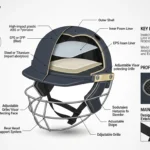
Cricket Helmet
The cricket helmet is one of the most important protective items, shielding the head and face from high-speed deliveries.
Key Features
- High-impact-resistant outer shell.
- Steel face grille.
- Adjustable chin strap.
- Internal shock-absorbing padding.
Benefits
- Protects against head injuries.
- Reduces the risk of facial fractures.
- Provides confidence against fast bowling.
Thigh Guard
A thigh guard protects the upper leg from painful impacts, especially when facing fast bowlers.
Key Features
- Lightweight foam padding.
- Ergonomic design.
- Adjustable straps.
- Comfortable fit beneath cricket clothing.
Benefits
- Protects the thigh from direct ball impact.
- Improves confidence during batting.
- Allows unrestricted movement.
Additional Protective Equipment
Professional cricketers often use additional protective gear for maximum safety.
Common Accessories
- Chest guard.
- Arm guard.
- Forearm guard.
- Elbow guard.
- Inner gloves.
- Abdominal support briefs or compression shorts.
- Wicketkeeping pads and gloves (for wicketkeepers).
Importance of Complete Protective Gear
Using an abdominal guard together with other protective equipment creates a comprehensive safety system that helps reduce injuries, improves confidence, and allows players to perform at their best in all playing conditions.
Major Cricket Tournaments Where Abdominal Guards Are Used
The abdominal guard is a standard piece of protective equipment used in every level of competitive cricket, from junior matches to international tournaments. Because cricket balls can travel at extremely high speeds, players rely on abdominal guards to protect the groin area during batting, wicketkeeping, and close-in fielding.
International Cricket Tournaments
Professional cricketers wear abdominal guards in all major international competitions.
Major Tournaments
- ICC Cricket World Cup
- ICC Men’s T20 World Cup
- ICC World Test Championship
- Bilateral Test series.
- One Day International (ODI) series.
- Twenty20 International (T20I) series.
Abdominal guards are especially important when batsmen face fast bowlers delivering the ball at speeds exceeding 140 km/h (87 mph).
Domestic Cricket Competitions
Cricketers also wear abdominal guards in domestic and regional tournaments.
Examples
- First-class cricket.
- List A competitions.
- Domestic T20 leagues.
- County cricket.
- State and provincial championships.
- Club cricket.
These competitions follow the same safety practices as international cricket, making protective equipment essential.
School and Junior Cricket
Young cricketers are strongly encouraged to wear abdominal guards from the beginning of their cricket training.
Common Events
- School cricket tournaments.
- Youth cricket leagues.
- Cricket academy training sessions.
- Junior development programs.
- Inter-school competitions.
Using proper protective equipment at an early stage helps develop safe playing habits and reduces the risk of injury.
Local and Recreational Cricket
Even in informal matches, an abdominal guard is recommended whenever a hard cricket ball is used.
Examples
- Club leagues.
- Community tournaments.
- Practice matches.
- Weekend recreational cricket.
- Friendly competitions.
Safety should always remain a priority, regardless of the level of play.
Importance Across All Levels of Cricket
Whether playing in an international championship, a domestic league, or a school competition, the abdominal guard remains one of the most important pieces of cricket safety equipment. It protects players from serious injuries, improves confidence, and enables batsmen, wicketkeepers, and close fielders to compete safely. From beginner cricketers to elite professionals, wearing an abdominal guard is considered a fundamental part of responsible and safe participation in the game.
Benefits of Using an Abdominal Guard
An abdominal guard is one of the most important pieces of protective equipment in cricket. It protects the groin area from high-speed impacts while allowing players to perform confidently and safely. Whether you are a beginner or a professional cricketer, wearing an abdominal guard significantly reduces the risk of injury and improves overall performance on the field.
Physical Benefits
The primary purpose of an abdominal guard is to provide maximum protection against the impact of hard cricket balls.
Prevents Serious Injuries
The hard outer shell absorbs and distributes the force of the ball, greatly reducing the risk of severe injuries to the groin and lower abdominal area.
Absorbs High-Speed Impact
Modern abdominal guards are designed using high-impact-resistant materials and shock-absorbing padding that minimize the force transmitted to the body.
Protects Sensitive Body Parts
The guard provides reliable protection for one of the body’s most vulnerable areas, helping prevent painful injuries during batting, wicketkeeping, and close-in fielding.
Reduces Long-Term Injury Risk
Consistent use of an abdominal guard lowers the likelihood of serious trauma that could require extended recovery or medical treatment.
Performance Benefits
In addition to improving safety, an abdominal guard also enhances player confidence and overall performance.
Builds Confidence
Players feel more secure when facing fast bowlers, allowing them to play attacking shots without constantly worrying about injury.
Allows Free Movement
Modern guards are lightweight and ergonomically designed, enabling unrestricted movement while batting, running, wicketkeeping, and fielding.
Improves Concentration
Knowing that sensitive areas are protected allows players to focus entirely on technique, timing, and match strategy.
Supports Better Performance
Greater confidence and comfort often lead to improved decision-making and more consistent performances throughout the match.
Safety Benefits
An abdominal guard contributes significantly to overall player safety.
Benefits Include
- Protects against unexpected ball bounce.
- Reduces injuries from fast and spin bowling.
- Increases safety during practice sessions.
- Essential for wicketkeepers and close fielders.
- Suitable for players of all ages and skill levels.
Interesting Facts About the Abdominal Guard
The abdominal guard has several interesting features that many cricket fans and beginners may not know.
Also Known as a “Box”
In cricket, an abdominal guard is commonly referred to as a “box”. Players and coaches frequently use this informal term during training sessions and matches.
Used in Multiple Sports
Although closely associated with cricket, abdominal guards are also widely used in sports where players face the risk of impact to the groin area.
Sports That Use Abdominal Guards
- Cricket
- Baseball
- Hockey
- Softball
- Martial arts
- Lacrosse
- American football
Lightweight Yet Extremely Strong
Modern abdominal guards are manufactured using advanced materials such as:
- High-impact polycarbonate.
- ABS plastic.
- Reinforced composite materials.
These materials provide excellent protection while keeping the guard lightweight and comfortable.
Essential for Wicketkeepers and Batsmen
Among all cricket players, batsmen and wicketkeepers rely most heavily on abdominal guards because they face the highest risk of direct ball impacts. Close-in fielders, such as those positioned at short leg or silly point, also commonly wear abdominal guards for additional protection.
Designed for Comfort
Modern abdominal guards feature ergonomic designs that:
- Fit naturally to the body.
- Reduce pressure during movement.
- Improve ventilation.
- Work comfortably with compression shorts or cricket briefs.
Mandatory in Professional Cricket
Although the official Laws of Cricket do not require an abdominal guard, it is considered standard protective equipment in professional, domestic, school, and club cricket. Most coaches and cricket organizations strongly recommend its use whenever a hard cricket ball is involved.
Why Every Cricketer Should Wear an Abdominal Guard
An abdominal guard provides the ideal combination of safety, comfort, and confidence. It protects one of the body’s most vulnerable areas, reduces the risk of serious injuries, and allows players to focus on their performance without fear of painful impacts. Whether playing at the school, club, domestic, or international level, wearing an abdominal guard is a simple but essential step toward safer and more confident cricket.
Comparison: Abdominal Guard vs No Guard
| Feature | Abdominal Guard | No Guard |
|---|---|---|
| Protection | High | None |
| Safety | Safe | Risky |
| Comfort | Comfortable | Painful risk |
| Confidence | High | Low |
| Injury Risk | Low | Very High |
Tips for Choosing the Right Abdominal Guard
Selecting the right abdominal guard is essential for comfort, protection, and confidence on the cricket field. A well-fitted guard stays securely in place, absorbs impact effectively, and allows you to move freely while batting, wicketkeeping, or fielding. Investing in a high-quality guard can significantly reduce the risk of injury and help you focus entirely on your game.
Key Factors
When buying an abdominal guard, consider these important features:
- Choose the correct size for a secure and comfortable fit.
- Look for a durable outer shell made from high-impact-resistant materials.
- Ensure it has soft padding or ergonomic edges for added comfort.
- Select a lightweight design that does not restrict movement.
- Check compatibility with compression shorts or jock straps for better stability.
- Pick a trusted brand known for reliable sports safety equipment.
Beginner Tips
If you’re new to cricket, these tips will help you choose and use an abdominal guard properly:
- Always wear an abdominal guard during matches and practice sessions.
- Test the fit before purchasing to ensure maximum comfort.
- Practice while wearing it to get used to moving and batting naturally.
- Replace the guard if it becomes cracked, damaged, or worn out.
- Clean it regularly to maintain hygiene and extend its lifespan.
Role of Abdominal Guard in Different Player Positions
An abdominal guard is important for almost every player on the field, but its importance varies depending on the playing position.
Batsman
Batsmen face high-speed deliveries that can unexpectedly rise or change direction after pitching. An abdominal guard protects one of the body’s most vulnerable areas from direct impact, allowing batters to play confidently against fast bowlers.
Wicketkeeper
Wicketkeepers stand close behind the stumps throughout the match. They are constantly exposed to fast deliveries, sharp edges, and unexpected deflections. Wearing an abdominal guard provides essential protection against painful impacts from missed catches or uneven bounce.
Close Fielders
Fielders positioned at short leg, silly point, or other close-in positions are at greater risk of being struck by powerful shots. An abdominal guard offers valuable protection during quick reflex catches and close-range fielding situations.
All-Rounders
Since all-rounders both bat and field in demanding positions, wearing an abdominal guard ensures continuous protection whenever they are involved in play.
Benefits of Playing Cricket with Safety Gear
Using proper cricket safety equipment, including an abdominal guard, helmet, pads, gloves, and thigh guards, makes the game safer and more enjoyable.
Physical Benefits
- Minimizes the risk of serious injuries.
- Protects sensitive body areas from high-speed impacts.
- Increases overall player safety during batting and fielding.
- Helps players perform with greater freedom of movement.
Mental Benefits
- Builds confidence while facing fast bowling.
- Reduces fear of getting injured.
- Improves concentration and decision-making.
- Encourages players to play naturally and aggressively.
- Enhances overall performance by allowing complete focus on the game.
Wearing the right protective gear is a simple yet essential step toward enjoying cricket safely while performing at your best.
Conclusion
The abdominal guard is a small but extremely important piece of cricket equipment. It provides essential protection to one of the most sensitive areas of the body, helping players avoid serious injuries.
Understanding its types, structure, and proper usage allows players to stay safe and perform better. Whether you are a beginner or a professional, wearing an abdominal guard is a must for safe gameplay.
From improving confidence to ensuring safety, the abdominal guard plays a vital role in cricket. Investing in a good-quality guard is a smart decision for every player who wants to enjoy the game without risk.