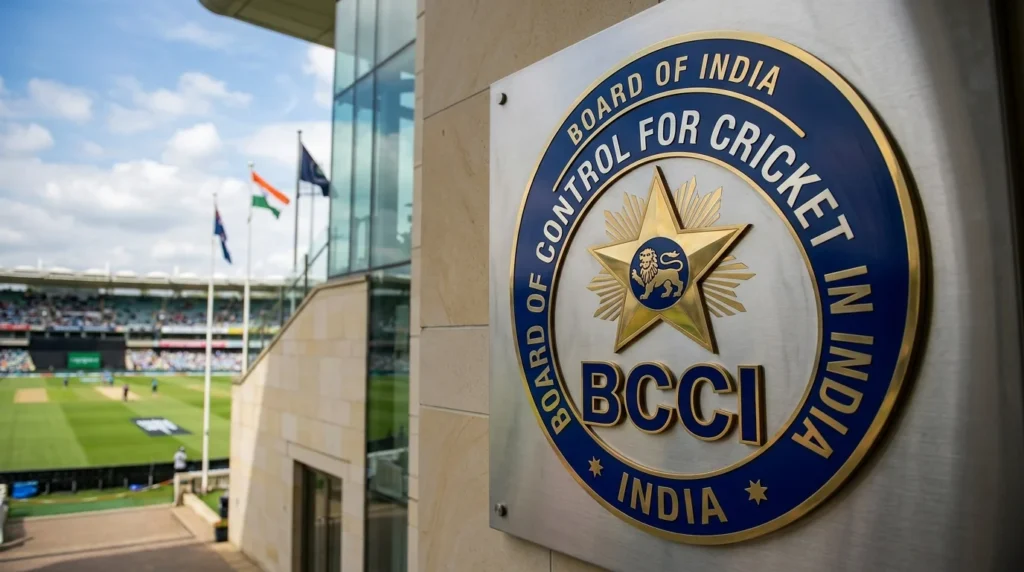
The Board of Control for Cricket in India, commonly known as BCCI, is the governing body for cricket in India. It is one of the richest and most influential cricket organizations in the world. The BCCI manages Indian cricket at national and international levels, organizes domestic tournaments, controls the Indian cricket team, and promotes the growth of cricket across the country.
Cricket is more than just a sport in India. Millions of fans follow the game passionately, and the BCCI plays a major role in making cricket highly successful in the country. From organizing the Indian Premier League (IPL) to managing international tours and developing young players, the BCCI has transformed Indian cricket into a global powerhouse.
This article explains the history, structure, functions, tournaments, achievements, and importance of the BCCI in simple and easy English.
History of BCCI
The BCCI was formed in December 1928 in Chennai, which was then known as Madras. The organization was created to represent India in international cricket and to organize cricket activities within the country.
Before the formation of the BCCI, cricket in India was controlled by regional associations. As cricket became more popular, there was a need for one central authority to manage the sport properly.
Formation and Early Years
The BCCI was founded by representatives from cricket associations in cities like Bombay, Delhi, Calcutta, and Madras. Soon after its formation, India became a member of the International Cricket Council, also known as the ICC.
India played its first official Test match against England in 1932 at Lord’s Cricket Ground in London. This was an important moment in Indian cricket history.
Growth of Indian Cricket
Indian cricket grew steadily after independence in 1947. Over time, the BCCI improved cricket infrastructure, developed domestic competitions, and supported talented players.
The organization gained major global recognition after India won the 1983 Cricket World Cup under the captaincy of Kapil Dev. This victory changed Indian cricket forever and increased the popularity of the sport across the country.
Structure of BCCI
The BCCI operates through different committees and state associations. It is responsible for managing cricket activities throughout India.
President
The president is the head of the BCCI and represents the organization at official events and meetings.
Secretary
The secretary handles administrative work, communication, planning, and coordination of cricket operations.
Treasurer
The treasurer manages the financial activities of the organization, including budgets, sponsorships, and revenue.
State Cricket Associations
Different state cricket associations work under the BCCI. These associations organize local tournaments, manage stadiums, and develop players at the state level.
Some famous cricket associations include:
- Mumbai Cricket Association
- Tamil Nadu Cricket Association
- Delhi & District Cricket Association
Main Functions of BCCI
The BCCI performs several important tasks related to Indian cricket.
Organizing International Matches
The BCCI organizes matches involving the Indian cricket team. These include:
- Test matches
- One Day Internationals (ODIs)
- Twenty20 Internationals (T20Is)
The organization manages stadium arrangements, ticket sales, broadcasting rights, and sponsorships.
Managing Team India
The BCCI selects coaching staff, trainers, physiotherapists, and support staff for the national team. It also manages player contracts and tour schedules.
Famous Indian captains managed under the BCCI include:
- Sachin Tendulkar
- MS Dhoni
- Virat Kohli
- Rohit Sharma
Developing Young Talent
The BCCI runs youth cricket programs and supports Under-19, Under-16, and domestic cricket competitions. These tournaments help young players gain experience and move toward international cricket.
Domestic Tournaments Organized by BCCI
Domestic cricket is extremely important for developing future stars. The BCCI organizes several major tournaments every year.
Ranji Trophy
The Ranji Trophy is India’s top domestic first-class cricket tournament. It began in 1934 and is named after famous cricketer Ranjitsinhji.
State teams compete in this tournament, and strong performances often lead to national team selection.
Vijay Hazare Trophy
This is a domestic One Day cricket tournament played between state teams.
Syed Mushtaq Ali Trophy
This tournament is India’s domestic T20 competition and helps players prepare for modern short-format cricket.
Duleep Trophy
The Duleep Trophy is another major domestic competition featuring regional teams.
Indian Premier League (IPL)
One of the biggest achievements of the BCCI is the creation of the Indian Premier League in 2008.
The IPL is the world’s most popular T20 cricket league. It features top players from India and around the world.
Importance of IPL
The IPL has changed cricket in many ways:
- Increased cricket entertainment
- Created opportunities for young players
- Improved financial growth in cricket
- Introduced advanced technology in the game
- Expanded cricket’s global audience
Popular IPL Teams
Some famous IPL teams include:
- Mumbai Indians
- Chennai Super Kings
- Royal Challengers Bengaluru
- Kolkata Knight Riders
Role of BCCI in Women’s Cricket
The BCCI has also played an important role in developing women’s cricket in India.
The organization manages the Indian women’s cricket team and organizes domestic tournaments for female cricketers.
Women’s Premier League (WPL)
The Women’s Premier League was introduced to promote women’s cricket and provide professional opportunities for female players.
This league has helped players gain international recognition and experience.
Famous Women Cricketers
The BCCI has supported many talented women cricketers, including:
- Mithali Raj
- Harmanpreet Kaur
- Smriti Mandhana
Revenue and Financial Strength
The BCCI is considered one of the richest cricket boards in the world.
Sources of Income
The organization earns money from:
- Broadcasting rights
- Sponsorship deals
- IPL revenue
- Ticket sales
- Advertisements
Media Rights
Television and digital broadcasting rights generate huge income for the BCCI. Millions of viewers watch Indian cricket matches worldwide.
This strong financial position allows the BCCI to improve stadiums, player facilities, and cricket development programs.
Cricket Infrastructure in India
The BCCI has invested heavily in cricket infrastructure.
Modern Stadiums
India has many world-class cricket stadiums, such as:
- Narendra Modi Stadium
- Wankhede Stadium
- M. A. Chidambaram Stadium
These stadiums host international matches and IPL games.
Training Facilities
The BCCI supports cricket academies and training centers where young players improve their skills under professional coaches.
Rules and Governance
The BCCI follows ICC rules and regulations for international cricket.
Anti-Corruption Measures
The organization has anti-corruption units to prevent match-fixing and illegal betting activities.
Player Discipline
The BCCI maintains disciplinary rules for players and officials to protect the image of Indian cricket.
Challenges Faced by BCCI
Although the BCCI is highly successful, it also faces several challenges.
Managing Player Workload
Modern cricketers play many matches throughout the year. The BCCI must balance player fitness and scheduling.
Maintaining Transparency
As a powerful organization, the BCCI often faces criticism regarding administration and decision-making processes.
Competition and Pressure
Indian cricket fans have high expectations. Managing pressure from media, fans, and sponsors is an ongoing challenge.
Interesting Facts About BCCI
Here are some interesting facts about the BCCI:
- The BCCI is one of the most financially powerful cricket boards globally.
- India won the Cricket World Cup in 1983 and 2011 under BCCI management.
- The IPL is among the most valuable sports leagues in the world.
- The BCCI headquarters is located in Mumbai, India.
- The organization controls one of the largest cricket fan bases globally.
Importance of BCCI in World Cricket
The BCCI has a massive influence on global cricket. Because India has a huge cricket audience, decisions made by the BCCI often impact international cricket schedules, broadcasting, and tournaments.
Contribution to Global Cricket
The BCCI has contributed to:
- Growth of T20 cricket
- Better player salaries
- Advanced cricket technology
- Increased global cricket popularity
Relationship with ICC
The BCCI works closely with the ICC to organize major events like:
- ICC Cricket World Cup
- ICC Champions Trophy
- ICC T20 World Cup
Benefits of Cricket Development by BCCI
The work done by the BCCI benefits Indian cricket in many ways.
Benefits for Players
- Better training facilities
- Financial security
- International exposure
- Professional coaching
Benefits for Fans
- High-quality cricket entertainment
- Access to live matches
- Improved stadium experiences
- Exciting domestic tournaments
Benefits for the Economy
Cricket creates jobs in:
- Media
- Tourism
- Advertising
- Sports management
- Event organization
Future of BCCI
The future of the BCCI looks very strong. Cricket continues to grow in India and around the world.
The organization is focusing on:
- Expanding grassroots cricket
- Supporting women’s cricket
- Improving sports technology
- Developing young players
- Increasing global cricket partnerships
With strong financial resources and a huge fan following, the BCCI is expected to remain a major force in international cricket for many years.
Conclusion
The Board of Control for Cricket in India has played a huge role in making India one of the strongest cricket nations in the world. From organizing domestic tournaments to managing international matches and creating the IPL, the BCCI has transformed cricket into a major sport and entertainment industry.
The organization supports players, improves infrastructure, and promotes cricket at every level. Despite facing challenges, the BCCI continues to influence global cricket through innovation, financial strength, and strong management.
For cricket fans, students, and athletes, understanding the role of the BCCI provides valuable insight into how modern cricket operates and grows both in India and worldwide.

Green Benn is a dedicated sports writer specializing in cricket, including IPL and international formats. Known for clear, engaging, and informative content, Green simplifies complex match analysis and player statistics for all readers. Passionate about sports storytelling, Green delivers reliable, SEO-friendly articles that keep fans updated and informed