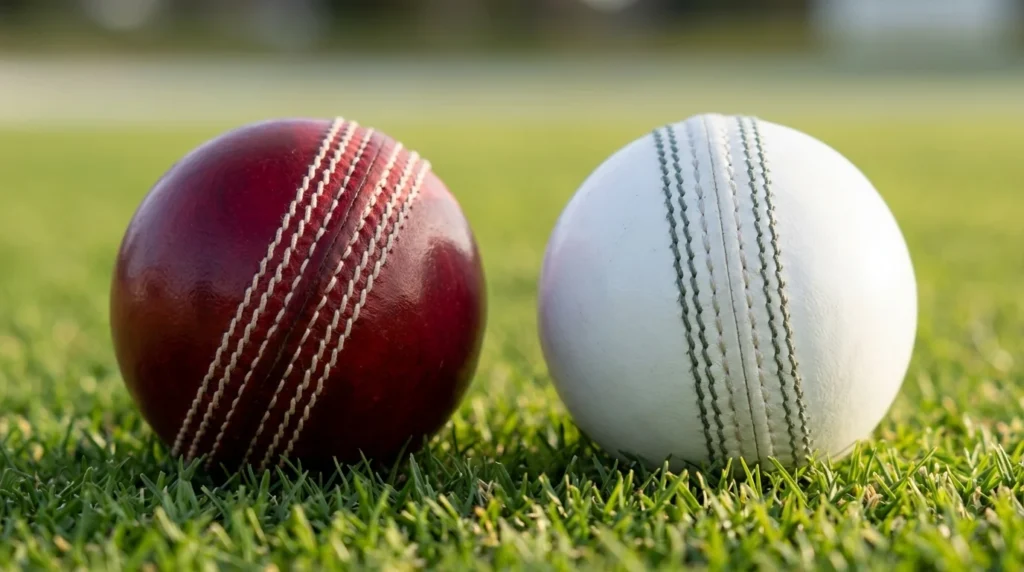
The cricket ball is one of the most important pieces of equipment in the game of cricket. Every delivery bowled, every boundary scored, and every wicket taken depends on the quality and condition of the ball. Whether it is a fast bowler swinging the ball under cloudy conditions or a spinner turning the ball sharply on a dry pitch, the cricket ball plays a major role in every match.
Imagine a tense final over in a cricket match where the bowler uses reverse swing to defeat the batter. That magical movement in the air happens because of the design and condition of the cricket ball. From local street cricket to international tournaments, the cricket ball remains the center of the action.
For beginners and sports fans, understanding the cricket ball helps improve knowledge about bowling techniques, gameplay strategies, and match conditions. In this article, you will learn about the history of the cricket ball, its construction, types, rules, bowling techniques, player roles, major tournaments, benefits of cricket, and many interesting facts related to this essential cricket equipment.
What is a Cricket Ball?
A cricket ball is a hard spherical ball used in the sport of cricket. It is specially designed for batting, bowling, and fielding during cricket matches.
The ball is usually made from:
- Cork core
- Layers of string
- Leather outer covering
Simple Definition
A cricket ball is a hard leather-covered ball used by bowlers to deliver the ball and by batters to score runs in cricket.
Real-Life Example
When a fast bowler bowls at speeds above 140 km/h, the cricket ball can swing, bounce, or seam depending on weather and pitch conditions.
History and Origin of the Cricket Ball
The history of the cricket ball dates back several centuries.
Early Cricket Balls
In the early days of cricket:
- Balls were made by hand
- Materials varied by region
- Shapes were not always perfectly round
Development of Leather Balls
As cricket became more organized:
- Leather coverings became standard
- Cork centers improved durability
- Seam stitching improved swing bowling
Modern Cricket Ball Evolution
Today’s cricket balls are:
- Professionally manufactured
- Tested for weight and balance
- Designed for international standards
Modern technology has improved:
- Durability
- Swing movement
- Seam quality
Construction and Components of a Cricket Ball
The cricket ball has several important parts.
Cork Core
The center of the ball contains compressed cork.
Function
- Maintains hardness
- Provides bounce
- Supports durability
String Layers
Tightly wound string surrounds the cork core.
Function
- Maintains shape
- Adds strength
- Improves balance
Leather Cover
The outer layer is made of leather.
Function
- Protects the ball
- Supports swing movement
- Improves grip for bowlers
Seam
The raised stitched seam is one of the most important features.
Function
- Helps swing bowling
- Assists seam movement
- Improves bowler grip
Types of Cricket Balls
Different cricket formats use different types of balls.
Red Cricket Ball
Used mainly in Test cricket.
Features
- Longer durability
- Better swing in traditional conditions
- Easier visibility in daylight
White Cricket Ball
Used in One Day Internationals and T20 matches.
Features
- Better visibility under floodlights
- Faster wear compared to red balls
- Common in limited-over cricket
Pink Cricket Ball
Used in day-night Test matches.
Features
- Visible under lights
- Combines red and white ball qualities
- Improved night visibility
Tennis Cricket Ball
Used in street and casual cricket.
Features
- Soft and lightweight
- Safer for beginners
- Common in local matches
Cricket Ball Working Principle
The cricket ball behaves differently depending on speed, seam position, pitch condition, and weather.
Swing Bowling
The seam and shiny side help move the ball in the air.
Types of Swing
- Outswing
- Inswing
- Reverse swing
Seam Bowling
The seam hits the pitch and changes direction.
Key Factors
- Seam position
- Pitch surface
- Ball condition
Spin Bowling
Spinners rotate the ball using finger or wrist action.
Spin Types
- Off-spin
- Leg-spin
- Doosra
- Googly
Rules Related to the Cricket Ball
The cricket ball must follow official cricket rules.
Standard Weight
Men’s cricket ball:
- 155.9 to 163 grams
Standard Circumference
- 22.4 to 22.9 cm
Ball Replacement Rules
Umpires may replace the ball if:
- It becomes damaged
- Loses shape
- Gets wet
Ball Tampering Rules
Players are not allowed to:
- Scratch the ball illegally
- Use foreign substances
- Damage the seam intentionally
Important Bowling Techniques Using the Cricket Ball
Fast Bowling
Focuses on:
- Speed
- Bounce
- Swing
Swing Bowling
Uses air movement to deceive batters.
Seam Bowling
Relies on seam movement after pitching.
Spin Bowling
Uses rotation for turn and deception.
Equipment Used Along with Cricket Ball
Several protective and playing items are used with the cricket ball.
Cricket Bat
Used by the batter to score runs.
Protective Pads
Protect legs from fast deliveries.
Gloves
Protect hands during batting and wicketkeeping.
Helmet
Provides head protection.
Wicketkeeping Equipment
Includes:
- Gloves
- Pads
- Inner gloves
Player Roles Related to the Cricket Ball
Bowlers
Use the cricket ball to take wickets.
Batters
Score runs against bowlers.
Wicketkeepers
Catch and stop the ball behind wickets.
Fielders
Stop boundaries and create run-out opportunities.
Major Cricket Tournaments
ICC Cricket World Cup
The biggest ODI tournament.
ICC T20 World Cup
Fast-paced international competition.
ICC World Test Championship
Elite Test cricket tournament.
Indian Premier League (IPL)
Popular franchise T20 tournament.
The Ashes
Historic Test series between England and Australia.
Benefits of Playing Cricket
Cricket offers both physical and mental advantages.
Physical Benefits
- Improves fitness
- Builds stamina
- Enhances coordination
- Strengthens muscles
Mental Benefits
- Improves concentration
- Develops teamwork
- Builds confidence
- Enhances decision-making skills
Social Benefits
- Encourages teamwork
- Improves communication
- Builds friendships
Difference Between Red Ball and White Ball
| Feature | Red Ball | White Ball |
|---|---|---|
| Format | Test Cricket | ODI & T20 |
| Durability | High | Medium |
| Swing | Longer swing | Early swing |
| Visibility | Day matches | Night matches |
| Wear Rate | Slower | Faster |
How to Choose the Right Cricket Ball
Choosing the correct cricket ball depends on skill level and playing format.
For Beginners
- Use tennis cricket balls
- Safer and lightweight
For Professional Practice
- Use leather cricket balls
- Improves bowling control
For Tournaments
- Follow official standards
- Choose approved brands
Weather Consideration
Different weather affects:
- Swing
- Grip
- Ball durability
Common Problems & Solutions
Problem 1: Ball Loses Shine Quickly
Solution:
Keep one side polished and dry.
Problem 2: Ball Becomes Soft
Solution:
Replace worn-out balls regularly.
Problem 3: Poor Swing Movement
Solution:
Maintain seam position and shiny side.
Problem 4: Cracked Leather
Solution:
Store balls in dry conditions.
Problem 5: Uneven Bounce
Solution:
Use quality balls and proper pitches.
Interesting Facts About Cricket Ball
- A cricket ball can travel over 160 km/h
- Reverse swing becomes stronger with older balls
- Pink balls are specially designed for night visibility
- Cricket balls are hand-stitched in many factories
- Seam position is extremely important for bowlers
Future Trends in Cricket Ball Technology
Modern cricket ball manufacturing continues improving.
Advanced Seam Technology
Improves durability and swing performance.
Better Leather Processing
Enhances grip and lifespan.
Smart Ball Technology
Future cricket balls may include:
- Speed sensors
- Spin tracking
- Data analysis systems
Eco-Friendly Manufacturing
Sustainable materials may become more common.
Conclusion
The cricket ball is much more than just a piece of sports equipment. It is the heart of the game and directly affects bowling, batting, fielding, and match strategy. From traditional red balls in Test cricket to white balls in T20 matches, each type has unique features and playing characteristics.
Understanding the construction, types, rules, and techniques related to the cricket ball helps beginners and sports fans appreciate the game at a deeper level. Bowlers use seam, swing, and spin to challenge batters, while fielders and wicketkeepers rely on quick reactions to control the ball.
As cricket continues evolving with technology and modern formats, cricket ball design and manufacturing will also improve. Learning about the cricket ball is essential for every cricket player, student, coach, and sports enthusiast who wants to understand the game professionally.

Green Benn is a dedicated sports writer specializing in cricket, including IPL and international formats. Known for clear, engaging, and informative content, Green simplifies complex match analysis and player statistics for all readers. Passionate about sports storytelling, Green delivers reliable, SEO-friendly articles that keep fans updated and informed