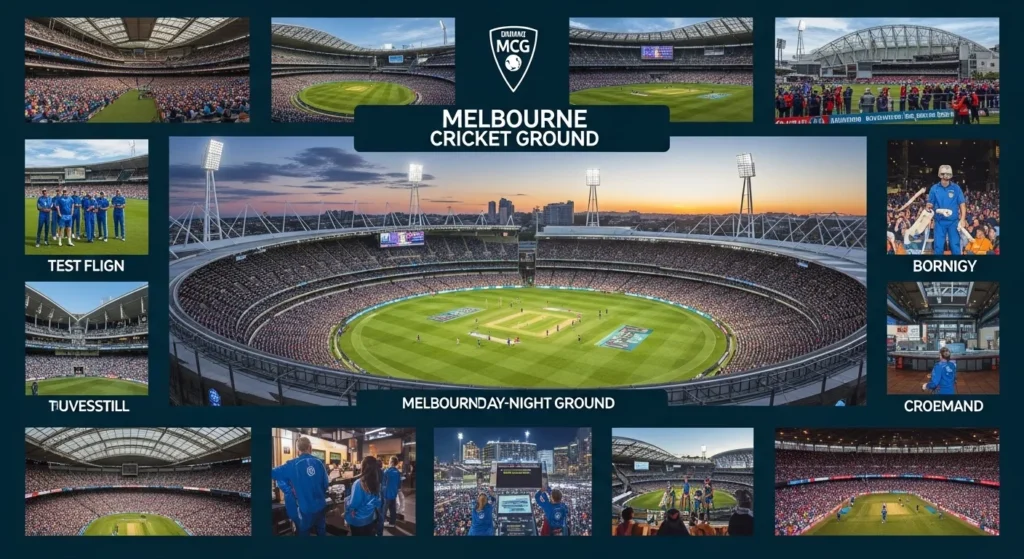

Imagine stepping into a massive stadium filled with over 90,000 cheering fans, where every run and wicket creates a thunderous roar. This is the unforgettable experience of the Melbourne Cricket Ground, one of the most iconic sports venues in the world.
Commonly known as the MCG, this historic ground is not only famous for cricket but also for hosting major sporting events of global importance. It has witnessed legendary matches, unforgettable performances, and historic milestones that shaped modern cricket.
Understanding the Melbourne Cricket Ground helps fans and learners appreciate how a stadium can influence gameplay, strategy, and player performance. In this article, you will explore the history, structure, pitch behavior, major tournaments, techniques, and overall importance of the Melbourne Cricket Ground in simple and clear language.
Melbourne Cricket Ground
The Melbourne Cricket Ground, commonly known as the MCG, is one of the most famous and historic sports stadiums in the world. Located in Melbourne, Australia, it is often referred to as “The G” by cricket fans. Established in 1853, the MCG has played a central role in the development of cricket and Australian sports culture. It is not only a cricket stadium but also hosts Australian Rules Football and major international events, making it a multi-purpose venue of global importance.
The MCG has a seating capacity of over 100,000 spectators, making it the largest stadium in Australia and one of the biggest in the world. Its massive size and electrifying atmosphere make it a dream venue for players and fans alike. The ground has hosted numerous historic matches, including Test matches, One Day Internationals, and ICC tournaments. One of the most iconic moments in cricket history took place here during the 1992 Cricket World Cup final.
The pitch at the MCG is known for offering a balanced contest between bat and ball. Fast bowlers often get bounce and pace, while batsmen can score big runs once they settle in. The large outfield also challenges fielders and rewards powerful hitting. These conditions make matches at the MCG exciting and unpredictable.
Apart from cricket, the stadium is also famous for hosting the opening ceremony of the 1956 Olympic Games and the 2006 Commonwealth Games. It is also the main venue for the Australian Football League (AFL) Grand Final, attracting huge crowds every year.
Inside the MCG, there are modern facilities including player dressing rooms, media centers, and the National Sports Museum, which showcases Australia’s rich sporting history. The stadium is well-equipped with advanced lighting and digital screens, ensuring a great experience for both players and spectators.
In conclusion, the Melbourne Cricket Ground is more than just a stadium—it is a symbol of sporting excellence and history. Its legacy, size, and importance make it one of the most respected venues in international sports.
What is Melbourne Cricket Ground?
The Melbourne Cricket Ground (MCG) is the largest cricket stadium in Australia and one of the biggest stadiums in the world.
Simple Definition
- It is an international sports stadium used mainly for cricket and Australian rules football
- Located in Melbourne, Australia
- Known for its large capacity and rich history
Practical Example
- It hosts international matches between top cricket teams
- It is famous for hosting Boxing Day Test matches every year
History and Origin of Melbourne Cricket Ground
Early Development
- Established in 1853
- One of the oldest cricket grounds in the world
- Originally used for local cricket matches
Growth and Expansion
- Expanded multiple times to increase seating capacity
- Became a major venue for international cricket
- Hosted events beyond cricket, including global sports competitions
Historic Importance
- Hosted the first-ever Test match in 1877
- Hosted the first One Day International in 1971
These milestones highlight the importance of the start of international cricket at this venue.
Structure and Design of the Stadium
Seating Capacity
- Holds over 100,000 spectators
- One of the largest stadiums globally
Ground Layout
- Oval-shaped field
- Large boundary size
- Excellent viewing angles for fans
Modern Facilities
- High-quality dressing rooms
- Practice areas for players
- Digital screens and scoreboards
- Media and broadcasting facilities
Pitch Behavior and Playing Conditions
The pitch at the Melbourne Cricket Ground is known for balanced conditions.
Nature of Pitch
- Offers bounce and pace
- Supports both batters and bowlers
Impact on Gameplay
- Fast bowlers benefit from bounce
- Batters can play aggressive shots
- Matches are usually competitive
Weather Conditions
- Weather can change quickly
- Cloud cover helps swing bowling
Rules and Gameplay at MCG
The MCG follows standard international cricket rules.
Match Formats Played
- Test matches
- One Day Internationals (ODIs)
- T20 Internationals
Key Gameplay Elements
- Batting requires timing and technique
- Bowling includes pace and spin
- Fielding must be sharp and active
Important Techniques and Strategies
Playing at the MCG requires specific approaches.
Batting Techniques
- Play bounce carefully
- Use timing for shots
- Build innings patiently
Bowling Strategies
- Fast bowlers use bounce and swing
- Spinners control middle overs
- Maintain consistent line and length
Fielding Strategies
- Cover large ground area
- Focus on fitness and speed
- Accurate throwing is essential
Player Roles and Positions
Each player role is important at the MCG.
Batter
- Needs strong technique
- Must handle bounce and pace
Bowler
- Fast bowlers dominate early
- Spinners play a supporting role
All-Rounder
- Provides balance to team
- Contributes in both batting and bowling
Wicketkeeper
- Handles fast deliveries
- Important for catches and stumpings
Equipment Used in Matches
Standard cricket equipment is used at the MCG.
Essential Equipment
- Cricket bat
- Cricket ball
- Helmet, gloves, and pads
- Stumps and bails
Major Tournaments and Matches
The MCG is famous for hosting major cricket events.
International Matches
- Historic Test matches
- High-profile ODI matches
Special Events
- Boxing Day Test match
- World Cup matches
Domestic and League Matches
- Domestic cricket competitions
- Big Bash League matches
Benefits of Playing at Melbourne Cricket Ground
Physical Benefits
- Improves stamina due to large ground
- Enhances running between wickets
Mental Benefits
- Builds confidence playing in large crowds
- Improves focus under pressure
Interesting Facts About Melbourne Cricket Ground
- Known as “The G” by fans
- One of the largest stadiums in the world
- Hosted the first Test match in cricket history
- Can hold over 100,000 spectators
Comparison Section
Melbourne Cricket Ground vs Other Stadiums
| Feature | Melbourne Cricket Ground | Other Stadiums |
|---|---|---|
| Capacity | Very high | Moderate to high |
| Pitch Type | Balanced | Varies |
| Historical Importance | Extremely high | Depends |
| Crowd Size | Massive | Smaller |
Common Challenges and Solutions
1. Handling Bounce
Problem: Ball bounces more than expected
Solution: Practice back-foot shots
2. Large Ground Area
Problem: Hard to score boundaries
Solution: Focus on running between wickets
3. Pressure of Crowd
Problem: Nervousness
Solution: Mental preparation and focus
Future Trends and Development
Stadium Improvements
- Better seating and facilities
- Enhanced fan experience
Technology Integration
- Advanced pitch monitoring
- Improved broadcasting
Growth of Cricket
- More global tournaments
- Increased international matches
Conclusion
The Melbourne Cricket Ground is not just a stadium—it is a symbol of cricket history and excellence. From hosting the first Test match to modern-day international tournaments, it has played a major role in shaping the sport.
Its balanced pitch, massive capacity, and historic significance make it one of the most respected venues in cricket. For players, it offers both challenges and opportunities, while for fans, it provides an unforgettable experience.
Understanding the MCG helps you appreciate the importance of stadiums in cricket and their impact on gameplay, strategy, and global popularity.

Jon Smith is a passionate sports writer specializing in cricket and global sporting events. With a keen eye for match analysis and player performance, he creates clear, engaging, and informative content. His work focuses on simplifying complex sports insights, making them accessible for beginners and experienced fans alike worldwide.