
Imagine standing at the crease while a fast bowler delivers a ball at over 140 km/h. If the ball misses the bat and strikes your thigh, the pain can be intense and even dangerous. This is where a thigh guard becomes an essential piece of cricket equipment.
Cricket is a game of skill, but it also involves physical risk, especially for batsmen facing fast bowling. Protective gear like thigh guards helps reduce injuries and gives players the confidence to play freely. Whether you are a beginner, student, or professional player, understanding the importance of a thigh guard is crucial.
In this article, you will learn everything about the thigh guard, including its history, types, structure, usage, benefits, and role in modern cricket. This guide is written in simple and clear English so that everyone can easily understand and apply it in real-life cricket situations.
What is Thigh Guard?
A thigh guard is a protective cricket equipment worn by batsmen to protect the thigh area from injury caused by fast-moving balls.
Simple Explanation
In simple words:
- It protects the upper leg (thigh)
- It reduces injury risk
- It is worn under cricket trousers
Practical Example
During a match:
- A fast ball may hit the thigh instead of the bat
- Without protection, it can cause serious pain or injury
- The thigh guard absorbs the impact and protects the player
History of Thigh Guard
The use of thigh guards developed as cricket became faster and more competitive.
Early Cricket
- Players had very limited protective gear
- Injuries to legs were common
Development Phase
- Basic thigh padding was introduced
- Mainly used by professional players
Modern Era
- Lightweight and flexible thigh guards
- Improved comfort and protection
- Used by players at all levels
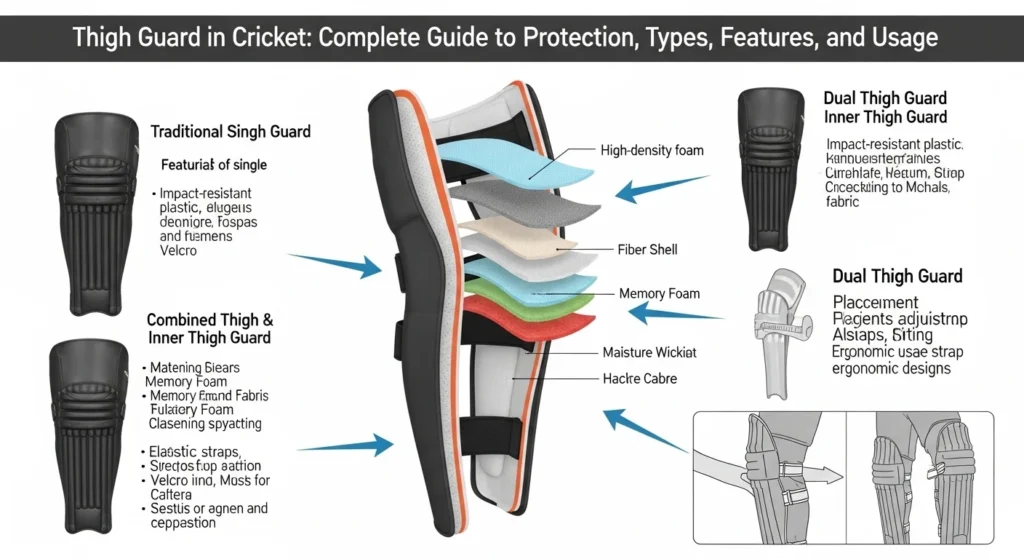
Structure of Thigh Guard
The design of a thigh guard focuses on safety and comfort.
Outer Shell
- Made from hard plastic or fiber
- Protects against strong impact
Inner Padding
- Soft foam layer
- Absorbs shock and reduces pain
Straps and Belts
- Elastic straps or waist belt
- Keeps the guard in place
Shape Design
- Curved to fit the thigh
- Allows easy movement while running and batting
Types of Thigh Guards
Different types of thigh guards are available for different needs.
Inner Thigh Guard
- Worn on the inner side of the thigh
- Protects against balls hitting close to the body
Outer Thigh Guard
- Worn on the outer thigh
- Provides additional protection
Combo Thigh Guard
- Combines inner and outer protection
- Offers maximum safety
Lightweight Thigh Guard
- Easy to wear
- Comfortable for long innings
Professional Thigh Guard
- Advanced design
- Used by international players
Role of Thigh Guard in Gameplay
The thigh guard plays a key role in cricket safety and performance.
Protection
- Prevents injuries from fast deliveries
- Reduces impact on the thigh
Confidence
- Players feel secure while batting
- Helps face fast bowlers without fear
Performance
- Encourages aggressive batting
- Improves focus on the game
Important Techniques for Using Thigh Guard
Proper Wearing
- Should fit tightly but comfortably
- Must cover the correct thigh area
Positioning
- Align properly with the leg
- Avoid loose fitting
Maintenance
- Check straps regularly
- Replace worn-out padding
Equipment Related to Thigh Guard
The thigh guard is part of a complete cricket safety kit.
Other Protective Equipment
- Cricket helmet
- Batting gloves
- Batting pads
- Arm guard
- Abdominal guard
Using all protective gear ensures maximum safety.
Major Tournaments Where Thigh Guard is Used
Thigh guards are used in all levels of cricket.
International Tournaments
- ICC Cricket World Cup
- T20 World Cup
- Test matches
Domestic Cricket
- Club matches
- School competitions
- Local leagues
Players at all levels rely on thigh guards for protection.
Benefits of Using Thigh Guard
Physical Benefits
- Prevents serious injuries
- Absorbs shock from impact
- Reduces pain
Performance Benefits
- Improves confidence
- Allows better shot selection
- Helps maintain focus
Interesting Facts About Thigh Guard
- Many players use custom-fit thigh guards
- Some thigh guards are very lightweight
- Designed for both right and left-handed players
- Widely used in modern cricket formats
Comparison: Thigh Guard vs No Protection
| Feature | Thigh Guard | No Protection |
|---|---|---|
| Safety | High | Low |
| Injury Risk | Low | High |
| Comfort | Comfortable | Painful |
| Confidence | High | Low |
| Performance | Better | Affected |
Tips for Choosing the Right Thigh Guard
Selecting the right thigh guard is important for safety and comfort.
Key Factors
- Proper size and fit
- Strong outer material
- Comfortable inner padding
- Adjustable straps
Beginner Tips
- Start with lightweight guards
- Ensure proper fitting
- Practice wearing during training
Role of Thigh Guard in Player Positions
Batsman
- Protects against fast deliveries
- Essential for facing bowlers
Close Fielders
- Sometimes used for extra safety
- Helpful in short-distance positions
Benefits of Playing Cricket with Safety Equipment
Physical Benefits
- Reduces injury risk
- Protects body parts
Mental Benefits
- Builds confidence
- Improves concentration
- Encourages better performance
Conclusion
The thigh guard is an essential piece of protective equipment in cricket that ensures safety and confidence for batsmen. It protects the thigh from high-speed deliveries and reduces the risk of injury during gameplay.
Understanding its types, features, and proper usage helps players make better decisions and improve their performance. Whether you are a beginner or a professional, using a thigh guard is highly recommended.
Cricket is a game of skill and courage, but safety should always come first. A good-quality thigh guard provides protection, comfort, and confidence, allowing players to perform at their best.