
Cricket is a game full of skill, strategy, and precision. Every ball bowled in cricket has a purpose, and every type of delivery can change the outcome of a match. One such dangerous and often misunderstood delivery is the Beamer.
A beamer in cricket is a rare but serious type of ball that travels toward the batsman without bouncing on the pitch and usually reaches above waist height. It is considered unsafe because the batsman does not expect a high full toss, which increases the risk of injury.
Understanding the beamer in cricket is very important for bowlers, coaches, and even beginners because it is strictly controlled by the laws of the game. One mistake can lead to penalties, warnings, or even removal of the bowler from the attack.
In this article, you will learn everything about beamer deliveries, including their definition, rules, history, techniques, safety concerns, and real match situations. This guide will help you clearly understand how and why beamers are treated seriously in modern cricket.
What is a Beamer in Cricket?
A beamer is a cricket delivery that reaches the batter without bouncing and above waist height. Under the Laws of Cricket, such a delivery is considered unfair and the umpire must call it a No-ball. The delivery may also be considered dangerous if the umpire believes its speed, height, and direction create a risk of injury to the batter.
Simple Definition
A beamer is a high full toss that passes or would have passed above the batter’s waist without pitching. It can happen accidentally, for example when a bowler attempts a yorker or another low delivery but loses control of the ball.
Key Characteristics of a Beamer
- The ball does not bounce before reaching the batter.
- It passes or would have passed above waist height.
- The umpire calls it a No-ball.
- It can be dangerous depending on the ball’s speed, height, direction, and the risk of injury.
- An accidental beamer is treated differently from one that the umpire considers deliberately dangerous.
Practical Example
Suppose a fast bowler tries to bowl a yorker, but the ball slips from the hand and travels directly toward the batter’s chest or head without bouncing. If it passes above waist height, the umpire will call it a No-ball.
If the umpire considers the delivery dangerous because it could cause injury, further disciplinary action can apply under the Laws.
History and Development of Beamer Rules
Rules concerning beamers developed as cricket’s laws became more specific about dangerous and unfair bowling. The modern Law 41.7 deals specifically with high, non-pitching deliveries.
The MCC revised Law 41.7 in 2019, giving umpires greater control in determining when a high full toss should be considered dangerous. The revised law also formally defined waist height for this purpose.
Modern Beamer Rules
Today, the Laws of Cricket state that a delivery passing or projected to pass above waist height without pitching is unfair and must be called a No-ball. If the umpire considers it dangerous, the bowler can receive a warning, and a further dangerous delivery in the same innings can result in the bowler being suspended from bowling for the remainder of that innings. A deliberately dangerous high full toss can lead to immediate suspension without the usual warning.
For the purpose of the Law, waist height is defined using the point where the top of the batter’s trousers would conventionally be when the batter is standing upright at the popping crease.
Rules of Beamer in Cricket
The rules for beamers in cricket are covered under the Laws of Cricket, particularly the rules concerning dangerous and unfair bowling. A high full toss that passes, or would have passed, above waist height without pitching is called a No-ball. The umpire then considers whether the delivery was also dangerous to the batter.
Basic Rules
- A full toss that passes or would have passed above waist height without pitching is called a No-ball.
- The umpire assesses whether the delivery was dangerous, considering factors such as its speed, height, and direction.
- A dangerous delivery can result in a warning to the bowler.
- If another dangerous delivery occurs in the same innings after the warning, the bowler can be suspended from bowling for the remainder of the innings.
- A delivery judged to be deliberately dangerous can lead to immediate action under the Laws.
Why Are Beamer Rules Important?
The main purpose of these rules is to:
- Protect batters from potentially serious injury
- Discourage dangerous and unfair bowling
- Maintain fairness and safety during the match
- Give umpires a clear framework for dealing with dangerous deliveries
Difference Between a Legal Full Toss and a Beamer
- Below waist height: Generally a legal full toss, provided no other rule is breached.
- Above waist height without pitching: Called a No-ball.
- Dangerous high full toss: May result in additional action against the bowler under the Laws.
Important Note
A beamer is not automatically treated as a dangerous delivery in every situation. The umpire determines whether the delivery is dangerous based on the circumstances. This distinction is important because the Laws separate the No-ball for a high full toss from the additional penalties for dangerous or unfair bowling.
Beamer Working Principle (Bowling Cause)
A beamer in cricket is usually the result of a bowling error rather than a planned type of delivery. It can occur when a bowler loses control of the ball and releases it on a trajectory that prevents it from pitching before reaching the batter.
How a Beamer Happens
- The bowler attempts to deliver the ball at pace.
- The ball may slip from the hand or be released incorrectly.
- The release point or angle causes the ball to travel too high.
- The ball continues through the air without bouncing.
- If it passes or would have passed above waist height, the umpire calls a No-ball.
Common Causes
A beamer can happen for several reasons, including:
- A poor or loose grip on the ball
- Wet or sweaty conditions affecting control
- An unexpected change in the release point
- An error in the bowling action
- Pressure or fatigue during a match
- Difficult weather or playing conditions
A beamer is often accidental, although the umpire can take additional action if a delivery is considered dangerous or deliberately dangerous.
Types of Deliveries Related to Beamers
Beamers are different from other types of cricket deliveries. Understanding the difference helps explain when a delivery is legal or potentially dangerous.
1. Beamer
A beamer is a high full toss that passes or would have passed above waist height without pitching. It is called a No-ball under the Laws of Cricket. If the umpire considers it dangerous, additional penalties may apply.
2. Full Toss
A full toss is a delivery that reaches the batter without bouncing. A full toss can be legal when it remains below the relevant waist-height limit and does not otherwise breach the Laws.
3. Half Tracker
A half tracker is an informal cricket term generally used for a short delivery that does not bounce as high or short as intended. It may be easier for the batter to attack, but its danger depends on its speed, height, direction, and the circumstances of the delivery.
Key Difference
The main difference is that a beamer is a high full toss that does not pitch and is called a No-ball, while a normal full toss can be legal if it meets the requirements of the Laws.
Key Difference Between Beamer and Full Toss
| Feature | Beamer | Full Toss |
|---|---|---|
| Bounce | No bounce | No bounce |
| Height | Above waist | Below waist |
| Safety | Dangerous | Usually safe |
| Rule | No-ball + warning | Legal or no-ball depending height |
Bowling Techniques and Control
How Bowlers Avoid Beamers
- Maintain proper grip on the ball
- Focus on consistent release point
- Practice yorkers and full-length deliveries
- Control wrist position
Training Methods
- Net practice with target zones
- Bowling drills for accuracy
- Strength and balance training
- Video analysis of action
Player Roles and Beamer Impact
Different players have different responsibilities when dealing with beamers and other unexpected deliveries.
Fast Bowlers
Fast bowlers can accidentally produce beamers when they lose control of the ball during a high-speed delivery. However, beamers are not limited to fast bowlers. Any bowler can produce a high full toss if the ball is released incorrectly.
Spin Bowlers
Spin bowlers can also bowl high full tosses, although their slower pace and different bowling action may make accidental beamers less common. The key issue under the Laws is the height and trajectory of the delivery, not the bowler’s style.
Batters
Batters need to remain alert when facing unexpected deliveries. Protective equipment such as helmets and chest protection can reduce injury risk, but the umpire’s assessment of whether a delivery is dangerous is based on factors including its speed, height, direction, the batter’s skill, and whether similar deliveries are being repeated.
Umpires
Umpires play an important role by:
- Identifying high non-pitching deliveries
- Calling a No-ball when required
- Assessing whether a delivery is dangerous
- Applying the appropriate warning or disciplinary procedure
- Helping maintain player safety and fair play
Equipment Used in Cricket (Related to Beamer Safety)
Batters use protective equipment to reduce the risk of injury from fast or unexpected deliveries, including accidental beamers.
Common protective equipment includes:
- Cricket helmet – Protects the head and face.
- Chest guard – Provides additional protection for the chest and upper body.
- Batting gloves – Protects the hands and fingers.
- Leg pads – Protects the legs and knees.
- Arm guards – Provides additional protection to the forearm and elbow area.
Protective equipment is important when facing fast bowling, although the Laws specifically require the umpire to disregard the batter’s protective equipment when deciding whether a delivery itself is dangerous.
Major Matches Where Beamer Rules Matter
Beamer rules apply across different formats and levels of cricket. Umpires monitor high full tosses and dangerous deliveries in:
International Matches
- Test matches
- One Day Internationals (ODIs)
- T20 Internationals
Major Tournaments
- ICC Cricket World Cup
- ICC T20 World Cup
- Asia Cup
The relevant Laws and competition playing conditions govern how umpires deal with unfair and dangerous deliveries. ICC playing conditions incorporate Law 41.7 for dangerous and unfair non-pitching deliveries.
Benefits of Understanding Beamer Rules in Cricket
Understanding the rules surrounding beamers is useful for players, coaches, and cricket fans.
Physical Safety
- Helps players understand the risks associated with high full tosses.
- Encourages appropriate use of protective equipment.
- Helps batters prepare for unexpected deliveries.
Skill Development
- Encourages bowlers to improve their release and control.
- Helps players understand different bowling trajectories.
- Promotes better bowling discipline.
Game Awareness
- Helps players understand No-ball and dangerous-bowling rules.
- Improves awareness of umpire decisions.
- Encourages fair play and match discipline.
Interesting Facts About Beamers
- A beamer is commonly used to describe a high full toss that reaches the batter without pitching.
- Under Law 41.7, a delivery that passes or would have passed above waist height without pitching is unfair and is called a No-ball.
- A high full toss is not automatically treated as a dangerous delivery. The umpire separately decides whether there is a risk of injury.
- If the umpire considers a non-pitching delivery dangerous, the bowler receives a first and final warning under the current Law.
- If the same bowler delivers another dangerous non-pitching delivery in that innings, the bowler can be suspended from bowling for the remainder of the innings.
- A deliberately dangerous high full toss can result in the bowler being suspended immediately, without the normal warning procedure.
- MCC revised Law 41.7 in 2019 to give umpires greater control in deciding whether a high full toss is dangerous.
Beamer vs Other Deliveries (Comparison)
Beamer vs Yorker
- Beamer: A high full toss that does not pitch before reaching the batter.
- Yorker: A delivery aimed at or very close to the batter’s feet, usually pitching near the popping crease.
Beamer vs Bouncer
- Beamer: Does not bounce before reaching the batter and may pass above waist height.
- Bouncer: A short-pitched delivery that bounces before reaching the batter.
Beamer vs Full Toss
- Beamer: A high full toss that passes or would have passed above waist height without pitching and is therefore called a No-ball.
- Full toss: Any delivery that reaches the batter without pitching; it can be legal if it remains within the applicable height limits and does not breach another Law.
Selection Guide for Bowlers: How to Avoid Beamers
Tips for Beginners
- Practice controlled bowling before increasing pace.
- Focus on a consistent line and length.
- Work on a stable release point.
- Avoid trying to generate excessive speed at the expense of control.
Professional Tips
- Maintain a consistent run-up and bowling rhythm.
- Focus on a repeatable release point.
- Keep the bowling action controlled under pressure.
- Practise different match situations to improve accuracy and consistency.
Common Problems and Solutions
Problem 1: Accidental Beamers
Cause: An inconsistent release, grip, or timing can cause the ball to travel too high.
Solution: Practise a consistent release point and work on grip and control during training.
Problem 2: Loss of Bowling Control
Cause: Fatigue, pressure, or changes in bowling rhythm can affect accuracy.
Solution: Use controlled training sessions, maintain a consistent routine, and manage workload appropriately.
Problem 3: Dangerous-Delivery Warning
Cause: Repeated high non-pitching deliveries may be judged dangerous by the umpire.
Solution: Improve release control and focus on safe line and length rather than simply reducing pace.
Future of Beamer Rules in Cricket
Cricket continues to use technology and improved officiating systems to support accurate decision-making and player safety.
Possible Areas of Development
- More advanced ball-tracking and video-analysis systems
- Improved analysis of bowling speed and trajectory
- Better training technology for bowling control
- Continued review of safety-related playing conditions
However, technology does not replace the umpire’s responsibility to apply the Laws. Under Law 41.7, the umpire assesses whether a high non-pitching delivery is dangerous by considering factors such as its speed, height, direction, the batter’s skill, and repeated deliveries.
The continued development of cricket technology and safety standards can help improve consistency while keeping player safety and fair play at the centre of the game.
Conclusion
The beamer in cricket is one of the most important safety-related rules in the game. It represents a dangerous delivery that can cause serious injury if not controlled. Understanding its definition, rules, and prevention techniques is essential for every bowler, coach, and cricket enthusiast.
Although accidental, beamers are strictly monitored in modern cricket to ensure fair play and player safety. By practicing proper bowling techniques and maintaining control, bowlers can easily avoid such deliveries.
Umpire Signals for a Beamer
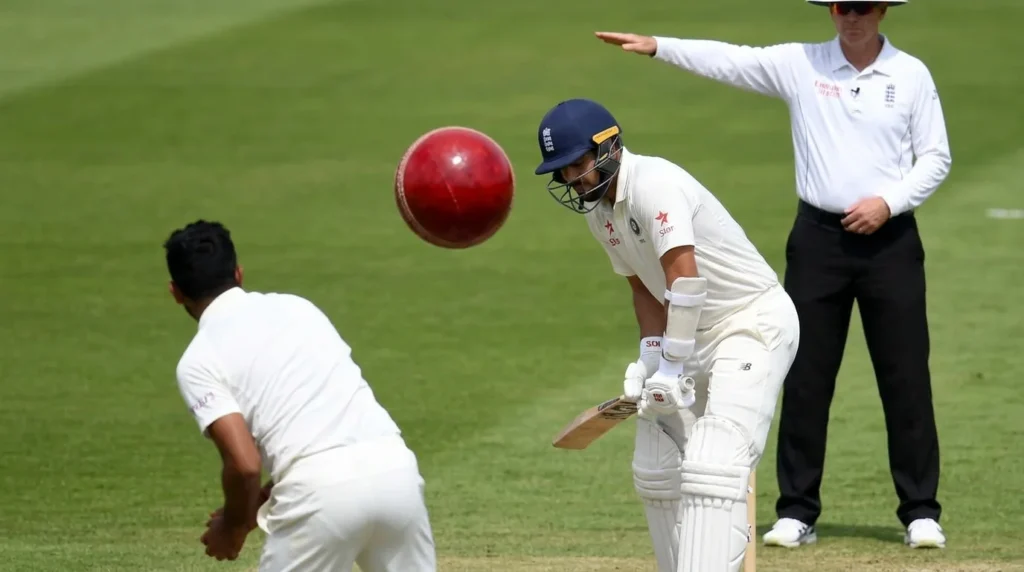
When a beamer is bowled, the umpire calls and signals a No-ball. The No-ball signal is given by extending one arm horizontally at shoulder height, so players and scorers can clearly see the decision.
If the umpire considers the delivery dangerous, a warning is also issued. The umpire informs the bowler, the fielding captain, and the other umpire about the warning, and this process is repeated on each occasion so everyone on the field understands the situation.
What Happens After a Beamer Is Bowled?
A beamer is called a No-ball, which means an extra run is added to the batting team’s score and the delivery does not count as one of the six balls in the over, so the bowler must bowl it again. In limited-overs cricket (ODIs and T20s), the No-ball for a beamer is also followed by a free hit, giving the batter a chance to score without the fear of being dismissed in most ways.
Even though a beamer is a No-ball, the batter is not completely safe. Off a No-ball, a batter can still be given out in a few limited ways, such as being run out, handling the ball, obstructing the field, or hitting the ball twice.
Frequently Asked Questions About Beamers in Cricket
What is the umpire’s signal for a beamer?
The umpire calls a No-ball and extends one arm horizontally at shoulder height. Any warning for dangerous bowling is also communicated to the bowler, the captain, and the other umpire.
Can a batter be out on a beamer?
Only in limited ways. A batter cannot be bowled or caught out off a No-ball, but they can still be run out, or given out for handling the ball, obstructing the field, or hitting the ball twice.
Is there a free hit after a beamer?
Yes, in limited-overs cricket (ODIs and T20s). The No-ball called for a beamer is followed by a free hit on the next delivery.
Does a beamer count as a ball in the over?
No. A No-ball is an extra delivery, so it does not count toward the six balls of the over, and the bowler must bowl an additional legal ball.
In the end, cricket is a game of skill and discipline, and knowing about beamers helps players improve both safety and performance on the field.

Jon Smith is a passionate sports writer specializing in cricket and global sporting events. With a keen eye for match analysis and player performance, he creates clear, engaging, and informative content. His work focuses on simplifying complex sports insights, making them accessible for beginners and experienced fans alike worldwide.