
Imagine facing a fast bowler delivering the ball at over 140 km/h. The ball rises sharply and hits your upper body. Without proper protection, this can cause serious injury. This is where a chest guard becomes an essential piece of cricket equipment.
Cricket is a sport that combines skill, technique, and safety. While batting looks exciting, it also involves risk, especially when facing fast bowlers. Protective gear like helmets, pads, gloves, and chest guards help reduce these risks and allow players to perform confidently.
In this article, you will learn everything about the chest guard in cricket. We will cover its definition, history, types, materials, usage, and importance. You will also understand how it improves performance, protects players, and fits into modern cricket. Whether you are a beginner or an experienced player, this guide will help you make better decisions about your safety and equipment.
What is a Cricket Chest Guard?
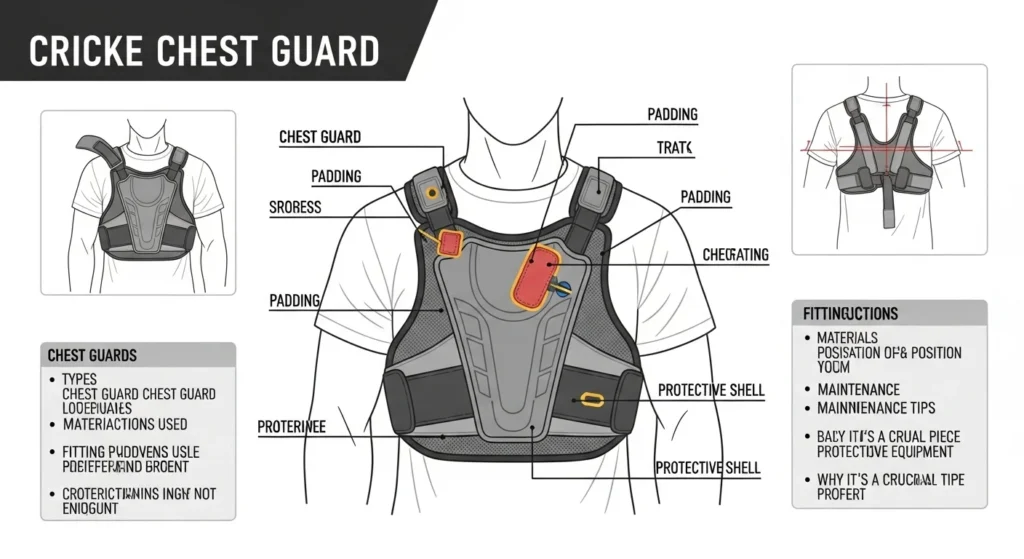
A cricket chest guard is an essential piece of protective equipment designed to shield a batter’s chest and upper rib area from the impact of fast-moving cricket balls. It is commonly worn by batsters when facing fast or short-pitched bowling, where the risk of being struck on the body is much higher. The chest guard helps absorb and distribute the force of the ball, significantly reducing the chances of bruises, fractures, and other serious injuries.
Modern cricket chest guards are made from lightweight yet durable materials such as high-density foam, EVA foam, molded plastic, and reinforced fiber. These materials provide excellent impact resistance while remaining comfortable enough to wear for long periods. Most chest guards are worn underneath the cricket shirt and are secured with adjustable elastic straps or integrated into compression garments to keep them firmly in place during batting.
Although professional cricketers frequently use chest guards against express pace bowlers, they are equally valuable for beginners, junior players, club cricketers, and anyone practicing against bowling machines. Wearing a chest guard gives batters greater confidence to play aggressive shots without worrying about painful body blows, allowing them to focus on their technique and performance.
Simple Explanation
A cricket chest guard works like a protective cushion for your chest. If a fast cricket ball strikes your body, the guard absorbs much of the impact and spreads the force over a larger area. This reduces pain and helps protect your chest, ribs, and upper body from injury.
Practical Example
Imagine a batter facing a fast bowler delivering the ball at over 140 km/h (87 mph). A short-pitched delivery unexpectedly rises and hits the batter’s chest instead of the bat. Without a chest guard, the impact can cause severe pain, bruising, or even broken ribs. However, when wearing a properly fitted cricket chest guard, much of the force is absorbed by the protective padding, allowing the player to recover quickly and continue batting with greater safety and confidence.
Why is a Cricket Chest Guard Important?
A cricket chest guard is important because it:
- Protects the chest and upper ribs from high-speed cricket balls.
- Reduces the risk of bruises, fractures, and impact injuries.
- Increases player confidence against fast bowling.
- Allows batters to focus on shot selection instead of fear of injury.
- Provides additional safety during matches, net practice, and bowling machine sessions.
- Is suitable for junior, amateur, and professional cricketers alike.
Whether you are a beginner learning the game or an experienced cricketer facing fast bowlers, a cricket chest guard is an important piece of safety equipment that helps you play with greater protection and confidence.
History and Evolution of Chest Guards
In earlier days of cricket, players did not use much protective gear. Batsmen relied on skill and courage to face fast bowlers.
As bowling speeds increased, injuries became more common. This led to the development of protective equipment like helmets and chest guards.
Evolution Highlights
- Early cricket: No protective gear
- 1970s–80s: Introduction of basic padding
- Modern era: Advanced lightweight and shock-absorbing materials
Today’s chest guards are designed using modern technology to provide maximum protection with minimal discomfort.
Why is a Chest Guard Important?
A chest guard plays a crucial role in player safety and confidence.
Key Importance
- Protects vital organs like the heart and lungs
- Reduces injury risk from fast deliveries
- Increases player confidence while batting
- Allows better focus on technique and performance
Without proper protection, even a small mistake can result in serious injury.
Types of Cricket Chest Guards
Cricket chest guards are available in different designs to suit players of all ages and skill levels. The right type depends on the level of protection required, comfort preferences, and the pace of bowling a player is likely to face. While all chest guards serve the same basic purpose, they differ in coverage, fit, and construction.
1. Standard Cricket Chest Guard
The standard cricket chest guard is the most commonly used type among beginners, club cricketers, and recreational players. It provides reliable protection to the upper chest while remaining lightweight and comfortable throughout long batting sessions.
Features:
- Covers the upper chest area.
- Lightweight and easy to wear.
- Adjustable straps for a secure fit.
- Suitable for practice sessions and competitive matches.
- Ideal for beginners and intermediate players.
2. Extended Cricket Chest Guard
An extended chest guard offers greater protection by covering not only the chest but also the upper rib cage and upper abdomen. It is commonly chosen by professional and advanced players who regularly face high-speed bowling.
Features:
- Provides wider coverage of the chest and upper body.
- Offers enhanced protection against short-pitched deliveries.
- Reduces the risk of bruising and impact injuries.
- Recommended for players facing fast bowlers.
- Suitable for professional and high-level cricket.
3. Integrated Cricket Chest Guard
An integrated chest guard is built directly into a compression vest, sleeveless shirt, or protective base layer. Instead of using separate straps, the padding stays securely in place as part of the garment, improving comfort and freedom of movement.
Features:
- Built into cricket shirts or compression vests.
- Eliminates the need for separate straps.
- Provides a secure and comfortable fit.
- Allows better flexibility while batting.
- Ideal for long matches and intensive training sessions.
4. Adjustable Cricket Chest Guard
An adjustable chest guard is designed with elastic straps or adjustable fasteners that allow players to customize the fit according to their body size. This type is popular among junior and senior cricketers because it can be fitted securely for maximum comfort and protection.
Features:
- Adjustable straps for a personalized fit.
- Suitable for different body shapes and sizes.
- Comfortable for extended use.
- Easy to wear and remove.
- Available in both junior and adult sizes.
Which Type of Cricket Chest Guard Should You Choose?
Choosing the right chest guard depends on your playing level and the type of bowling you face. Beginners usually prefer a standard chest guard because it is lightweight and comfortable, while professional players often select extended or integrated models for maximum protection against fast bowling. Regardless of the type, a properly fitted cricket chest guard improves safety, confidence, and overall performance at the crease.
Materials Used in Cricket Chest Guards
Modern cricket chest guards are manufactured using advanced impact-resistant materials that provide excellent protection while remaining lightweight and comfortable. Manufacturers often combine multiple materials to absorb the force of a fast-moving cricket ball and distribute the impact across a larger surface area. This helps reduce the risk of bruising, fractures, and other chest injuries without restricting a batter’s movement.
Common Materials Used
High-Density Foam (HD Foam)
High-density foam is the primary cushioning material used in most chest guards. It absorbs shock efficiently and helps reduce the impact of high-speed deliveries.
EVA Foam (Ethylene Vinyl Acetate)
EVA foam is lightweight, flexible, and highly durable. It offers excellent cushioning while maintaining comfort during long batting sessions.
Polyurethane (PU)
Polyurethane is used for its durability and flexibility. It helps chest guards retain their shape even after repeated impacts.
Molded Plastic Shells
Some premium chest guards include molded plastic outer shells that provide additional impact resistance against fast bowlers and short-pitched deliveries.
Reinforced Fiber or Composite Materials
High-end cricket chest guards may use reinforced fiber or composite materials to increase strength while keeping the guard lightweight and easy to wear.
Using these materials together allows modern chest guards to deliver maximum protection without adding unnecessary weight or reducing player mobility.
How to Wear a Cricket Chest Guard Correctly
Wearing a cricket chest guard properly is essential for maximum protection. A poorly fitted guard may shift during play and leave parts of the chest exposed. The guard should fit securely while allowing the player to move, breathe, and bat comfortably.
Steps to Wear a Cricket Chest Guard
- Position the chest guard over the center of your upper chest.
- Secure the elastic straps or fasteners according to the manufacturer’s instructions.
- Adjust the straps until the guard fits snugly without causing discomfort.
- Wear it underneath your cricket shirt or protective compression vest.
- Move your arms and shoulders freely to ensure unrestricted batting movement.
- Check that the guard stays firmly in place before entering the field.
Tips for a Proper Fit
- Avoid wearing the chest guard too loosely.
- Do not tighten the straps excessively, as this may restrict breathing.
- Ensure the guard covers the chest area completely.
- Test the fit during practice sessions before using it in a competitive match.
- Replace worn-out straps or damaged padding when necessary.
Advantages of Using a Cricket Chest Guard
A cricket chest guard provides essential protection for batters facing medium-pace and fast bowlers. It not only reduces the risk of injury but also helps players bat with greater confidence.
Key Benefits
- Protects the chest, ribs, and upper body from high-speed cricket balls.
- Absorbs and disperses impact to reduce pain and bruising.
- Lowers the risk of fractures and other impact-related injuries.
- Increases confidence when facing fast and short-pitched bowling.
- Lightweight design allows unrestricted batting movement.
- Comfortable enough for long practice sessions and matches.
- Easy to wear, adjust, and remove.
- Available in different sizes for junior, youth, and adult players.
- Suitable for beginners, club cricketers, and professional players.
A well-fitted cricket chest guard is an important piece of protective equipment that enhances player safety without compromising comfort or performance.
It allows players to focus more on the game and less on fear.
Disadvantages of Chest Guard
Despite its benefits, there are some limitations.
Limitations
- May feel uncomfortable initially
- Can restrict movement if not fitted properly
- Additional cost for players
- Some players feel it affects flexibility
However, these issues can be minimized by choosing the right size and type.
Chest Guard vs Other Protective Gear
| Equipment | Protection Area | Purpose |
|---|---|---|
| Chest Guard | Chest | Protects from ball impact |
| Helmet | Head and face | Prevents head injuries |
| Batting Pads | Legs | Protects knees and shins |
| Gloves | Hands | Protects fingers and grip |
Chest Guard vs Helmet: What’s the Difference?
A cricket chest guard and a cricket helmet are both essential pieces of protective equipment, but they protect different parts of the body and serve different purposes. While a helmet safeguards the head and face from high-speed deliveries, a chest guard protects the chest and upper rib area from painful impacts. Many batters wear both together to ensure maximum safety when facing fast bowlers.
| Feature | Cricket Chest Guard | Cricket Helmet |
|---|---|---|
| Primary Purpose | Protects the chest and upper ribs | Protects the head, face, and neck |
| Body Area Protected | Chest, sternum, and upper rib cage | Head, forehead, ears, face, and back of the head |
| Main Material | High-density foam, EVA foam, plastic, and fiber | ABS shell, steel grille, carbon fiber, and impact-absorbing foam |
| Used Against | Fast and short-pitched deliveries to the body | Bouncers, rising deliveries, and accidental impacts to the head |
| Comfort | Lightweight and worn inside the shirt | Worn externally with an adjustable fit |
| Importance | Reduces chest injuries and bruising | Prevents serious head and facial injuries |
For maximum protection, players should wear both a properly fitted chest guard and a certified cricket helmet when facing medium-pace or fast bowling.
Applications of Cricket Chest Guards
Cricket chest guards are used at every level of the game to improve player safety and confidence. They are especially valuable when facing fast bowlers or practicing against bowling machines that consistently deliver high-speed balls.
Professional Cricket
International and professional cricketers often wear chest guards when facing express pace bowlers, particularly during Test matches and high-intensity competitions where short-pitched bowling is common.
Domestic and Club Cricket
Players in domestic leagues, club competitions, and amateur tournaments use chest guards to reduce the risk of injury while maintaining confidence at the crease.
Practice and Net Sessions
Chest guards are widely used during net practice, especially when training against fast bowlers or bowling machines. They allow batters to practice challenging deliveries with greater safety.
School and College Cricket
Young cricketers benefit from wearing chest guards while developing batting techniques. Coaches often recommend protective equipment to reduce injuries and encourage safe learning.
Women’s and Junior Cricket
Chest guards are commonly used in women’s cricket and junior cricket, where player safety and confidence are essential for skill development.
Modern Uses
Today, cricket chest guards are commonly used in:
- Test, One Day International (ODI), and T20 cricket.
- High-speed bowling machine training.
- Professional coaching academies.
- Club and league competitions.
- Youth development programs.
- Practice sessions against short-pitched bowling.
Although chest guards are primarily designed for batters, some wicketkeepers may choose to wear additional chest protection during specific training drills or when standing close to the stumps, depending on coaching requirements and personal preference.
How a Cricket Chest Guard Improves Player Performance
A cricket chest guard does more than protect against injury—it also helps improve a batter’s overall performance. When players feel confident that their chest is protected, they can focus on batting technique, shot selection, and match awareness instead of worrying about getting hit by a fast delivery.
Confidence plays a major role in cricket, especially when facing pace bowlers. A properly fitted chest guard allows batters to play more freely, react quickly to short-pitched balls, and maintain better concentration throughout an innings.
Performance Benefits
- Increases confidence against fast and short-pitched bowling.
- Reduces fear of painful chest impacts.
- Helps players maintain focus on timing and shot selection.
- Encourages positive footwork and balanced batting.
- Supports longer batting sessions with greater confidence.
- Allows beginners to develop skills without unnecessary hesitation.
- Improves overall comfort during practice and competitive matches.
A quality chest guard enables players to perform at their best by combining safety, comfort, and confidence.
How to Choose the Right Cricket Chest Guard
Choosing the right cricket chest guard is essential for maximum protection and comfort. The ideal chest guard should fit securely, absorb impact effectively, and allow unrestricted movement while batting.
Factors to Consider
Size and Fit
Choose a chest guard that matches your body size. It should cover the chest properly without shifting during movement or leaving gaps.
Material Quality
Look for models made from high-density foam, EVA foam, reinforced plastic, or composite materials that provide excellent impact protection while remaining lightweight.
Comfort
The chest guard should fit snugly without restricting breathing, shoulder movement, or batting technique. Soft padding and breathable materials improve comfort during long innings.
Protection Level
Select a chest guard based on the level of cricket you play. Professional players facing high-speed bowling may require models with extended coverage, while beginners can usually use standard designs.
Adjustability
Elastic straps or integrated compression garments help keep the guard securely in place and provide a personalized fit.
Tips for Beginners
- Start with a lightweight standard chest guard.
- Choose a model with adjustable straps or an integrated vest.
- Ensure it fits comfortably under your cricket shirt.
- Practice while wearing it before using it in competitive matches.
- Replace the guard if it becomes damaged or loses its protective padding.
Maintenance and Care of a Cricket Chest Guard
Proper maintenance helps keep your cricket chest guard hygienic, comfortable, and effective. Regular care also extends its lifespan and ensures it continues to provide reliable protection.
Maintenance Tips
- Wipe the chest guard with a clean, damp cloth after each use.
- Allow it to air dry completely before storing.
- Avoid prolonged exposure to direct sunlight or excessive heat.
- Store it in a cool, dry, and well-ventilated place.
- Keep it away from heavy objects that could deform the padding.
- Inspect the foam, straps, and protective shell regularly for signs of wear or damage.
- Replace the chest guard if the padding becomes compressed, cracked, or loses its ability to absorb impact.
- Follow the manufacturer’s cleaning and maintenance instructions whenever possible.
With proper care, a high-quality cricket chest guard can provide dependable protection and comfort for many seasons of practice and match play.
Safety Tips While Using Chest Guard
- Always wear it during fast bowling
- Combine with other protective gear
- Replace if damaged
- Ensure proper fitting
Safety should always be the top priority.
Interesting Facts About Chest Guards
- Not all players use chest guards regularly
- Some professionals prefer minimal gear for flexibility
- Modern guards are extremely lightweight
- Technology continues to improve protection levels
Frequently Asked Questions (FAQs) About Cricket Chest Guards
Choosing and using a cricket chest guard often raises questions, especially for beginners. Below are answers to some of the most common questions about cricket chest guards, their purpose, and their effectiveness.
Q1: Is a cricket chest guard necessary for beginners?
Yes. A cricket chest guard is highly recommended for beginners, particularly when facing medium-pace or fast bowlers. New players are still developing their batting technique and may struggle to judge the line and bounce of the ball accurately. Wearing a chest guard reduces the risk of painful impacts and helps beginners gain confidence while learning the game in a safer environment.
Q2: Can a cricket chest guard completely prevent injuries?
No. A cricket chest guard cannot guarantee complete protection against every type of injury. However, it significantly reduces the force of impact from fast deliveries by absorbing and dispersing the shock. When used alongside other protective equipment such as a helmet, batting pads, gloves, thigh guards, and abdominal guards, it greatly improves overall player safety.
Q3: Does wearing a chest guard affect batting performance?
A properly fitted chest guard should not negatively affect batting performance. Modern chest guards are lightweight, ergonomically designed, and flexible, allowing players to move freely while playing all types of cricket shots. In fact, many batters perform better because they feel more confident when facing fast bowling.
Q4: Who should wear a cricket chest guard?
A cricket chest guard is suitable for:
- Professional cricketers.
- Club and league players.
- Junior and school cricketers.
- Beginners learning to face fast bowling.
- Players practicing with bowling machines.
- Batters regularly facing medium-pace or fast bowlers.
Q5: Can a chest guard be worn under a cricket shirt?
Yes. Most cricket chest guards are designed to be worn underneath a cricket shirt or inside a compression vest. This keeps the guard securely in place while maintaining comfort and allowing unrestricted movement during batting.
Q6: How do I know if my chest guard fits correctly?
A correctly fitted chest guard should:
- Cover the center of the chest and upper rib area.
- Stay securely in position during movement.
- Allow comfortable breathing.
- Not restrict shoulder or arm movement.
- Fit comfortably beneath the cricket shirt without shifting.
Q7: How long does a cricket chest guard last?
The lifespan of a chest guard depends on the quality of the materials, frequency of use, and maintenance. With proper care, a high-quality chest guard can last several seasons. It should be replaced immediately if the foam becomes compressed, the shell cracks, or the straps lose their strength.
Future of Cricket Chest Guards
Advancements in sports safety technology continue to improve the design and performance of cricket chest guards. Manufacturers are developing lighter, stronger, and more comfortable protective equipment to meet the needs of modern cricketers while maintaining high safety standards.
Smart Impact-Absorbing Materials
Future chest guards are expected to use advanced foam technologies and smart materials that automatically absorb and distribute impact energy more efficiently than traditional padding. These innovations will provide greater protection without increasing weight.
Lightweight Composite Construction
Manufacturers are increasingly using composite materials, reinforced polymers, and high-strength fibers to create chest guards that offer maximum protection while remaining lightweight and flexible. This allows players to move naturally without feeling restricted.
Custom-Fit Designs
Modern manufacturing techniques such as 3D body scanning and precision molding are making it possible to produce chest guards that fit individual players more accurately. A personalized fit improves both comfort and protective performance.
Improved Ventilation Systems
Future chest guards are likely to feature enhanced airflow channels, breathable fabrics, and moisture-wicking materials that help keep players cool during long innings and hot weather conditions.
Ergonomic and Flexible Designs
New designs focus on improving flexibility around the shoulders and torso, allowing players to play every shot comfortably while maintaining full chest protection.
Sustainable Manufacturing
Many sports equipment manufacturers are exploring environmentally friendly production methods, including recyclable materials and sustainable manufacturing processes, without compromising safety or durability.
Integration with Performance Apparel
Modern chest guards are increasingly being integrated into compression shirts and performance base layers. This provides a secure fit, reduces movement during play, and improves overall comfort for batters.
Enhanced Safety Standards
As cricket continues to evolve, manufacturers are expected to develop chest guards that meet even stricter safety and quality standards. Continuous research and testing will help create protective equipment that offers better impact resistance while remaining lightweight and comfortable.
The future of cricket chest guards is focused on delivering greater protection, improved comfort, better mobility, and advanced technology, allowing players of all skill levels to bat with increased confidence and safety.
Conclusion
A chest guard is an essential piece of cricket safety equipment that protects players from serious injuries. It is especially important when facing fast bowlers, as it reduces the impact of high-speed deliveries on the chest.
From basic foam designs to advanced lightweight materials, chest guards have evolved significantly. They not only improve safety but also boost confidence, allowing players to focus on performance rather than fear.
Choosing the right chest guard, wearing it properly, and maintaining it well are key steps every player should follow. Whether you are a beginner or a professional, safety should never be ignored.
By understanding the importance and proper use of a chest guard, you can enjoy cricket more safely and confidently while improving your overall game.

Jon Smith is a passionate sports writer specializing in cricket and global sporting events. With a keen eye for match analysis and player performance, he creates clear, engaging, and informative content. His work focuses on simplifying complex sports insights, making them accessible for beginners and experienced fans alike worldwide.