
In cricket, the umpire is responsible for watching every delivery, checking the position of players, making important decisions, and ensuring that the laws of the game are followed. Along with their formal clothing and equipment, the cricket umpire hat is one of the most recognizable parts of an umpire’s appearance.
A traditional umpire hat usually has a wide brim that helps provide shade from direct sunlight. It also gives umpires a professional and consistent appearance during long matches. Since cricket games can continue for several hours, comfortable clothing and suitable headwear can make a difference to an umpire’s overall comfort.
Many beginners and cricket fans search for terms such as umpire hat cricket, cricket umpires hat, and cricket umpire hats because umpire headwear has become closely associated with traditional cricket. International cricket has also helped make the white umpire hat a familiar sight around the world.
This guide explains what an umpire hat is, its history, types, features, uses, relationship with professional cricket, maintenance, and common questions about this important part of cricket equipment.
What Is a Cricket Umpire Hat?
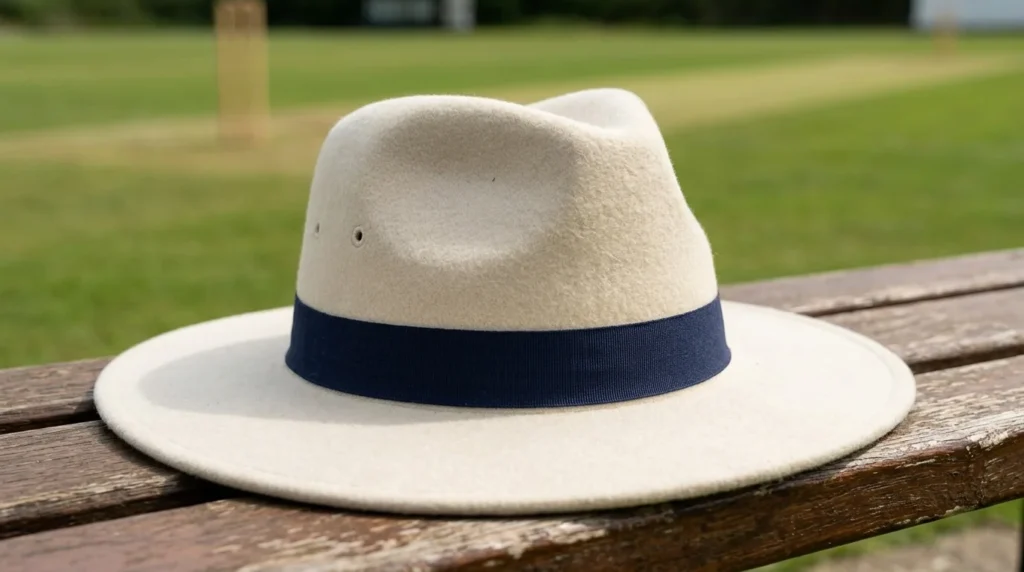
A cricket umpire hat is a type of headwear worn by cricket officials while standing on the field. Traditional designs normally feature a broad brim, a structured crown, and a light color such as white or cream.
The main purpose of the hat is to provide shade and improve comfort while an umpire spends long periods outdoors. The brim can help reduce direct sunlight reaching the face and eyes, although the hat should not be considered a replacement for proper sun protection.
The traditional design is also part of cricket’s visual identity. When people see a wide-brimmed white hat on a cricket field, they often immediately associate it with an umpire.
Modern competitions may use different styles depending on the tournament, uniform requirements, weather, and sponsorship arrangements.
History of the Cricket Umpire Hat
Traditional cricket developed in outdoor environments where players and officials spent long periods under natural sunlight. As cricket became more organized, umpires adopted clothing that was practical as well as formal.
The wide-brimmed hat became particularly recognizable because it provided shade while maintaining the traditional appearance of cricket officials.
Over time, umpire clothing became more standardized. Shirts, trousers, shoes, hats, and other accessories were increasingly selected to create a professional appearance.
Although modern cricket has introduced caps and other alternatives, the traditional wide-brimmed hat remains strongly connected with the image of a cricket umpire.
Why Do Cricket Umpires Wear Hats?
There are several practical reasons why umpires may wear hats during a match.
Protection From Sunlight
A wide brim provides shade around the face and head. This can make an umpire more comfortable when standing in direct sunlight.
Better Comfort During Long Matches
Cricket matches can last for many hours. A suitable hat can help reduce the discomfort caused by continuous exposure to the sun.
Traditional Appearance
The hat has become part of the traditional appearance of cricket officials. It helps distinguish the umpire from players and other people around the field.
Professional Presentation
A clean and properly fitted hat contributes to a professional appearance, particularly in high-level cricket.
Types of Cricket Umpire Hats
Different styles of headwear may be used by cricket officials. The choice can depend on the level of cricket, weather conditions, tournament rules, and uniform policies.
Wide-Brim Umpire Hat
The wide-brim style is the classic design most people associate with cricket officials.
Its large brim provides useful shade around the face and neck. The design is also strongly associated with traditional cricket.
Cap-Style Umpire Hat
Some officials may wear a smaller cricket cap instead of a traditional wide-brim design.
Caps are lightweight and can be convenient in certain weather conditions. Their smaller size also makes them easier to store and carry.
Bucket-Style Hat
Bucket-style headwear can provide shade around the head and face. It may be useful in recreational cricket or specific playing conditions.
However, the exact headwear allowed in organized cricket depends on the competition and its uniform requirements.
ICC Umpire Hat and Professional Cricket
The phrase ICC umpire hat is commonly used when people search for the traditional headwear associated with officials working in international cricket.
The ICC umpires hat may be discussed in connection with international tournaments, official umpire uniforms, and the recognizable appearance of cricket officials. However, there is not necessarily one universal hat design used in every international competition.
Uniform styles can change according to tournament regulations, sponsors, manufacturers, and official clothing arrangements.
The term ICC cricket umpire hat therefore generally refers to umpire headwear associated with international-level cricket rather than a single permanent design that must be used in every match.
Main Features of a Good Cricket Umpire Hat
A good umpire hat should combine comfort, durability, and practical design.
Wide Brim
A broad brim can provide useful shade around the face and eyes. It is one of the most recognizable features of traditional umpire headwear.
Comfortable Material
The material should be comfortable enough for long periods of outdoor use. Breathable fabrics can be particularly useful in hot conditions.
Proper Fit
A hat should fit securely without being too tight. A loose hat may move during windy conditions, while an excessively tight hat can become uncomfortable.
Lightweight Construction
A lightweight design reduces unnecessary pressure on the head and makes the hat easier to wear throughout a long match.
Durable Design
Umpires may spend many hours outdoors, so durable construction is important. A quality hat should maintain its shape after regular use.
Cricket Umpire Hat vs Ordinary Hat
Although an umpire hat can look similar to other outdoor hats, its design is strongly associated with cricket.
| Feature | Cricket Umpire Hat | Ordinary Outdoor Hat |
|---|---|---|
| Main use | Cricket officiating | General outdoor use |
| Design | Often traditional and formal | Many different designs |
| Brim | Usually wide in traditional styles | Depends on the model |
| Appearance | Professional cricket uniform | Casual or practical |
| Use during matches | Common in traditional umpiring | Not normally part of an official uniform |
The main difference is not simply the shape. The umpire hat is part of the overall visual identity and uniform of cricket officials.
Role of the Umpire in Cricket
An umpire has a much more important responsibility than simply standing on the field wearing an official uniform.
The umpire watches the action and makes decisions according to the laws of cricket. Depending on their position, officials may monitor deliveries, wickets, boundaries, dismissals, and player conduct.
Important responsibilities include:
- Checking whether deliveries are legal
- Making decisions about dismissals
- Calling no-balls and wides
- Checking boundaries
- Monitoring player conduct
- Communicating decisions clearly
- Working with other match officials
- Maintaining concentration throughout the match
Because umpires remain on the field for extended periods, comfortable clothing and suitable headwear can contribute to their overall working comfort.
Equipment Used by Cricket Umpires
An umpire’s equipment is not limited to headwear. Different items may be used depending on the level and format of cricket.
Counter
A counter can help an umpire keep track of deliveries or other match information.
Sunglasses
Sunglasses may be useful in bright conditions, although their use must not interfere with visibility or official duties.
Communication Equipment
At professional levels, umpires may use communication systems to communicate with other officials.
Watch or Timing Device
Timing equipment can help officials monitor match-related timings and breaks.
Umpire Hat
The hat remains one of the most recognizable pieces of an umpire’s traditional appearance.
How to Wear an Umpire Hat Correctly
The hat should sit comfortably and securely on the head.
The brim should remain level enough to provide shade without blocking the umpire’s view of the field. The hat should not be positioned so low that it interferes with visibility.
A proper fit is especially important in windy conditions. If a hat moves repeatedly during a match, it can become distracting.
The best approach is to select the correct size and adjust the hat before the match begins.
Maintenance of Cricket Umpire Hats
Regular maintenance can extend the life of an umpire hat.
Keep It Clean
Dust and sweat can build up after repeated outdoor use. Clean the hat according to the manufacturer’s care instructions.
Avoid Excessive Moisture
If the hat becomes wet, allow it to dry naturally. Avoid storing it while it is still damp.
Maintain Its Shape
Wide-brimmed hats can lose their shape if they are crushed or stored incorrectly. Keep the hat in a suitable location when it is not being used.
Store It Properly
A clean, dry storage area can help prevent unwanted odors, stains, and material damage.
Cricket Umpire Hats for Different Playing Conditions
Weather can influence the type of headwear that is comfortable for an umpire.
In hot and sunny conditions, a wide-brimmed design can provide useful shade. In cooler conditions, a lighter cap or another approved style may be more practical.
Wind is another factor. A very lightweight hat may move easily, so a secure fit is important.
At professional levels, however, officials normally need to follow the uniform requirements of the competition rather than choosing any hat they prefer.
Importance of Proper Umpire Clothing
An umpire needs clothing that allows comfortable movement while maintaining a professional appearance.
A typical official uniform may include:
- A professional shirt
- Trousers
- Suitable shoes
- Hat or cap
- Match-related equipment
- Communication equipment at professional levels
The purpose of this clothing is both practical and professional. Officials need to remain comfortable while clearly appearing as match officials on the field.
Cricket Umpire Hat and Player Safety
A hat does not directly control player safety, but comfortable headwear can support the umpire’s ability to remain focused during a match.
An umpire must continuously watch the ball and players. Anything that causes discomfort or repeatedly distracts the official can become inconvenient.
For this reason, an appropriately fitted hat can be useful as part of suitable match clothing.
However, the most important factors in umpiring remain knowledge of the laws, concentration, positioning, communication, and sound judgment.
Advantages of Wearing a Cricket Umpire Hat
A traditional hat offers several practical advantages.
Provides Shade
The broad brim can reduce direct sunlight around the face and head.
Professional Appearance
It gives the official a recognizable and traditional cricket appearance.
Comfortable for Outdoor Use
A suitable lightweight hat can be comfortable during extended periods on the field.
Recognizable Official Clothing
Players and spectators can easily identify the umpire on the field.
Disadvantages and Limitations
Despite its advantages, an umpire hat is not perfect for every situation.
A wide-brimmed hat can become inconvenient in strong wind. It can also become uncomfortable in extremely hot or humid weather if the material does not allow enough airflow.
Some modern competitions may prefer different styles of headwear depending on their uniform policies.
The hat should therefore be selected according to the official requirements and playing conditions.
Common Problems With Umpire Hats
Hat Keeps Blowing Away
This usually happens when the hat is too loose or the wind is strong. Choosing the correct size can help.
Hat Feels Too Tight
A smaller size may create pressure and discomfort. A better-fitting hat should be selected.
Hat Loses Its Shape
Incorrect storage or placing heavy objects on the hat can damage its shape.
Hat Becomes Dirty Quickly
Outdoor cricket naturally exposes clothing and equipment to dust and sweat. Regular cleaning helps maintain its appearance.
Hat Blocks the View
If the brim is positioned incorrectly, it may interfere with visibility. Adjusting the position can solve the problem.
Where Are Umpire Hats Used?
Umpire headwear can be seen across different levels of cricket, including:
- International cricket
- Domestic cricket
- Professional competitions
- Club cricket
- School cricket
- Amateur matches
- Recreational cricket
The exact design and whether a particular hat is required can vary between competitions.
Cricket Umpire Hats in Different Formats
Cricket is played in several formats, including Test cricket, One Day Internationals, and Twenty20 cricket.
Traditional umpire clothing can appear across these formats, but uniform designs may vary between tournaments and governing bodies.
In shorter formats, modern branding and tournament-specific clothing can be more visible. In traditional cricket settings, the classic wide-brimmed hat remains especially recognizable.
Why Is the Umpire Hat So Recognizable?
Cricket has a strong visual tradition. White clothing, a carefully prepared pitch, wickets, and traditional umpire clothing have all become associated with the sport.
The wide-brimmed hat is one of the easiest features for spectators to recognize.
It also creates a visual distinction between officials and players, which is useful for spectators watching the game.
Interesting Facts About Umpire Hats
- The wide-brimmed design is strongly associated with traditional cricket.
- Umpire headwear can provide shade during long outdoor matches.
- International cricket has helped make traditional umpire clothing recognizable worldwide.
- Modern competitions may use different headwear depending on official uniform requirements.
- A properly fitted hat is more comfortable than one that is too loose or too tight.
- Hat design can change over time as cricket uniforms become more modern.
How to Choose a Cricket Umpire Hat
When selecting an umpire hat, consider the following factors:
Size
Choose a size that fits securely without creating pressure.
Brim Width
A wider brim can provide more shade, while a smaller brim may feel lighter and easier to manage.
Material
Choose breathable and comfortable material for long outdoor use.
Durability
A good-quality hat should withstand repeated use and regular cleaning.
Competition Rules
If the hat is being used in organized cricket, check the competition’s uniform requirements before purchasing it.
Frequently Asked Questions
What is a cricket umpire hat?
A cricket umpire hat is headwear traditionally worn by cricket officials. It commonly features a wide brim that provides shade and gives the umpire a professional appearance.
Why do cricket umpires wear hats?
Umpires may wear hats to provide shade, improve outdoor comfort, and maintain the traditional appearance of cricket officials.
What is an ICC umpire hat?
An ICC umpire hat generally refers to headwear associated with umpires working in international cricket. The exact design can vary according to tournament and uniform requirements.
Are cricket umpire hats mandatory?
Not necessarily. Whether an umpire must wear a particular style of headwear depends on the rules and uniform requirements of the competition.
Can an umpire wear a normal hat?
In informal cricket, this may be possible. In organized cricket, officials normally follow the uniform rules established by the relevant competition or governing body.
What material is best for an umpire hat?
A lightweight, breathable, and durable material is generally suitable for long periods of outdoor use.
Does an umpire hat protect against the sun?
A wide brim can provide shade to the face and head, but it should not be considered complete protection from ultraviolet radiation.
Future of Cricket Umpire Headwear
Cricket equipment continues to develop as manufacturers focus on comfort, lightweight materials, breathability, and practical design.
Future umpire headwear may use improved moisture control, lighter materials, better ventilation, and more comfortable construction.
At the same time, the traditional appearance of cricket is likely to remain important. This means future designs may combine modern materials with the classic visual style associated with cricket officials.
History of the Cricket Umpire Hat
The cricket umpire hat has evolved alongside the game itself. While early cricket officials wore ordinary hats for personal comfort, modern umpire hats are specially designed to provide sun protection, comfort, and a professional appearance. Today, the umpire hat is recognized as an essential part of an official’s uniform in cricket around the world.
Early Days of Cricket
In the early years of cricket, there was no official umpire uniform. Umpires usually wore their own hats or caps based on personal preference and local weather conditions. As the sport became more organized, the need for a standard, professional appearance led to the introduction of official umpire clothing.
Evolution of the Cricket Umpire Hat
Over the years, cricket umpire hats have improved significantly to meet the demands of modern officiating. Key developments include:
- Introduction of official umpire uniforms in professional cricket.
- Standardization of white or light-colored wide-brim hats for better sun protection.
- Use of lightweight, breathable materials for improved comfort.
- Addition of moisture-wicking sweatbands and ventilation panels.
- Adoption of officially branded hats in international and domestic tournaments.
Today, the cricket umpire hat combines functionality, comfort, and professionalism, helping officials perform effectively throughout long matches.
Understanding Cricket Rules and Gameplay
Cricket is a bat-and-ball sport played between two teams, with umpires responsible for ensuring that every match is conducted fairly according to the Laws of Cricket. Their decisions and match management are essential to maintaining the integrity of the game.
Basic Rules of Cricket
A standard game of cricket follows several fundamental rules:
- Two teams, each consisting of 11 players, compete against each other.
- One team bats to score runs while the other bowls and fields to dismiss batters and restrict scoring.
- Matches are played in overs, with each over consisting of six legal deliveries.
- Teams alternate between batting and bowling innings.
- The team with the highest number of runs at the end of the match wins.
- Umpires supervise the game and ensure that all rules are followed correctly.
Understanding these basic rules helps players and spectators enjoy the game more fully.
Role of the Umpire in Cricket
Umpires are the on-field officials responsible for applying the Laws of Cricket and ensuring that matches are played fairly and safely. They make impartial decisions and manage the flow of the game from start to finish.
Key Responsibilities of an Umpire
Cricket umpires are responsible for:
- Declaring out or not out decisions.
- Calling wide balls and no-balls.
- Monitoring fair play and player conduct.
- Managing overs, playing conditions, and match timing.
- Confirming boundaries, runs, and dismissals.
- Working with the third umpire when technology is required.
Because umpires spend many hours standing in the sun, a cricket umpire hat plays an important supporting role by providing protection from heat and glare. This added comfort helps officials remain focused, alert, and capable of making accurate decisions throughout every stage of the match.
Purpose and Importance of a Cricket Umpire Hat
A cricket umpire hat is an essential part of an umpire’s official uniform. It is designed to provide protection from the sun, improve comfort, and help officials remain focused throughout long hours on the field. Since umpires spend an entire match outdoors, often in hot and sunny conditions, wearing the right hat helps them perform their duties safely and efficiently.
Why Do Cricket Umpires Wear Hats?
Cricket umpires wear hats for several important reasons:
- Protect the face, ears, and neck from harmful UV rays.
- Reduce glare caused by bright sunlight, making it easier to follow the ball.
- Improve comfort during long Test, ODI, and T20 matches.
- Reduce fatigue and heat exposure, especially in warm climates.
- Maintain a professional appearance as part of the official umpire uniform.
Importance in Real Matches
A comfortable and well-protected umpire is more likely to make accurate decisions throughout the game. Without proper sun protection, prolonged exposure to heat can lead to fatigue, discomfort, and reduced concentration. A high-quality umpire hat helps officials stay cool, alert, and focused, ensuring fair and consistent decision-making from the first ball to the last.
Types of Cricket Umpire Hats
Different styles of cricket umpire hats are available to suit various weather conditions, match levels, and personal preferences. Each type offers different levels of comfort and sun protection.
Wide-Brim Umpire Hat
The wide-brim hat is the most commonly used style in professional cricket. It provides excellent protection from direct sunlight and is widely worn by international umpires.
Key Features:
- Wide brim for maximum sun protection.
- Shields the face, ears, and neck.
- Lightweight and breathable design.
- Preferred for Test, ODI, and T20 international matches.
Cap-Style Umpire Hat
The cap-style hat offers a modern, lightweight alternative for cooler weather or shorter matches.
Key Features:
- Lightweight and comfortable.
- Better airflow and ventilation.
- Suitable for mild weather conditions.
- Offers less sun coverage than a wide-brim hat.
Bucket Umpire Hat
The bucket hat is commonly used in club cricket, training sessions, and recreational matches. It combines comfort with practical sun protection.
Key Features:
- Flexible and easy to wear.
- Provides good all-around shade.
- Comfortable for extended outdoor use.
- Popular in local and amateur cricket competitions.
Key Features of a Cricket Umpire Hat
Modern cricket umpire hats are designed to maximize comfort, durability, and protection while maintaining a professional appearance on the field.
High-Quality Materials
Most umpire hats are manufactured using lightweight performance fabrics such as:
- Cotton for softness and breathability.
- Polyester for durability and quick drying.
- Moisture-wicking materials to absorb sweat.
- UV-resistant fabrics for enhanced sun protection.
Practical Design
A well-designed cricket umpire hat includes features that improve comfort during long matches, such as:
- Wide brim to protect against direct sunlight.
- Ventilation panels or mesh holes for improved airflow.
- Lightweight construction to reduce fatigue.
- Comfortable inner sweatband to manage perspiration.
- Adjustable fit or chin strap for stability in windy conditions.
Color and Appearance
Professional cricket umpire hats are typically available in white or other light colors because they help reflect heat and maintain a clean, professional appearance.
Benefits of light-colored hats include:
- Reflecting sunlight to keep the wearer cooler.
- Reducing heat absorption during hot weather.
- Matching official umpire uniforms.
- Providing a neat and professional look throughout the match.
By combining quality materials, functional design, and effective sun protection, a cricket umpire hat helps officials stay comfortable, focused, and ready to make accurate decisions in every format of the game.
Equipment Used in Cricket (Including the Umpire Hat)
Cricket requires a variety of specialized equipment to ensure player safety, fair officiating, and smooth match management. While players rely on protective gear and playing equipment, umpires use dedicated accessories that help them perform their responsibilities efficiently throughout the game.
Player Equipment
Cricketers use several essential items during a match, including:
- Cricket bat for scoring runs.
- Cricket ball for bowling and fielding.
- Helmet to protect the head and face.
- Batting pads and gloves for protection against fast deliveries.
- Thigh guards, arm guards, and abdominal guard for additional safety.
- Cricket shoes with spikes or rubber soles for better grip.
These items help players perform confidently while reducing the risk of injury.
Umpire Equipment
To officiate matches effectively, umpires use a range of professional equipment, such as:
- Cricket umpire hat for sun protection and comfort.
- Ball counter (clicker) to keep track of legal deliveries in each over.
- Scorecards or digital scoring devices to record match events.
- Communication devices for coordination with third umpires and match officials.
- Protective sunglasses and sunscreen during sunny conditions.
- Official umpire clothing and footwear for comfort and professionalism.
Among these items, the cricket umpire hat remains one of the most important pieces of equipment, protecting officials from prolonged sun exposure while helping them stay comfortable and focused during long matches.
Techniques and Best Practices for Using a Cricket Umpire Hat
Wearing and maintaining a cricket umpire hat correctly improves comfort, durability, and protection. Proper use allows umpires to concentrate on the game without being distracted by heat or discomfort.
Proper Wearing Style
To achieve maximum comfort and protection, an umpire should:
- Choose a hat that fits securely without being too tight.
- Ensure the wide brim provides adequate shade for the face, ears, and neck.
- Position the hat properly so it does not obstruct vision.
- Use an adjustable chin strap when officiating in windy conditions.
- Select breathable, lightweight materials for improved comfort during long matches.
A properly fitted hat helps reduce heat exposure while allowing the umpire to move freely around the field.
Maintenance Tips
Regular maintenance extends the life of an umpire hat and keeps it looking professional. Best practices include:
- Clean the hat regularly according to the manufacturer’s instructions.
- Allow it to dry completely after use in hot or humid conditions.
- Store it in a cool, dry place away from direct sunlight.
- Avoid folding or crushing the brim to maintain its shape.
- Replace the hat if it becomes faded, damaged, or loses its protective structure.
With proper care and maintenance, a high-quality cricket umpire hat can provide reliable comfort, protection, and durability throughout many seasons of cricket.
Player Roles and the Importance of Umpire Equipment
Every person on a cricket field has a specific role, and while players focus on performance, umpires ensure that the match is conducted fairly according to the Laws of Cricket. An umpire hat may not directly affect how players perform, but it helps officials stay comfortable and focused throughout long hours on the field.
Batsman
The batsman’s primary responsibility is to score runs and build partnerships. While the umpire hat does not directly affect batting performance, batsmen rely on umpires to make accurate decisions on dismissals, boundaries, no-balls, wides, and other match situations.
Bowler
Bowlers aim to take wickets and restrict the opposition’s scoring. Every delivery is judged by the umpire, who decides whether it is a legal ball, no-ball, or wide. Accurate umpiring is essential for maintaining fairness and consistency throughout the match.
Umpire
The umpire oversees every aspect of the game and is responsible for enforcing the rules fairly. A cricket umpire hat plays an important role by:
- Protecting the head, face, and neck from direct sunlight.
- Improving comfort during long matches.
- Reducing fatigue caused by heat and sun exposure.
- Maintaining a professional appearance on the field.
- Helping umpires stay focused when making important decisions.
Proper umpire equipment allows officials to perform their duties safely and efficiently in all weather conditions.
Major Cricket Tournaments Where Umpire Hats Are Used
Cricket umpire hats are part of the official uniform in professional competitions around the world. Umpires wear them throughout matches to ensure comfort, protection, and a consistent professional appearance.
International Cricket Tournaments
Official umpire hats are commonly worn during major international events, including:
- ICC Cricket World Cup
- ICC Men’s T20 World Cup
- ICC World Test Championship
- Bilateral Test, ODI, and T20 International series
- ICC Champions Trophy (when held)
Popular Domestic Cricket Leagues
Professional umpires also wear official hats in leading domestic competitions, such as:
- Indian Premier League (IPL)
- Big Bash League (BBL)
- Pakistan Super League (PSL)
- Caribbean Premier League (CPL)
- SA20
- Major League Cricket (MLC)
Across these tournaments, the cricket umpire hat remains an essential part of the umpire’s uniform, providing sun protection, comfort, and a professional appearance while officials manage the game fairly and efficiently.
Advantages and Disadvantages of Cricket Umpire Hat
Advantages
- Protects from sun and heat
- Improves comfort
- Reduces eye strain
- Enhances professional look
- Lightweight and easy to use
Disadvantages
- Can be uncomfortable in strong wind
- Needs regular cleaning
- May not suit all weather conditions
Comparison: Umpire Hat vs Cap
| Feature | Umpire Hat | Cap |
|---|---|---|
| Sun Protection | High | Medium |
| Comfort | High | Medium |
| Coverage | Full | Limited |
| Professional Look | Standard | Less formal |
This shows the difference between cricket umpire hat and cap.
Applications of a Cricket Umpire Hat
A cricket umpire hat is an essential part of an umpire’s uniform and is used across all levels of the game. It provides protection from the sun, improves comfort during long matches, and helps maintain a professional appearance on the field. Whether officiating international tournaments or local competitions, umpires rely on their hats to perform their duties effectively.
Common Applications
Cricket umpire hats are widely used in:
- International cricket matches, including Test, ODI, and T20 Internationals.
- Domestic professional leagues such as the IPL, BBL, PSL, and other franchise tournaments.
- First-class, List A, and T20 domestic competitions.
- School, college, and club cricket matches.
- Cricket academies and umpire training programs.
- Local tournaments and recreational cricket.
Their versatility makes them suitable for both professional and amateur cricket.
Benefits of Playing Cricket
Cricket is a complete sport that offers numerous physical, mental, and social benefits. Regular participation improves overall fitness while developing valuable skills that can be applied both on and off the field.
Physical Benefits
Playing cricket helps:
- Improve cardiovascular fitness and endurance.
- Build strength in the legs, arms, shoulders, and core.
- Enhance hand-eye coordination and reflexes.
- Increase speed, agility, and balance.
- Promote flexibility and overall physical health.
Mental Benefits
Cricket also contributes to mental well-being by helping players:
- Improve concentration and focus.
- Develop teamwork and communication skills.
- Build confidence and self-discipline.
- Strengthen decision-making and strategic thinking.
- Reduce stress through regular physical activity.
These benefits make cricket an excellent sport for people of all ages.
Interesting Facts About Cricket Umpire Hats
Cricket umpire hats are more than just part of the official uniform—they are designed to improve comfort, protection, and professionalism during matches. Here are some interesting facts:
- White or light-colored hats help reflect sunlight and keep umpires cooler during long matches.
- The wide-brim design provides excellent protection for the face, ears, and neck from harmful UV rays.
- A cricket umpire hat is an important part of the official umpire dress code in many professional competitions.
- Umpires wear these hats in Test, ODI, and T20 cricket at both international and domestic levels.
- Modern umpire hats are made from lightweight, breathable fabrics for maximum comfort.
- Many hats include moisture-wicking sweatbands to keep umpires dry in hot weather.
- High-quality umpire hats are designed to withstand long hours of outdoor use while maintaining their shape and durability.
Future Trends in Cricket Umpire Equipment and Technology
Cricket umpire equipment is continuously evolving to improve comfort, safety, communication, and on-field performance. Manufacturers are developing innovative designs and advanced technologies that help umpires perform their duties more efficiently, even during long matches in challenging weather conditions. Future equipment is expected to be lighter, smarter, and more durable than ever before.
Advanced Materials
Modern umpire gear is being designed with high-performance materials that enhance comfort and durability. Future improvements may include:
- Sweat-resistant and moisture-wicking fabrics for better comfort.
- UV-protection technology to reduce sun exposure during outdoor matches.
- Lightweight, durable materials that improve mobility.
- Weather-resistant fabrics for use in different playing conditions.
Smart Wearable Technology
Technology is playing an increasing role in cricket officiating. Future umpire equipment may feature:
- Smart hats with built-in cooling systems to reduce heat stress.
- Integrated communication devices for seamless coordination with third umpires and match officials.
- Health-monitoring wearables to track heart rate, body temperature, and fatigue.
- GPS and performance tracking to analyze movement and positioning during matches.
Improved Equipment Design
Manufacturers continue to focus on making umpire equipment more practical and comfortable by introducing:
- Lightweight and foldable designs for easy transport.
- Enhanced ventilation systems to improve airflow and cooling.
- Ergonomic designs for greater comfort during long hours on the field.
- Eco-friendly materials that support sustainable manufacturing practices.
As cricket continues to embrace innovation, future umpire equipment will combine advanced materials, smart technology, and ergonomic design to improve officiating accuracy, comfort, and performance at every level of the game.
Conclusion
The cricket umpire hat may seem like a simple accessory, but it plays a vital role in ensuring comfort, protection, and professionalism during cricket matches. Umpires spend long hours on the field, and the right equipment helps them perform their duties effectively.
In this guide, you learned about the definition, history, types, features, advantages, and applications of the cricket umpire hat. You also explored its importance in gameplay and how it supports umpires in maintaining fairness.
For beginners and cricket enthusiasts, understanding such details enhances your overall knowledge of the sport. As cricket continues to evolve, even small items like the umpire hat will continue to improve with new technology and designs.

Jon Smith is a passionate sports writer specializing in cricket and global sporting events. With a keen eye for match analysis and player performance, he creates clear, engaging, and informative content. His work focuses on simplifying complex sports insights, making them accessible for beginners and experienced fans alike worldwide.