
South Africa is one of the most exciting cricketing nations in the world, known for its fast pitches, world-class players, and iconic stadiums. Imagine watching a match where fast bowlers dominate with pace and bounce while batters play aggressive shots on lively pitches—that is the unique charm of cricket in South Africa.
The country has hosted several major tournaments, including the ICC Cricket World Cup, which has helped build a strong reputation for its cricket infrastructure. The South Africa national cricket team has played many historic matches at these venues.
In this detailed guide, you will learn about the most famous cricket stadiums in South Africa, their pitch conditions, records, playing strategies, and why they are important in international cricket.
What are Cricket Stadiums in South Africa?
Definition
Cricket stadiums in South Africa are international and domestic venues where professional cricket matches are played under official rules.
Simple Explanation
These stadiums are designed for high-quality cricket, with proper pitch conditions, seating, and facilities for players and fans.
Practical Example
Venues like Newlands Cricket Ground and Wanderers Stadium are famous for hosting thrilling matches with fast bowling and high scores.
History of Cricket in South Africa
Cricket was introduced in South Africa during the 19th century by British settlers. Over time, the sport grew in popularity and became a major part of the country’s culture.
South Africa has since developed some of the best cricket facilities in the world, producing legendary players and hosting major global events.
Major Cricket Stadiums in South Africa
1. Newlands Cricket Ground (Cape Town)

Newlands Cricket Ground, located in Cape Town, is widely regarded as one of the most beautiful cricket stadiums in the world. Surrounded by the stunning backdrop of Table Mountain and Devil’s Peak, this venue offers a unique blend of natural beauty and world-class cricket facilities. It is one of the oldest and most iconic cricket grounds in South Africa and has hosted numerous historic international matches.
Established in 1888, Newlands has a rich cricketing history and is a regular home ground for the South Africa national cricket team. Over the years, it has witnessed legendary performances by both local and international players. The stadium has a seating capacity of around 25,000 spectators, providing an intimate yet energetic atmosphere during matches.
One of the most important aspects of Newlands is its pitch condition. The pitch here is generally considered balanced, offering assistance to both batters and bowlers. In the early stages of a match, fast bowlers often benefit from swing and seam movement due to the coastal weather conditions. As the game progresses, the pitch tends to settle, allowing batters to play their shots more freely. This balance makes matches at Newlands highly competitive and exciting.
The weather in Cape Town also plays a significant role in influencing match conditions. The presence of moisture in the air helps swing bowlers, especially during morning sessions in Test matches. However, on sunny days, the pitch becomes more batting-friendly, leading to high-scoring games. This variation keeps both teams constantly adjusting their strategies.
Newlands Cricket Ground has hosted several major tournaments, including matches in the ICC Cricket World Cup. It is also a regular venue for Test matches, One Day Internationals (ODIs), and T20 Internationals. The stadium is known for its excellent facilities, including modern dressing rooms, media centers, and well-maintained outfield.
From a player’s perspective, Newlands is a challenging yet rewarding venue. Fast bowlers enjoy the bounce and movement, while skilled batters can score big runs once they adjust to the conditions. Spinners may also find some assistance later in the match, especially in longer formats.
Another highlight of Newlands is its passionate crowd. Cricket fans in Cape Town are known for their enthusiasm and deep understanding of the game. The atmosphere during matches is lively, making it a memorable experience for both players and spectators.
In conclusion, Newlands Cricket Ground is not just a cricket venue but a symbol of South Africa’s rich cricketing culture. Its combination of scenic beauty, balanced pitch conditions, and historic significance makes it one of the finest stadiums in the world. Whether it is a thrilling Test match or an exciting T20 game, Newlands always delivers unforgettable cricket moments.
Key Features
- Scenic view with mountains
- Balanced pitch conditions
- Historic venue
Pitch Report
- Offers swing early
- Good for both batters and bowlers
2. Wanderers Stadium (Johannesburg)

Wanderers Stadium, located in Johannesburg, is one of the most famous cricket grounds in the world. Popularly known as the “Bullring,” this stadium is known for its electrifying atmosphere, large crowds, and high-energy matches. It is a key venue for the South Africa national cricket team and regularly hosts international fixtures across all formats.
Established in 1956, Wanderers Stadium has become a symbol of South African cricket excellence. It has a seating capacity of around 34,000 spectators, making it one of the largest cricket venues in the country. The ground is well-equipped with modern facilities, including high-quality dressing rooms, advanced media centers, and excellent outfield conditions.
One of the most unique features of Wanderers Stadium is its location at a high altitude. Johannesburg sits over 1,700 meters above sea level, and this significantly affects how the ball behaves during matches. Due to the thinner air, the ball travels faster and further, which often results in high-scoring games. Batters enjoy playing here because even mistimed shots can go for boundaries.
The pitch at Wanderers is known for its pace and bounce. Fast bowlers get good assistance, especially with short-pitched deliveries, making it challenging for batters in the early stages of an innings. However, once batters adjust to the bounce, they can play aggressive strokes and score quickly. This balance between bat and ball makes matches at Wanderers very exciting.
The stadium has hosted several historic matches, including games in the ICC Cricket World Cup. One of the most memorable matches played here was the famous ODI between South Africa and Australia in 2006, where a record-breaking total was chased successfully, showcasing the ground’s batting-friendly nature.
Weather conditions also play a role at Wanderers. The dry climate usually supports fast bowling, while occasional cloud cover can assist swing bowlers. The outfield is quick, which adds to the high-scoring nature of the ground.
In conclusion, Wanderers Stadium is a world-class cricket venue known for its fast pitch, high altitude conditions, and thrilling matches. It offers a perfect combination of pace, bounce, and scoring opportunities, making it a favorite for players and fans alike. Whether it is a Test match or a T20 clash, Wanderers always promises action-packed cricket.
Key Features
- Known as “Bullring”
- High altitude location
- Large crowd capacity
Pitch Report
- Fast and bouncy pitch
- Ideal for fast bowlers
- Ball travels faster due to altitude
3. Kingsmead Cricket Ground (Durban)
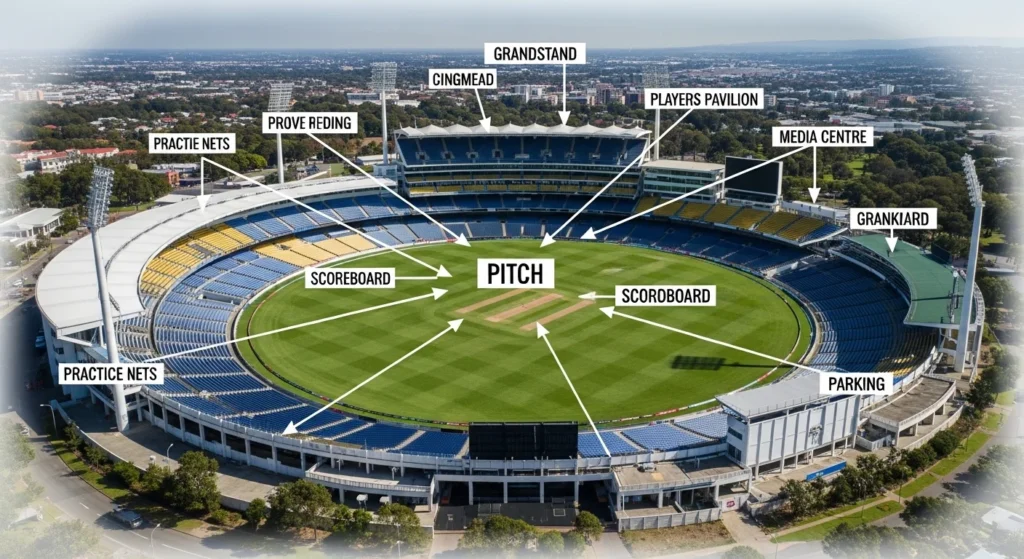
Kingsmead Cricket Ground, located in the coastal city of Durban, is one of South Africa’s most well-known and historic cricket venues. Established in 1923, this stadium has hosted countless international matches and remains a key home ground for the South Africa national cricket team. With a seating capacity of around 25,000 spectators, Kingsmead offers an exciting and lively atmosphere, especially during major international games.
One of the most defining features of Kingsmead is its coastal location. Being close to the Indian Ocean, the stadium experiences humid weather conditions, which significantly influence the pitch behavior. The pitch at Kingsmead is generally known for assisting fast bowlers, particularly in the early stages of a match. The presence of moisture in the air helps the ball swing, making it challenging for batters to settle in quickly.
As the match progresses, the pitch tends to slow down slightly, allowing batters to play more comfortably. However, it rarely becomes completely flat, meaning bowlers continue to have some assistance throughout the game. This balance between bat and ball makes matches at Kingsmead competitive and unpredictable.
The ground has hosted several important matches, including fixtures in the ICC Cricket World Cup. It is also a regular venue for Test matches, One Day Internationals (ODIs), and T20 Internationals. Kingsmead is particularly known for hosting thrilling limited-overs games due to its conditions that support both aggressive batting and disciplined bowling.
Another important aspect of Kingsmead is its outfield, which is generally fast. This helps the ball travel quickly to the boundary, rewarding well-timed shots. At the same time, fielders need to be sharp and agile to stop boundaries and save runs.
From a player’s perspective, Kingsmead requires adaptability. Fast bowlers can take advantage of swing and seam movement, while batters need to focus on technique and patience, especially in the early overs. Spinners may also find some assistance later in longer formats, although pace bowling usually dominates.
In conclusion, Kingsmead Cricket Ground is a unique and challenging venue that reflects the diverse conditions of South African cricket. Its coastal climate, balanced pitch, and rich history make it an important stadium in international cricket. Whether it is a Test match battle or a high-scoring T20 game, Kingsmead consistently delivers exciting cricket action for players and fans alike.
Key Features
- Coastal stadium
- Humid conditions
- Swing-friendly environment
Pitch Report
- Assists swing bowling
- Slower compared to Johannesburg
4. SuperSport Park (Centurion)

SuperSport Park, located in Centurion near Pretoria, is one of the most modern and high-performing cricket stadiums in South Africa. Established in 1986, this venue has become a regular host for international matches and is considered a favorite ground for both players and fans. It serves as an important home venue for the South Africa national cricket team and has built a strong reputation for producing exciting and competitive games.
The stadium has a seating capacity of around 22,000 spectators and is known for its excellent facilities, including modern dressing rooms, media centers, and a well-maintained outfield. The atmosphere at SuperSport Park is energetic, especially during international matches, where fans create a vibrant environment.
One of the key highlights of SuperSport Park is its pitch condition. The pitch is generally batting-friendly, offering good pace and bounce, which allows batters to play their shots confidently. However, it also provides enough assistance to fast bowlers, particularly in the early stages of a match. The ball tends to move slightly off the seam, making it challenging for batters during the initial overs.
As the match progresses, the pitch becomes more stable and easier for batting, often leading to high-scoring games. This makes SuperSport Park a balanced venue where both batters and bowlers have opportunities to perform. In limited-overs formats, teams often post big totals due to the consistent bounce and fast outfield.
SuperSport Park has hosted several major cricket events, including matches in the ICC Cricket World Cup. It is also known for memorable Test matches where both pace bowlers and aggressive batters have dominated at different times.
Weather conditions in Centurion also play a role in match outcomes. The relatively dry climate supports fast bowling, while occasional cloud cover can help swing bowlers. The outfield is quick, which means well-timed shots often result in boundaries.
From a player’s perspective, SuperSport Park is a rewarding venue. Fast bowlers can exploit early movement, while batters who adjust quickly can score freely. Fielders also need to be alert due to the fast outfield and quick scoring rate.
In conclusion, SuperSport Park is a world-class cricket stadium known for its balanced pitch, modern infrastructure, and thrilling matches. Its ability to support both batting and bowling makes it one of the most exciting venues in South African cricket.
Key Features
- Modern facilities
- Known for high scores
- Fast outfield
Pitch Report
- Batting-friendly with bounce
- Supports aggressive cricket
5. St George’s Park (Port Elizabeth)
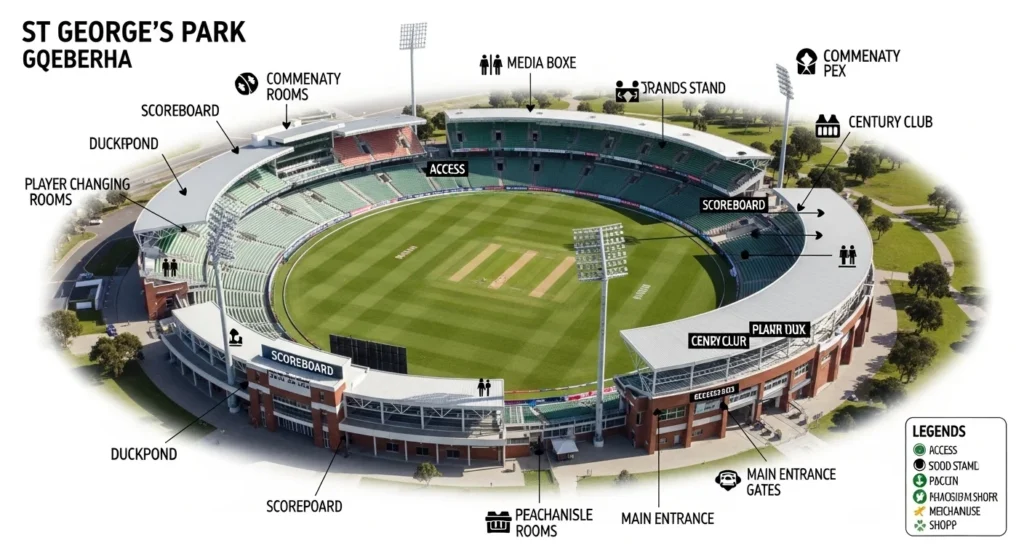
St George’s Park, located in Gqeberha (formerly Port Elizabeth), is one of the oldest and most historic cricket grounds in South Africa. Established in 1888, it holds a special place in cricket history as it hosted the country’s first-ever Test match. This iconic venue continues to be an important home ground for the South Africa national cricket team and regularly hosts international and domestic matches.
The stadium has a seating capacity of around 19,000 spectators and is known for its traditional charm and lively atmosphere. One of its unique features is the famous brass band that entertains the crowd during matches, creating a festive and energetic environment. Unlike some modern stadiums, St George’s Park offers a classic cricket experience that blends history with passion.
The pitch at St George’s Park is generally slower compared to other South African venues. It tends to assist spinners more than most pitches in the country, especially as the match progresses. In the early stages, fast bowlers may get some movement, but overall, the conditions favor controlled bowling rather than raw pace. This makes it a slightly more balanced ground where both batters and bowlers must rely on skill and strategy.
Batters often need patience when playing at this venue. The slower pitch can make stroke play challenging, and timing becomes more important than power. As the game goes on, cracks and wear on the pitch may offer additional help to spin bowlers, particularly in longer formats like Test matches.
St George’s Park has hosted several important matches, including games in the ICC Cricket World Cup. It remains a key venue for Test matches, One Day Internationals (ODIs), and T20 Internationals. The ground’s conditions often lead to competitive matches where strategy plays a major role.
Weather conditions in Gqeberha are usually mild, with coastal influences that can occasionally assist swing bowling. However, the pitch remains the main factor influencing gameplay. The outfield is generally well-maintained, though slightly slower than some other South African stadiums.
From a player’s perspective, St George’s Park requires adaptability. Bowlers must focus on accuracy and variation, while batters need to adjust their technique to the slower conditions. Fielders also need to stay alert due to the unpredictable nature of the pitch.
In conclusion, St George’s Park is a historic and unique cricket venue that offers a different challenge compared to other South African grounds. Its slower pitch, rich tradition, and passionate crowd make it a special place for cricket lovers.
Key Features
- One of the oldest grounds
- Traditional cricket atmosphere
Pitch Report
- Slower pitch
- Helps spinners slightly
6. Boland Park (Paarl)
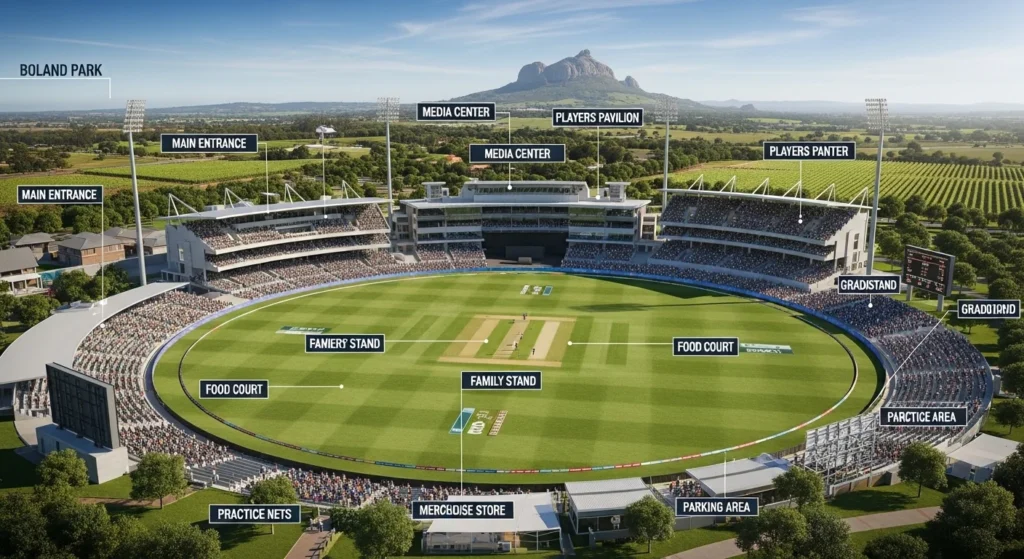
Boland Park, situated in the scenic town of Paarl in South Africa’s Western Cape, is a charming and important cricket venue known for its beautiful surroundings and competitive playing conditions. Established in 1996, the stadium may not be as large as some other South African grounds, but it has earned a strong reputation for hosting exciting international and domestic matches. It is occasionally used by the South Africa national cricket team for limited-overs fixtures.
The ground has a seating capacity of around 10,000 spectators, offering an intimate atmosphere where fans can closely experience the action. Surrounded by mountains and vineyards, Boland Park is often praised for its natural beauty, making it one of the most picturesque cricket venues in the country.
The pitch at Boland Park is generally considered batting-friendly, especially in One Day Internationals (ODIs) and T20 matches. It offers good pace and consistent bounce, allowing batters to play their shots freely. High-scoring matches are common here, particularly when teams take advantage of the favorable conditions. However, bowlers are not completely out of the game.
In the early stages of a match, fast bowlers may get some assistance with movement, especially under cloudy conditions. As the match progresses, the pitch tends to settle, making batting easier. Spinners can also find some grip later in the game, particularly in longer formats, although pace bowlers usually play a bigger role overall.
Boland Park has hosted matches in major tournaments such as the ICC Cricket World Cup, which helped increase its international recognition. The stadium is also frequently used for domestic competitions and serves as an important development ground for South African cricket.
Another notable feature of Boland Park is its well-maintained outfield, which is relatively quick. This allows well-timed shots to reach the boundary easily, encouraging aggressive batting. Fielders, however, must be sharp and agile to prevent runs and save boundaries.
Weather conditions in Paarl are usually warm and dry, which further supports batting-friendly conditions. The lack of excessive moisture reduces swing, making it easier for batters to dominate once they settle at the crease.
In conclusion, Boland Park is a compact yet exciting cricket venue known for its batting-friendly pitch, scenic environment, and lively matches. It provides a great balance between competition and entertainment, making it a valuable part of South Africa’s cricketing landscape.
Key Features
- Smaller stadium
- Scenic surroundings
Pitch Report
- Good for batting
- Balanced conditions
Cricket Pitch Conditions in South Africa
South Africa is known for producing some of the fastest and most challenging cricket pitches in the world. Most South African grounds offer good pace, extra bounce, and consistent carry, making them ideal for fast bowlers while still rewarding technically sound batters. Unlike slow or turning pitches found in some other countries, South African surfaces generally provide a fair contest between bat and ball throughout a match.
The nature of the pitch can vary slightly from one venue to another, but pace and bounce remain the defining characteristics of cricket in South Africa.
Key Characteristics of South African Pitches
South African pitches are widely recognized for the following features:
- High pace that allows fast bowlers to generate extra speed.
- Consistent bounce, making stroke play possible for skilled batters.
- Excellent carry through to the wicketkeeper and slip fielders.
- Early assistance for seam and swing bowlers, particularly with the new ball.
- Even pace across most of the playing surface.
- Better batting conditions as the ball gets older on many pitches.
- Balanced conditions that reward both quality bowling and technically correct batting.
How Weather Affects Pitch Conditions
Weather plays an important role in determining how South African pitches behave during a match.
Dry Climate
Many regions experience warm and dry weather, which helps pitches remain firm and hard. These conditions produce extra bounce and pace, making batting against fast bowlers more challenging.
Coastal Conditions
Coastal venues often experience higher humidity and stronger sea breezes. These conditions can help fast bowlers generate additional conventional swing, especially during the opening overs with the new ball.
High Altitude
Several South African stadiums are located at higher elevations above sea level. At these venues, the thinner air offers less resistance, allowing the ball to travel faster through the air and often carry farther when struck by batters.
Rain and Moisture
When moisture is present due to rain or overcast weather, pitches can offer increased seam movement. Fast bowlers usually benefit from these conditions before the surface dries out later in the match.
Overall, South African pitches are regarded as some of the most pace-friendly surfaces in international cricket, providing exciting contests between fast bowlers and technically skilled batters across Test, ODI, and T20 formats.
Cricket Stadiums Working Principle
The cricket stadiums working principle is based on providing a safe and fair environment for players and spectators.
How It Works
- Proper pitch preparation
- Maintenance of outfield
- Standardized boundary dimensions
- Safety measures for players
Types of Cricket Stadium Pitch Conditions in South Africa
Although South Africa is generally known for fast and bouncy pitches, playing conditions vary depending on the stadium’s location, altitude, climate, and pitch preparation. Understanding these differences helps players, coaches, and fans appreciate how each venue influences match strategy and performance.
1. Coastal Stadiums
Example: Kingsmead, Durban
Cricket stadiums located near the coast are influenced by humid air and sea breezes. These conditions often help fast bowlers generate conventional swing, particularly during the early stages of an innings when the ball is new. Overcast weather can further enhance swing bowling, making batting more challenging.
Key Characteristics:
- Greater assistance for swing bowlers.
- Humid conditions help the new ball move through the air.
- Moderate pace with consistent bounce.
- Early wickets are common if bowlers maintain good line and length.
- Batting generally becomes easier once the ball loses its shine.
Best Suited For:
- Swing bowlers.
- Opening fast bowlers.
- Technically sound opening batters.
2. High-Altitude Stadiums
Example: Wanderers Stadium, Johannesburg
High-altitude venues are among the fastest cricket grounds in the world. The thinner air at higher elevations allows the ball to travel more quickly through the air and carry farther after being hit. These pitches usually provide excellent pace and bounce, creating exciting contests between fast bowlers and aggressive batters.
Key Characteristics:
- Excellent pace and lively bounce.
- Fast outfields that reward attacking stroke play.
- The ball travels farther due to reduced air resistance.
- Good carry for wicketkeepers and slip fielders.
- Suitable for high-scoring matches when batters settle.
Best Suited For:
- Express fast bowlers.
- Aggressive stroke-makers.
- Teams with strong pace attacks.
3. Balanced Cricket Stadiums
Example: Newlands, Cape Town
Some South African venues offer balanced playing conditions where both batters and bowlers have opportunities to succeed. These pitches generally provide early movement for seam bowlers before becoming better for batting as the match progresses. Later in longer-format games, spinners may also find some assistance as the surface wears.
Key Characteristics:
- Fair balance between bat and ball.
- Early seam movement with the new ball.
- Reliable bounce throughout the match.
- Good batting conditions after the initial session.
- May offer some assistance to spin bowlers on the final days of Test matches.
Best Suited For:
- Balanced bowling attacks.
- Technically skilled batters.
- Teams that adapt well to changing match conditions.
Why Stadium Conditions Matter
Each South African cricket stadium presents unique playing conditions that influence team selection, bowling strategies, batting techniques, and overall match tactics. Coastal venues generally favor swing bowling, high-altitude grounds reward pace and attacking batting, while balanced stadiums provide a fair contest between bat and ball. Understanding these conditions is essential for players, coaches, analysts, and cricket fans looking to better appreciate the challenges of playing cricket in South Africa.
How South African Stadium Conditions Affect Different Players
The unique pace, bounce, and weather conditions found at South African cricket stadiums influence the way every player performs. Batters, bowlers, and fielders must adapt their techniques and strategies to succeed on these challenging surfaces.
Batters
Batters playing in South Africa must possess solid technique and quick reflexes to handle the extra pace and bounce generated by the pitches. Playing the ball late, maintaining good balance, and judging bounce accurately are essential for building long innings.
Key Challenges and Strategies:
- Adjust to higher bounce compared to many other countries.
- Play the ball close to the body to reduce the risk of edges.
- Use strong footwork against fast bowling.
- Take advantage of fast outfields by playing well-timed attacking shots.
- Build confidence before playing aggressive strokes.
Bowlers
South African conditions are highly favorable for fast bowlers, especially during the early stages of an innings. Pace bowlers often use seam movement, swing, and bounce to trouble batters, while spinners focus on accuracy and control.
Key Advantages for Bowlers:
- Generate extra pace and bounce from hard pitches.
- Use conventional swing in humid coastal conditions.
- Exploit seam movement with the new ball.
- Bowl disciplined line and length to create wicket-taking opportunities.
- Utilize short-pitched deliveries when conditions are suitable.
Fielders
Fast outfields and lively pitches demand excellent athleticism from fielders. Slip fielders and wicketkeepers must react quickly because the ball often carries at high speed after passing the batter.
Key Fielding Requirements:
- Quick reflexes for catches close to the wicket.
- Excellent anticipation in the slip cordon.
- Strong throwing accuracy from the deep.
- High fitness levels for chasing fast-moving balls.
- Safe catching technique under difficult conditions.
Essential Equipment Used at South African Cricket Stadiums
Maintaining international cricket venues requires specialized equipment to prepare the pitch, ensure player safety, and deliver a professional match experience for players and spectators.
World-class cricket stadiums in South Africa rely on specialized equipment to prepare pitches, maintain the outfield, and ensure matches are played under safe and professional conditions. From pitch preparation to modern technology, every piece of equipment contributes to the quality of the game.
Pitch Rollers
Pitch rollers are among the most important pieces of ground equipment. Heavy rollers are used before matches to compact the pitch, creating a firm, even surface with consistent pace and bounce. Groundskeepers may use both light and heavy rollers during different stages of pitch preparation and maintenance to achieve the desired playing conditions.
Grass Cutting and Turf Maintenance Equipment
Professional stadiums use high-precision grass mowers and turf maintenance machines to keep the pitch and outfield at the correct grass height. Regular mowing promotes healthy grass growth, improves ball movement across the surface, and ensures a smooth, fast outfield for fielders and batters.
Pitch Covers and Weather Protection
Large waterproof pitch covers protect the playing surface from rain, excessive moisture, and harsh weather conditions. These covers help preserve the quality of the wicket, reduce match delays, and allow play to resume more quickly after rain.
Irrigation and Drainage Systems
Modern cricket stadiums are equipped with advanced irrigation systems that maintain the ideal moisture level in the pitch and outfield. Efficient underground drainage systems quickly remove excess rainwater, minimizing interruptions and helping the ground recover faster after wet weather.
Boundary Ropes and Field Marking Equipment
Boundary ropes clearly define the limits of the playing field, allowing umpires to determine fours and sixes accurately. Ground staff also use measuring tapes, marking wheels, string lines, and specialized marking paint to create precise crease lines and field markings that comply with the Laws of Cricket.
Floodlighting Systems
High-performance LED floodlights provide uniform illumination for day-night matches and evening games. Modern lighting systems improve visibility for players, umpires, spectators, television broadcasters, and camera operators while meeting international broadcasting standards.
Electronic Scoreboards and Match Technology
International venues feature advanced electronic scoreboards, giant LED video screens, digital scoring software, and real-time statistics systems. These technologies display live scores, player statistics, over summaries, replays, and match information, enhancing the experience for spectators both inside the stadium and watching worldwide.
Sight Screens
Sight screens are positioned behind the bowler’s arm at each end of the ground to provide a clear background for the batter. This improves ball visibility, especially during fast bowling, allowing batters to track the ball more effectively.
Practice Facilities
Most South African international stadiums include modern practice facilities with outdoor nets, indoor training areas, bowling machines, and dedicated practice wickets. These facilities enable players to prepare for varying pitch conditions before matches.
Ground Maintenance Vehicles and Equipment
Groundskeepers use specialized tractors, utility vehicles, aerators, turf brushes, and maintenance machinery to transport equipment, repair playing surfaces, and maintain both the pitch and outfield throughout the cricket season.
Together, these tools and technologies help South African cricket stadiums maintain high-quality playing conditions, ensuring that domestic and international matches are conducted safely, fairly, and according to international cricket standards.
Major Cricket Tournaments Hosted in South Africa
South Africa has hosted numerous prestigious international and domestic cricket tournaments. Its world-class stadiums are recognized for excellent facilities, high-quality pitches, and enthusiastic cricket fans.
Major events hosted at South African venues include:
- ICC Cricket World Cup
- ICC Champions Trophy
- ICC Women’s T20 World Cup
- International Test series
- One Day International (ODI) series
- T20 International (T20I) series
- SA20 League
- Domestic First-Class Cricket
- Domestic One-Day Competitions
- Bilateral international cricket tours
These tournaments showcase South Africa’s reputation as one of the world’s premier cricket-hosting nations, offering competitive playing conditions that challenge both batters and bowlers while delivering exciting matches for fans around the globe.
Applications of Cricket Stadiums in South Africa
Cricket stadiums in South Africa serve far more than just match-day purposes. They are world-class sporting venues used for international competitions, domestic tournaments, player development, coaching programs, community events, and fan engagement. With modern facilities and high-quality playing surfaces, these stadiums play a vital role in the growth of cricket both nationally and internationally.
Professional Cricket Matches
South African cricket stadiums regularly host major international and domestic competitions. Their well-prepared pitches, advanced facilities, and large seating capacities make them ideal venues for high-profile events.
Applications in Professional Cricket:
- Hosting international Test, ODI, and T20I matches.
- Organizing domestic first-class and limited-overs tournaments.
- Serving as venues for franchise leagues such as the SA20 League.
- Providing world-class facilities for players, officials, broadcasters, and media.
- Supporting fair and competitive cricket through professionally maintained pitches.
Training and Player Development
Many stadiums include modern training facilities that help players improve their technical, physical, and tactical skills. Professional teams, cricket academies, and youth development programs regularly use these venues throughout the year.
Training Applications:
- Batting, bowling, and fielding practice sessions.
- High-performance coaching programs.
- Bowling machine and net practice.
- Fitness and conditioning sessions.
- Talent identification and player development camps.
- Junior and academy cricket training.
Fan Experience and Entertainment
Modern South African stadiums are designed to provide an enjoyable and engaging experience for spectators. Comfortable seating, digital technology, and entertainment facilities help create an exciting match-day atmosphere.
Features That Enhance the Fan Experience:
- Comfortable seating with excellent views of the field.
- Giant LED screens showing live replays and match statistics.
- High-quality sound systems and public announcements.
- Food courts, retail outlets, and hospitality lounges.
- Interactive entertainment during match breaks.
- Family-friendly facilities and accessible seating.
Community and Grassroots Cricket
Many stadiums also support the development of cricket at the grassroots level by hosting local tournaments, school competitions, coaching clinics, and community programs. These activities help inspire young players and promote participation in the sport.
Community Applications:
- School and college cricket tournaments.
- Youth coaching camps.
- Local club competitions.
- Cricket development initiatives.
- Community sporting events and outreach programs.
Multi-Purpose Venue Usage
Outside of cricket, several South African stadiums are used for concerts, cultural events, corporate functions, exhibitions, and public celebrations. This multi-purpose use helps maximize the value of these world-class sporting facilities throughout the year.
Overall, South African cricket stadiums are essential hubs for international cricket, player development, sports entertainment, and community engagement, making them an important part of the country’s sporting infrastructure.
Comparison Section
Difference Between South Africa and Subcontinent Pitches
| Feature | South Africa | Subcontinent |
|---|---|---|
| Bounce | High | Low |
| Pace | Fast | Medium |
| Spin | Less | More |
| Batting | Challenging | Easier |
Player’s Guide to Performing in South African Cricket Conditions
Playing cricket in South Africa requires excellent technique, quick reflexes, and the ability to adapt to pitches that offer extra pace and bounce. Whether you are a beginner or an experienced cricketer, understanding local conditions can significantly improve your performance. Proper preparation, sound batting techniques, disciplined bowling, and high fitness levels are all essential for success on South African grounds.
Tips for Batters
Batters must be prepared to face fast bowlers and lively pitches. Developing the right technique is more important than simply playing attacking shots.
Recommended Batting Strategies:
- Practice regularly against genuine fast bowling.
- Improve back-foot shots such as the back-foot punch, cut shot, and pull shot.
- Watch the ball closely from the bowler’s hand.
- Play the ball as late as possible to reduce the risk of edging.
- Leave deliveries outside the off stump whenever appropriate.
- Maintain good balance and footwork against extra bounce.
- Wear certified protective equipment, including a helmet, chest guard, gloves, and batting pads.
- Build confidence before attempting aggressive stroke play.
Tips for Bowlers
South African pitches provide excellent opportunities for fast bowlers, but success still depends on skill and consistency.
Recommended Bowling Strategies:
- Bowl a disciplined line and length.
- Make full use of seam movement and natural bounce.
- Attack the off-stump channel consistently.
- Use short-pitched deliveries strategically rather than excessively.
- Adjust bowling plans according to pitch and weather conditions.
- Maintain fitness to sustain pace throughout long spells.
Tips for Fielders
Fast outfields and lively pitches require alert and athletic fielding.
Recommended Fielding Strategies:
- Improve reaction speed through regular catching drills.
- Practice slip catching for fast edges.
- Develop strong and accurate throwing skills.
- Stay balanced and anticipate quick deflections.
- Maintain high fitness levels for chasing fast-moving balls.
Common Challenges When Playing in South Africa and Their Solutions
South African conditions can test every aspect of a player’s game. Understanding the most common challenges and knowing how to overcome them can make a significant difference in performance.
Challenge: Handling Extra Bounce
One of the biggest challenges is the additional bounce generated by hard pitches, especially for players unfamiliar with South African conditions.
Solution:
- Practice back-foot batting techniques.
- Keep your eyes level and watch the ball closely.
- Stay balanced and avoid committing too early.
- Learn to judge bounce during practice sessions before matches.
Challenge: Facing High-Speed Fast Bowling
South Africa is home to some of the world’s fastest bowling conditions, making reaction time extremely important.
Solution:
- Train regularly against fast bowlers or bowling machines.
- Improve hand-eye coordination through reaction drills.
- Wear complete protective equipment for confidence and safety.
- Focus on correct technique rather than power.
Challenge: Swing Bowling in Coastal Conditions
At coastal venues, humidity and sea breezes can help the ball swing significantly, especially with the new ball.
Solution:
- Play the ball as late as possible.
- Watch the seam position carefully after release.
- Avoid driving loosely outside the off stump.
- Be patient during the opening overs until the swing decreases.
Challenge: Maintaining Concentration
Fast pitches and attacking bowling can quickly put pressure on batters, making concentration essential.
Solution:
- Stay mentally focused on every delivery.
- Build partnerships and rotate the strike.
- Follow a consistent pre-delivery routine.
- Avoid rushing into aggressive shots before settling at the crease.
Challenge: Adapting to Different Stadium Conditions
Playing conditions vary between coastal, inland, and high-altitude venues, requiring players to adjust their approach.
Solution:
- Study the pitch report before the match.
- Adapt batting and bowling strategies to local conditions.
- Observe how the pitch behaves during the early overs.
- Be prepared to change tactics as the match progresses.
By understanding South African cricket conditions and preparing accordingly, players can improve their confidence, make better tactical decisions, and perform more consistently in both domestic and international matches.
Benefits of Playing Cricket in South African Conditions
Playing cricket in South Africa provides valuable experience for players of all skill levels. The country’s fast and bouncy pitches, varied weather conditions, and world-class facilities help cricketers improve their technical skills, physical fitness, and mental toughness. Competing in these conditions prepares players to perform successfully in international cricket and other challenging environments.
Physical Benefits
South African conditions encourage players to develop greater athletic ability and overall fitness.
Key Physical Benefits:
- Improves strength and endurance through long batting and bowling spells.
- Enhances reflexes when facing fast and bouncing deliveries.
- Develops quicker footwork and body movement.
- Increases agility while fielding on fast outfields.
- Improves hand-eye coordination and reaction time.
- Builds stamina to perform consistently throughout long matches.
- Encourages better balance and athletic performance.
Technical Benefits
Playing on South African pitches also helps players refine their cricket skills.
Key Technical Benefits:
- Improves batting against pace and bounce.
- Develops better back-foot technique.
- Enhances bowling accuracy and control.
- Teaches players to use seam and swing effectively.
- Improves slip catching and wicketkeeping skills.
- Helps players adapt to different pitch and weather conditions.
Mental Benefits
Success in South African conditions requires strong concentration and confidence.
Key Mental Benefits:
- Builds confidence against high-quality fast bowling.
- Improves decision-making under pressure.
- Develops patience and mental resilience.
- Enhances adaptability to changing match conditions.
- Strengthens tactical awareness and game management.
- Encourages disciplined shot selection and bowling strategies.
Overall, playing cricket in South Africa helps players become more complete cricketers by improving their physical fitness, technical ability, and mental strength.
Interesting Facts About Cricket Stadiums in South Africa
South Africa is home to some of the world’s most iconic cricket stadiums and has a rich cricketing history. Its venues are famous for their unique atmosphere, fast pitches, and memorable international matches.
The Wanderers is Known as “The Bullring”
The Wanderers Stadium in Johannesburg is famously nicknamed “The Bullring” because of its energetic atmosphere and enthusiastic crowds. The stadium is also known for its high-altitude location, fast pitch, and excellent batting conditions.
Newlands is One of the World’s Most Scenic Cricket Grounds
Newlands Cricket Ground in Cape Town is widely regarded as one of the most beautiful cricket venues in the world. With the stunning backdrop of Table Mountain, it offers breathtaking views while hosting international Test, ODI, and T20 matches.
South Africa Produces Outstanding Fast Bowlers
South Africa has consistently produced some of the world’s finest fast bowlers. The country’s hard pitches, extra bounce, and pace-friendly conditions help develop bowlers capable of performing successfully in international cricket.
South African Pitches Are Famous for Pace and Bounce
Unlike many subcontinental pitches, South African wickets generally provide consistent pace and extra bounce, creating exciting contests between batters and fast bowlers across all formats of the game.
World-Class Cricket Infrastructure
South African stadiums feature modern facilities, advanced drainage systems, high-quality practice areas, LED floodlights, and internationally recognized pitch preparation standards, making them popular venues for major ICC tournaments and bilateral series.
A Popular Destination for International Cricket
Because of their excellent playing conditions and professional facilities, South African cricket stadiums regularly host international Test matches, One Day Internationals (ODIs), T20 Internationals (T20Is), domestic competitions, and global cricket events, attracting players and fans from around the world.
Future Trends in South African Cricket Stadium Development
Cricket stadiums in South Africa continue to evolve through technological innovation, sustainable construction, and improved player and spectator facilities. As the game becomes more advanced, stadiums are adopting modern solutions that enhance pitch management, match operations, and the overall fan experience. These developments are helping South Africa maintain its reputation as one of the world’s leading cricket-hosting nations.
Smart Stadium Technology
Modern cricket stadiums are increasingly integrating smart technologies to improve operations and enhance the spectator experience. Digital ticketing, high-speed Wi-Fi, mobile applications, contactless entry systems, and AI-powered security are becoming standard features at major venues.
Advanced Pitch Monitoring Systems
Ground staff are beginning to use advanced technology to monitor pitch conditions more accurately. Sensors and data analytics can measure soil moisture, grass health, temperature, and surface hardness, helping groundskeepers prepare consistent playing surfaces while reducing maintenance costs.
Enhanced Fan Experience
Future stadiums will focus on providing a more interactive and enjoyable experience for spectators. Features such as giant ultra-HD video screens, real-time match statistics, augmented reality (AR), virtual reality (VR), mobile ordering services, and improved hospitality areas will make attending cricket matches more engaging and convenient.
Sustainable Stadium Infrastructure
Environmental sustainability is becoming a major priority in stadium development. New and upgraded cricket venues are expected to include solar energy systems, rainwater harvesting, energy-efficient LED lighting, eco-friendly building materials, advanced waste management, and water-saving irrigation systems to reduce their environmental impact.
Improved Player Facilities
Future stadiums will continue to enhance facilities for players by offering modern dressing rooms, high-performance training centers, indoor practice facilities, sports science laboratories, recovery areas, and advanced medical support to improve preparation and player welfare.
AI and Data-Driven Ground Management
Artificial intelligence and data analytics are expected to play a larger role in stadium operations. AI can assist with pitch preparation, weather forecasting, crowd management, maintenance scheduling, and resource optimization, ensuring smoother and more efficient match-day operations.
Better Broadcasting and Digital Coverage
With the growing demand for high-quality sports broadcasting, future stadiums will feature advanced camera systems, ultra-high-definition (4K and 8K) production capabilities, drone coverage, and enhanced digital connectivity to deliver an immersive viewing experience for audiences worldwide.
As technology continues to advance, South African cricket stadiums are expected to become smarter, more sustainable, and more fan-friendly, while maintaining world-class playing conditions for international and domestic cricket.
Conclusion
Cricket stadiums in South Africa are among the best in the world, offering a perfect mix of fast pitches, modern facilities, and exciting gameplay. From the scenic beauty of Newlands to the high-energy atmosphere of Wanderers, each stadium has its own identity and playing conditions.
Understanding these stadiums helps players improve their skills and allows fans to enjoy cricket more deeply. Whether it is a Test match or a T20 game, South African grounds always deliver thrilling and competitive cricket.

Green Benn is a dedicated sports writer specializing in cricket, including IPL and international formats. Known for clear, engaging, and informative content, Green simplifies complex match analysis and player statistics for all readers. Passionate about sports storytelling, Green delivers reliable, SEO-friendly articles that keep fans updated and informed