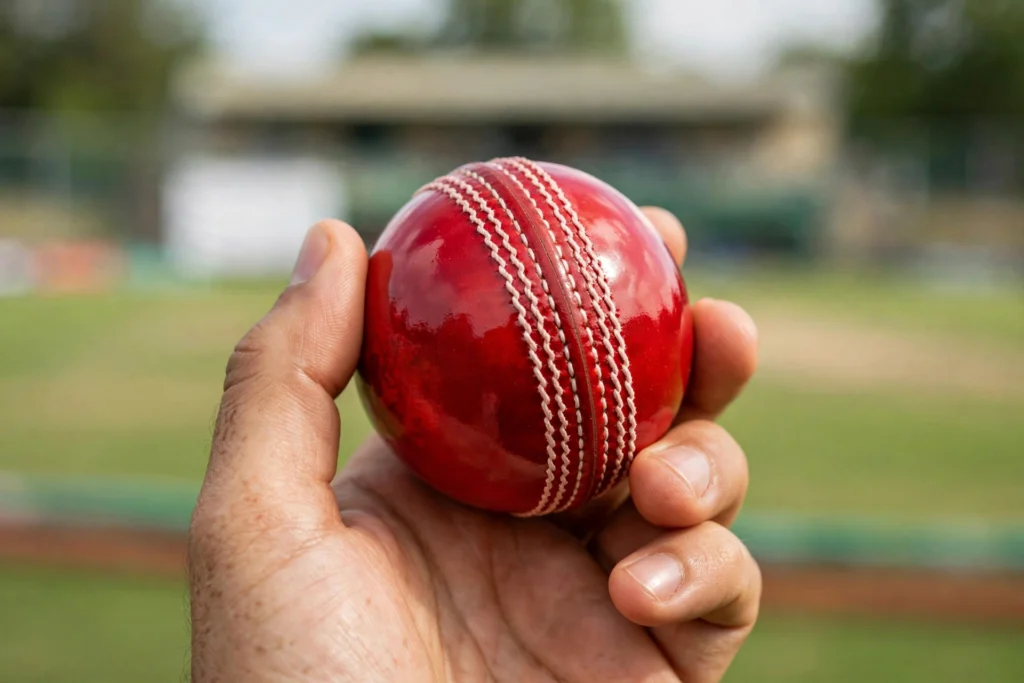

There is no sight in cricket quite like a brand-new ball glinting in the sun — hard, shiny, and ready to swing. The new ball is one of the game’s great weapons, and the rules around when it can be taken shape entire match strategies. Here is everything about cricket’s new ball rules.
When Is the New Ball Available?
The rules differ by format:
- Test cricket: The fielding side may take a new ball after 80 overs have been bowled with the old one. The captain can choose to take it immediately at 80 overs or delay it — a classic tactical decision.
- ODIs: Two new balls are used — one from each end — and they are used for the entire 50-over innings. There is no mid-innings new ball.
- T20Is: One new ball per innings, used for the full 20 overs.
The 80-over rule in Tests is the one that creates drama: a captain with a tiring attack might delay the new ball, while one smelling blood takes it the moment it is available.
Why Does the New Ball Matter?
A new ball is harder, shinier, and has a prouder seam than an old one. This means:
- More swing: The shiny lacquer helps the ball swing in the air, especially in the first 10–15 overs.
- More seam movement: The raised seam grips the pitch and deviates off it.
- More pace and bounce: The hardness gives fast bowlers extra carry through to the wicketkeeper.
This is why opening batters face the toughest examination in cricket — and why the new-ball bowlers are often a team’s most prized assets.
New Ball Strategy in Test Cricket
Taking the new ball is never automatic. Captains weigh:
- Bowler freshness: Is the strike bowler rested enough to exploit it?
- Ball condition: Sometimes the old ball is reverse-swinging beautifully — why give that up?
- Match situation: Chasing wickets before stumps? Take it. Grinding through a flat session? Maybe wait.
- Light and conditions: An evening session with a new ball under lights can be devastating.
Some of Test cricket’s most famous spells have come with the second or third new ball — fresh bowlers, hard ball, tiring batters.
Two New Balls in ODIs: Why?
Since 2011, ODIs have used two new balls, one from each end. The ICC introduced this to help bowlers — the old single ball would get soft and stop swinging by the 35th over, turning the death overs into a batting exhibition. With two balls, each ball is only 25 overs old at the innings end.
The trade-off: the ball never gets old enough to reverse swing, which is why reverse swing has nearly vanished from ODI cricket — a change many former players lament.
What Happens If the Ball Is Lost or Damaged?
If the ball is lost (hit into the stands and never found) or becomes unfit for play, the umpires replace it with a ball of similar condition — not a brand-new one (unless the lost ball was itself nearly new). The umpires keep a box of used balls of varying wear to make the closest possible match.
Deliberately damaging the ball is ball tampering — a serious offence carrying 5 penalty runs and possible suspensions.
Frequently Asked Questions
After how many overs is the new ball taken in Test cricket?
After 80 overs. The fielding captain may take it immediately or delay it.
How many new balls are used in ODIs?
Two — one from each end — used for the whole innings.
Why is the new ball so dangerous?
It is harder, shinier, and has a prouder seam, producing more swing, seam movement, pace, and bounce.
Can the batting side refuse the new ball?
No — the decision belongs entirely to the fielding captain.
What if the ball is lost?
Umpires replace it with a used ball of similar wear, not a new one.
Conclusion
The new ball is cricket’s great equaliser between bat and ball — 80 overs of patience, then 10 overs of menace. Captains who time it right win sessions; those who get it wrong watch the game drift away. Learn more in the MCC Laws of Cricket.