
Cricket is a sport filled with exciting moments, and one of the most dramatic ways a batter can lose their wicket is through a Run Out. Unlike dismissals such as bowled, caught, or LBW, a run out often happens in a split second and can completely change the outcome of a match. A direct hit from a fielder, a quick throw to the wicketkeeper, or confusion between batters can lead to a crucial run out that shifts momentum toward the fielding team.
For beginners, understanding the run-out rule is important because it combines batting, running, fielding, awareness, and teamwork. Players must communicate clearly, judge runs accurately, and react quickly under pressure. Fielders, on the other hand, need speed, accuracy, and excellent decision-making skills to create run-out opportunities.
This article explains everything about run outs in cricket, including their history, official rules, techniques, player roles, strategies, equipment, famous examples, benefits of cricket, and interesting facts. Whether you are a student, athlete, coach, blogger, or cricket fan, this guide will help you fully understand one of the most exciting aspects of the game.
What is a Run Out?
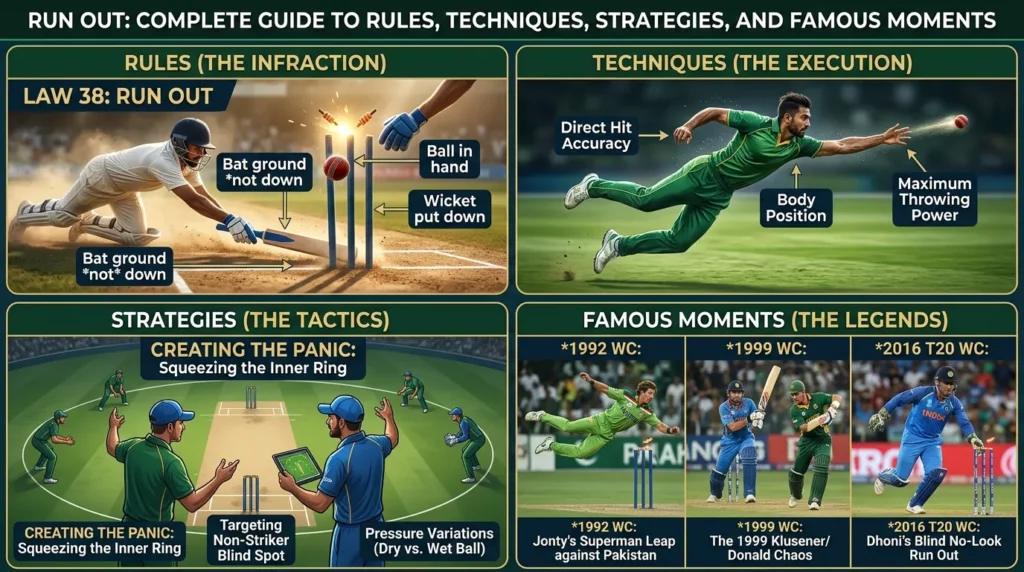
A run out occurs when a batter is outside their crease while attempting a run, and the fielding team successfully breaks the stumps with the ball before the batter reaches safety.
Basic Definition
A batter is declared run out when:
- The ball is in play.
- The batter is outside their crease.
- A fielder breaks the wicket with the ball.
- The batter has not grounded their bat or body behind the crease line.
Why Run Outs Are Important
Run outs are significant because they:
- Create pressure on batting teams.
- Reward excellent fielding.
- Can change the course of a match.
- Require teamwork and communication.
History of Run Outs in Cricket
Early Cricket Rules
Run outs have been part of cricket for centuries. Early versions of cricket included rules that protected fielding teams from careless running between wickets.
Evolution of the Rule
As cricket became more organized, run-out regulations became clearer. Modern technology now helps umpires make accurate decisions.
Introduction of Third Umpire
Today, many close run-out decisions are reviewed using:
- Slow-motion cameras
- Ultra-motion technology
- Multiple viewing angles
This ensures fair outcomes.
Official Rules of Run Out
When a Batter Can Be Run Out
A batter can be dismissed if:
- They leave their crease while attempting a run.
- They fail to reach the opposite crease before the wicket is broken.
When a Batter Cannot Be Run Out
A batter is usually not run out if:
- The ball is declared dead.
- They are safely inside their crease.
- Special rules apply, such as certain no-ball situations.
Understanding the Crease
The crease acts as a safety zone for batters.
Once any part of the bat or body is grounded behind the popping crease, the batter is considered safe.
How a Run Out Happens
Direct Hit
A fielder throws the ball directly at the stumps and hits them without assistance.
Wicketkeeper Run Out
The wicketkeeper receives the throw and removes the bails before the batter reaches safety.
Relay Throw Run Out
Multiple fielders combine to create a run-out opportunity.
Mix-Up Between Batters
Poor communication often results in both batters ending up at the same end, making one vulnerable to a run out.
Player Roles in a Run Out
Batters
Batters must:
- Call loudly
- Judge runs correctly
- Run quickly
- Stay aware of fielders
Fielders
Fielders need:
- Fast reactions
- Strong throwing ability
- Accuracy under pressure
Wicketkeeper
The wicketkeeper plays a crucial role by:
- Collecting throws
- Removing bails quickly
- Directing fielders
Captain
Captains help position fielders strategically to create run-out opportunities.
Techniques to Avoid Getting Run Out
Clear Communication
Batters should call:
- “Yes”
- “No”
- “Wait”
This reduces confusion.
Watching the Ball
Always observe where the ball is before committing to a run.
Grounding the Bat Properly
Players should extend the bat inside the crease while running.
Running Efficiently
Quick turns and strong acceleration improve running between wickets.
Fielding Strategies for Creating Run Outs
Quick Ball Collection
Fielders should attack the ball aggressively.
Accurate Throwing
Accuracy is often more important than power.
Back-Up Fielding
Supporting fielders prevent overthrows and create additional run-out chances.
Pressure Fielding
Constant pressure can force batters into mistakes.
Importance of Running Between the Wickets
Running between wickets is a major cricket skill.
Benefits include:
- Rotating strike
- Building partnerships
- Scoring extra runs
- Pressuring fielders
Good running often separates great teams from average ones.
Equipment Used During Run-Out Situations
Cricket Bat
Used by batters to reach the crease safely.
Cricket Ball
Fielders use the ball to break the stumps.
Wickets
Consist of:
- Three stumps
- Two bails
Protective Gear
Players wear:
- Helmets
- Gloves
- Pads
- Guards
Run Out in Different Cricket Formats
Test Cricket
Patience and concentration are important.
One-Day Internationals (ODIs)
Batters take calculated risks while running.
T20 Cricket
Run-out opportunities occur more frequently because players run aggressively.
Franchise Cricket
Leagues such as IPL often feature spectacular run-out moments.
Major Cricket Competitions Featuring Run Outs
ICC Cricket World Cup
The world’s biggest cricket tournament often produces memorable run-outs.
ICC T20 World Cup
Fast-paced cricket creates frequent run-out chances.
ICC Champions Trophy
Top international teams compete for glory.
Indian Premier League (IPL)
Known for athletic fielding and dramatic run-out dismissals.
Domestic Cricket Competitions
Run outs play a major role in domestic tournaments worldwide.
Benefits of Playing Cricket
Physical Benefits
Cricket helps improve:
- Fitness
- Speed
- Agility
- Coordination
Mental Benefits
Players develop:
- Focus
- Decision-making
- Confidence
- Patience
Social Benefits
Cricket teaches:
- Teamwork
- Leadership
- Communication
Common Run-Out Mistakes
Poor Calling
Unclear communication causes confusion.
Hesitation
Changing decisions midway often leads to dismissals.
Ball Watching Too Late
Players sometimes focus only on running and ignore the fielders.
Slow Turning
Inefficient turning wastes valuable time.
Famous Run-Out Moments in Cricket
World Cup Pressure Situations
Many World Cup matches have been decided by crucial run outs.
Last-Ball Run Outs
Some of cricket’s most dramatic finishes involve run-outs on the final delivery.
Athletic Fielding Displays
Modern fielders regularly produce spectacular direct hits.
Interesting Facts About Run Outs
- A direct-hit run out is one of cricket’s most difficult fielding skills.
- Modern cameras can detect run-outs within fractions of a second.
- T20 cricket produces more run-outs than longer formats.
- Great running between wickets can add 20–30 runs to a team’s total.
- Some legendary matches have been decided by a single run out.
Why Run Outs Matter in Modern Cricket
Match-Changing Moments
A run out can remove a key batter instantly.
Fielding Excellence
Run outs highlight athleticism and skill.
Tactical Advantage
Fielding teams use pressure to create opportunities.
Entertainment Value
Fans love the excitement of close run-out decisions.
Future of Run-Out Decisions
Advanced Technology
Future improvements may include:
- AI-assisted reviews
- Faster camera systems
- Improved decision accuracy
Better Fielding Standards
Players continue to develop stronger throwing and fielding skills.
Increased Athleticism
Modern cricket emphasizes fitness and agility more than ever before.
Conclusion
A run out is one of cricket’s most exciting and dramatic forms of dismissal. It combines speed, awareness, teamwork, communication, and fielding excellence into a single moment that can change an entire match. Whether it happens through a brilliant direct hit, a sharp wicketkeeper collection, or a simple misunderstanding between batters, a run out often becomes a defining moment in cricket contests.
Understanding run-out rules helps players improve their running between wickets, decision-making, and overall game awareness. At the same time, fielders learn the value of accuracy, quick reactions, and teamwork. From local club matches to World Cup finals, run outs continue to play a major role in cricket strategy and entertainment.
For beginners and experienced players alike, mastering the skills related to run outs can significantly improve performance on the field. As cricket continues to evolve, run outs will remain one of the sport’s most thrilling and influential aspects.

Jon Smith is a passionate sports writer specializing in cricket and global sporting events. With a keen eye for match analysis and player performance, he creates clear, engaging, and informative content. His work focuses on simplifying complex sports insights, making them accessible for beginners and experienced fans alike worldwide.