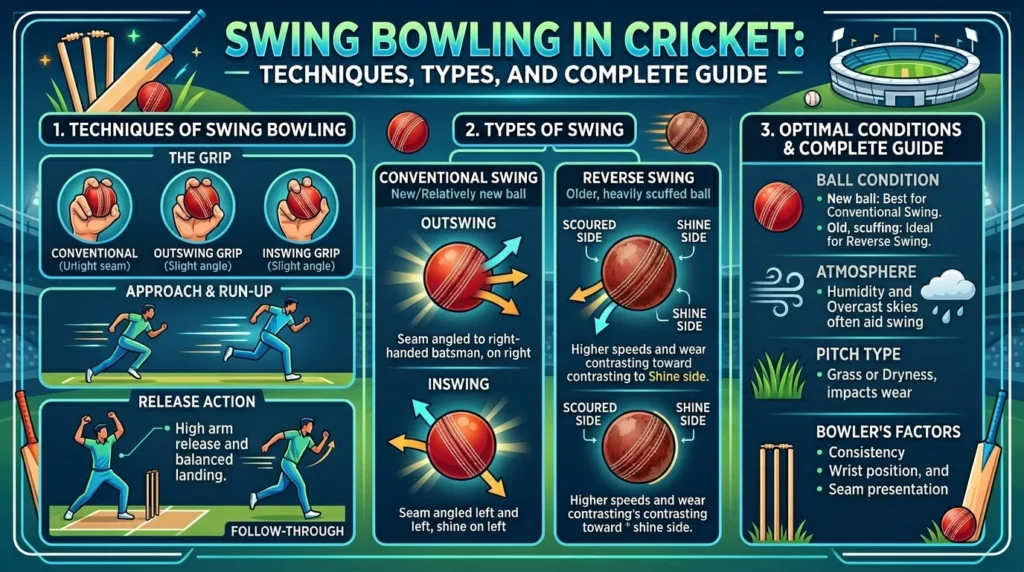

Swing bowling is one of the most skillful and intelligent forms of fast bowling in cricket. Unlike pure speed bowling, swing bowling depends on the movement of the cricket ball in the air. A bowler uses grip, seam position, wrist angle, and atmospheric conditions to make the ball move either left or right while traveling toward the batsman.
This movement makes swing bowling very difficult to predict and play. Even top-class batsmen can struggle when a ball suddenly changes direction in the air. That is why swing bowlers are considered match-winners, especially in conditions where the ball swings more, such as cloudy weather or grassy pitches.
Swing bowling is not just about talent; it is a combination of physics, practice, and control. Understanding air pressure, seam position, and ball shine plays a major role in mastering this art.
History and Origin of Swing Bowling
Early Development of Swing Bowling
Swing bowling became popular in the early days of cricket in England. The weather conditions in England, especially humidity and cloud cover, naturally helped the ball swing more.
Evolution in Modern Cricket
Over time, great bowlers started experimenting with techniques to control swing intentionally. Bowlers like Wasim Akram, Waqar Younis, and James Anderson made swing bowling famous worldwide.
Reverse Swing Introduction
In the late 20th century, Pakistani bowlers introduced a new concept called reverse swing, which changed the game completely. This made old balls swing in the opposite direction compared to normal swing.
Types of Swing Bowling
Conventional Swing
Conventional swing happens with a new ball and depends on seam position and shine.
Inswing
- Ball moves toward the batsman
- Difficult for batsmen to play
- Usually aimed at stumps or pads
Outswing
- Ball moves away from batsman
- Creates chances for edges and catches
- Very effective for dismissals behind the wicket
Reverse Swing
Reverse swing occurs when the ball becomes old and rough.
Characteristics of Reverse Swing
- Ball swings opposite to conventional swing
- Happens at high speeds (usually 85+ mph)
- More effective in dry conditions
Why It Happens
The rough side and smooth side of the ball create different air resistance, causing unexpected movement.
Techniques of Swing Bowling
Grip of the Ball
A proper grip is essential for swing bowling. The seam should be upright and stable between the fingers to control movement.
Seam Position
The seam position determines the direction of swing:
- Seam angled slightly toward slips = outswing
- Seam angled toward leg side = inswing
Wrist Position
A straight wrist helps maintain control. Any unwanted wrist movement can reduce swing.
Release Point
A consistent release point ensures accuracy and helps maintain swing movement.
Ball Maintenance
Keeping one side of the ball shiny and the other rough is very important. Fielders often polish one side to help bowlers generate swing.
Conditions That Affect Swing Bowling
Weather Conditions
- Humid air increases swing
- Cloudy conditions are ideal
- Dry air reduces swing
Pitch Conditions
- Green pitches support swing bowling
- Hard pitches help reverse swing later in the game
Ball Condition
- New ball: more conventional swing
- Old ball: more reverse swing
Role of Swing Bowlers in a Team
Opening Bowlers
Swing bowlers usually open the bowling attack because the new ball swings the most.
Middle Overs Control
They can also be used in middle overs to break partnerships by creating pressure.
Death Overs (Reverse Swing Specialists)
Experienced bowlers use reverse swing in the final overs to restrict runs and take wickets.
Important Skills for Swing Bowling
Accuracy
Swing bowling without accuracy is ineffective. Line and length must be consistent.
Patience
Swing bowlers often wait for mistakes from batsmen rather than forcing wickets.
Variation
Changing between inswing and outswing keeps the batsman guessing.
Reading Conditions
Smart bowlers quickly understand pitch and weather conditions to adjust their strategy.
Equipment Used in Swing Bowling
Cricket Ball
The ball is the most important tool. Seam quality and leather condition affect swing.
Protective Gear
- Bowling shoes with grip
- Supportive clothing for long spells
Training Tools
- Practice nets
- Bowling machines
- Speed radar guns
Famous Swing Bowlers in Cricket
Wasim Akram
Known as the “Sultan of Swing,” he mastered both conventional and reverse swing.
James Anderson
One of the greatest modern swing bowlers with incredible control and accuracy.
Waqar Younis
Famous for deadly reverse swing and fast yorkers.
Bhuvneshwar Kumar
An Indian bowler known for perfect swing in powerplay overs.
Strategies Used in Swing Bowling
Setting Up the Batsman
Bowlers often use outswing deliveries to lure batsmen into playing risky shots.
Targeting Weaknesses
Swing bowlers study batsmen’s weaknesses, such as playing away from the body.
Changing Angles
Different angles of delivery create confusion and increase chances of wickets.
Benefits of Swing Bowling
Physical Benefits
- Improves arm strength
- Enhances stamina
- Builds bowling accuracy
Mental Benefits
- Develops patience
- Improves decision-making
- Increases game awareness
Team Benefits
- Helps take early wickets
- Builds pressure on opposition
- Controls run rate
Common Mistakes in Swing Bowling
Incorrect Grip
Poor grip reduces swing effectiveness.
Overusing Speed
Swing is more about skill than speed.
Ignoring Conditions
Failing to adapt to weather and pitch reduces success.
Poor Ball Maintenance
Not maintaining shine reduces swing potential.
Interesting Facts About Swing Bowling
- Swing bowling works better with a shiny ball surface.
- Even a 2–3 km/h change in speed can affect swing direction.
- Reverse swing was once considered a “secret weapon” in cricket.
- Some balls can swing up to 20–30 cm in the air.
- Artificial stadium lights can slightly influence swing movement.
Future of Swing Bowling in Cricket
Swing bowling continues to be a key part of modern cricket. Even with T20 cricket becoming faster, swing bowlers remain valuable due to their ability to take early wickets and control the game.
Advanced technology like ball-tracking systems and biomechanics analysis is helping bowlers improve their swing techniques. However, natural skill, practice, and understanding of conditions will always remain the core of swing bowling.
Conclusion
Swing bowling is a unique and powerful skill in cricket that combines science, skill, and strategy. From conventional swing with a new ball to reverse swing with an old ball, it plays a major role in deciding match outcomes.
Great swing bowlers are not just fast bowlers—they are thinkers who understand the game deeply. Whether you are a beginner or an aspiring cricketer, mastering swing bowling requires patience, practice, and observation of conditions.
In modern cricket, swing bowling remains one of the most dangerous weapons for any team and continues to shape the outcome of matches worldwide.