Cricket is a game of skill, strategy, and teamwork, where every fielding position has a specific purpose. Among all the positions on a cricket field, Silly Point is one of the most fascinating and dangerous. It is known for placing a fielder extremely close to the batter, requiring exceptional courage, quick reflexes, and concentration.
Many cricket fans, especially beginners, often wonder, “What is Silly Point in Cricket?” Why would a player stand just a few feet away from a batter hitting a hard cricket ball? The answer lies in the tactical importance of this fielding position. A well-placed silly point fielder can create pressure on the batter, catch defensive shots, and help the bowling side take crucial wickets.
In this complete guide, you’ll learn everything about the Silly Point position, including its meaning, history, purpose, rules, techniques, player responsibilities, famous catches, advantages, challenges, and interesting facts. Whether you’re a beginner, student, coach, or passionate cricket fan, this guide will help you understand why the silly point remains one of cricket’s most exciting fielding positions.
What Is Silly Point in Cricket?
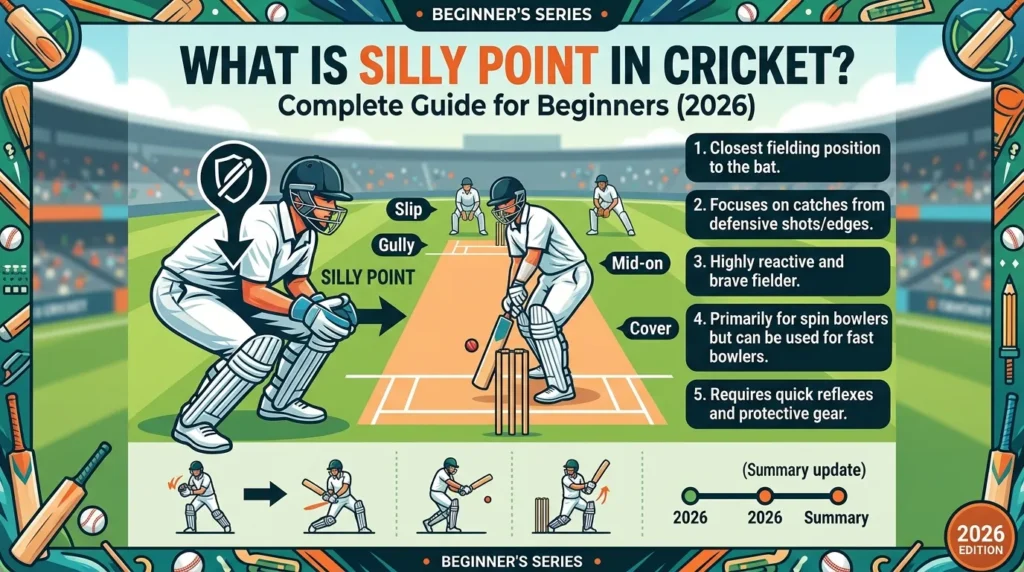
A Silly Point is a close-in fielding position located on the off side of the batter, only about 2–4 meters (6–13 feet) from the batting crease. The fielder stands almost directly in front of the batter’s off side, making it one of the closest positions in cricket.
The primary objective of the silly point fielder is to catch balls that pop up from defensive shots, bat-pad deflections, or mistimed strokes, particularly against spin bowling.
Simple Explanation
Think of the silly point as a “close catcher.” Instead of standing far away like boundary fielders, this player stays extremely close to the batter to take quick reaction catches.
Why Is It Called “Silly Point”?
The term “silly” does not mean foolish. Historically, the position earned this name because standing so close to a batter facing a hard cricket ball was considered extremely risky. The word “point” refers to its location on the off side of the field.
History and Origin of Silly Point
The silly point position has existed for well over a century and became especially important with the rise of spin bowling. Before modern protective equipment, fielders at silly point relied mainly on courage and fast reflexes.
As batting techniques evolved, captains realized that placing a fielder close to the batter increased the chances of catching bat-pad deflections. Today, helmets, shin guards, chest protectors, and other safety equipment make the position much safer than it was in the past.
Where Is Silly Point Positioned?
Standard Position
The silly point fielder stands:
- On the off side of the batter
- Very close to the batting crease
- Around 2–4 meters from the batter
- Slightly in front of square
The exact position may change depending on:
- Right-handed or left-handed batter
- Type of bowler
- Pitch conditions
- Batter’s playing style
Why Is Silly Point Used?
Captains mainly use the silly point position against spin bowlers because batters often play defensive shots that can produce short catches.
Main Objectives
- Catch bat-pad deflections
- Create pressure on the batter
- Force batting mistakes
- Support spin bowlers
- Prevent easy singles
How Does Silly Point Work?
When a spinner delivers the ball:
- The batter plays a defensive stroke.
- The ball may strike the bat and pad simultaneously.
- The ball pops into the air.
- The silly point fielder reacts instantly.
- A catch is completed before the ball touches the ground.
Reaction time is often less than half a second.
Skills Required for a Good Silly Point Fielder
Quick Reflexes
The ball reaches the fielder almost instantly, requiring lightning-fast reactions.
Courage
Standing only a few feet from the batter demands confidence and bravery.
Excellent Hand-Eye Coordination
The fielder must judge the ball accurately and react immediately.
Sharp Concentration
Every delivery requires complete focus because a catch can come unexpectedly.
Balance and Agility
The player must remain balanced and ready to dive in any direction.
Protective Equipment Used
Because of the high risk, silly point fielders wear protective gear.
Essential Equipment
- Cricket helmet
- Leg guards
- Chest protector
- Arm guard
- Abdominal guard
- Cricket shoes
- Protective gloves (optional during practice)
Safety equipment has significantly reduced injuries at this position.
When Is Silly Point Most Effective?
The silly point position is especially useful under certain conditions.
Against Spin Bowlers
Spin creates edges and bat-pad chances.
On Turning Pitches
Dry pitches produce more spin and bounce, increasing catching opportunities.
New Batter at the Crease
A newly arrived batter is more likely to make mistakes.
Defensive Batting
Batters playing cautiously often create close-catching opportunities.
Role of the Captain
The captain decides whether to use a silly point based on:
- Bowling style
- Pitch conditions
- Match situation
- Batter’s strengths and weaknesses
- Need for attacking field placements
An aggressive captain often uses silly point to increase wicket-taking chances.
Difference Between Silly Point and Short Leg
Although both are close fielding positions, they are different.
| Feature | Silly Point | Short Leg |
|---|---|---|
| Side of Batter | Off Side | Leg Side |
| Primary Purpose | Catch off-side bat-pad chances | Catch leg-side deflections |
| Best Against | Spin bowlers | Spin and short-pitched bowling |
| Position | In front of square | Behind square on leg side |
Common Bowling Strategies
Spin bowlers frequently work with silly point fielders.
Off-Spin
The spinner invites defensive shots that may produce catches.
Left-Arm Orthodox Spin
Bat-pad catches are common against right-handed batters.
Leg Spin
Sharp turn and bounce create additional close-catching chances.
Advantages of Using Silly Point
Creates Pressure
Batters feel uncomfortable with a close fielder nearby.
Improves Wicket Chances
Close catches become more likely.
Supports Spin Bowling
Spin bowlers gain extra confidence.
Prevents Easy Singles
The batter hesitates to push the ball into nearby gaps.
Encourages Mistakes
Mental pressure often forces poor shot selection.
Challenges of Playing Silly Point
Despite its benefits, the position has challenges.
- High injury risk
- Extremely fast reaction time required
- Physically demanding
- Mentally exhausting
- Constant concentration needed
Only highly skilled fielders usually occupy this position.
Famous Players Who Excelled at Close Fielding
Several legendary cricketers became famous for their close-catching abilities.
- Eknath Solkar
- Rahul Dravid
- Alastair Cook
- Steve Smith
- Faf du Plessis
- Joe Root
These players consistently took difficult catches around the bat.
Major Cricket Competitions Where Silly Point Is Common
You will frequently see the silly point position in:
- ICC Cricket World Cup
- ICC World Test Championship
- ICC Champions Trophy
- Indian Premier League (IPL)
- The Ashes
- Ranji Trophy
- County Championship
- Big Bash League
The position is used far more often in Test cricket than in T20 matches.
Benefits of Learning Close Fielding
Practicing silly point fielding improves several cricket skills.
Physical Benefits
- Faster reflexes
- Better agility
- Improved coordination
- Enhanced fitness
Mental Benefits
- Improved concentration
- Greater confidence
- Better anticipation
- Stronger decision-making
These qualities also improve overall fielding performance.
Interesting Facts About Silly Point
- It is one of cricket’s closest fielding positions.
- Helmets became common after player safety improved.
- The position is mainly used against spin bowling.
- Reaction time is often under one second.
- Many memorable Test cricket catches have been taken at silly point.
- Some captains avoid using it in limited-overs cricket because batters attack more aggressively.
Tips for Beginners
If you want to practice silly point safely:
- Always wear protective equipment.
- Start with tennis balls during training.
- Practice reaction drills.
- Keep your eyes on the ball.
- Stay balanced and relaxed.
- Learn proper catching techniques.
- Build confidence gradually.
Frequently Asked Questions
Is Silly Point Dangerous?
Yes. It is one of the riskiest positions in cricket because the fielder stands very close to the batter. Proper protective equipment greatly reduces the risk.
Why Is It Called Silly Point?
The name originated because standing so close to a batter was once considered “silly” due to the danger involved.
Is Silly Point Used in T20 Cricket?
Yes, but less frequently than in Test matches because batters generally play more aggressive shots in T20 cricket.
Which Bowlers Benefit Most?
Spin bowlers, especially off-spinners and left-arm orthodox spinners, benefit the most from having a silly point fielder.
Can Fast Bowlers Use Silly Point?
Rarely. The position is primarily designed to support spin bowling.
Conclusion
The Silly Point is one of the most specialized and courageous fielding positions in cricket. Positioned only a few feet from the batter, the fielder plays a vital role in supporting spin bowlers by taking quick reaction catches and creating constant pressure. Although the position requires exceptional bravery, concentration, and reflexes, it can change the outcome of a match by producing crucial wickets.
Whether you’re watching international cricket, playing club matches, or learning the game for the first time, understanding what Silly Point is in cricket helps you appreciate the tactical depth and excitement of the sport. As cricket continues to evolve, the silly point will remain one of the game’s most iconic and respected fielding positions.

Green Benn is a dedicated sports writer specializing in cricket, including IPL and international formats. Known for clear, engaging, and informative content, Green simplifies complex match analysis and player statistics for all readers. Passionate about sports storytelling, Green delivers reliable, SEO-friendly articles that keep fans updated and informed