
Cricket is a physically demanding sport that requires players to bat, bowl, field, and run for long periods. During a match, players can suffer injuries from fast deliveries, diving stops, muscle cramps, collisions, or extreme weather conditions. Sometimes, an injured batter cannot continue playing safely. In such situations, cricket has a special rule known as Retired Hurt.
Many cricket fans, beginners, students, and players ask, “What is Retired Hurt?” This rule allows a batter to leave the field because of illness, injury, or another valid physical reason without immediately losing their wicket. If the player recovers and the match situation allows, they may return later to continue their innings under the Laws of Cricket.
Understanding the Retired Hurt rule helps players appreciate how cricket balances competition with player safety. It also explains why scorecards sometimes show a batter as “Retired Hurt” instead of “Out.” This guide covers the history of the rule, how it works, player roles, important strategies, equipment used in cricket, major tournaments, benefits, interesting facts, and frequently asked questions in simple and easy-to-understand language.
History of the Retired Hurt Rule
The Retired Hurt rule has been part of cricket for many years. As the game developed, the Laws of Cricket recognized that players could suffer genuine injuries during a match.
Earlier versions of the laws allowed injured batters to retire temporarily without losing their wicket. The purpose was to protect player welfare while ensuring fairness for both teams.
Today, the Marylebone Cricket Club (MCC) includes Retired Hurt in the official Laws of Cricket, and it is followed in international and domestic matches around the world.
What is Retired Hurt?
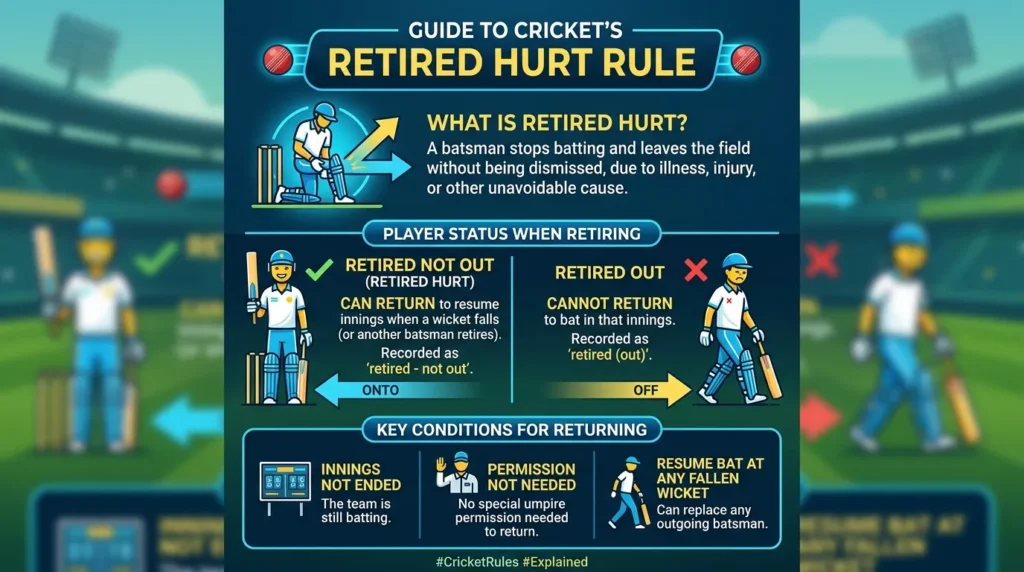
Retired Hurt is a cricket rule that allows a batter to leave the field during an innings because of injury, illness, or another acceptable physical reason.
The batter is not automatically out. If they recover and their team still has wickets remaining, they may return later and continue batting.
Simple Example
A batter is struck on the hand by a fast ball and cannot continue due to pain. The batter leaves the field as Retired Hurt. After receiving medical treatment, they recover and return later in the innings to continue batting.
How Does the Retired Hurt Rule Work?
The process is simple and follows the Laws of Cricket.
Injury or Illness Occurs
The batter suffers an injury or becomes unwell during the innings.
Batter Leaves the Field
The batter retires and receives medical attention.
Next Batter Arrives
Another batter comes to the crease and continues the innings.
Medical Assessment
The team’s medical staff evaluates whether the injured player can safely return.
Return to Bat
If the player recovers and conditions allow, they may resume their innings at the fall of a wicket or retirement of another batter.
Rules of Retired Hurt
The Batter Is Not Out
A Retired Hurt player keeps their wicket unless dismissed later after returning.
Return Is Allowed
The player may return if physically fit and the innings has not ended.
Medical Reason Required
The retirement should be due to injury, illness, or another acceptable physical reason.
Umpire Awareness
The umpires record the retirement and manage the continuation of play.
Scorecard Entry
The player’s score is shown as Retired Hurt if they do not return before the innings ends.
Difference Between Retired Hurt and Retired Out
Many people confuse these two cricket terms.
| Feature | Retired Hurt | Retired Out |
|---|---|---|
| Reason | Injury or illness | Tactical decision |
| Considered Out | No | Yes |
| Can Return | Yes, if fit | No |
| Medical Reason | Required | Not required |
| Recorded As | Retired Hurt | Retired Out |
Retired Hurt protects injured players, while Retired Out is usually a strategic decision made by the batting team.
Why is the Retired Hurt Rule Important?
Protects Player Safety
Players should not continue when seriously injured.
Supports Fair Play
Teams are not forced to risk a player’s health.
Encourages Proper Medical Treatment
Medical staff can examine players without unnecessary pressure.
Maintains Match Integrity
The game continues while allowing injured players the opportunity to return.
Player Roles During a Retired Hurt Situation
Batter
Reports the injury and decides whether continuing is safe after medical advice.
Captain
Works with medical staff and team management regarding the player’s condition.
Coach
Supports the player’s recovery and adjusts team strategy.
Medical Staff
Examine, treat, and monitor the injured player.
Umpires
Record the retirement and ensure the Laws of Cricket are followed correctly.
Common Injuries That May Lead to Retired Hurt
Hand Injuries
Fast deliveries can strike fingers or hands while batting.
Head Injuries
A batter may suffer a blow to the helmet or head.
Muscle Cramps
Long innings in hot weather may cause severe cramping.
Hamstring Strain
Quick running between wickets can result in muscle injuries.
Back Pain
Long batting sessions may place stress on the lower back.
Heat Exhaustion
Extreme temperatures can affect player health.
Equipment Used to Reduce Batting Injuries
Modern cricket equipment helps reduce injury risks.
Cricket Helmet
Protects the head from fast bowling.
Batting Gloves
Reduce hand injuries.
Batting Pads
Protect the legs against impact.
Thigh Guard
Protects the upper leg.
Arm Guard
Protects the forearm from short-pitched deliveries.
Chest Guard
Provides upper body protection.
Abdominal Guard
Protects sensitive areas during batting.
Although protective equipment lowers injury risk, it cannot eliminate all injuries.
Major Cricket Tournaments Where Retired Hurt Applies
The Retired Hurt rule is used across all major levels of cricket.
ICC Cricket World Cup
Batters may retire hurt if injured during the tournament.
ICC World Test Championship
Long matches increase the importance of player fitness.
ICC T20 World Cup
High-intensity cricket can sometimes result in injuries requiring retirement.
ICC Champions Trophy
The rule protects players during elite international competition.
Indian Premier League (IPL)
Retired Hurt occasionally occurs due to fast bowling or muscle injuries.
Domestic Cricket
The rule applies in most professional domestic competitions.
Strategies After a Batter Retires Hurt
Build Partnerships
The incoming batter should quickly settle into the innings.
Protect Key Players
Captains may adjust the batting approach while the injured player receives treatment.
Monitor Recovery
Medical staff determine whether returning is safe.
Prepare Batting Order
Teams remain flexible depending on the injured player’s availability.
Benefits of Cricket
Physical Benefits
- Improves fitness
- Builds stamina
- Develops coordination
- Strengthens muscles
- Enhances agility
Mental Benefits
- Improves concentration
- Builds confidence
- Develops teamwork
- Enhances decision-making
- Encourages discipline
Interesting Facts About Retired Hurt
- A Retired Hurt batter is not automatically out.
- The player may return later if medically fit.
- The rule has existed in cricket for many decades.
- The scorecard records the batter as “Retired Hurt” if they do not return.
- Head injuries are taken especially seriously in modern cricket.
- Medical staff play an important role in deciding whether a player should continue.
- Retired Hurt differs completely from Retired Out.
Frequently Asked Questions
What is Retired Hurt in cricket?
Retired Hurt allows a batter to leave the field because of injury or illness without immediately losing their wicket.
Is a Retired Hurt batter out?
No. The batter is not considered out and may return if fit.
Can a Retired Hurt player bat again?
Yes. The player may resume their innings if they recover before the innings ends and wickets remain.
What happens if the batter cannot return?
The innings continues with other batters. The scorecard records the player as Retired Hurt.
Who decides if the player returns?
The player, captain, coach, and medical staff make the decision, while the umpires apply the Laws of Cricket.
Is Retired Hurt used in all formats?
Yes. The rule applies in Test, One Day International (ODI), T20, and most domestic cricket competitions.
What is the difference between Retired Hurt and Retired Out?
Retired Hurt occurs because of injury or illness and does not count as a dismissal. Retired Out is a tactical retirement and is treated as a dismissal.
Conclusion
Understanding what is Retired Hurt helps players and fans appreciate cricket’s strong focus on player safety. The rule allows an injured or ill batter to leave the field without immediately losing their wicket, giving them the opportunity to receive treatment and return later if medically fit. It ensures that health always comes before competition while maintaining fairness under the Laws of Cricket. Combined with modern protective equipment, qualified medical staff, and improved injury management, the Retired Hurt rule has become an important part of today’s game. Whether watching international cricket or playing at the local level, knowing this rule provides a better understanding of how cricket protects its players while preserving the spirit of the sport.