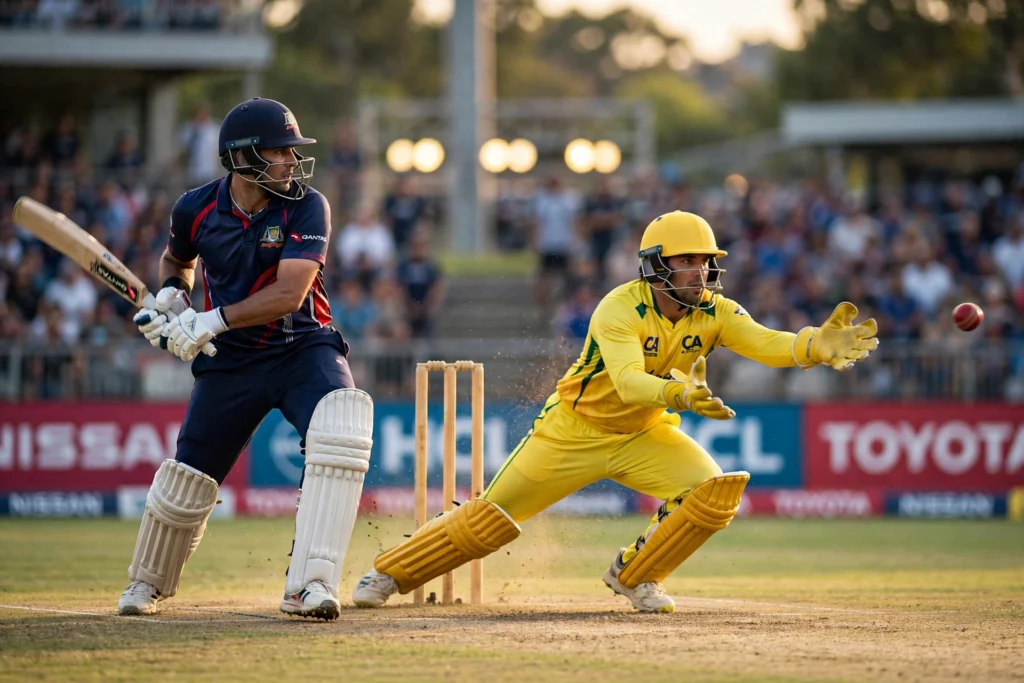

Every cricket fan has watched the ball race past the wicketkeeper to the boundary and wondered: is that a bye or a leg bye? These two extras look almost identical to the untrained eye, but they come from very different situations — and the difference matters for scoring, records, and even match results.
What Is a Bye in Cricket?
A bye is scored when the ball passes the batter without touching the bat or the batter’s body, and the batters run. The classic example: the bowler delivers, the batter misses completely, the wicketkeeper fumbles, and the batters sprint through for runs.
Byes are credited to the team total, not to the batter’s personal score. On the scorecard they appear under “Extras” as “b” — for example, “Extras: 12 (b 4, lb 2, w 6)”. If the ball races to the boundary without being touched, four byes are awarded.
What Is a Leg Bye in Cricket?
A leg bye is scored when the ball hits the batter’s body (or clothing/equipment) without touching the bat, and the batters run. The name is historical — most often the ball strikes the pads — but a leg bye can come off any part of the body: thigh, shoulder, glove, even the helmet.
Like byes, leg byes go to the team total as extras, marked “lb” on the scorecard. But there is one crucial condition that byes do not have.
The Key Difference: Attempt to Play
This is the heart of the matter. For a leg bye to be awarded, the batter must have either:
- Attempted to play the ball with the bat, or
- Tried to avoid being hit by the ball.
If the batter simply stands there and lets the ball hit their pads with no attempt to play or dodge, the umpire will not award leg byes. This stops batters from deliberately padding away dangerous deliveries to steal runs.
Byes have no such requirement — if the ball misses everything and the keeper misses it too, byes are byes, whatever the batter was doing.
How Byes and Leg Byes Are Scored
- Both count as extras — added to the team total, not the batter’s score.
- Both count as runs conceded by the bowler’s team, but they are not charged against the bowler’s figures.
- Both are added to the over’s total and can change the outcome of tight matches.
- On the scorecard: byes = “b”, leg byes = “lb”.
- If the ball reaches the boundary: 4 byes or 4 leg byes.
Can a Batter Be Out on a Bye or Leg Bye?
The batter cannot be out bowled, LBW, or caught on a ball that yields byes — the ball did not touch the bat. However, the batters can be run out while attempting byes or leg byes, just like on any other ball. A sharp piece of fielding can turn a stolen single into a wicket.
On a leg bye, the striker also cannot be out LBW — if the ball hit the pads but the umpire judged it was missing the stumps, play continues and leg byes may be taken.
Bye vs Leg Bye: Quick Comparison
| Bye | Leg Bye | |
|---|---|---|
| Ball touches | Nothing — misses bat and body | Batter’s body, clothing or equipment |
| Attempt to play needed? | No | Yes — must attempt shot or evade |
| Credited to | Team extras | Team extras |
| Batter’s score? | No | No |
| Scorecard symbol | b | lb |
Frequently Asked Questions
What is the difference between a bye and a leg bye?
A bye is when the ball misses both bat and body entirely. A leg bye is when the ball hits the batter’s body (without touching the bat). Leg byes also require the batter to have attempted a shot or tried to avoid the ball.
Do byes count in the batsman’s score?
No. Both byes and leg byes are extras — they go to the team total only.
Can you get 4 leg byes?
Yes. If the ball hits the batter’s body (with a genuine attempt to play or evade) and runs to the boundary, 4 leg byes are awarded.
Why are they called leg byes if the ball can hit anywhere?
The name is historical — the ball most commonly strikes the pads (legs). The law covers the whole body and equipment.
Can a batter be run out taking byes?
Yes. Batters attempting byes or leg byes can be run out exactly as on any normal delivery.
Conclusion
Bye and leg bye: same result on the scoreboard (extras for the team), different stories behind them. Remember the golden rule — leg byes need an honest attempt, byes need nothing at all. Next time the ball sneaks past everyone, you will know exactly what to call it. Learn more in the MCC Laws of Cricket. For more cricket rules explained, see our guides to the dead ball rule and the timed out dismissal.