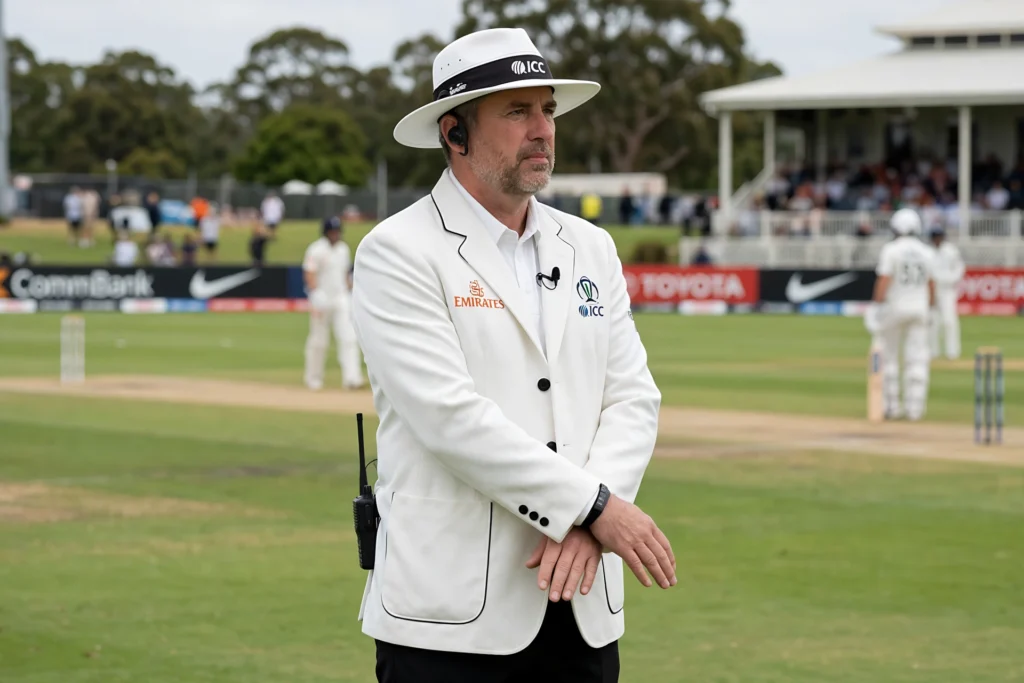

Every ball bowled in cricket is either “live” or “dead.” When the ball is live, runs can be scored and wickets can fall. When the umpire calls it dead, everything freezes — no runs count, no batter can be dismissed, and the ball must be bowled again. The dead ball rule is one of cricket’s most important yet least understood laws.
What Is a Dead Ball in Cricket?
A dead ball is a ball that is no longer in play. Under Law 20 of the MCC Laws of Cricket, the ball becomes dead at the moment it is finally settled in the hands of the wicketkeeper or a fielder, when a boundary is scored, when a batter is dismissed, or when the umpire calls “dead ball.”
Once the ball is dead, nothing that happens afterwards counts. If a fielder throws the ball at the stumps after the ball is dead, it means nothing. If the batters keep running, the runs do not count.
When Does the Ball Become Dead Automatically?
In most cases, no signal is needed — the ball simply becomes dead on its own:
- The ball settles in the wicketkeeper’s or bowler’s hands and the batters have finished running.
- A boundary is scored — the ball is dead the instant it crosses the rope.
- A batter is dismissed — the ball is dead as soon as the dismissal is complete.
- The ball is trapped between the bat and pad or lodges in a batter’s clothing.
In all these situations, play simply moves on to the next delivery.
When Does the Umpire Call Dead Ball?
Sometimes the umpire must intervene and actively call dead ball. This happens when:
Serious injury. If a player is seriously hurt — for example, a batter struck on the head or a fielder colliding with the boundary — the umpire calls dead ball immediately.
Equipment interference. If the ball lodges in the umpire’s clothing, a fielder’s helmet, or the sightscreen, the umpire calls it dead.
Distraction or interruption. If a person, animal, or object comes onto the field during play, or if the striker is distracted by noise or movement while the bowler is running in, the umpire can call dead ball.
Pitch damage. If the pitch is damaged during play in a way that makes continuing unfair, the umpire intervenes.
The umpire signals dead ball by crossing and re-crossing the wrists below the waist.
What Happens After a Dead Ball Is Called?
Three things follow automatically:
- The ball does not count. If the umpire calls dead ball during a delivery, that ball is not counted as one of the over. It must be bowled again.
- No runs count. Any runs the batters attempted do not go on the scoreboard.
- No dismissal counts. A batter cannot be given out off a dead ball — with one rare exception involving penalties, the wicket simply does not stand.
This is why you sometimes see the same ball bowled twice in an over’s count — the first attempt was declared dead.
Dead Ball vs Wide Ball and No Ball
Beginners often confuse these. A wide ball or no-ball is still a live ball in most respects — runs can be scored and the batter can be stumped or run out (though not out in most other ways). A dead ball is completely removed from play. Think of it this way: wides and no-balls are penalties within live play; a dead ball is play being switched off entirely.
Dead Ball in the Age of Technology
Modern cricket has added new dead-ball situations the lawmakers never imagined. Balls striking the spidercam or the wire above the field are immediately called dead. Roofed stadiums have their own playing conditions for balls hitting the roof. And with stump microphones and broadcast equipment everywhere, umpires are quicker than ever to kill play when something unusual interferes.
Famous Dead Ball Moments
Dead ball calls have produced memorable passages of play. Balls lodging in helmets placed behind the keeper, streakers running onto the field, and batters pulling away late because of sightscreen movement have all forced umpires to kill play. In one well-remembered IPL passage, a ball struck straight back became lodged in the bowler’s follow-through equipment, and the umpire’s crossed wrists told everyone the delivery would not count.
Frequently Asked Questions
What is a dead ball in cricket?
A dead ball is a ball that is no longer in play. No runs can be scored and no batter can be dismissed while the ball is dead. It becomes dead automatically in normal play, or when the umpire calls and signals it.
Does a dead ball count in the over?
No. If the umpire calls dead ball during a delivery, that ball does not count as one of the over and must be bowled again.
Can a batsman be out on a dead ball?
No. Once the ball is dead, no dismissal is possible. Any appeal made after the ball is dead is invalid.
What is the umpire’s signal for dead ball?
The umpire crosses and re-crosses the wrists below the waist to signal dead ball.
What happens to runs scored before the umpire calls dead ball?
They do not count. Once dead ball is called for that delivery, everything from that ball is wiped — runs and wickets alike.
Conclusion
The dead ball rule is cricket’s reset button. It protects players, keeps the game fair when the unexpected happens, and ensures that only genuine cricket — a fairly delivered ball, fairly played — counts toward the result. The next time you see an umpire cross their wrists, you will know exactly why play has stopped.
Source: MCC Laws of Cricket