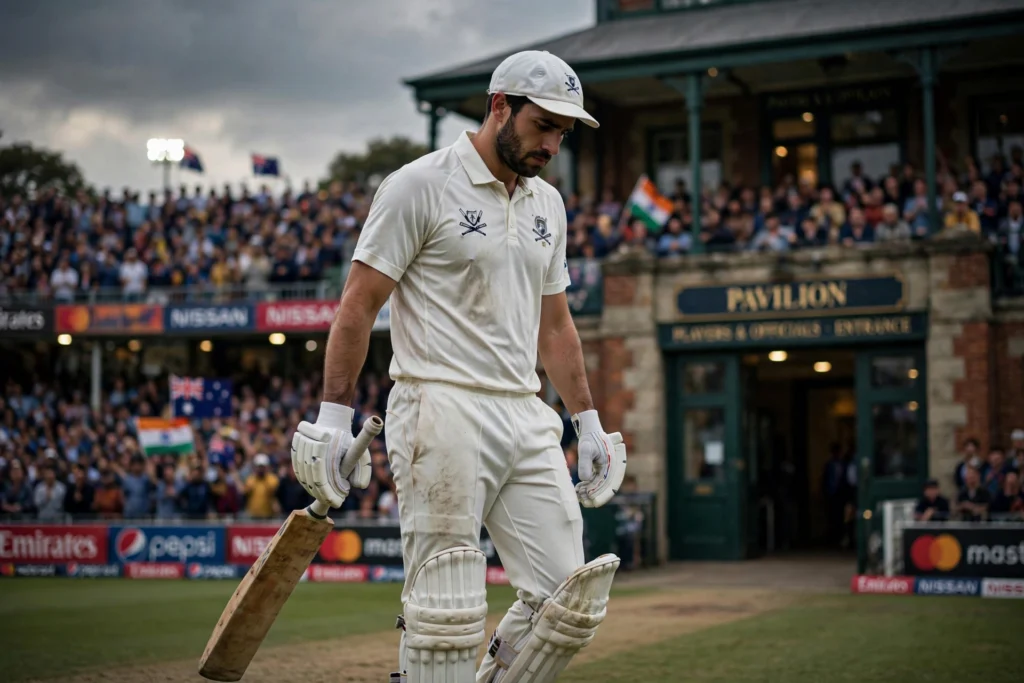
Cricket has eleven ways to dismiss a batter, and the rarest of them all went unused in international cricket for over 146 years. Then, at the 2023 World Cup, Angelo Mathews walked out to bat, his helmet strap broke, and within minutes he was walking back — given out timed out. It was a moment that split the cricket world and put one of the game’s most obscure laws under the spotlight.
What Is Timed Out in Cricket?
Timed out is a method of dismissal under Law 40 of the MCC Laws of Cricket. It applies when an incoming batter takes too long to be ready to face the next ball after a wicket has fallen or a batter has retired.
The law states that the new batter must be ready to receive the ball — or for their partner to be ready at the non-striker’s end — within 2 minutes of the previous dismissal in Test cricket. In limited-overs internationals, the ICC playing conditions set the same 2-minute requirement.
If the batter is not ready in time and the fielding side appeals, the umpire gives the batter out — timed out. The new batter does not even need to face a ball. They walk out, and they walk straight back.
The 2-Minute Rule Explained
The clock starts the moment the previous wicket falls. Within those two minutes, the incoming batter must:
- Walk from the dressing room to the pitch.
- Take guard and be ready to face, or be ready at the non-striker’s end.
- Have all equipment — pads, gloves, helmet — in order.
Two minutes sounds generous until you consider the distance from some dressing rooms to the middle, plus the time needed to pad up. Batters usually begin preparing the moment a wicket looks likely, which is why timed out was never enforced at international level for so long.
Before the 2017 update to the Laws, the limit was 3 minutes. The MCC reduced it to 2 minutes to keep the game moving.
The Angelo Mathews Incident: What Really Happened
On 6 November 2023, during the World Cup match between Sri Lanka and Bangladesh in Delhi, Angelo Mathews came out to bat after a wicket fell. As he was preparing to take guard, the strap of his helmet broke. He called for a replacement helmet, but before it arrived, Bangladesh captain Shakib Al Hasan appealed for timed out.
The umpires checked the timing and found that more than two minutes had elapsed. Mathews was given out — the first timed-out dismissal in the history of international cricket, across more than a century and a half of the game.
Mathews was furious, arguing that the delay was caused by faulty equipment, not by him wasting time. Bangladesh refused to withdraw the appeal. The incident sparked a fierce debate: was it within the laws but against the spirit of cricket? The ICC later confirmed the decision was correct under the playing conditions.
Do You Need an Appeal?
Yes. Like most dismissals, timed out requires the fielding side to appeal. The umpire will not give it on their own. This is why the dismissal went unheard of for so long — teams simply never appealed, considering it unsporting.
Shakib’s decision to appeal was entirely within the laws, but it raised the eternal cricket question: the difference between the laws of the game and the so-called “spirit of cricket.”
How Batters Avoid Being Timed Out
Professional teams now treat the two-minute limit as a genuine match consideration. The next batter pads up the moment a wicket looks likely, stands near the boundary rope ready to sprint, and keeps a spare helmet and gloves within reach. Dressing rooms at major grounds are built as close to the field as possible, and batters rehearse the walk so they can reach the middle in under a minute.
After the Mathews incident, several teams quietly added “equipment check before walking out” to their routines — a small habit that could prevent a historic embarrassment.
Timed Out vs Other Rare Dismissals
Timed out belongs to cricket’s family of almost-never-seen dismissals, alongside obstructing the field and hit the ball twice. Unlike those, though, timed out is entirely about the clock — no skill or intent is involved. A batter can be dismissed timed out without the bowler delivering a single ball to them.
Frequently Asked Questions
What is timed out in cricket?
Timed out is a dismissal under Law 40. If the incoming batter is not ready to face within 2 minutes of the previous wicket falling, the fielding side can appeal and the batter is given out.
How much time does a batter get after a wicket falls?
Two minutes. The limit was reduced from 3 minutes to 2 minutes in the 2017 update to the MCC Laws.
Has anyone been timed out in international cricket?
Yes. Angelo Mathews of Sri Lanka was given out timed out against Bangladesh at the 2023 World Cup in Delhi — the first such dismissal in international cricket history.
Why was Mathews timed out if his helmet broke?
The umpires ruled that more than two minutes had passed since the previous wicket, regardless of the equipment problem. The law does not make an exception for faulty gear.
Can the fielding captain withdraw a timed out appeal?
Yes, a captain may withdraw the appeal, as with any dismissal. Shakib Al Hasan chose not to withdraw it against Mathews.
Conclusion
Timed out spent 146 years as a law nobody used — until one broken helmet strap in Delhi made it world famous. It remains a dismissal that tests the boundary between playing by the rules and playing in the right spirit. And every batter walking out now knows: the clock is always ticking.
Source: MCC Laws of Cricket

Green Benn is a dedicated sports writer specializing in cricket, including IPL and international formats. Known for clear, engaging, and informative content, Green simplifies complex match analysis and player statistics for all readers. Passionate about sports storytelling, Green delivers reliable, SEO-friendly articles that keep fans updated and informed

Pingback: Bye vs Leg Bye in Cricket: Difference & Rules