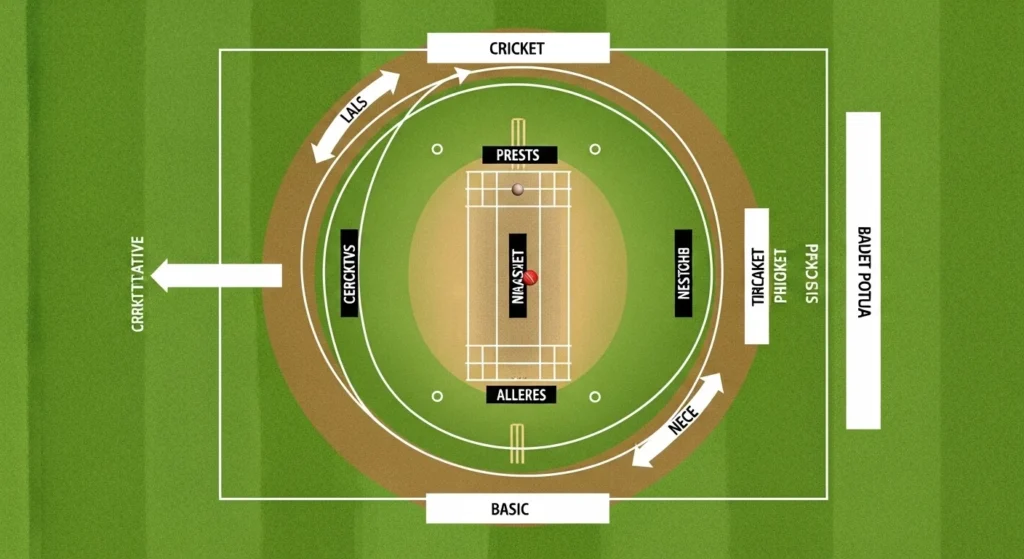

Cricket is a game of skill, strategy, and precision, and at the center of it all lies the cricket pitch. Imagine watching a match where the ball behaves unpredictably, bouncing too high or staying low—this is often due to the condition and areas of the pitch. Whether it’s a thrilling Test match or a fast-paced T20 game, understanding cricket pitch areas helps players and fans better appreciate the game.
The pitch is not just a flat strip; it is divided into several important zones that influence batting, bowling, and fielding strategies. From the crease lines to the danger area, every section has a specific purpose defined by the rules of the Marylebone Cricket Club and followed globally under the International Cricket Council.
In this detailed guide, you will learn about all the cricket pitch areas, their markings, roles, techniques, and how they impact gameplay in different formats.
What are Cricket Pitch Areas?
Definition
Cricket pitch areas refer to the different marked sections and zones on the 22-yard pitch that define gameplay rules and player positions.
Simple Explanation
The pitch is divided into specific parts like batting crease, bowling crease, and return crease, each helping players follow rules and maintain fairness.
Practical Example
When a bowler delivers the ball, their foot must stay behind the bowling crease. Similarly, a batter must stay within the crease to avoid being run out or stumped.
History and Evolution of Cricket Pitch Markings
In early cricket, pitches were not standardized, and markings were minimal. Over time, as the sport developed, proper pitch measurements and markings were introduced to ensure fair play.
Today, all professional matches follow strict guidelines defined by international cricket bodies, ensuring consistency across stadiums worldwide.
Main Cricket Pitch Areas and Markings
1. The Pitch (Central Area)
- Length: 22 yards (20.12 meters)
- Width: Approximately 10 feet
This is the main playing surface where the ball is bowled and hit.
2. Batting Crease (Popping Crease)
The batting crease is the line in front of the stumps.
Purpose
- Defines the batter’s safe zone
- Used for run-out and stumping decisions
3. Bowling Crease
This is the line on which the stumps are placed.
Purpose
- Bowler must deliver the ball without crossing this line
- Helps determine no-balls
4. Return Crease
These lines are drawn perpendicular to the bowling crease.
Purpose
- Defines the bowler’s delivery area
- Prevents illegal bowling angles
5. Protected Area (Danger Area)
This is the central part of the pitch, usually 5 feet wide.
Purpose
- Protected to maintain pitch condition
- Bowlers are not allowed to run on it unnecessarily
6. Footmarks Area
Created by bowlers’ landing spots.
Impact
- Affects spin and bounce
- Becomes rough over time
Cricket Pitch Areas Working Principle
The cricket pitch areas working principle is based on maintaining fairness, control, and safety in the game.
How It Works
- Crease lines define player limits
- Protected areas maintain pitch quality
- Markings guide umpire decisions
- Zones help in strategy planning
Simple Analogy
Think of the pitch like a football field with marked zones—each area has a rule and purpose.
Types of Cricket Pitch Surfaces
1. Grass Pitch
- Found in countries like England and New Zealand
- Helps fast bowlers
2. Dry Pitch
- Common in Asian countries
- Supports spin bowling
3. Hard Pitch
- Offers consistent bounce
- Good for batting
Important Techniques Related to Pitch Areas
For Batters
- Stay inside crease to avoid dismissal
- Use crease depth to adjust to bounce
For Bowlers
- Maintain proper foot placement
- Use footmarks to generate spin
For Fielders
- Position based on pitch behavior
- Adjust according to bounce and speed
Player Roles on the Pitch
Batter
- Uses crease for safety
- Judges ball based on pitch behavior
Bowler
- Uses bowling crease and return crease
- Targets specific pitch areas
Wicketkeeper
- Stands behind stumps
- Uses pitch bounce to judge catches
Equipment Used on the Pitch
- Cricket stumps and bails
- Marking tools for crease lines
- Pitch rollers
- Grass cutters and maintenance tools
Proper equipment ensures accurate pitch markings and quality surface.
Major Tournaments and Pitch Importance
Pitch conditions play a key role in major tournaments like the ICC Cricket World Cup.
Different pitch areas influence:
- Match outcomes
- Team strategies
- Player performance
Cricket Pitch Areas Applications
The cricket pitch areas applications are important in:
Professional Matches
- Ensuring fair play
- Supporting umpire decisions
Training and Coaching
- Teaching correct techniques
- Improving player skills
Ground Management
- Maintaining pitch quality
- Preparing match surfaces
Comparison Section
Difference Between Bowling Crease and Batting Crease
| Feature | Bowling Crease | Batting Crease |
|---|---|---|
| Purpose | Bowler’s limit | Batter’s safety |
| Position | At stumps | In front of stumps |
| Usage | No-ball check | Run-out/stumping |
Selection Guide for Beginners
How to Understand Pitch Areas
- Learn all crease markings
- Practice positioning
- Observe professional matches
- Understand pitch behavior
Tips
- Always stay aware of crease position
- Practice footwork regularly
- Watch how experts use pitch zones
Common Problems & Solutions
Problem: No-ball by Bowler
Solution: Maintain foot behind bowling crease
Problem: Run-out
Solution: Stay inside batting crease
Problem: Pitch Damage
Solution: Avoid stepping on protected area
Future Trends in Pitch Technology
Modern cricket is evolving with new pitch technologies:
- Hybrid pitches (natural + artificial)
- Smart pitch monitoring systems
- Advanced drainage systems
- Data-based pitch analysis
These innovations improve gameplay and pitch durability.
Interesting Facts About Cricket Pitch Areas
- Pitch length (22 yards) has remained unchanged for centuries
- Footmarks play a major role in spin bowling
- Pitch conditions vary across countries
- Some pitches are known for high scores, others for low scores
Benefits of Understanding Cricket Pitch Areas
Physical Benefits
- Improves player movement
- Enhances coordination
Mental Benefits
- Better decision-making
- Improved game awareness
Conclusion
Cricket pitch areas are the foundation of the game, guiding players, umpires, and strategies. From the batting crease to the protected area, every section has a clear role in maintaining fairness and structure. Understanding these areas helps players improve their skills and helps fans enjoy the game more deeply.
Whether you are a beginner or an experienced player, learning about cricket pitch areas will enhance your knowledge and appreciation of cricket. It is not just about playing the game—it is about understanding the science and strategy behind it.