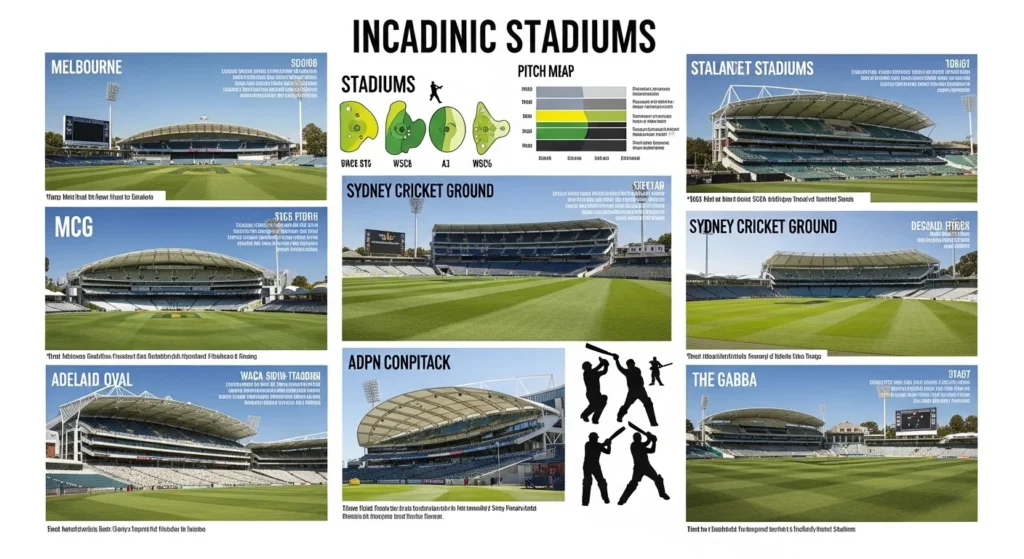
Cricket in Australia is more than just a sport—it is a national passion deeply rooted in history and culture. From thrilling Ashes battles to high-energy T20 clashes, Australian stadiums have hosted some of the most unforgettable moments in cricket. Imagine a packed crowd cheering under bright lights as a fast bowler delivers at high speed or a batter smashes a six into the stands—that’s the magic of Australian cricket grounds.
Australia is home to some of the world’s most famous stadiums, known for their large capacity, world-class facilities, and unique pitch conditions. These venues not only host international matches but also domestic competitions and global tournaments organized by the International Cricket Council.
In this article, you will explore the top Cricket Stadiums in Australia, their history, pitch behavior, records, and importance in modern cricket. This guide is perfect for beginners, students, and cricket fans who want a clear and professional understanding of Australian cricket venues.
History of Cricket Stadiums in Australia
Cricket was introduced in Australia during the 19th century, and since then, the country has developed some of the finest stadiums in the world. Early grounds were simple fields, but over time they evolved into modern venues with advanced facilities.
Australia played a key role in shaping international cricket, hosting major tournaments like the ICC Cricket World Cup and iconic Ashes series. Today, Australian stadiums are known for their excellent infrastructure and high-quality playing surfaces.
Major Cricket Stadiums in Australia
Melbourne Cricket Ground (MCG)
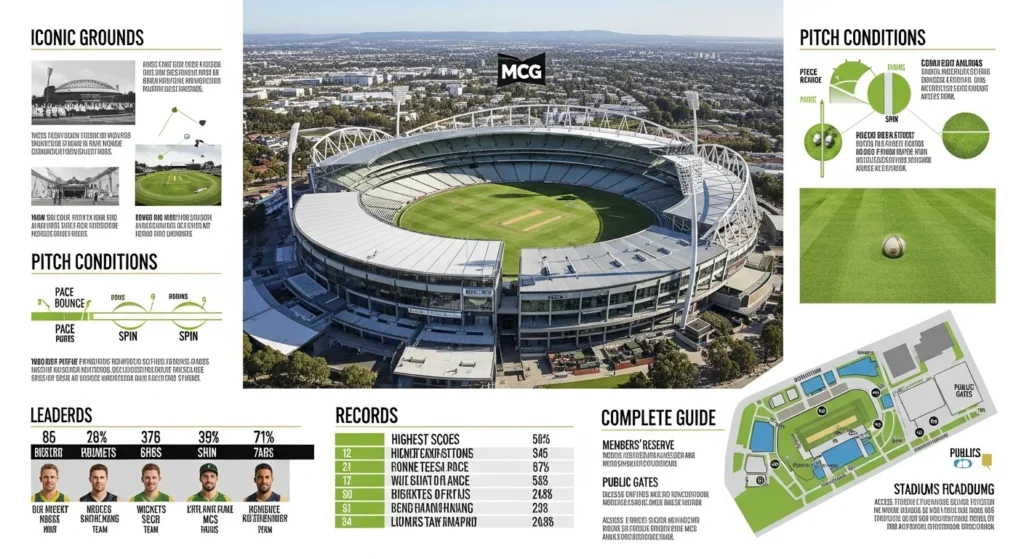
The Melbourne Cricket Ground is the largest stadium in Australia and one of the most iconic in the world. With a capacity of over 100,000 spectators, it regularly hosts major international matches and finals.
The Melbourne Cricket Ground (MCG), often called “The G,” is one of the most iconic and largest cricket stadiums in the world. Located in Melbourne, Australia, it was established in 1853 and has since become the heart of Australian cricket. With a seating capacity of over 100,000 spectators, the MCG is not only the biggest stadium in Australia but also one of the most famous sporting venues globally.
The MCG is the home ground of the Australia national cricket team for many international matches and regularly hosts high-profile games, including Test matches, One Day Internationals (ODIs), and T20 fixtures. It is especially renowned for the traditional Boxing Day Test match held every year on December 26, which attracts huge crowds and global attention.
One of the key features of the MCG is its balanced pitch. Unlike some Australian grounds that heavily favor either batters or bowlers, the MCG offers something for everyone. In the early stages of a match, fast bowlers may get some assistance from the pitch, including bounce and slight seam movement. As the game progresses, the surface tends to settle, making it easier for batters to play their shots and build big scores.
The large dimensions of the ground also play a significant role in the style of play. Boundaries are longer compared to many other stadiums, which means players must rely more on running between the wickets rather than hitting frequent fours and sixes. This adds an extra layer of strategy, especially in limited-overs formats.
The MCG has hosted numerous historic matches, including finals of the ICC Cricket World Cup, making it a landmark venue in cricket history. Legendary performances by some of the greatest cricketers have taken place here, adding to its prestige and legacy.
Another important aspect of the MCG is its world-class infrastructure. The stadium is equipped with modern facilities, including advanced lighting systems, high-quality dressing rooms, media centers, and excellent seating arrangements for fans. Despite its modern upgrades, the MCG has managed to preserve its historical significance, with sections of the ground reflecting its rich heritage.
Weather conditions in Melbourne can be unpredictable and often play a role in matches at the MCG. Sudden changes in weather, including cloud cover and wind, can influence swing bowling and overall gameplay. This makes adaptability an important skill for players competing at this venue.
The outfield at the MCG is typically fast and well-maintained, allowing the ball to travel quickly once it passes the infield. Fielding teams need to be sharp and agile to prevent boundaries, especially given the large size of the ground.
In conclusion, the Melbourne Cricket Ground is not just a stadium—it is a symbol of cricketing excellence. Its massive capacity, balanced pitch, historic matches, and passionate crowd make it one of the most respected and celebrated cricket venues in the world.
Pitch Condition:
- Balanced surface
- Early help for fast bowlers
- Good for batting later
Famous Matches:
- World Cup finals
- Boxing Day Test matches
Sydney Cricket Ground (SCG)
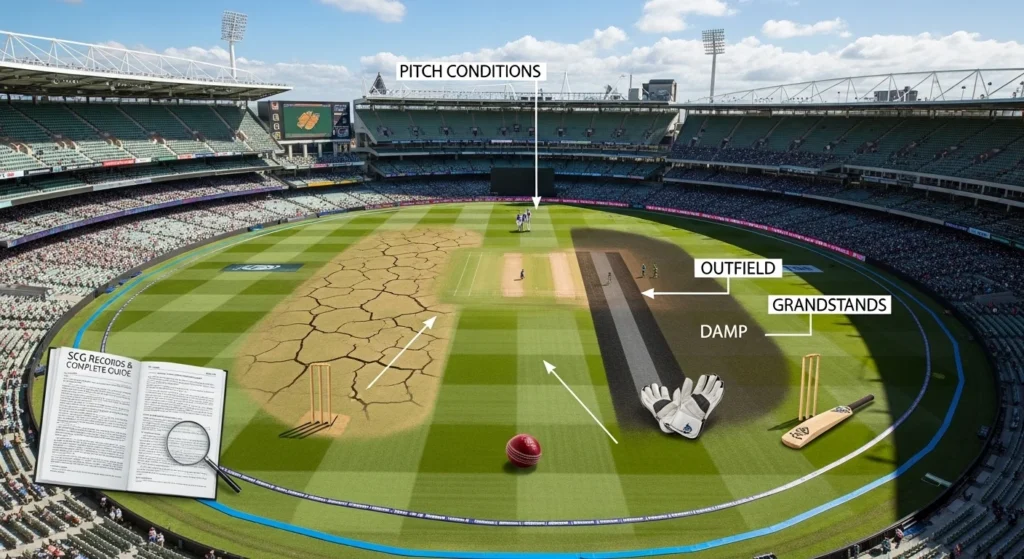
The SCG is known for its rich history and spin-friendly pitch.
Sydney Cricket Ground (SCG) is one of the most historic and iconic cricket venues in the world. Located in Sydney, Australia, it was established in 1848 and has been a central part of Australian cricket for over a century. The ground regularly hosts matches for the Australia national cricket team and is known for its rich traditions and classic atmosphere.
With a seating capacity of around 48,000 spectators, the SCG offers a unique blend of old-world charm and modern facilities. The stadium features historic stands alongside newly developed seating areas, providing excellent viewing experiences for fans. It is also famous for its lively crowd, especially during major international matches and Ashes series.
One of the most distinctive features of the SCG is its pitch condition. Unlike fast and bouncy tracks found in other Australian venues, the SCG pitch is generally slower and tends to favor spin bowlers, particularly in longer formats like Test cricket. In the early stages of a match, the pitch may offer some assistance to fast bowlers with slight movement. However, as the game progresses, the surface begins to wear, creating rough patches that help spinners generate turn and bounce.
This makes batting at the SCG a test of patience and technique. Batters who can adapt to changing conditions and play spin well often succeed here. Timing and shot selection are crucial, especially in the later stages of a match when the pitch becomes more challenging.
The SCG has hosted numerous memorable matches, including games in the ICC Cricket World Cup. It is also known for its traditional New Year Test match, which attracts cricket fans from around the world. Many legendary performances by great players have taken place on this historic ground.
The outfield at the SCG is generally fast and well-maintained, allowing the ball to travel quickly to the boundary. This encourages stroke play once batters settle in. However, the ground dimensions can vary, which adds an extra strategic element to the game.
Weather conditions in Sydney can also influence matches. Warm temperatures and dry conditions often help the pitch deteriorate, increasing the role of spin bowlers. Occasionally, humidity may assist swing bowling early in the innings.
In conclusion, the Sydney Cricket Ground is a unique and historic venue that offers balanced yet spin-friendly conditions. Its rich history, passionate crowd, and challenging pitch make it one of the most respected cricket stadiums in the world.
Pitch Condition:
- Assists spin bowlers
- Slower surface
- Good for strategic batting
Special Feature:
- Ideal for Test matches
Adelaide Oval
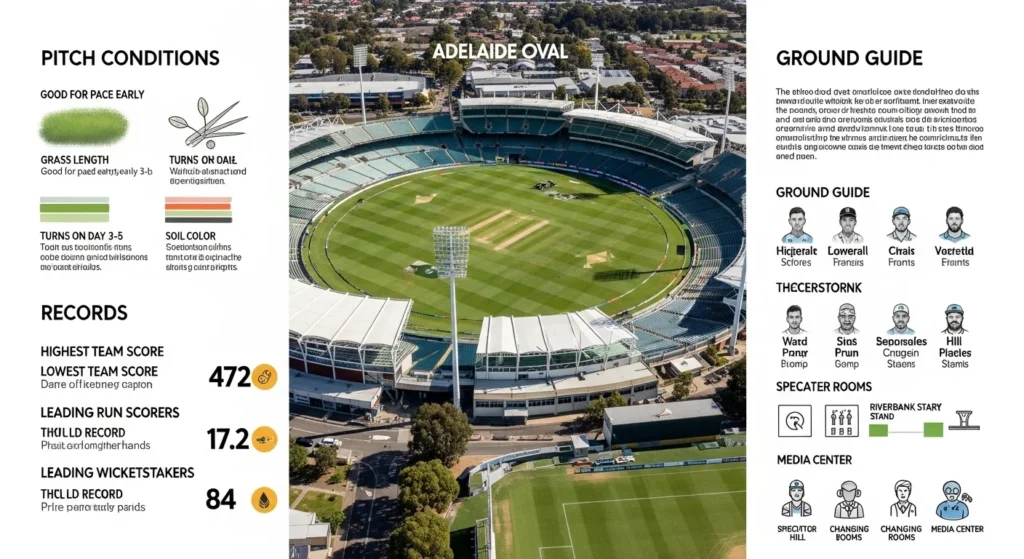
Adelaide Oval is considered one of the most beautiful cricket stadiums in the world.
Adelaide Oval is widely regarded as one of the most beautiful and picturesque cricket stadiums in the world. Located in Adelaide, South Australia, this historic venue was established in 1871 and has since become a central hub for international and domestic cricket. Surrounded by parklands and offering scenic views, Adelaide Oval combines traditional charm with modern infrastructure, making it a favorite among players and fans alike.
The stadium has a seating capacity of around 53,000 spectators and regularly hosts matches for the Australia national cricket team. It is also a key venue for major tournaments and events organized by the International Cricket Council. Over the years, Adelaide Oval has witnessed countless memorable matches, including Test matches, One Day Internationals (ODIs), and T20 games.
One of the most notable features of Adelaide Oval is its batting-friendly pitch. The surface is generally flat and offers consistent bounce, which makes it ideal for batsmen to play their shots freely. In the early stages of a match, fast bowlers may get minimal assistance, but overall, the pitch tends to favor batting. As a result, high-scoring games are quite common at this venue, especially in limited-overs formats.
Adelaide Oval is also famous for hosting day-night Test matches played with a pink ball. These matches have become a major attraction, offering a unique viewing experience for fans. Under lights, the pink ball behaves differently compared to the traditional red ball, often assisting fast bowlers with swing during the evening sessions. This creates a balanced contest between bat and ball, adding excitement to the game.
The outfield at Adelaide Oval is known for being quick and well-maintained. Once the ball passes the infield, it travels rapidly to the boundary, rewarding well-timed shots. However, the ground dimensions are relatively moderate compared to larger venues like the Melbourne Cricket Ground, which means boundaries can be scored more easily.
Weather conditions in Adelaide are generally dry and warm, which helps maintain a consistent pitch throughout the match. Unlike some other Australian venues, the pitch at Adelaide Oval does not deteriorate significantly, making it easier for batters even in the later stages of the game.
Apart from cricket, Adelaide Oval is also used for other sports and entertainment events, showcasing its versatility. The stadium features modern facilities, including upgraded seating, advanced lighting systems, and excellent player amenities. Despite these modern developments, it has retained its historical essence, with iconic features like the heritage scoreboard still in place.
Adelaide Oval has hosted several matches during the ICC Cricket World Cup, further enhancing its global reputation. It continues to be one of the most respected venues in international cricket.
In conclusion, Adelaide Oval stands out for its stunning beauty, batting-friendly pitch, and rich cricketing history. Its ability to provide both high-scoring excitement and competitive matches makes it one of the finest cricket stadiums in Australia and the world.
Pitch Condition:
- Excellent for batting
- Flat pitch
- High-scoring matches
Highlight:
- Day-night Test matches
Perth Stadium (Optus Stadium)
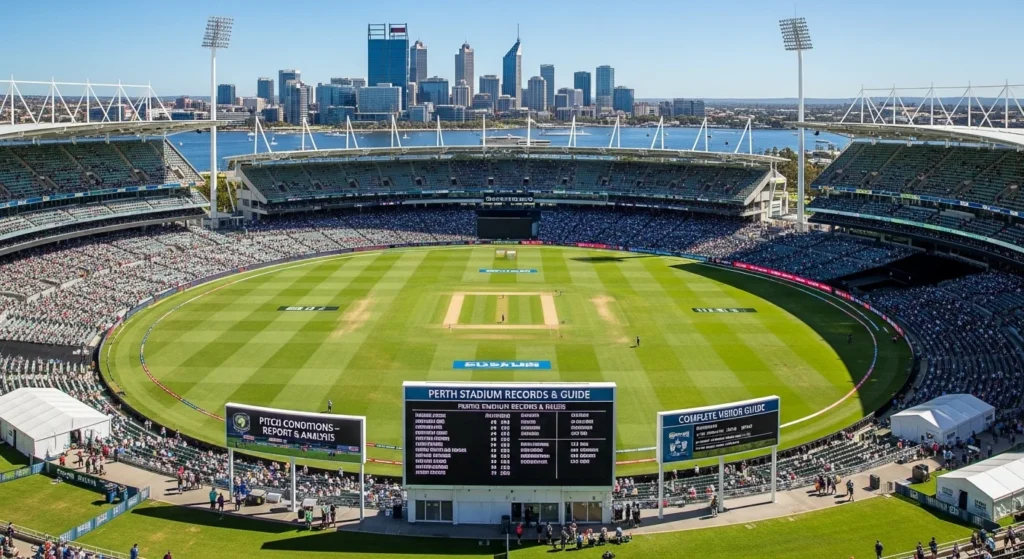
Perth Stadium is famous for its pace and bounce.
Perth Stadium, popularly known as Optus Stadium, is one of the newest and most modern cricket venues in Australia. Located in Perth, Western Australia, it officially opened in 2018 and quickly became a premier destination for international and domestic cricket. With a seating capacity of around 60,000 spectators, the stadium offers world-class facilities and an exceptional viewing experience for fans.
Optus Stadium serves as an important venue for matches involving the Australia national cricket team and hosts all formats of the game, including Test matches, One Day Internationals (ODIs), and T20 matches. It has also been selected as a venue for global tournaments organized by the International Cricket Council, highlighting its growing importance in international cricket.
One of the most defining characteristics of Perth Stadium is its fast and bouncy pitch. Traditionally, Perth has been known for producing some of the quickest pitches in the world, and Optus Stadium continues this legacy. Fast bowlers enjoy significant assistance here, with extra bounce and pace making it challenging for batters, especially in the early stages of a match. The ball often rises sharply, testing the technique and reflexes of even the most experienced players.
In the initial overs, seamers can generate good movement, particularly under favorable weather conditions. As the match progresses, the pitch tends to settle slightly, allowing batters to play more confidently. However, the bounce remains consistent throughout, ensuring that bowlers always have an advantage compared to flatter surfaces.
The outfield at Optus Stadium is fast and well-maintained, which means that well-timed shots can quickly reach the boundary. Despite the large size of the ground, the quick outfield balances scoring opportunities for batters. Fielders must be alert and athletic, as the ball travels rapidly across the grass.
Weather conditions in Perth are generally hot and dry, which helps maintain the pace and hardness of the pitch. These conditions are ideal for fast bowling and often lead to exciting contests between bat and ball. Unlike spin-friendly venues, Perth offers limited assistance to spin bowlers, especially in the early stages of a match.
Another major highlight of Optus Stadium is its modern design and infrastructure. The stadium features advanced lighting systems, comfortable seating arrangements, and excellent facilities for players and spectators. Its design also ensures great acoustics, creating an electric atmosphere during matches.
Optus Stadium has already hosted several high-profile matches, including games in the ICC Cricket World Cup. Its reputation continues to grow as players and fans appreciate its high-quality playing conditions and modern amenities.
In conclusion, Perth Stadium (Optus Stadium) is a world-class cricket venue known for its fast and bouncy pitch, modern facilities, and exciting gameplay. It offers a challenging environment for batters and a rewarding experience for fast bowlers, making it one of the most dynamic cricket stadiums in Australia.
Pitch Condition:
- Fast and bouncy
- Supports fast bowlers
- Challenging for batters
The Gabba
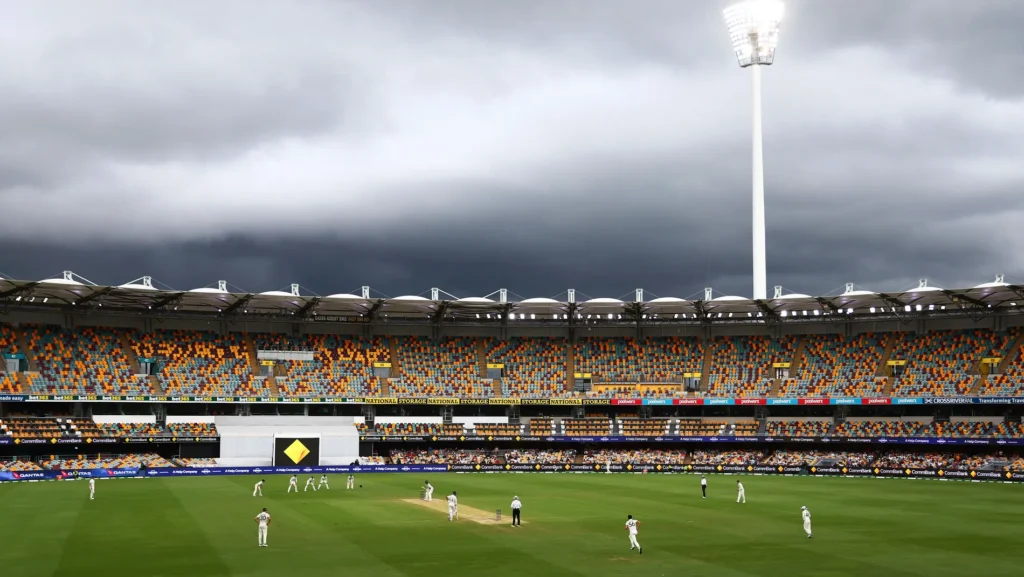
The Gabba is known for its aggressive pace-friendly conditions.
The Gabba, officially known as the Brisbane Cricket Ground, is one of Australia’s most famous and respected cricket stadiums. Located in Brisbane, Queensland, this historic venue has been hosting international cricket since 1931. Over the years, The Gabba has built a strong reputation as a fortress for the Australia national cricket team, where visiting teams often find it difficult to win.
With a seating capacity of around 42,000 spectators, The Gabba offers an energetic and lively atmosphere during matches. It regularly hosts Test matches, One Day Internationals (ODIs), and T20 games, and is traditionally the venue for the opening Test of Australia’s home summer. The passionate Brisbane crowd adds to the excitement, making it a challenging environment for opposing teams.
One of the most distinctive features of The Gabba is its pace-friendly pitch. The surface is known for its extra bounce and speed, which makes it ideal for fast bowlers. In the early stages of a match, seamers get significant assistance, including movement off the pitch and lively bounce. This can make batting quite difficult, especially for players who are not used to such conditions.
As the match progresses, the pitch begins to settle slightly, allowing batters to play more confidently. However, the bounce remains consistent throughout the game, which continues to support fast bowlers. Unlike some other venues, spin bowlers usually play a limited role at The Gabba, especially in the early days of a Test match.
Batting at The Gabba requires strong technique and patience. Players need to adjust to the bounce and pace while selecting their shots carefully. Once batters get set, they can score runs effectively, as the outfield is generally fast and rewards well-timed shots. The large ground dimensions also encourage running between the wickets, adding a strategic element to the game.
Weather conditions in Brisbane can also influence matches at The Gabba. The region often experiences warm temperatures along with occasional humidity, which can assist swing bowling, particularly in the early morning sessions. Rain interruptions are also possible, which can affect match conditions and strategies.
The Gabba has been the venue for many historic and memorable matches, including games in the ICC Cricket World Cup. It has witnessed outstanding performances from legendary players and continues to be a key venue in international cricket.
In terms of infrastructure, The Gabba offers modern facilities, including upgraded seating, advanced lighting for day-night matches, and excellent player amenities. Despite these improvements, the stadium has maintained its traditional charm and identity.
In conclusion, The Gabba is a world-class cricket stadium known for its fast and bouncy pitch, competitive playing conditions, and strong home advantage. It provides an exciting challenge for players and delivers thrilling cricket for fans, making it one of the most important venues in Australia.
Pitch Condition:
- High bounce
- Favors fast bowlers
- Tough for visiting teams
Cricket Rules and Gameplay in Stadium Context
Basic Gameplay
- Two teams with 11 players each
- One team bats, the other bowls
- Objective is to score more runs
Impact of Stadium Conditions
- Pitch affects batting and bowling
- Weather influences swing and bounce
- Ground size impacts scoring
Pitch Types in Australian Stadiums
Fast Pitches
- Found in Perth and Brisbane
- Help fast bowlers
Flat Batting Pitches
- Found in Adelaide
- Ideal for scoring runs
Spin-Friendly Pitches
- Found in Sydney
- Assist spin bowlers
Player Roles in Stadium Performance
Batters
- Adapt to pitch conditions
- Play defensive or aggressive shots
Bowlers
- Use pitch to advantage
- Fast bowlers dominate in pace-friendly venues
Fielders
- Save runs on large grounds
- Need speed and accuracy
Equipment Used in Cricket
- Bat
- Ball
- Protective gear
- Stumps
Australian stadiums are designed to support professional-level equipment and gameplay.
Major Tournaments in Australian Stadiums
- ICC Cricket World Cup
- Ashes Series
- Big Bash League
Advantages of Australian Cricket Stadiums
- World-class facilities
- Large seating capacity
- High-quality pitches
- Advanced technology
Disadvantages / Limitations
- Weather can affect matches
- Large grounds may reduce boundaries
- Travel distances between venues
Applications of Cricket Stadiums
Sports
- International matches
- Domestic leagues
Entertainment
- Events and concerts
Training
- Practice and development
Comparison of Major Stadiums
| Stadium | Pitch Type | Key Feature |
|---|---|---|
| MCG | Balanced | Largest capacity |
| SCG | Spin-friendly | Historic ground |
| Adelaide Oval | Batting-friendly | Beautiful design |
| Perth Stadium | Fast | High bounce |
| Gabba | Pace-friendly | Tough conditions |
Selection Guide for Understanding Stadiums
- Check pitch type
- Study weather conditions
- Understand team strengths
Common Challenges & Solutions
Problem: Difficult Pitch
Solution: Adapt strategy
Problem: Weather Impact
Solution: Flexible planning
Benefits of Playing Cricket
Physical Benefits
- Improves fitness
- Builds strength
Mental Benefits
- Enhances focus
- Develops teamwork
Interesting Facts
- MCG is one of the largest stadiums globally
- Gabba is known for strong home advantage
- Perth pitch is among the fastest in the world
Future Trends
- Smart stadium technology
- Improved pitch management
- Enhanced fan experience
Conclusion
Cricket Stadiums in Australia are among the best in the world, offering a perfect mix of history, modern facilities, and exciting gameplay conditions. From the massive Melbourne Cricket Ground to the fast and bouncy pitches of Perth and Brisbane, each stadium provides a unique challenge for players.
Understanding these venues helps players improve strategies and allows fans to enjoy the game more deeply. Whether it’s a Test match, ODI, or T20 game, Australian stadiums continue to deliver unforgettable cricket experiences.

Green Benn is a dedicated sports writer specializing in cricket, including IPL and international formats. Known for clear, engaging, and informative content, Green simplifies complex match analysis and player statistics for all readers. Passionate about sports storytelling, Green delivers reliable, SEO-friendly articles that keep fans updated and informed