

Cricket in India is not just a sport—it is a religion, a passion, and a major part of daily life. From street cricket in small towns to packed international stadiums, the game unites millions of fans across the country. When India hosts matches, the atmosphere inside stadiums becomes electric, with cheering crowds, drums, chants, and unforgettable energy.
India is home to some of the most famous cricket venues in the world. These stadiums have witnessed historic victories, record-breaking performances, and legendary moments involving teams like the India national cricket team and global tournaments such as the ICC Cricket World Cup.
In this article, you will learn about the most important Cricket Stadiums in India, their history, pitch behavior, famous matches, and key features. This guide is designed for beginners, students, and cricket fans who want a simple and clear understanding of Indian cricket grounds.
History of Cricket Stadiums in India
Cricket was introduced in India during the British colonial period, and the first stadiums were built in major cities like Kolkata, Mumbai, and Chennai. Over time, these grounds evolved into world-class venues with modern facilities.
Today, India has some of the largest cricket stadiums in the world, including venues that host international matches, IPL games, and ICC events. The rise of the Indian Premier League (IPL) has further improved stadium infrastructure across the country.
Major Cricket Stadiums in India
Narendra Modi Stadium
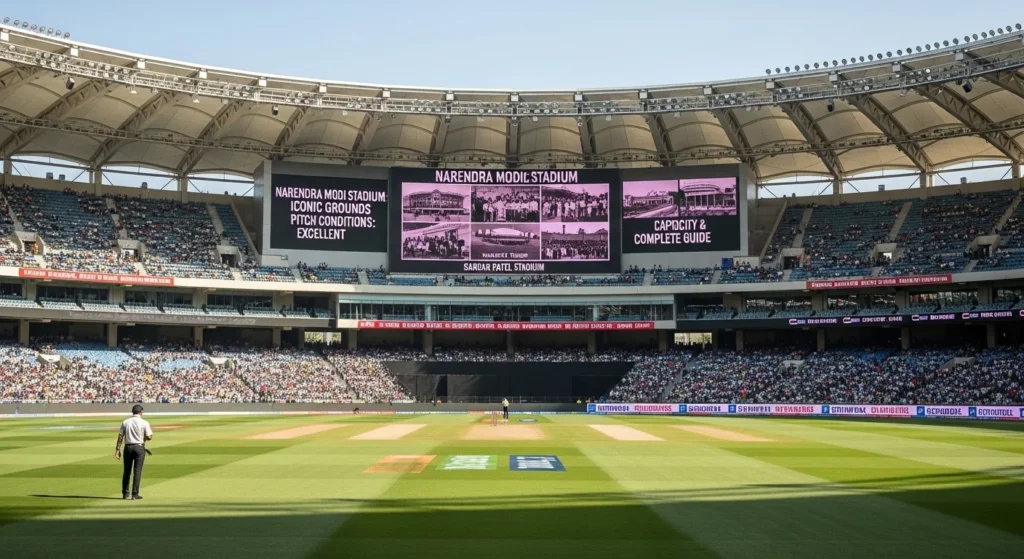
The Narendra Modi Stadium is the largest cricket stadium in the world with a seating capacity of over 130,000 spectators.
The Narendra Modi Stadium, located in Ahmedabad, India, is currently the largest cricket stadium in the world. It is a modern masterpiece of sports architecture and a symbol of India’s growing influence in international cricket. With a massive seating capacity of over 130,000 spectators, this stadium can host more fans than any other cricket ground globally, creating an unmatched atmosphere during big matches.
The stadium is the home venue for the India national cricket team and frequently hosts major international fixtures, including Test matches, One Day Internationals (ODIs), and T20 games. It is also a key venue for high-profile tournaments organized by the ICC Cricket World Cup, as well as the Indian Premier League (IPL), which attracts millions of viewers worldwide.
One of the most important features of the Narendra Modi Stadium is its balanced pitch. The surface is designed to offer fair competition between bat and ball. In the early stages of a match, batters can enjoy good scoring opportunities due to a relatively flat surface. However, as the game progresses, the pitch can assist spin bowlers, especially in longer formats like Test cricket.
Fast bowlers also get some help with the new ball, particularly under lights when there is slight movement available. This makes the stadium suitable for all types of playing conditions, allowing for exciting and competitive matches. The ground dimensions are also large, which means batters need to rely on timing and placement rather than just power hitting.
The stadium is divided into two main stands named after prominent Indian cricket legends, providing a tribute to the country’s cricketing history. It also includes world-class facilities such as advanced dressing rooms, indoor practice areas, modern media centers, and high-tech broadcasting systems. These features make it one of the most advanced cricket venues in the world.
The outfield at the Narendra Modi Stadium is fast and well-maintained, allowing the ball to travel quickly once it crosses the infield. This encourages dynamic fielding and strategic gameplay. The stadium also uses LED floodlights, making it ideal for day-night matches with excellent visibility for both players and spectators.
Weather conditions in Ahmedabad are generally hot and dry, which can affect pitch behavior. During dry conditions, the surface may start to assist spinners more as the match progresses. Dew in night games can also play a significant role, especially in limited-overs formats, often favoring the team batting second.
The Narendra Modi Stadium has hosted several historic matches, including high-stakes encounters in the ICC Cricket World Cup. It has quickly become a landmark venue in modern cricket due to its scale, design, and atmosphere.
In conclusion, the Narendra Modi Stadium is not just a cricket ground but a global sporting icon. Its massive capacity, modern infrastructure, and balanced pitch make it one of the most important venues in world cricket today.
Pitch Condition:
- Balanced pitch
- Good for batting early
- Assists spinners later
Key Feature:
- Hosts major international finals and IPL matches
Eden Gardens
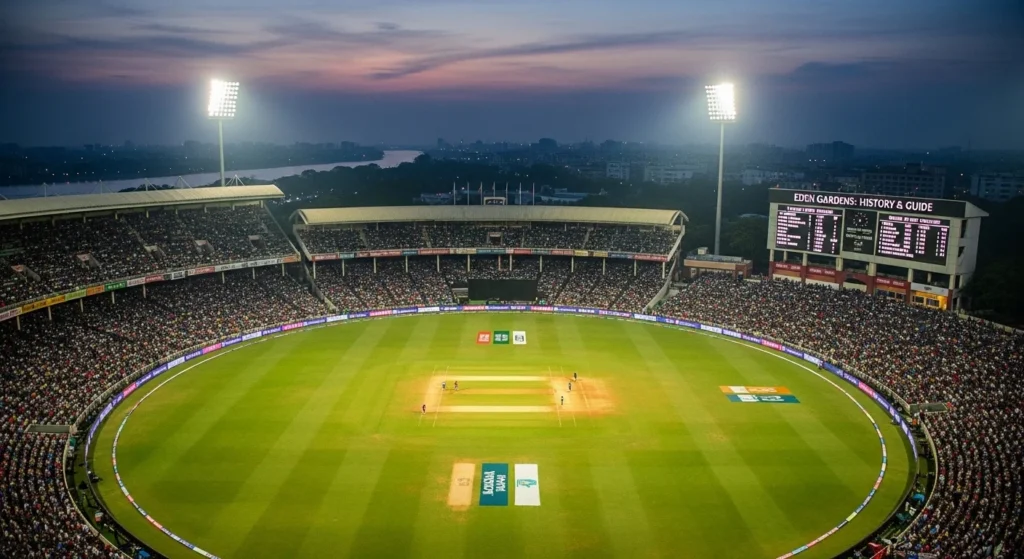
Eden Gardens is one of the oldest and most historic cricket stadiums in India.
Eden Gardens, located in Kolkata, India, is one of the most historic and iconic cricket stadiums in the world. Established in 1864, it is often referred to as the “Mecca of Indian Cricket” due to its deep connection with the sport’s history and culture in the country. With a seating capacity of around 66,000 spectators, Eden Gardens is known for its electrifying atmosphere, especially during international matches.
This legendary stadium is a key venue for the India national cricket team and regularly hosts Test matches, One Day Internationals (ODIs), and T20 games. It has also been a prominent venue for major global tournaments such as the ICC Cricket World Cup, where it has witnessed some unforgettable cricketing moments.
One of the most defining features of Eden Gardens is its spin-friendly pitch. Traditionally, the surface here slows down as the match progresses, making it highly favorable for spin bowlers. In the early stages of a match, fast bowlers may get some movement and bounce, but as the pitch wears out, spinners become the dominant force. This makes batting more challenging in the later sessions, especially in Test matches.
Batters who succeed at Eden Gardens usually rely on strong technique, patience, and good footwork. Since the pitch tends to assist spin, players must be careful while playing turning deliveries. Timing and shot selection become extremely important, particularly when the ball starts gripping the surface.
The outfield at Eden Gardens is generally fast, allowing well-timed shots to reach the boundary quickly. However, the large crowd and intense atmosphere can put pressure on visiting teams, making it one of the toughest places to play cricket in India. The passionate Kolkata crowd is known for its energy, cheering loudly for the home team and creating a stadium environment that feels alive throughout the match.
Weather conditions in Kolkata also play a role in how matches unfold. The city’s humid climate can sometimes assist swing bowling early in the innings. As the game progresses, heat and moisture can affect pitch behavior, making it slower and more suitable for spinners. Dew during evening matches can also influence results in limited-overs formats.
Eden Gardens has a rich history of hosting legendary matches and unforgettable performances. Many historic games in the ICC Cricket World Cup have taken place here, adding to its global reputation. The stadium has also been the stage for dramatic finishes, record-breaking innings, and iconic bowling spells.
Over the years, Eden Gardens has undergone several renovations to improve facilities while preserving its historic charm. Modern upgrades include improved seating, advanced lighting systems for day-night matches, and better player amenities. Despite these changes, the stadium has maintained its traditional identity and emotional value among cricket fans.
In conclusion, Eden Gardens is more than just a cricket stadium—it is a symbol of cricketing heritage in India. Its spin-friendly pitch, passionate crowd, and historic significance make it one of the most respected and iconic cricket venues in the world.
Pitch Condition:
- Spin-friendly surface
- Slower pitch
- Tactical gameplay required
Special Feature:
- Known as the “Mecca of Indian Cricket”
Wankhede Stadium

Wankhede Stadium is famous for its unforgettable cricket moments.
Wankhede Stadium, located in Mumbai, India, is one of the most famous and emotionally significant cricket stadiums in the world. Established in 1974, this venue has hosted countless historic matches and is known for its passionate crowd, high-energy atmosphere, and unforgettable cricketing moments. With a seating capacity of around 33,000 spectators, Wankhede may not be the largest stadium, but it is certainly one of the loudest and most exciting.
This iconic stadium is a key home ground for the India national cricket team and regularly hosts international matches across all formats, including Test matches, ODIs, and T20s. It has also been the venue for major global tournaments such as the ICC Cricket World Cup, making it a central part of cricket history.
One of the most important features of Wankhede Stadium is its batting-friendly pitch. The surface generally offers good bounce and carry, allowing batters to play their shots confidently. This makes it a high-scoring ground, especially in limited-overs formats like ODIs and T20 matches. Fast bowlers may get some early movement with the new ball, but overall, the pitch favors batting once players settle in.
Spin bowlers usually play a secondary role at Wankhede, especially in the first innings. However, as the match progresses, slight wear on the pitch can help spinners extract some turn. Still, compared to other Indian venues, Wankhede is considered more favorable for batters than bowlers.
The outfield at Wankhede is one of the fastest in India. Well-timed shots race to the boundary quickly, making stroke play highly rewarding. The ground dimensions are relatively small, which further increases the scoring rate. This combination of pitch and outfield conditions often leads to thrilling, high-scoring encounters.
Weather conditions in Mumbai also have a significant impact on matches. The city’s coastal climate brings humidity, which can assist swing bowling in the early overs. Dew is another important factor in evening matches, often making it difficult for bowlers to grip the ball, especially in the second innings.
Wankhede Stadium is also famous for its emotional and historic moments. One of the most iconic events in cricket history took place here during the 2011 Cricket World Cup final, where India lifted the trophy after defeating Sri Lanka. This victory remains one of the greatest moments for Indian cricket fans and is deeply associated with this stadium.
The stadium has undergone multiple renovations over the years, improving seating arrangements, media facilities, floodlights, and player amenities. Despite modernization, Wankhede has retained its traditional charm and continues to be a favorite among players and fans.
In conclusion, Wankhede Stadium is not just a cricket venue—it is a symbol of passion, pride, and unforgettable cricket memories. With its batting-friendly pitch, fast outfield, and electrifying crowd, it remains one of the most exciting cricket stadiums in the world.
Pitch Condition:
- Batting-friendly
- Short boundaries
- High-scoring matches
Famous Moment:
- 2011 Cricket World Cup final victory
M. A. Chidambaram Stadium (Chepauk)
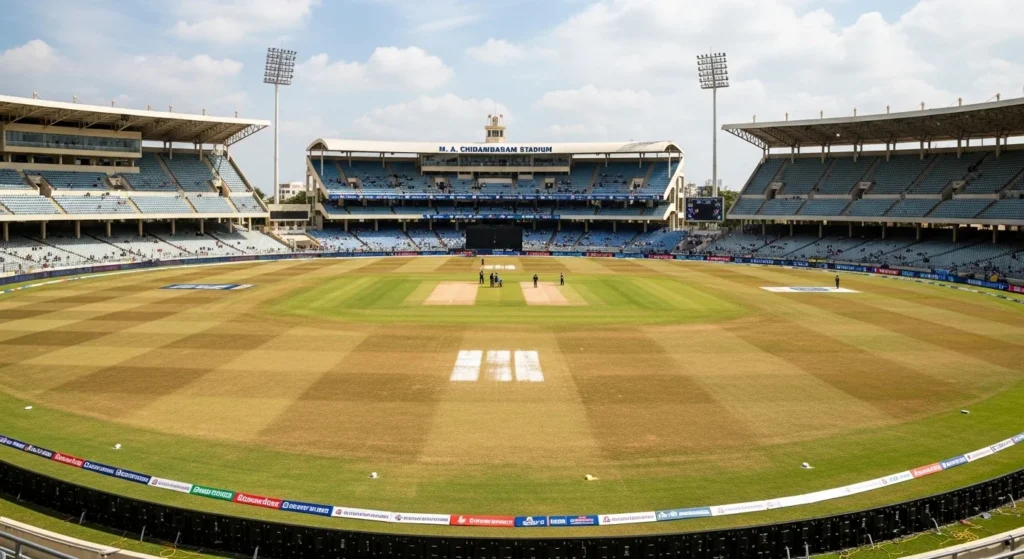
Chepauk is one of the most spin-friendly stadiums in India.
The M. A. Chidambaram Stadium, commonly known as Chepauk, is one of the oldest and most iconic cricket stadiums in India. Located in Chennai, Tamil Nadu, it was established in 1916 and holds a special place in Indian cricket history. With a seating capacity of around 50,000 spectators, Chepauk is famous for its intense atmosphere, passionate crowd, and strong connection with traditional Test cricket.
This historic stadium is an important venue for the India national cricket team and regularly hosts international matches, including Test matches, One Day Internationals (ODIs), and T20 games. It has also hosted several important fixtures of the ICC Cricket World Cup, adding to its global recognition and legacy.
One of the most defining features of Chepauk is its spin-friendly pitch. The surface is known for offering significant turn and slow bounce, especially as the match progresses. In the early stages, fast bowlers may get some movement with the new ball, but the pitch quickly becomes more favorable for spin bowling. This makes it one of the toughest grounds for batters, particularly in Test matches.
Batting at Chepauk requires patience, technique, and strong footwork. Players must carefully judge spin and variations, as the pitch tends to grip and turn sharply. Defensive skills are just as important as attacking shots, and batters who can rotate the strike effectively often succeed here. Low bounce in later stages also adds to the difficulty, making timing more challenging.
The outfield at Chepauk is generally slow compared to other Indian stadiums. This means that even well-timed shots may not reach the boundary easily, forcing batters to rely more on running between the wickets. Fielding teams also benefit from this, as it reduces the number of boundaries scored.
Weather conditions in Chennai play a major role in match dynamics. The hot and humid climate helps dry out the pitch, increasing its tendency to break and assist spinners. Dew is less of a factor compared to coastal cities like Mumbai, making spin bowlers even more effective in the second innings of a match.
Chepauk has witnessed many historic performances and memorable matches over the years. It has hosted key encounters in the ICC Cricket World Cup and remains a fortress for spin bowling. Legendary Indian spinners have often dominated here, making it a nightmare for visiting teams unfamiliar with such conditions.
The stadium has undergone several modern upgrades, including improved seating, floodlights for day-night matches, and enhanced facilities for players and spectators. Despite these changes, Chepauk has preserved its traditional cricketing identity and continues to be one of the most respected venues in world cricket.
In conclusion, the M. A. Chidambaram Stadium (Chepauk) is a historic cricket ground known for its spin-friendly pitch, rich heritage, and passionate crowd. It offers a unique challenge for batters and remains one of the most important cricket stadiums in India and the world.
Pitch Condition:
- Strong turn for spinners
- Slow surface
- Tough for batting in later stages
M. Chinnaswamy Stadium
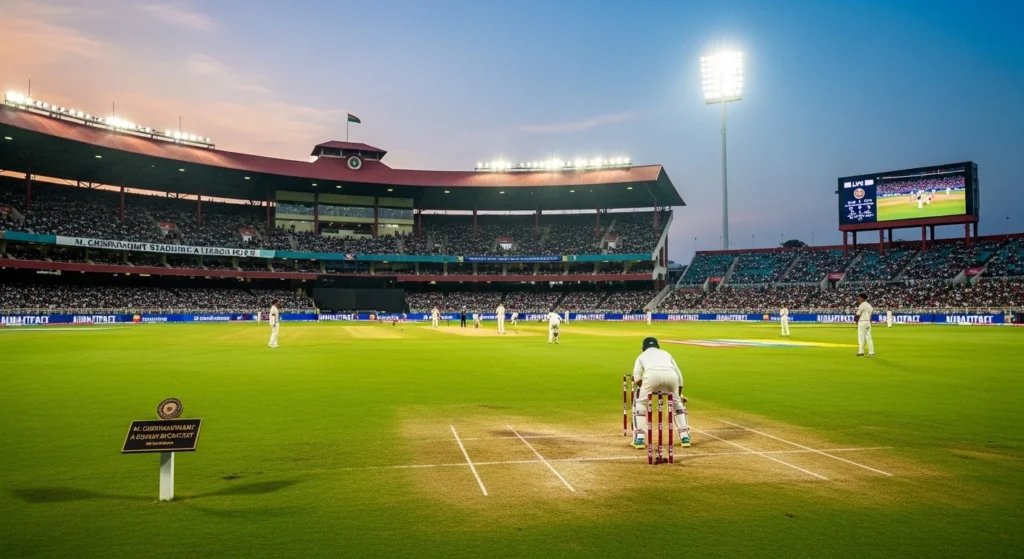
This stadium is known for its small boundaries and high-scoring matches.
The M. Chinnaswamy Stadium, located in Bengaluru, Karnataka, is one of the most popular and exciting cricket stadiums in India. Established in 1969, it is known for its electric atmosphere, modern facilities, and high-scoring matches. With a seating capacity of around 40,000 spectators, the stadium is often packed with passionate fans who create a lively and energetic environment during every game.
This stadium is an important venue for the India national cricket team and regularly hosts international matches in all formats, including Test matches, One Day Internationals (ODIs), and T20 games. It has also been a key venue for major global tournaments like the ICC Cricket World Cup, where it has witnessed several thrilling encounters and record-breaking performances.
One of the most notable features of the M. Chinnaswamy Stadium is its batting-friendly pitch. The surface is generally flat with consistent bounce, making it ideal for stroke play. Batters enjoy playing freely here, and high-scoring matches are very common, especially in limited-overs cricket such as T20s and ODIs. Fast bowlers may get slight movement early on, but overall, the pitch heavily favors batsmen.
Spin bowlers usually find limited assistance at this venue, especially during the early and middle stages of a match. However, as the game progresses and the pitch starts to wear slightly, spinners may get some grip. Still, compared to other Indian stadiums, Chinnaswamy remains one of the most batting-friendly grounds.
The ground is famous for its short boundaries and fast outfield. These conditions allow batters to score quickly, and even mistimed shots can sometimes travel to the boundary. This makes the stadium especially popular for T20 cricket, where aggressive batting and high run rates are a regular feature.
Weather conditions in Bengaluru also influence gameplay. The city has a moderate climate, which generally supports good playing conditions throughout the year. However, dew often plays a major role in evening matches, making it difficult for bowlers to grip the ball in the second innings. This often gives an advantage to the team chasing.
The stadium is also known for being one of the most technologically advanced cricket venues in India. It was one of the first stadiums in the country to use solar panels for power generation, making it environmentally friendly. It also features modern seating, upgraded dressing rooms, and excellent media facilities.
Over the years, M. Chinnaswamy Stadium has hosted several unforgettable matches, including key games in the ICC Cricket World Cup. It is also a home ground for popular IPL matches, where fans witness explosive batting performances regularly.
In conclusion, the M. Chinnaswamy Stadium is a paradise for batters and a dream venue for cricket fans. With its short boundaries, batting-friendly pitch, and energetic crowd, it consistently delivers thrilling and high-scoring cricket matches, making it one of the most exciting stadiums in the world.
Pitch Condition:
- Batting paradise
- Fast outfield
- Ideal for T20 cricket
Cricket Rules and Gameplay Overview
Basic Structure
- Two teams of 11 players
- One team bats, one bowls
- Objective: score more runs
How Stadiums Affect Gameplay
- Pitch type influences match strategy
- Weather impacts swing and spin
- Ground size affects scoring rate
Pitch Types in Indian Stadiums
Spin-Friendly Pitches
- Found in Chennai and Kolkata
- Assist spin bowlers
Batting-Friendly Pitches
- Found in Mumbai and Bengaluru
- High scoring matches
Balanced Pitches
- Found in Ahmedabad
- Equal support for bat and ball
Player Roles in Stadium Conditions
Batters
- Adjust to pitch behavior
- Build partnerships
Bowlers
- Use spin or pace depending on pitch
- Focus on variations
Fielders
- Save runs in high-scoring matches
- Quick reflexes needed
Equipment Used in Cricket
- Bat
- Ball
- Protective gear
- Helmets and pads
Stadium conditions often influence how this equipment is used effectively.
Major Tournaments Hosted in India
- ICC Cricket World Cup
- IPL (Indian Premier League)
- Asia Cup
- Test series and ODIs
Advantages of Indian Cricket Stadiums
- Huge fan support
- Modern infrastructure
- High-quality pitches
- Electric atmosphere
Disadvantages / Challenges
- Extreme weather conditions
- Overcrowding during big matches
- Pitch inconsistency in some venues
Applications of Cricket Stadiums
International Cricket
- Test matches
- ODIs and T20s
Domestic Cricket
- Ranji Trophy
- IPL matches
Entertainment Events
- Ceremonies and concerts
Comparison of Major Stadiums
| Stadium | Location | Pitch Type | Key Feature |
|---|---|---|---|
| Narendra Modi Stadium | Ahmedabad | Balanced | Largest stadium |
| Eden Gardens | Kolkata | Spin-friendly | Historic ground |
| Wankhede Stadium | Mumbai | Batting-friendly | Famous finals |
| Chepauk | Chennai | Spin-heavy | Tough pitch |
| Chinnaswamy | Bengaluru | Batting-friendly | High scoring |
Interesting Facts
- Narendra Modi Stadium is the largest cricket stadium in the world
- Eden Gardens is one of the oldest stadiums in Asia
- Wankhede hosted India’s 2011 World Cup victory
- Chinnaswamy is known for shortest boundaries
Future Trends
- Smart stadium technology
- Better pitch monitoring systems
- Improved fan experience with digital upgrades
Conclusion
Cricket Stadiums in India are a perfect blend of history, passion, and modern infrastructure. Each stadium has its own identity, pitch behavior, and unforgettable moments that make Indian cricket special.
From the massive Narendra Modi Stadium to the historic Eden Gardens and electrifying Wankhede Stadium, every venue offers a unique experience for players and fans. These stadiums not only host matches but also create memories that last a lifetime.
Understanding these stadiums helps fans appreciate the game better and understand how pitch conditions influence cricket strategies. India truly remains one of the most exciting cricket destinations in the world.

Jon Smith is a passionate sports writer specializing in cricket and global sporting events. With a keen eye for match analysis and player performance, he creates clear, engaging, and informative content. His work focuses on simplifying complex sports insights, making them accessible for beginners and experienced fans alike worldwide.