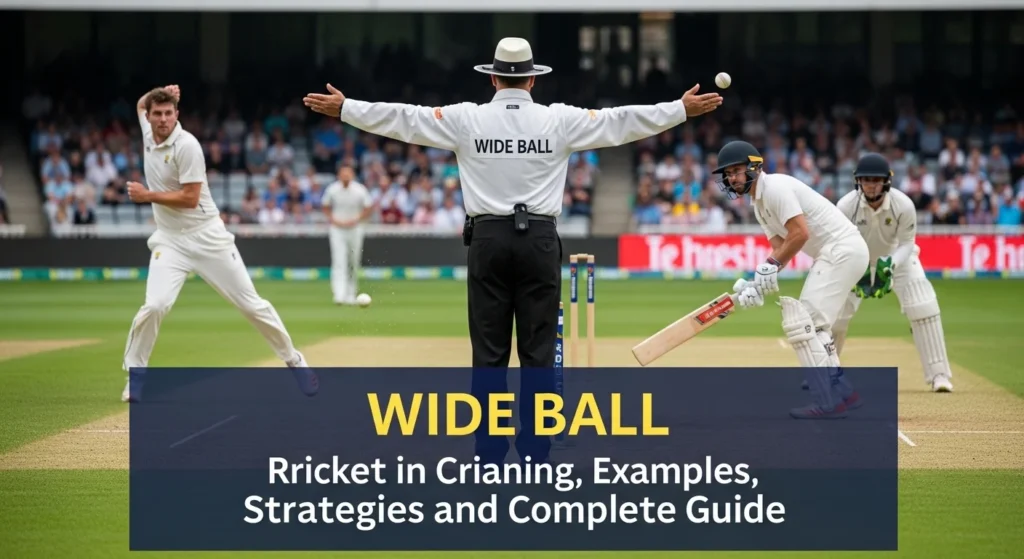

Imagine a tense cricket match where the batting team needs just a few runs to win. The bowler runs in, delivers the ball—but it goes far outside the batter’s reach. The umpire stretches both arms wide. That’s a wide ball, and it can change the outcome of the game instantly.
In modern cricket, especially fast-paced formats like the Indian Premier League, even a single extra run can make a huge difference. A wide ball not only gives an extra run to the batting team but also forces the bowler to re-bowl the delivery, increasing pressure.
Understanding the concept of a wide ball is essential for players, coaches, and fans. It helps improve discipline in bowling, enhances game awareness, and allows viewers to better understand match situations.
In this article, you will learn everything about wide balls—rules, examples, strategies, player roles, and their importance in cricket.
What is a Wide Ball?
Definition
A wide ball is a delivery bowled by the bowler that is too far from the batter to hit using a normal cricket shot, as judged by the umpire.
Simple Explanation
If the ball is out of the batter’s reach and cannot be played properly, the umpire calls it a wide.
Governing Rules
The rules of wide balls are defined by the Marylebone Cricket Club and followed worldwide under the International Cricket Council.
History of Wide Ball Rule
Wide balls have been part of cricket rules for many years. Initially, the rules were not very strict, but as cricket evolved—especially in limited-overs formats—umpires began enforcing stricter guidelines.
Modern cricket uses clear markings and stricter interpretation to ensure fair play and maintain balance between bat and ball.
Wide Ball Working Principle
How a Wide Ball is Determined
- The bowler delivers the ball
- The umpire observes the line of the ball
- If the ball is outside the batter’s reachable area
- The umpire signals a wide
Umpire Signal
- Both arms stretched horizontally
Important Points
- One extra run is awarded
- The ball must be re-bowled
- Additional runs can be scored if the ball goes to the boundary
Rules of Wide Ball in Cricket
Basic Rules
- Ball must be within reach of the batter
- If too wide, it is declared a wide ball
- Applies to both off-side and leg-side
Leg Side Rule
- Any ball passing behind the batter on the leg side is usually called wide
No Ball vs Wide Ball
| Feature | Wide Ball | No Ball |
|---|---|---|
| Line | Outside reach | Illegal delivery |
| Extra Run | Yes | Yes |
| Free Hit | No | Yes (in limited overs) |
Types of Wide Balls
1. Off-Side Wide
- Ball goes too far outside off stump
2. Leg-Side Wide
- Ball passes behind batter on leg side
3. Height Wide (Limited Overs)
- Ball passes above batter’s head
Player Roles Related to Wide Ball
Bowler
- Must control line and length
- Avoid unnecessary wides
Batter
- Can leave wide balls
- May score runs if possible
Wicket-Keeper
- Stops wide balls
- Prevents extra runs
Umpire
- Decides whether a ball is wide
- Ensures fair play
Techniques to Avoid Bowling Wide Balls
For Fast Bowlers
- Maintain proper line
- Practice consistency
For Spin Bowlers
- Control wrist movement
- Focus on accuracy
General Tips
- Practice regularly
- Improve control and balance
- Stay calm under pressure
Strategies Involving Wide Balls
Bowling Strategy
- Bowl close to off stump
- Avoid risky wide deliveries
Batting Strategy
- Let wide balls go
- Take advantage of extra runs
Equipment Used in Cricket
- Cricket ball
- Bat
- Stumps
- Protective gear
Wide ball decisions depend heavily on pitch markings and field setup.
Major Tournaments Where Wide Balls Matter
Wide balls play a crucial role in:
- ICC Cricket World Cup
- Indian Premier League
- International matches
Advantages of Wide Ball Rule
- Ensures fair play
- Prevents negative bowling
- Encourages attacking cricket
- Helps batters score freely
Disadvantages / Limitations
- Can increase pressure on bowlers
- Strict rules may be debated
- Umpire decisions can vary
Applications of Wide Ball Rule
In Matches
- Maintains balance between bat and ball
In Training
- Helps bowlers improve accuracy
In Strategy
- Influences game outcomes
Comparison Section
Wide Ball vs Legal Delivery
| Feature | Wide Ball | Legal Ball |
|---|---|---|
| Valid Delivery | No | Yes |
| Extra Run | Yes | No |
| Re-bowled | Yes | No |
Selection Guide for Beginners
How to Avoid Wide Balls
- Practice line and length
- Watch batter’s position
- Learn proper bowling technique
Tips
- Focus on accuracy
- Avoid overthinking
- Stay relaxed
Common Problems & Solutions
Problem: Frequent Wide Balls
Solution: Practice control drills
Problem: Pressure in Matches
Solution: Stay calm and focused
Problem: Poor Line Control
Solution: Improve bowling mechanics
Benefits of Playing Cricket
Physical Benefits
- Improves fitness
- Builds stamina
Mental Benefits
- Enhances focus
- Improves decision-making
Interesting Facts About Wide Balls
- Wide balls are common in T20 cricket
- They can change match results
- Umpires use strict guidelines
Future Trends in Wide Ball Rules
- Use of technology for accuracy
- More consistent umpire decisions
- Better training for players
Conclusion
A wide ball is a small but powerful rule in cricket that can have a big impact on the game. It ensures fair play, maintains balance, and adds excitement to matches. For bowlers, it highlights the importance of accuracy and control, while for batters, it offers scoring opportunities.
Understanding wide ball rules, techniques, and strategies helps players improve their performance and allows fans to enjoy the game more deeply. Whether you are a beginner or an experienced cricket enthusiast, mastering this concept is essential to understanding modern cricket.

Jon Smith is a passionate sports writer specializing in cricket and global sporting events. With a keen eye for match analysis and player performance, he creates clear, engaging, and informative content. His work focuses on simplifying complex sports insights, making them accessible for beginners and experienced fans alike worldwide.