
Football is one of the most popular sports in the world, but understanding all the football match rules can be confusing for beginners. From kick-off and scoring to fouls, offside, substitutions, penalties, and added time, every part of a match follows specific laws designed to keep the game fair and organized.
Whether you are watching football for the first time, playing at school or amateur level, coaching young players, or simply trying to understand why a referee makes certain decisions, knowing the basic rules makes the game much more enjoyable.
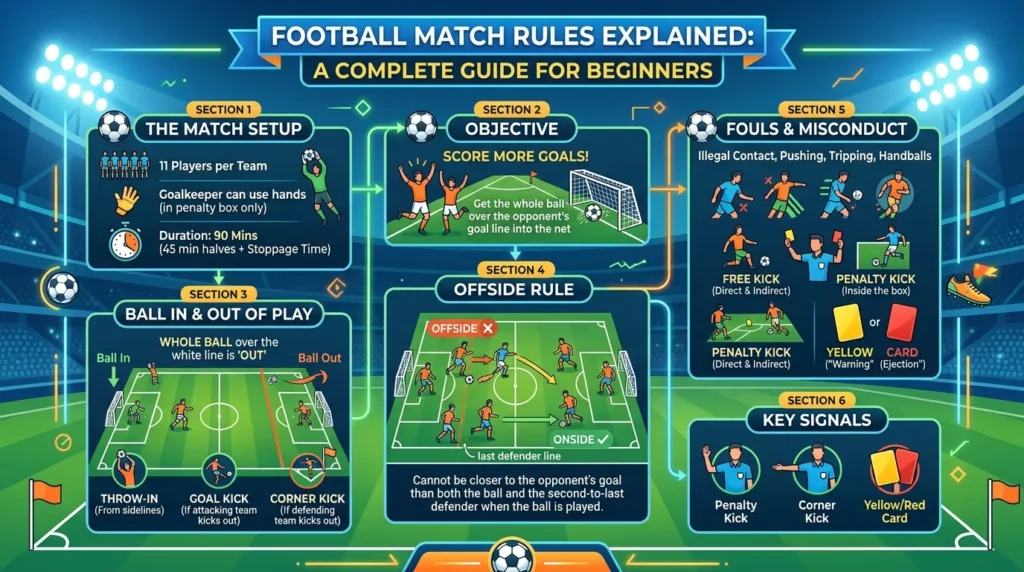
The official Laws of the Game cover everything from the field and ball to player equipment, fouls, disciplinary actions, restarts, and match officials. This guide explains the most important football match rules in simple English, with practical examples that beginners can easily understand. You will learn how a match starts, how teams score, what counts as a foul, how offside works, when penalties are awarded, and what happens when the score is level.
What Are the Basic Rules of a Football Match?
Football is played between two teams, with each team trying to score more goals than the opponent.
According to the Laws of the Game, each team can have a maximum of 11 players on the field, and one player must be the goalkeeper. A match cannot start or continue if either team has fewer than seven players.
The main objective is simple:
Score more goals than the opposing team before the match ends.
A goal is scored when the entire ball passes over the goal line between the goalposts and underneath the crossbar, provided the attacking team has not committed an offence.
How a Football Match Is Won
The team that scores more goals wins.
For example:
| Final Score | Result |
|---|---|
| 3–1 | First team wins |
| 2–0 | First team wins |
| 2–2 | Draw |
| 0–1 | Second team wins |
In league competitions, a drawn match may end with both teams receiving points. In knockout competitions, additional procedures may be used if a winner is required.
How Long Is a Football Match?
A standard football match lasts 90 minutes, divided into two halves of 45 minutes.
There is normally a halftime interval between the two halves. The Laws of the Game state that halftime must not exceed 15 minutes.
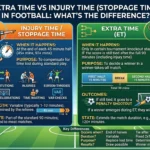
What Is Added Time?
The referee adds time at the end of each half for time lost during the match.
Time can be added for events such as:
- Substitutions
- Injuries
- Goal celebrations
- Delays
- Disciplinary actions
- VAR reviews
- Other significant interruptions
The fourth official usually displays the minimum amount of additional time, while the referee remains responsible for the final amount.
How Does a Football Match Start?
A match begins with a kick-off.
A kick-off is also used to restart play after a goal has been scored and at the beginning of the second half. It can also be used at the start of each period of extra time when applicable.
Before the match, the teams normally participate in a coin toss.
The team that wins the toss chooses which goal to attack or whether to take the kick-off, according to the competition’s applicable procedures and the current Laws of the Game.
Basic Kick-Off Rules
At kick-off:
- The ball is stationary on the centre mark.
- The referee gives the signal.
- Players must be in their own half except the player taking the kick.
- Opponents must remain at least 9.15 metres from the ball until it is in play.
- The ball is in play when it is kicked and clearly moves.
Football Field and Goal Rules
The football pitch has specific markings and dimensions, although the exact field size can vary within the limits set by the Laws.
Important markings include:
- Touchlines
- Goal lines
- Halfway line
- Centre mark
- Centre circle
- Penalty area
- Goal area
- Penalty mark
- Corner areas
The goals are positioned in the centre of each goal line.
What Is the Penalty Area?
The penalty area is the large rectangular area in front of each goal.
The goalkeeper has special privileges inside their own penalty area, particularly regarding handling the ball. A direct free kick can also be awarded for certain offences committed by a player inside their own penalty area, and some of these offences can result in a penalty kick.
Football Player Rules
Each team fields a maximum of 11 players, including a goalkeeper.
Players normally have specific positions, such as:
- Goalkeeper
- Centre-back
- Full-back
- Midfielder
- Winger
- Striker
However, the Laws do not require players to remain in traditional tactical positions. Coaches can use different formations and tactical systems.
The Goalkeeper’s Role
The goalkeeper is the only player who can legally handle the ball within their own penalty area, subject to the restrictions in the Laws.
Outside their own penalty area, the goalkeeper is treated like an ordinary outfield player when handling the ball.
Football Substitution Rules
Substitutions allow a team to replace one player with another during a match.
The number of substitutions depends on the competition regulations. Many competitions permit teams to use up to five substitutes, while the specific competition determines how many substitutions may be made and under what conditions.
In competitions using the five-substitution system, teams may generally make substitutions during a limited number of stoppages in normal play, while substitutions at halftime do not count as one of those stoppages. Competition regulations determine the exact procedure.
Players who have been replaced cannot normally return to the match unless the competition uses return substitutions.
How Goals Are Scored in Football
The main purpose of football is to score goals.
A goal is awarded when:
- The entire ball crosses the goal line.
- It passes between the goalposts.
- It passes underneath the crossbar.
- No attacking offence has occurred before the ball enters the goal.
Can a Goalkeeper Score?
Yes.
A goalkeeper can score by kicking, heading, or otherwise legally playing the ball into the opponent’s goal.
A goalkeeper can also score directly from certain restarts, depending on the situation and the applicable Laws.
The Offside Rule Explained
The offside rule is one of the most misunderstood football rules.
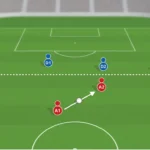
A player is in an offside position if:
- They are in the opponents’ half.
- Part of their head, body, or feet is nearer to the opponents’ goal line than both the ball and the second-last opponent.
The hands and arms do not count when determining offside position.
Most importantly:
Being in an offside position is not automatically an offence.
The player must become involved in active play in a way covered by the offside law.
When Is Offside Not Given?
There is no offside offence when a player receives the ball directly from:
- A goal kick
- A throw-in
- A corner kick
This is one of the easiest exceptions to remember.
Fouls and Free Kicks
Fouls are another major part of football match rules.
A player can be penalized for committing certain offences, particularly when they are careless, reckless, or use excessive force.
Common fouls include:
- Kicking or attempting to kick an opponent
- Tripping or attempting to trip
- Pushing
- Holding
- Striking or attempting to strike
- Tackling illegally
- Handling the ball deliberately
The exact punishment depends on the type and circumstances of the offence.
Direct Free Kick
A direct free kick allows a team to score directly against the opponents.
It can be awarded for many physical offences and deliberate handball offences covered by Law 12.
Indirect Free Kick
An indirect free kick requires another player to touch the ball before a goal can be scored.
Offside is one common situation resulting in an indirect free kick.
Yellow and Red Cards
Referees use cards to communicate disciplinary decisions.
Yellow Card
A yellow card is a caution.
Players can receive yellow cards for offences such as:
- Unsporting behaviour
- Delaying the restart
- Dissent
- Persistent offences
- Failing to respect the required distance at certain restarts
- Entering or leaving the field without permission in certain circumstances
Red Card
A red card means the player is sent off.
Examples of sending-off offences include:
- Serious foul play
- Violent conduct
- Denying an obvious goal-scoring opportunity through certain offences
- Receiving a second caution
- Using offensive, insulting, or abusive language or action
A sent-off player cannot be replaced after the team has been reduced following the dismissal.
Penalty Kick Rules
A penalty kick is awarded when a player commits a direct-free-kick offence inside their own penalty area while the ball is in play.
The kick is taken from the penalty mark.
The goalkeeper must remain on the goal line between the goalposts until the ball is kicked, subject to the current Law 14 requirements.
What Happens During a Penalty?
The kicker must:
- Identify the ball correctly.
- Take the kick from the penalty mark.
- Wait for the referee’s signal.
- Kick the ball forward.
- Follow the specific restrictions in Law 14.
Other players must remain outside the penalty area, behind the penalty mark, and at least 9.15 metres from the penalty mark until the kick is taken.
Throw-In Rules
A throw-in restarts play when the entire ball crosses the touchline.
The throw-in is awarded to the opponents of the player who last touched the ball.
The thrower must use both hands and deliver the ball from behind and over the head while having part of each foot on the touchline or on the ground outside the touchline.
A goal cannot be scored directly from a throw-in.
If the ball enters the opponents’ goal directly, a goal kick is awarded. If it enters the thrower’s own goal directly, a corner kick is awarded.
Goal Kick Rules
A goal kick is awarded when the entire ball crosses the goal line, last touched by an attacking player, and no goal is scored.
The ball must be stationary and kicked from anywhere inside the goal area by a player of the defending team.
Opponents must remain outside the penalty area until the ball is in play.
Corner Kick Rules
A corner kick is awarded when the entire ball crosses the goal line, was last touched by a defending player, and no goal is scored.
The kick is taken from the corner area nearest to where the ball crossed the goal line.
Unlike a throw-in, an attacker can be directly involved from a corner without committing an offside offence.
What Happens When the Ball Goes Out of Play?
The ball is out of play when it has completely crossed the touchline or goal line, or when the referee stops play.
The entire ball must cross the line. If even part of the ball remains above or alongside the line, it is still in play.
Depending on how the ball went out, play can restart with:
- Throw-in
- Goal kick
- Corner kick
The restart depends on which team touched the ball last and where it crossed the boundary.
Referee and Match Official Rules
The referee has authority to enforce the Laws of the Game during the match.
The referee:
- Controls the match
- Keeps time
- Awards restarts
- Applies disciplinary action
- Stops and restarts play
- Signals goals and other decisions
- Works with other match officials
Depending on the competition, additional officials may include assistant referees, a fourth official, VAR, and assistant VAR.
What Does VAR Do?
Video Assistant Referee (VAR) technology can assist referees with specific match-changing incidents under the competition’s VAR protocol.
VAR is generally associated with four categories:
- Goal/no goal
- Penalty/no penalty
- Direct red card decisions
- Mistaken identity
The referee remains responsible for the final decision.
What Happens If a Match Ends in a Draw?
The result depends on the competition.
In a league match, a draw usually means the teams share the available points according to the competition’s rules.
In a knockout match, a winner may be required.
Possible methods include:
- Extra time
- Penalty shoot-out
Extra Time
When used, extra time normally consists of two additional periods of up to 15 minutes each.
If the score remains level after extra time in a competition that requires a winner, the match may proceed to a penalty shoot-out.
Common Football Rules Beginners Get Wrong
Thinking Every Handball Is a Foul
Not every contact between the ball and a player’s hand or arm is automatically a handball offence. The circumstances and Law 12 criteria matter.
Thinking Offside Means “Standing Behind a Defender”
Offside depends on the player’s position relative to the ball and second-last opponent, as well as involvement in active play.
Thinking the Ball Must Leave the Pitch Completely Before a Restart
Yes, the entire ball must cross the relevant line for it to be out of play.
Thinking a Yellow Card Means the Player Is Sent Off
A yellow card is a caution. A red card means the player is sent off.
Thinking the Goalkeeper Can Handle the Ball Anywhere
The goalkeeper’s special handling privilege applies within their own penalty area, subject to the Laws.
Quick Summary of Football Match Rules
| Rule | Basic Explanation |
|---|---|
| Players | Two teams, normally up to 11 players each |
| Match duration | Two 45-minute halves |
| Main objective | Score more goals |
| Kick-off | Starts and restarts certain periods of play |
| Offside | Prevents unfair attacking positioning |
| Fouls | Can result in free kicks or penalties |
| Yellow card | Caution |
| Red card | Sending-off |
| Penalty kick | Awarded for certain direct-free-kick offences inside the penalty area |
| Throw-in | Restart after ball crosses touchline |
| Goal kick | Restart after attacker last touches ball over goal line without scoring |
| Corner kick | Restart after defender last touches ball over goal line without scoring |
| Extra time | Used in some knockout matches when a winner is required |
| VAR | Assists officials with specified reviewable incidents |
Frequently Asked Questions About Football Match Rules
How many players are on a football team?
A team can have a maximum of 11 players on the field, including one goalkeeper. A match cannot start or continue if a team has fewer than seven players.
How long is a football match?
A standard match consists of two 45-minute halves, with a halftime interval of no more than 15 minutes. Additional time is added for certain stoppages.
What is the most important football rule?
The main objective is to score more goals than the opponent. However, players must follow all Laws of the Game covering fouls, offside, restarts, equipment, substitutions, and match conduct.
What happens after a red card?
The player is sent off and cannot continue playing. Depending on the competition and circumstances, the team normally continues with fewer players.
Can you score directly from a corner kick?
Yes. A player can score directly from a corner kick into the opponents’ goal. If the ball goes directly into the kicker’s own goal, the restart is a corner kick for the opponents.
Can you score directly from a throw-in?
No. If the ball enters the opponents’ goal directly from a throw-in, the restart is a goal kick. If it enters the thrower’s own goal directly, the opponents receive a corner kick.
What is the difference between a free kick and a penalty?
A free kick is taken from the location specified by the Laws for the offence. A penalty kick is awarded for certain direct-free-kick offences committed inside the offender’s own penalty area and is taken from the penalty mark.
Who makes the final decision when VAR is used?
The referee makes the final decision. VAR provides assistance by reviewing incidents that fall within the applicable review protocol.
Conclusion
Understanding football match rules makes watching and playing the game much easier. Although football has many detailed laws, beginners can start with the fundamentals: two teams try to score more goals, matches normally last 90 minutes, and the referee enforces the Laws of the Game.
The most important rules to learn include offside, fouls, free kicks, penalties, throw-ins, goal kicks, corner kicks, substitutions, and disciplinary cards. Once these basics become familiar, more advanced tactical and refereeing decisions become easier to understand.
Football rules are designed not only to punish mistakes but also to keep the game fair, safe, competitive, and enjoyable. If you are learning football, watch matches while paying attention to why the referee stops play and how each restart is awarded. With regular practice and observation, even complicated decisions will start to make sense.