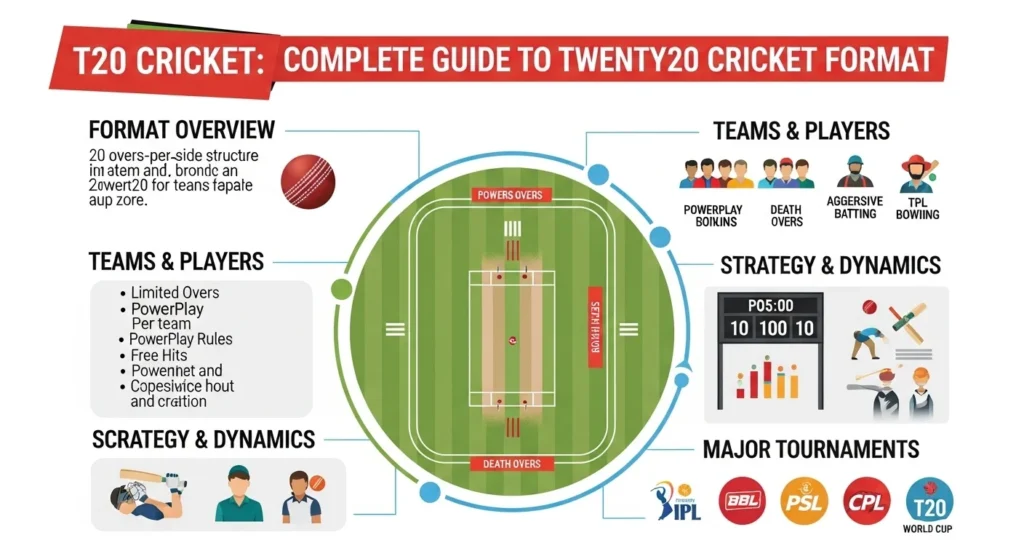

T20 Cricket (Twenty20 Cricket) is the shortest and most exciting format of cricket. It was designed to make the game faster, more entertaining, and easier to watch for modern audiences. In this format, each team plays a limited number of overs, making matches finish within a few hours.
T20 cricket has gained massive popularity worldwide because of its fast pace, big hits, and thrilling finishes. It attracts not only traditional cricket fans but also new audiences who enjoy quick and action-packed games.
In this complete guide, you will learn everything about T20 Cricket, including its history, rules, gameplay, strategies, player roles, equipment, major tournaments, and interesting facts.
History and Origin of T20 Cricket
Early Development
T20 cricket was introduced by the England and Wales Cricket Board (ECB) in 2003. The main goal was to create a shorter format of the game that could be completed in around three hours.
Growth and Popularity
- First international T20 match played in 2005
- ICC T20 World Cup started in 2007
- Leagues like IPL increased global popularity
Modern Era
Today, T20 cricket is one of the most watched formats in the world. It has transformed the way cricket is played, with more focus on aggressive batting and innovative strategies.
Basic Rules of T20 Cricket
Match Structure
- Each team plays 20 overs
- Each over consists of 6 balls
- Total of 120 balls per innings
Innings Format
- Two innings in a match
- Each team bats once
- Team with more runs wins
Bowling Restrictions
- A bowler can bowl a maximum of 4 overs
Fielding Restrictions
- First 6 overs are called the Powerplay
- Only 2 fielders allowed outside the circle
Gameplay and Format of T20 Matches
Toss and Decision
- Captains toss a coin
- Winner chooses to bat or bowl first
Batting Approach
- Aggressive from the start
- Focus on scoring quickly
Bowling Approach
- Use variations like slower balls
- Focus on limiting runs
Result
- Matches rarely end in a draw
- Super Over may be used in case of a tie
Phases of a T20 Innings
Powerplay (Overs 1–6)
- Field restrictions apply
- Batsmen play attacking shots
Middle Overs (7–15)
- Balance between scoring and wickets
- Use of spin bowlers
Death Overs (16–20)
- Maximum scoring phase
- Big hits and risky shots
Batting Techniques and Strategies in T20 Cricket
Power Hitting
- Focus on boundaries (fours and sixes)
- Use strong shots like pull and lofted drives
Innovative Shots
- Reverse sweep
- Scoop shot
- Switch hit
Strike Rate Importance
- High scoring rate is crucial
- Even short innings can impact the game
Bowling Strategies in T20 Cricket
Variation in Bowling
- Slower balls
- Yorkers
- Bouncers
Line and Length
- Bowlers must be precise
- Avoid giving easy scoring opportunities
Death Bowling Skills
- Key role in final overs
- Control pressure situations
Player Roles in T20 Cricket
Batsmen
- Openers: Start aggressively
- Middle order: Maintain scoring
- Finishers: Score quickly in final overs
Bowlers
- Fast bowlers: Early wickets
- Spinners: Control middle overs
All-Rounders
- Provide balance to the team
Wicketkeeper
- Important for quick dismissals
- Helps in fielding coordination
Equipment Used in T20 Cricket
Basic Equipment
- Cricket bat
- White cricket ball
- Stumps and bails
- Protective gear (helmet, gloves, pads)
Clothing
- Colored jerseys
- Lightweight sportswear
Major T20 Cricket Tournaments
ICC T20 World Cup
- International tournament
- Held every few years
Indian Premier League (IPL)
- One of the biggest T20 leagues
- Features international players
Other Leagues
- Big Bash League (BBL)
- Pakistan Super League (PSL)
- Caribbean Premier League (CPL)
Benefits of Playing T20 Cricket
Physical Benefits
- Improves speed and agility
- Enhances reflexes
- Builds overall fitness
Mental Benefits
- Improves quick decision-making
- Develops confidence
- Encourages teamwork
Interesting Facts About T20 Cricket
- Matches usually finish in about 3 hours
- High scoring games are common
- Players often hit multiple sixes in one match
- T20 cricket has increased global fan engagement
- Super Over adds extra excitement
Common Mistakes in T20 Cricket
Over-Aggression
- Can lead to quick wickets
Poor Bowling Execution
- Results in high scoring by opponents
Weak Fielding
- Missed chances can change the game
Tips for Beginners
- Practice batting and bowling regularly
- Focus on timing and power
- Improve fitness and reflexes
- Learn from watching professional matches
- Understand game situations
Conclusion
T20 Cricket is the most dynamic and entertaining format of cricket. It has revolutionized the game by introducing fast-paced action, innovative shots, and exciting finishes. With only 20 overs per side, every ball matters, making the format highly competitive and thrilling.
From its introduction in 2003 to becoming a global phenomenon, T20 cricket has changed the way cricket is played and watched. It is perfect for modern audiences who prefer quick and engaging sports.
Whether you are a beginner or an experienced player, understanding T20 cricket will help you enjoy the game more and improve your skills. It is not just a format but a celebration of energy, creativity, and passion for cricket.