
Test Cricket is the oldest and most traditional format of cricket. It is often considered the purest form of the game because it tests a player’s skill, patience, endurance, and strategy over a long period. Unlike shorter formats like ODI and T20, Test cricket is played over five days, making it a true test of both physical and mental strength.
Test cricket is highly respected among players and fans because it reflects the true spirit of the sport. It requires discipline, teamwork, and the ability to adapt to different match situations.
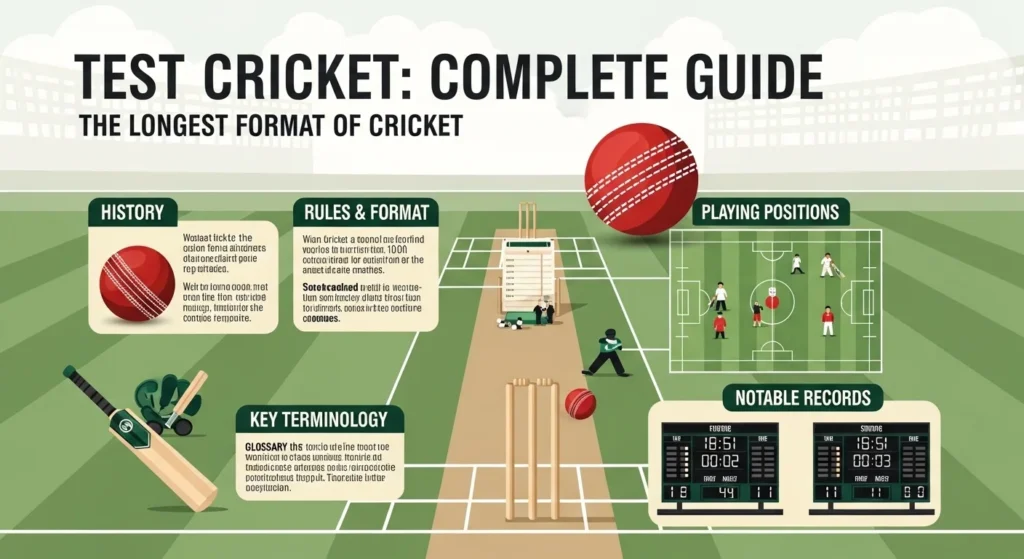
In this complete guide, you will learn everything about Test Cricket, including its history, rules, gameplay, strategies, player roles, equipment, major tournaments, and interesting facts.
History and Origin of Test Cricket
Early Beginnings
Test cricket began in 1877, when the first official Test match was played between Australia and England in Melbourne. This match marked the beginning of international cricket as we know it today.
Evolution Over Time
- Initially, matches were played without time limits
- Later, a 5-day format was introduced
- Protective gear and improved equipment were developed
- Modern technology like DRS has been added
Importance of Test Cricket
Test cricket is considered the highest level of the game. Performing well in Test matches is seen as a major achievement for any cricketer.
Basic Rules of Test Cricket
Match Duration
- Played over 5 days
- Each day includes multiple sessions
- Each team gets two innings
Overs and Time
- No fixed limit on overs
- Teams bat until all players are out or they declare
Winning Conditions
A team wins by:
- Scoring more runs than the opponent
- Dismissing the opponent in the final innings
Draw
- If time runs out before a result, the match ends in a draw
Gameplay Structure of Test Matches
Toss and Decision
- Captains toss a coin
- Winner chooses to bat or bowl first
First Innings
- First team bats and sets a total
- Second team tries to match or exceed it
Second Innings
- Teams bat again
- Strategy becomes more complex
Result
- Win, loss, tie, or draw
Key Concepts in Test Cricket
Follow-On
- If a team scores much less in the first innings
- Opponent can force them to bat again
Declaration
- Captain can declare innings closed
- Used to create a chance to win
Sessions and Breaks
- Matches are divided into sessions
- Includes lunch and tea breaks
Batting Techniques and Strategies
Patience and Defense
- Focus on staying at the crease
- Play defensive shots
Shot Selection
- Choose safe and effective shots
- Avoid risky strokes
Building Partnerships
- Work with other batsmen
- Score steadily
Long Innings
- Batsmen often play for hours
- Concentration is key
Bowling Strategies in Test Cricket
Fast Bowling
- Use pace and swing
- Target early wickets
Spin Bowling
- Effective on worn pitches
- Creates turn and bounce
Line and Length
- Maintain accuracy
- Build pressure over time
Reverse Swing
- Occurs with older ball
- Difficult for batsmen to face
Fielding and Captaincy in Test Cricket
Field Placements
- Slip fielders for catching edges
- Close-in fielders for pressure
Captain’s Role
- Make strategic decisions
- Rotate bowlers effectively
- Set attacking or defensive fields
Player Roles in Test Cricket
Batsmen
- Openers: Face new ball
- Middle order: Build innings
- Lower order: Add extra runs
Bowlers
- Fast bowlers: Early breakthroughs
- Spinners: Control and wickets later
All-Rounders
- Contribute in both batting and bowling
Wicketkeeper
- Key defensive role
- Supports bowlers
Equipment Used in Test Cricket
Basic Equipment
- Cricket bat
- Red cricket ball
- Stumps and bails
- Protective gear (helmet, pads, gloves)
Clothing
- Traditional white uniforms
- Test matches use red ball instead of white
Major Test Cricket Tournaments
ICC World Test Championship
- Top teams compete over a cycle
- Final decides the champion
Famous Test Series
- The Ashes (England vs Australia)
- Border-Gavaskar Trophy (India vs Australia)
Benefits of Playing Test Cricket
Physical Benefits
- Builds stamina and endurance
- Improves strength and fitness
- Enhances coordination
Mental Benefits
- Develops patience
- Improves focus and concentration
- Encourages strategic thinking
Interesting Facts About Test Cricket
- First Test match played in 1877
- Matches can last up to 5 days
- Some matches end in draws
- Longest matches in history lasted timeless days
- Players can score centuries and double centuries
Common Mistakes in Test Cricket
Lack of Patience
- Leads to early dismissal
Poor Shot Selection
- Increases risk of getting out
Weak Bowling Strategy
- Allows batsmen to settle
Fielding Errors
- Dropped catches can change the game
Tips for Beginners
- Focus on technique and basics
- Practice defensive batting
- Improve fitness and endurance
- Learn match situations
- Watch Test matches to understand strategy
Conclusion
Test Cricket is the most traditional and respected format of the game. It is not just about scoring runs or taking wickets but about endurance, patience, and strategy over five days.
From its origin in the 19th century to modern-day competitions, Test cricket has remained the ultimate challenge for cricketers. It tests every aspect of a player’s ability, including technique, mental strength, and teamwork.
Understanding Test cricket helps fans appreciate the depth and beauty of the sport. Whether you are a beginner or an experienced player, learning about this format will enhance your cricket knowledge and enjoyment.
Test cricket truly represents the spirit of the game and remains a cornerstone of international cricket.