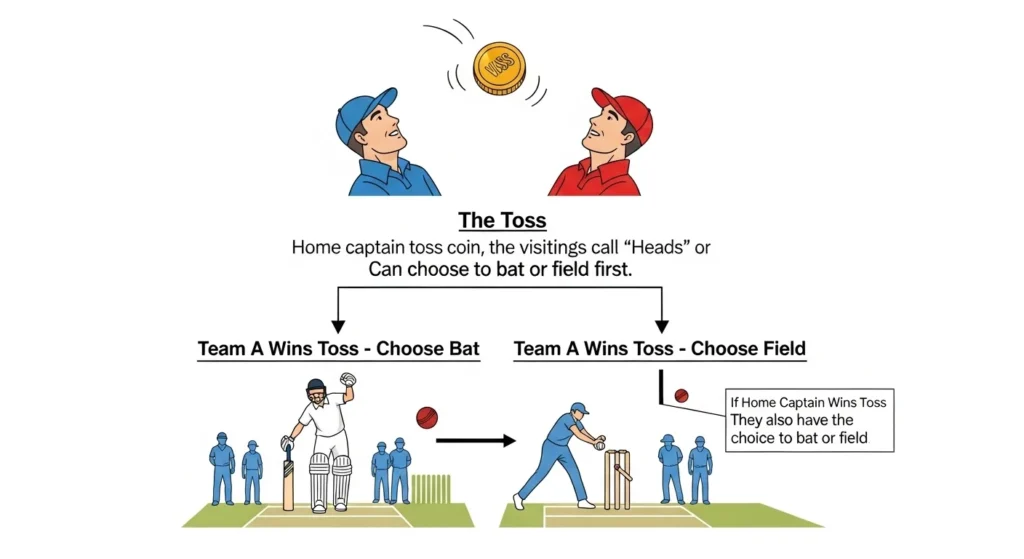

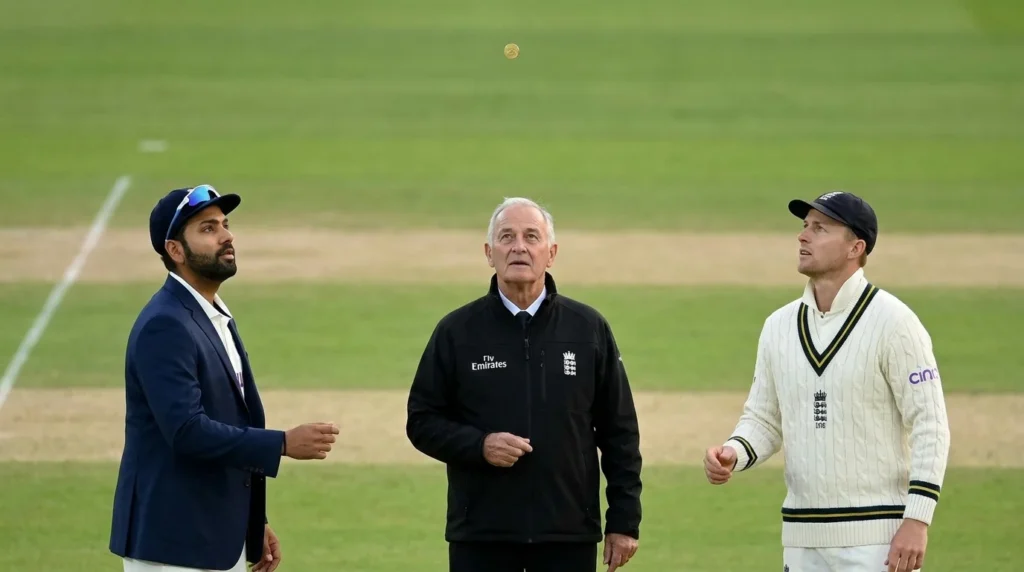
The toss rule in cricket is one of the most important traditions in the game. Before every cricket match begins, the captains of both teams meet in the middle of the field, where the match referee or umpire flips a coin. One captain calls heads or tails, and the result of the coin toss determines which team gets the first choice in the match.
The team that wins the toss can decide whether to bat first or bowl first. This decision can greatly influence the outcome of the match because cricket is a sport where pitch conditions, weather, and match format play a major role.
The toss rule may seem simple, but it can have a huge impact on the game. Captains carefully analyze many factors before making their decision. For example, if the pitch is dry and good for batting, a captain may choose to bat first. On the other hand, if the weather is cloudy and helpful for bowlers, the captain may decide to bowl first.
In international matches, league competitions, and even local cricket games, the toss remains a key starting moment of the match. Fans often watch the toss with excitement because it provides the first strategic decision of the game.
This article explains the toss rule in cricket, its history, rules, importance, strategies, and how it affects cricket matches around the world.
History of the Toss Rule in Cricket

Early Development of the Toss System
The toss system in cricket has a long and interesting early development history that is closely connected with the evolution of the sport itself. In the earliest forms of cricket, there was no formal coin toss system as we see today. Matches were often arranged informally between teams, and decisions about who would bat or bowl first were usually made by mutual agreement or by the home team’s preference. As cricket became more organized in the 18th and 19th centuries in England, the need for a fair and standardized method to decide the start of the game became important. This led to the introduction of the coin toss system, which was simple, unbiased, and easy to implement in all types of matches.
The coin toss was adopted because it removed disputes between captains and ensured equal opportunity for both teams. Over time, the toss became a fixed rule in official cricket laws. The captain who won the toss was given the right to choose whether to bat first or bowl first, depending on pitch and weather conditions. This system added a new strategic layer to cricket, as teams now had to think carefully about match conditions before making their decision.
In the early development phase, cricket pitches were unpredictable and uncovered, meaning weather had a huge impact on playing conditions. Because of this, winning the toss often provided a significant advantage. Captains began to study pitch behavior more closely, which increased the importance of the toss in match strategy. Famous early cricket matches showed that teams winning the toss had better chances of controlling the game, especially in longer formats.
As international cricket expanded to countries like Australia and later to India, the toss system became a universal rule. It was included in the official Laws of Cricket, maintained by governing bodies such as the Marylebone Cricket Club (MCC). This ensured consistency in all international and domestic matches.
In modern cricket, the toss is not just a simple coin flip but a crucial strategic moment. Captains analyze pitch reports, weather forecasts, team balance, and match format before making their decision. The early development of the toss system transformed cricket from a casual game into a structured and competitive sport where fairness and strategy play a major role in every match.
The coin toss has been used for centuries as a fair way to make decisions between two options. In early cricket matches during the 18th century, teams needed a simple and unbiased method to decide who would bat first.
The coin toss quickly became the standard practice because it was fast, fair, and easy to understand.
Toss Rule in Modern Cricket
The toss rule in modern cricket is a simple but very important part of the game that decides which team gets the first choice to bat or bowl. In all formats of international cricket, the captains of both teams meet at the start of the match with the match referee and umpires. A coin is tossed, and the captain who wins the toss gets the right to choose whether their team will bat first or bowl first. This decision can have a strong impact on the outcome of the match, especially in different pitch and weather conditions.
In modern cricket, the toss is governed by the Laws of Cricket maintained by the Marylebone Cricket Club. The rule ensures fairness by giving both teams an equal 50-50 chance to make the first decision. The captain must announce their decision immediately after winning the toss, and it cannot be changed later.
In limited-overs cricket like One Day Internationals (ODIs) and T20 matches, toss decisions are often based on chasing advantage, dew conditions, and pitch behavior. In Test cricket, the toss is even more important because matches last up to five days and pitch conditions change significantly over time.
Modern technology, pitch reports, and weather forecasts now play a major role in helping captains decide what to do after winning the toss. In countries like India, Australia, and England, captains carefully study conditions before making their choice.
Overall, the toss rule remains a small but powerful part of modern cricket strategy that can influence match direction from the very first moment.
Today, the toss is an official part of cricket laws. It takes place about 30 minutes before the start of the match in international games.
The toss is conducted in the presence of:
- Both team captains
- Match referee
- Umpires
- Media representatives (in professional matches)
The result is recorded officially before the game begins.
What is the Toss Rule in Cricket?
The toss rule in cricket is a process used to determine which team gets the first choice to bat or bowl at the start of a match.
The toss involves flipping a coin into the air. One captain calls heads or tails, and whichever side the coin lands on determines the winner of the toss.
The winning captain can choose one of the following options:
- Bat First
- Bowl First
The opposing team automatically receives the remaining option.
This decision is important because cricket conditions change during the match.
How the Toss Works in a Cricket Match
Step-by-Step Toss Procedure
The toss usually follows a simple process.
- Both captains meet at the center of the pitch.
- The referee or umpire shows the coin to both captains.
- One captain calls heads or tails before the coin is flipped.
- The coin is tossed into the air.
- The side facing upward determines the result.
- The winning captain announces the decision to bat or bowl.
After the decision is made, the match preparation continues and the teams get ready for the first ball.
Importance of the Toss Rule in Cricket
The toss rule plays a crucial role in cricket strategy.
1. Pitch Conditions
Pitch conditions cricket ka sab se important factor hota hai jo match ke result par direct asar dalta hai. Cricket pitch ek aisa playing surface hota hai jahan batting aur bowling dono ka asal test hota hai. Pitch ki nature har stadium mein different hoti hai aur time ke sath bhi change hoti rehti hai. Isi wajah se captains, coaches aur players match se pehle pitch ko carefully study karte hain taake best strategy bana sakein.
Pitch conditions ko mainly teen types mein divide kiya jata hai: flat pitch, green pitch, aur dry/spin-friendly pitch. Flat pitch batting ke liye best hoti hai kyun ke is par ball achi bounce aur speed ke sath bat par aati hai. Aise pitches par high scoring matches dekhne ko milte hain, specially T20 aur ODI cricket mein. Countries jaise Australia mein flat pitches fast aur bouncy hoti hain jo batsmen ko shot playing mein madad deti hain.
Green pitch ya grassy pitch fast bowlers ke liye ideal hoti hai. Is type ki pitch par ball swing aur seam movement zyada hota hai, jis se batting difficult ho jati hai. Early overs mein fast bowlers ko yahan zyada advantage milta hai. Countries jaise England aur New Zealand green pitches ke liye famous hain.
Dry pitch ya dusty pitch spin bowlers ke liye best hoti hai. Jaise jaise match aage badhta hai, pitch crack hone lagti hai aur ball zyada turn karti hai. Is type ki pitch par batters ko run banana mushkil ho jata hai aur spinners game control karte hain. India ki pitches aksar spin-friendly hoti hain.
Pitch conditions ka toss strategy par bhi bohat bada asar hota hai. Captains pehle pitch ko dekh kar decide karte hain ke batting karein ya bowling. Agar pitch green ho to bowling first better hoti hai, aur agar flat ho to batting first advantage deti hai.
Pitch match ke dauran bhi change hoti rehti hai. Test cricket mein pitch gradually slow aur rough ho jati hai, jis se game interesting ho jata hai. Isi wajah se Test cricket ko “real test of skill” kaha jata hai.
Overall, pitch conditions cricket ka backbone hoti hain jo batting, bowling, strategy aur match result sab ko influence karti hain. Har match mein pitch ka behavior samajhna winning strategy ka important hissa hota hai.
The pitch condition is one of the biggest factors affecting the decision after the toss.
A fresh pitch may:
- Help fast bowlers early
- Become better for batting later
- Break down and assist spin bowlers
Captains study the pitch carefully before making their choice.
2. Weather Conditions
Weather conditions cricket ke har match ka ek bahut important hissa hota hai. Cricket ek outdoor game hai is liye is par natural environment ka direct asar padta hai. Dhoop, barish, hawa, humidity aur badalte hue mausam sab mil kar match ki direction ko change kar dete hain. Weather sirf pitch ko hi nahi balki ball, batting, bowling aur overall game strategy ko bhi affect karta hai. Isi wajah se captains aur coaches match se pehle weather report ko carefully check karte hain.
Sunny weather ya garmi wale dinon mein pitch zyada dry aur hard ho jati hai. Aisi conditions mein ball achi tarah bat par aati hai aur batting karna relatively easy hota hai. Lekin jaise jaise match aage badhta hai, pitch slow ho sakti hai aur spinners ko madad milti hai. Isliye Test cricket mein weather ka impact sabse zyada hota hai kyun ke match 5 din tak chalta hai. Countries jaise India aur Australia mein dry aur hot weather spin bowling ko strong bana deta hai, jab ke England mein cloudy aur humid conditions fast bowlers ko swing provide karti hain.
Barish ya rainy weather cricket matches ko sab se zyada disturb karta hai. Barish ki wajah se outfield wet ho jata hai, ball slippery ho jati hai aur game ruk jata hai. Limited overs matches mein DLS method ka use kiya jata hai taake result decide ho sake. Rain delays ki wajah se overs kam bhi kiye jate hain aur match ka pressure dono teams par barh jata hai.
Humidity bhi cricket mein important role play karti hai. Zyada humidity mein fast bowlers ko ball swing karne mein help milti hai lekin fielders aur players ko thakan bhi zyada hoti hai. Wind ya hawa bhi ball ki movement ko change kar sakti hai, jis se bowling aur fielding dono par asar hota hai.
Weather conditions captains ki strategy ko bhi change kar dete hain. Toss ke waqt captain decide karta hai ke pehle batting kare ya bowling, aur yeh decision aksar weather report par depend karta hai. Agar sky cloudy ho to bowling first better hoti hai, aur agar dry aur sunny conditions ho to batting first advantage deti hai.
Overall weather cricket ka ek natural aur unpredictable factor hai jo har match ko interesting aur challenging bana deta hai. Isi wajah se cricket ko “game of uncertainty” bhi kaha jata hai jahan weather kabhi bhi result ko change kar sakta hai.
Weather can influence the match significantly.
For example:
- Cloudy weather helps swing bowlers
- Hot weather makes batting easier
- Dew at night affects bowling in limited-overs matches
Because of this, captains use the toss to their advantage.
3. Match Format
Different cricket formats require different toss strategies.
The three main formats are:
- Test Cricket
- One Day International (ODI)
- Twenty20 (T20)
Each format has unique conditions that influence toss decisions.
Toss Strategy in Different Cricket Formats
Toss Strategy in Test Cricket
Test matches last up to five days, so the pitch condition changes during the game.In Test cricket, toss strategy plays a very important role because matches last up to five days and pitch conditions change throughout the game. The captain who wins the toss must carefully decide whether to bat first or bowl first based on weather, pitch behavior, team strength, and match conditions. Usually, teams prefer to bat first because the pitch is fresh and easier for batting during the early days of the match. A strong first-innings score puts pressure on the opposition and gives bowlers an advantage later when the pitch starts breaking, cracking, or turning for spin bowlers. However, in conditions where there is cloud cover, moisture, or green grass on the pitch, captains may choose to bowl first because fast bowlers can get swing and seam movement that troubles batters. Countries like England and New Zealand often provide helpful conditions for fast bowlers early in the match, while pitches in India usually become better for spin bowlers as the game progresses. Captains also consider weather forecasts because rain interruptions can affect batting conditions and match results. Famous captains such as Virat Kohli, Pat Cummins, and Ben Stokes often use toss strategy to gain an early advantage over opponents. In modern Test cricket, toss decisions are closely connected to team balance, bowling attack, pitch reading, and long-term match planning. A smart toss strategy can strongly influence the outcome of a Test match and sometimes even decide a series result.
Captains often choose to bat first because:
- The pitch is usually best for batting on day one.
- It becomes difficult to bat on days four and five.
However, if the pitch has moisture, captains may choose to bowl first.
Toss Strategy in One Day Internationals (ODI)
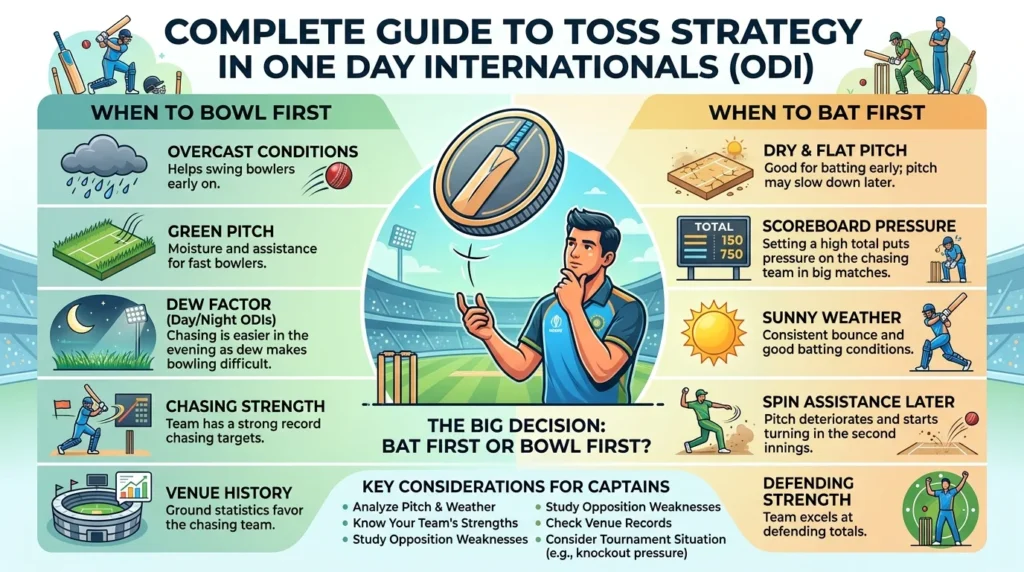
In One Day Internationals (ODIs), toss strategy is a very important part of match planning because each team gets only 50 overs to bat and bowl. The captain who wins the toss must decide whether to bat first or bowl first after studying the pitch, weather, ground conditions, and team strengths. In modern ODI cricket, many captains prefer to bowl first because chasing a target has become easier due to better batting techniques, powerful hitters, and the pressure created by scoreboard calculations. Bowling first also helps teams understand the pitch behavior before batting under similar conditions later in the match. Another major reason for choosing to bowl first is the possibility of dew during evening matches. Dew makes the ball wet and slippery, which reduces spin and makes bowling difficult in the second innings. Because of this, teams often prefer chasing under lights in countries like India and Pakistan where dew is common during night games. However, some captains still choose to bat first if the pitch is expected to slow down later or become difficult for batting in the second innings. A strong first-innings total can create scoreboard pressure and force the chasing team into mistakes. In big tournaments like the ICC Cricket World Cup, toss decisions are often influenced by pitch reports and weather forecasts. Fast bowlers may get swing early in cloudy conditions, especially in countries like England and New Zealand, encouraging captains to bowl first. On dry pitches, teams with strong spin attacks may prefer batting first and defending the target later. Captains such as MS Dhoni, Ricky Ponting, and Kane Williamson became famous for making smart toss decisions based on match situations. Team balance also affects toss strategy because some teams are stronger while chasing, while others perform better defending totals. Modern ODI cricket requires careful planning, quick decision-making, and understanding of match conditions. A successful toss strategy can provide an important advantage and sometimes completely change the direction of an ODI match.
In ODIs, teams often consider:
- Day or night match conditions
- Dew factor
- Pitch behavior
Many captains prefer to bowl first in day-night matches because chasing a target becomes easier when dew appears later.
Toss Strategy in T20 Cricket
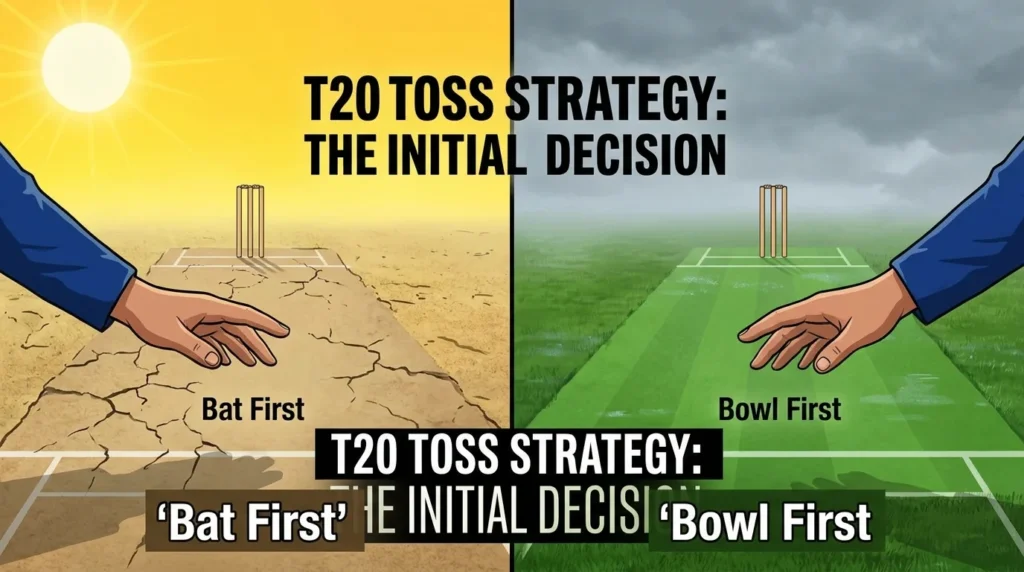
In T20 cricket, toss strategy is extremely important because the match is very short, fast-paced, and highly dependent on conditions. Since each team gets only 20 overs, captains must make quick and smart decisions after winning the toss. In modern T20 cricket, most teams prefer to bowl first because chasing targets has become easier due to aggressive batting, powerful hitters, and clear run-rate calculations. Teams also like to know the exact target before batting, which helps batters plan their innings more effectively. One of the biggest reasons for choosing to bowl first is dew, especially in night matches. Dew makes the ball wet and slippery, creating difficulties for bowlers, particularly spin bowlers, during the second innings. Because of this, captains in countries like India and United Arab Emirates often prefer chasing under lights. However, some teams still choose to bat first if the pitch is dry, slow, or expected to become difficult later in the match. A strong batting lineup can post a big total and create pressure on the chasing side. In major tournaments such as the ICC T20 World Cup and leagues like the Indian Premier League, toss decisions often influence the result because momentum changes quickly in T20 cricket. Captains also study pitch reports carefully before making their choice. Flat pitches usually favor batting, while pitches with grass or moisture may help fast bowlers early in the innings. Teams with strong death bowlers sometimes choose to defend totals because they trust their bowlers under pressure. Famous captains such as MS Dhoni, Rohit Sharma, and Eoin Morgan are known for using smart toss strategies in T20 cricket. Fitness, fielding quality, and batting depth also affect toss decisions because every over is important in this format. In modern T20 cricket, toss strategy is considered a major tactical advantage that can shape the entire direction of the match within a few overs.
In T20 matches, chasing a score has become a popular strategy.
Reasons include:
- Short match duration
- Clear target to chase
- Dew affecting bowlers in the second innings
Because of this, many captains choose to bowl first after winning the toss.
Role of the Captain During the Toss
The captain plays a critical role in making the toss decision.
Captain’s Responsibilities
A team captain’s responsibilities are very important in any sport because the captain acts as the leader on the field and helps guide the team toward success. The captain is not only responsible for making decisions during the game but also for motivating players, maintaining discipline, and representing the team in front of officials and opponents. A good captain plays a key role in building team confidence and ensuring smooth coordination among players.
One of the main responsibilities of a captain is on-field decision making. This includes setting field placements, deciding bowling changes, and adjusting strategies according to match situations. In sports like cricket, football, or basketball, quick and smart decisions can change the outcome of the game. The captain must carefully analyze the opponent’s strengths and weaknesses to make effective tactical choices.
Another important responsibility is team leadership and motivation. The captain must encourage players, especially during difficult situations when the team is under pressure. A positive attitude from the captain helps boost team morale and keeps players focused. The captain also ensures that all team members work together as a unit.
The captain is also responsible for communication with coaches and referees. They act as the main link between the team and officials, discussing rules, decisions, and match-related issues. Proper communication helps avoid misunderstandings during the game.
In addition, the captain maintains discipline and sportsmanship within the team. They ensure that players follow rules, respect opponents, and maintain fair play. The captain also sets an example through behavior, dedication, and performance.
Off the field, the captain may participate in team meetings, strategy planning, and media interactions. They represent the team in interviews and public events, which requires confidence and responsibility.
Overall, a captain is not just a player but a leader who guides, motivates, and manages the entire team. Strong leadership from the captain plays a crucial role in achieving success and building a positive team environment.
The captain must:
- Analyze pitch conditions
- Study weather forecasts
- Consider team strengths
- Decide the best strategy
A good toss decision can increase the chances of winning the match.
Player Roles in Cricket After the Toss Decision
Once the toss decision is made, players prepare for their roles in the match.
Batting Team Roles
Batting team roles are very important in cricket because each batsman has a specific responsibility that helps the team build a strong total and win matches. A successful batting performance depends on understanding roles, playing according to the situation, and forming partnerships. Different batting positions require different skills, techniques, and mindsets.
The opening batsmen play a crucial role in starting the innings. They face the new ball, which is usually fast and difficult to handle due to swing and bounce. Openers must have strong technique, patience, and good defensive skills. Their main responsibility is to provide a solid start and protect the middle order from early pressure.
The top-order batsmen (usually number 3 and 4) are responsible for stabilizing the innings after the openers. They often face quality bowling attacks and must build partnerships while also scoring runs at a steady rate. These players are usually the backbone of the batting lineup.
The middle-order batsmen play a flexible and important role. They handle pressure situations, rotate strike, and accelerate scoring when needed. In limited-overs cricket, they are responsible for increasing the run rate during the middle and death overs.
The finisher or lower-middle-order batsman has the responsibility of scoring quickly in the final overs. They play aggressive shots, maximize boundaries, and help the team reach a strong total. Finishing matches successfully requires power hitting and calm decision-making under pressure.
In addition to individual roles, teamwork is very important in batting. Building partnerships helps stabilize the innings and increase the score. Communication between batsmen is also essential for running between the wickets and avoiding run-outs.
Overall, batting team roles are carefully structured to ensure balance, stability, and aggression in an innings. Each role contributes differently, but together they help the team achieve a competitive score and increase the chances of winning the match.
If a team chooses to bat first, players prepare for batting.
Important roles include:
- Opening batsmen – start the innings
- Middle-order batsmen – stabilize the innings
- Finishers – score quick runs at the end
Bowling Team Roles
Bowling team roles are very important in cricket because bowlers are responsible for stopping the opposition from scoring runs and taking wickets. A strong bowling unit can control the match, apply pressure, and change the outcome of the game. Each bowler has a specific role depending on their skill, match situation, and format of the game.
The fast bowlers usually play the role of strike bowlers, especially with the new ball. Their main responsibility is to take early wickets by using pace, swing, and seam movement. In limited-overs cricket, fast bowlers also bowl at the end of the innings (death overs) where they try to restrict runs using yorkers, slower balls, and variations.
The opening bowlers are typically fast bowlers who start the innings. They aim to attack the batsmen early and create pressure by maintaining tight lines and lengths. Getting early wickets helps the team dominate the match from the beginning.
The middle-overs bowlers focus on controlling the game between the powerplay and death overs. This role is often handled by spin bowlers or medium pacers. Their main goal is to slow down the scoring rate, build pressure, and force batsmen into making mistakes.
The spin bowlers play a key role in the middle overs. They use variations in flight, speed, and turn to deceive batsmen. Spinners are especially effective on slow pitches and can create wicket-taking opportunities by building pressure.
The death bowlers are specialists who bowl in the final overs of limited-overs matches. Their responsibility is to defend runs when batsmen are playing aggressively. They use skills like yorkers, bouncers, and slower deliveries to limit scoring.
Overall, bowling team roles are designed to balance attack and control throughout the innings. Each bowler contributes in a different phase of the game, and teamwork among bowlers is essential for restricting runs and taking wickets. A well-organized bowling unit is often the key to winning cricket matches.
If a team bowls first, bowlers take the responsibility to restrict the opposition.
Key bowling roles include:
- Fast bowlers – attack early with speed and swing
- Spin bowlers – control runs and take wickets in middle overs
- Death bowlers – bowl in final overs
Fielding Team Roles
Fielding team roles are an essential part of cricket because good fielding can save runs, create pressure, and help take wickets. Every player on the field has a specific position and responsibility, and teamwork in the field is just as important as batting and bowling. A strong fielding side can completely change the outcome of a match by stopping boundaries and creating run-out opportunities.
The wicketkeeper is one of the most important fielding roles. Positioned behind the stumps, the wicketkeeper collects balls that the batsman misses, takes catches behind the wicket, and helps in stumpings and run-outs. They also guide fielders and support the captain with game awareness.
The slip fielders stand close to the wicketkeeper and are responsible for catching edges from fast bowlers. Their reaction time and hand-eye coordination must be very sharp because the ball comes very quickly in this area.
Infielders such as point, cover, mid-off, mid-on, and midwicket play a key role in stopping quick singles and saving boundaries. They must have fast reflexes and strong throwing arms to prevent runs and attempt run-outs.
Outfielders are positioned near the boundary line. Their main job is to stop boundaries, collect high shots, and return the ball quickly to the wicketkeeper or bowler. They need speed, fitness, and accurate throwing skills.
The captain also plays a major role in fielding by setting field positions and making adjustments according to the match situation. Good field placement can create pressure on batsmen and increase chances of wickets.
Overall, fielding team roles require alertness, agility, and teamwork. Every fielder contributes to the team’s success by saving runs, supporting bowlers, and creating opportunities for dismissals. Excellent fielding is often the difference between winning and losing a match.
Fielders support the bowlers by stopping runs and taking catches.
Important positions include:
- Wicketkeeper
- Slip fielders
- Cover and point fielders
- Boundary riders
Equipment Used During the Toss
The toss requires only a few basic items.
Cricket Coin
A cricket coin is a small coin used before the start of a cricket match to decide which team will win the toss. The toss is an important part of the game because it determines which team will bat first or bowl first. This decision can strongly influence match conditions, especially in formats like T20 and ODI cricket where pitch and weather play a big role.
The cricket coin is usually specially designed with team logos, tournament branding, or cricket symbols. In international and professional matches, an official match referee or umpire conducts the toss using this coin. The two team captains come to the center of the field, and one captain calls “heads” or “tails” before the coin is flipped.
Once the coin is tossed, the result is checked, and the winning captain gets the right to choose either batting or bowling first. This decision is based on pitch conditions, weather, dew factor, and team strategy. For example, some teams prefer to chase targets, while others prefer to set a score.
Although the coin itself is simple, it plays a very important role in the match outcome. Winning the toss can give a team a strategic advantage, especially in limited-overs cricket. However, it does not guarantee victory, as performance on the field is what truly decides the result.
Overall, the cricket coin is a small but essential part of the game that adds fairness and structure to match planning.
A coin is used for the toss. It has two sides:
- Heads
- Tails
In international matches, special coins are sometimes used.
Cricket Pitch
A cricket pitch is the central playing area of a cricket ground where most of the action takes place during a match. It is a rectangular strip located in the middle of the field and is carefully prepared to provide fair playing conditions for both batters and bowlers. According to official cricket laws, the pitch is 22 yards (20.12 meters) long and 10 feet (3.05 meters) wide. At each end of the pitch, there are three wooden stumps with two bails placed on top, forming the wickets. The condition of the cricket pitch is extremely important because it directly affects batting, bowling, bounce, swing, spin, and overall match strategy. Different types of pitches behave differently depending on weather, grass cover, moisture, and soil composition. For example, green pitches usually help fast bowlers because the ball moves more after pitching, while dry and dusty pitches favor spin bowlers as the surface begins to crack and turn. Flat pitches are considered batting-friendly because they offer consistent bounce and fewer difficulties for batters. Countries like Australia often have hard and bouncy pitches that support fast bowling, while pitches in India commonly help spin bowlers during longer matches. Groundsmen play a major role in preparing and maintaining cricket pitches before and during tournaments. Captains carefully study the pitch before the toss because pitch behavior strongly influences match strategy and team selection. In Test cricket, the pitch changes over five days, making batting more difficult later in the match, while in T20 cricket pitches are usually prepared for high-scoring and entertaining games. Famous cricket stadiums such as Melbourne Cricket Ground and Lord’s Cricket Ground are known for their unique pitch conditions. Understanding the cricket pitch is essential for players, coaches, and fans because it plays a major role in deciding the outcome and style of every cricket match.
The toss takes place on the cricket pitch, the central area of the field where batting and bowling occur.
Captains often inspect the pitch closely before the toss.
Match Officials
Match officials in cricket are responsible for managing the game fairly, enforcing the rules, and maintaining discipline on the field. They play a very important role in ensuring that matches are conducted smoothly and according to the Laws of Cricket. Cricket match officials include umpires, referees, third umpires, and scorers, each with specific duties during a match. The two on-field umpires stand at opposite ends of the pitch and make decisions related to dismissals, no-balls, wides, boundaries, and player conduct. They also monitor over rates, playing conditions, and fair play throughout the game. Modern cricket additionally uses a third umpire who watches television replays to assist with close decisions such as run-outs, stumpings, catches, and boundary checks. Technology like Decision Review System (DRS), ball tracking, and UltraEdge helps officials make more accurate decisions during international matches. The match referee, appointed by the International Cricket Council, supervises the overall conduct of the game and ensures players follow the code of conduct. Match referees can issue fines or penalties for poor behavior, slow over rates, or rule violations. Scorers are also important officials because they record runs, wickets, overs, and player statistics throughout the match. In major tournaments such as the ICC Cricket World Cup and the ICC T20 World Cup, match officials work under high pressure because every decision can affect the result of the game. Famous umpires such as Aleem Dar and Simon Taufel became respected worldwide for their consistency and professionalism. Match officials must have deep knowledge of cricket laws, excellent concentration, quick decision-making skills, and strong communication abilities. They also need physical fitness because standing on the field for long hours can be demanding, especially in Test cricket. Without match officials, cricket games would become difficult to control fairly and professionally. Their role is essential in protecting the spirit of cricket, maintaining discipline, and ensuring equal competition between teams at all levels of the sport.
Officials involved in the toss include:
- Umpires
- Match referee
- Team captains
They ensure the toss is conducted fairly.
Major Cricket Tournaments Where the Toss Matters
The toss rule in cricket plays an important role in major international and domestic competitions. After winning the toss, the captain usually chooses whether their team will bat first or field first. This decision can be influenced by the pitch, weather, ground conditions, and match format.
International Tournaments
The toss is used in major international competitions, including:
- ICC Cricket World Cup
- ICC Men’s T20 World Cup
- ICC Champions Trophy
- ICC World Test Championship
- ICC Women’s Cricket World Cup
- ICC Women’s T20 World Cup
The importance of the toss can vary depending on the format and playing conditions. For example, captains may consider pitch deterioration in Test cricket or dew and chasing conditions in limited-overs matches.
Domestic Cricket Leagues
The toss also forms part of many major domestic leagues, such as:
- Indian Premier League (IPL)
- Big Bash League (BBL)
- Pakistan Super League (PSL)
- Caribbean Premier League (CPL)
- The Hundred
Captains use the toss to make an early tactical decision based on conditions and their team’s strengths.
Benefits of Playing Cricket
Cricket provides a combination of physical activity, mental challenges, and teamwork. Regular participation can help players develop several useful skills.
Physical Benefits
Playing cricket can help improve:
- Cardiovascular fitness
- Muscular strength and endurance
- Hand-eye coordination
- Agility and balance
- Reflexes and reaction speed
Batting, bowling, running between wickets, and fielding involve different types of physical movement.
Mental Benefits
Cricket also develops important mental and social skills, including:
- Strategic thinking
- Decision-making
- Concentration
- Communication
- Teamwork
- Leadership
Captains and players regularly make decisions under pressure, from setting field placements to choosing bowling changes and batting strategies.
Interesting Facts About the Toss in Cricket
Here are some useful facts about the cricket toss:
- The toss determines which captain gets the first choice between batting and fielding.
- Winning the toss does not guarantee that a team will win the match.
- Captains consider factors such as the pitch, weather, dew, and team strengths before making their decision.
- The toss is normally conducted shortly before the scheduled start of play.
- Toss decisions can be particularly important in Test matches because pitch and weather conditions may change over several days.
- In limited-overs cricket, captains may consider whether chasing is likely to become easier or harder later in the innings.
Controversies and Discussions About the Toss
The traditional toss has occasionally been debated because winning it can provide a potential advantage in certain conditions.
The Toss Advantage Debate
The impact of winning the toss depends heavily on the venue, format, pitch, weather, and playing conditions. In some Test matches, for example, a captain may prefer to bat first if the pitch is expected to become more difficult later in the match.
Other conditions can also influence the decision:
- Day-night matches: Evening conditions and dew can affect bowling and fielding.
- Turning pitches: A pitch may offer more assistance to spin bowlers as a match progresses.
- Weather: Cloud cover, humidity, and rain can influence bowling conditions.
- Dew: In some limited-overs matches, a wet outfield can make defending a target more difficult.
Because of these factors, alternative methods to reduce the potential toss advantage have occasionally been discussed. However, the traditional coin toss remains an established part of cricket, subject to the rules and playing conditions of the particular competition.
Conclusion
The toss rule in cricket is a simple but extremely important part of the game. It provides a fair method to decide which team will bat or bowl first. Although the outcome of the toss is based purely on chance, the decision made afterward can have a big impact on the match.
Captains carefully analyze pitch conditions, weather, and team strengths before choosing their strategy. In different formats such as Test matches, ODIs, and T20s, the toss decision can influence the entire flow of the game.
From local matches to international tournaments, the toss remains a traditional and exciting moment that marks the beginning of every cricket match. It highlights the importance of strategy, leadership, and quick decision-making in the sport.
Understanding the toss rule helps cricket fans, beginners, and players appreciate the tactical side of the game and the crucial role captains play even before the first ball is bowled.

Jon Smith is a passionate sports writer specializing in cricket and global sporting events. With a keen eye for match analysis and player performance, he creates clear, engaging, and informative content. His work focuses on simplifying complex sports insights, making them accessible for beginners and experienced fans alike worldwide.