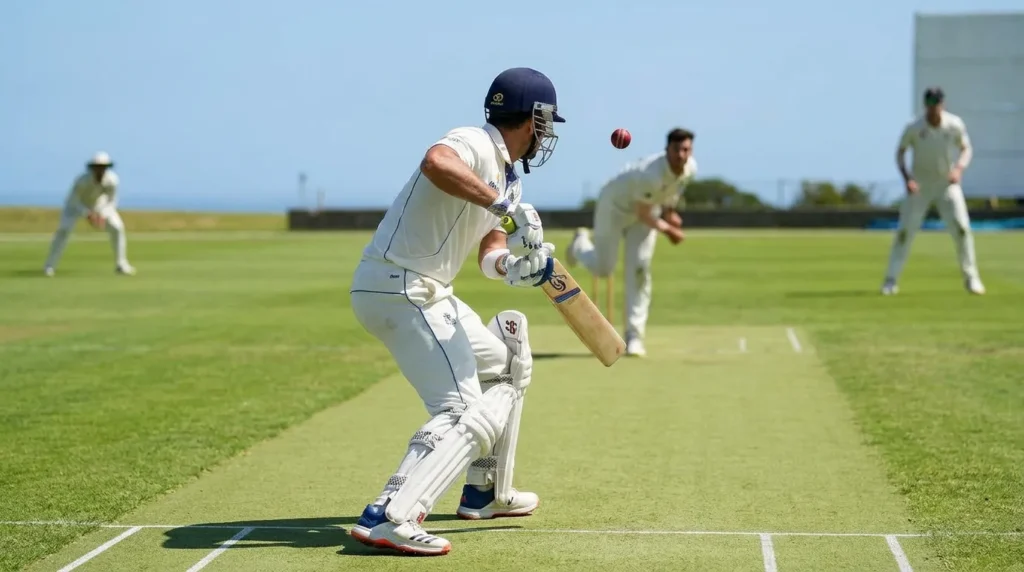

A full toss is a type of cricket delivery that reaches the batter without bouncing on the pitch. Unlike most normal deliveries, the ball travels directly from the bowler’s hand toward the batter without making contact with the ground first.
Full tosses can happen by accident or be used as a deliberate bowling variation. Their effect depends on the ball’s height, speed, line, and the batter’s position. A low full toss can sometimes be difficult to control, while a high full toss can be dangerous and may be called a no-ball under cricket’s laws.
Understanding what is full toss in cricket is important for beginners because the delivery has specific rules. Bowlers must control the height of the ball, especially when it reaches the batter. Batters also need to recognize full tosses quickly because they can create excellent scoring opportunities.
Full tosses appear in Test cricket, ODIs, T20 matches, and other formats. Fast bowlers, spin bowlers, and even specialist death-over bowlers may produce them.
This guide explains the meaning of a full toss, its types, rules, height restrictions, advantages, disadvantages, batting techniques, bowling strategies, and common mistakes.
What Is Full Toss in Cricket?
A full toss is a delivery that reaches the batter without bouncing on the pitch.
In a normal delivery, the ball lands on the pitch before reaching the batter. With a full toss, the ball travels through the air directly to the batter.
Simple Definition
A full toss is a cricket delivery that reaches the batter without bouncing on the pitch.
The term can describe deliveries from both fast bowlers and spin bowlers.
Example
A bowler releases the ball.
The ball travels directly toward the batter.
It does not touch the pitch.
The batter hits it.
That delivery is a full toss.
How Is a Full Toss Different From a Normal Delivery?
The main difference is whether the ball bounces.
| Delivery | Ball Bounces Before Batter? | Basic Result |
|---|---|---|
| Full toss | No | Reaches batter directly |
| Good length | Yes | Bounces before batter |
| Yorker | Yes, normally | Bounces very close to batter’s feet |
| Bouncer | Yes | Bounces and rises toward batter |
A full toss can be intentional or accidental.
For example, a fast bowler may attempt a yorker but release the ball slightly too early. Instead of landing near the batter’s feet, the ball reaches the batter on the full.
Why Do Full Tosses Happen?
There are several reasons a bowler may bowl a full toss.
Accidental Release
The most common reason is poor control.
A bowler may attempt to bowl:
- Yorker
- Good-length delivery
- Slower ball
- Spin delivery
But the ball may be released too early and reach the batter without bouncing.
Deliberate Variation
Some full tosses are intentional.
A bowler may use a low full toss as a variation, especially in limited-overs cricket.
Pressure Situation
Under pressure, bowlers may lose control of their length.
This can lead to full tosses during important overs.
Slower Full Toss
A bowler may deliberately reduce the pace and bowl a slower full toss.
The goal is to make the batter mistime an attacking shot.
Types of Full Tosses
Not every full toss behaves in the same way.
Low Full Toss
A low full toss travels toward the batter around knee or lower-body height.
It can be difficult to hit if it is fast and accurately placed.
Waist-High Full Toss
A full toss that reaches the batter around waist height can be subject to specific no-ball rules depending on the circumstances and format.
High Full Toss
A high full toss reaches the batter above the permitted height.
Such deliveries may be called no-balls under the Laws of Cricket.
Slow Full Toss
A slower full toss is bowled with reduced pace.
It is often used as a deceptive variation in limited-overs cricket.
Full Toss No-Ball Rule
One of the most important things to understand about a full toss is the height rule.
A full toss can be called a no-ball if it passes or would have passed over the batter’s waist height when the batter is standing upright at the popping crease.
The exact application depends on the Laws of Cricket and playing conditions.
Why Is This Rule Important?
High full tosses can be dangerous.
A ball traveling at high speed around the batter’s head or upper body can create a serious safety risk.
Therefore, cricket has rules that restrict dangerous high full tosses.
Waist-High Full Toss
If a delivery reaches the batter at or above the relevant waist-height limit without bouncing, the umpire can call a no-ball under the applicable rules.
The measurement is based on the batter’s position at the popping crease.
What Happens When a Full Toss Is a No-Ball?
If the full toss is called a no-ball, the batting team receives the appropriate no-ball extra under the Laws and playing conditions.
The delivery may also give the batter an opportunity to score runs from the ball.
For example:
Bowler delivers a high full toss → umpire calls no-ball → batter hits it for a boundary.
The total score depends on the boundary result and the applicable extras.
Why Can Full Tosses Be Dangerous?
The main concern is a high full toss.
A fast ball traveling directly toward the batter without bouncing gives the batter less time to adjust.
A high full toss can potentially strike:
- Head
- Face
- Chest
- Upper body
This is why cricket has strict rules regarding dangerous bowling.
Batters should always wear appropriate protective equipment, especially against fast bowling.
How Batters Play a Full Toss
A full toss can be an excellent scoring opportunity if it is low enough and the batter reacts quickly.
Straight Drive
If the ball is in a suitable area, the batter can play a straight drive.
Leg-Side Shot
A full toss on the leg side can be hit through:
- Midwicket
- Square leg
- Fine leg
Lofted Shot
If the field allows it, the batter may hit a full toss over the infield.
Cover Drive
A full toss outside off stump can sometimes be driven through cover.
Flick
A leg-side full toss can be flicked through the leg side.
Why Full Tosses Can Be Easy to Hit
A batter often has more time to see the ball’s path because there is no bounce to change its trajectory.
The ball also arrives at a predictable height.
If the delivery is poorly placed, the batter can use it to score quickly.
Common Scoring Areas
Batters may target:
- Straight
- Mid-on
- Mid-off
- Cover
- Midwicket
- Square leg
The best shot depends on the line and height of the delivery.
Why a Full Toss Can Still Be Difficult to Hit
A full toss is not automatically an easy ball.
Several factors can make it challenging.
High Speed
A fast full toss can reach the batter quickly.
Poor Line
If the ball is outside the batter’s hitting zone, it can be difficult to attack.
Swing
A full toss from a swing bowler may move through the air.
Field Placement
A captain may place fielders in areas where the batter is likely to hit.
Deception
A slower full toss can make the batter swing too early.
Full Toss Bowling Strategy
Although full tosses are often considered mistakes, bowlers can sometimes use them strategically.
Use a Low Full Toss
A low full toss can be difficult to attack if it is fast and accurately placed.
Mix Pace
A slower full toss can disrupt the batter’s timing.
Change the Line
Bowlers can change the line between deliveries to prevent the batter from setting up for one shot.
Use It at the Death
In T20 cricket, bowlers sometimes use slower full tosses during the final overs.
The aim is to deceive batters who are trying to hit every delivery.
Full Toss vs Yorker
These two deliveries are often confused.
| Feature | Full Toss | Yorker |
|---|---|---|
| Bounces? | No | Normally yes |
| Target area | Varies | Near batter’s feet |
| Risk | Can be easy to hit | Usually difficult to attack |
| Common purpose | Variation or mistake | Restrict scoring |
| Height | Varies | Very low |
A yorker is designed to land close to the batter’s feet.
A full toss does not bounce before reaching the batter.
Attempted Yorker Becoming Full Toss
This is a common bowling mistake.
The bowler aims for a yorker but releases the ball too early.
The ball then travels directly to the batter.
Full Toss vs Half Volley
A full toss should also be distinguished from a half volley.
Full Toss
The ball does not bounce.
Half Volley
The ball bounces very close to the batter and reaches the batter at a comfortable height.
Both can be good scoring opportunities, but they are technically different deliveries.
Full Toss in Test Cricket
Full tosses occur in Test cricket, although bowlers generally try to maintain consistent lengths.
A full toss from a spinner can sometimes be particularly dangerous because the batter may attack it immediately.
Fast bowlers can also accidentally bowl full tosses when trying to produce yorkers.
Full Toss in ODI Cricket
In ODI cricket, full tosses can be useful or costly depending on the situation.
During the middle overs, a batter may use a full toss to attack gaps in the field.
During the final overs, bowlers may occasionally use slower full tosses as variations.
Full Toss in T20 Cricket
T20 cricket has increased the importance of variations.
Batters are constantly looking for scoring opportunities, while bowlers attempt to prevent boundaries.
A deliberate slower full toss can work because the batter may expect a faster delivery.
However, a poorly controlled full toss can easily disappear over the boundary.
Famous Full Toss Moments
Full tosses have produced many memorable moments in cricket because they can suddenly change the score.
A batter can convert a poorly placed full toss into:
- Six
- Four
- Quick runs
- A match-changing partnership
At the same time, high full tosses can create controversy when the umpire must determine whether the delivery has crossed the permitted height.
Equipment Used When Facing Full Tosses
The equipment used by batters is the same basic protective equipment used for normal cricket.
Cricket Helmet
A helmet protects the head from dangerous deliveries.
Batting Pads
Pads protect the legs.
Batting Gloves
Gloves protect the hands and improve grip.
Abdominal Guard
A protective guard protects sensitive areas.
Cricket Bat
The bat is used to control and strike the delivery.
Fast bowlers make protective equipment especially important because a full toss can arrive without the batter receiving the visual cue of a bounce.
Common Mistakes by Bowlers
Releasing Too Early
This can turn an intended yorker into a full toss.
Poor Length Control
Bowlers need consistent release points to control length.
Bowling Too Many Full Tosses
If the batter identifies the pattern, scoring becomes easier.
Ignoring the Batter
A bowler should consider the batter’s strengths and preferred scoring areas.
Using Too Much Pace
A fast full toss in the wrong area can be hit for a boundary.
Benefits of Learning to Bowl Variations
For bowlers, learning controlled variations can improve overall performance.
Better Deception
Different speeds and trajectories make the bowler harder to predict.
Improved Control
Practicing full toss variations can also help bowlers understand release points.
Stronger Death Bowling
Limited-overs bowlers need several options during the final overs.
Better Match Awareness
Knowing when to use a variation improves tactical decision-making.
Interesting Facts About Full Tosses
- A full toss does not bounce before reaching the batter.
- Full tosses can be intentional or accidental.
- High full tosses may be called no-balls.
- A full toss can occur in Test, ODI, and T20 cricket.
- A low full toss can be a useful variation.
- An attempted yorker can accidentally become a full toss.
- Slower full tosses are sometimes used in limited-overs cricket.
- Batters can often attack poorly placed full tosses.
- Protective equipment is important when facing fast full tosses.
- The height of a full toss is important under cricket’s bowling laws.
Frequently Asked Questions About Full Toss
What is a full toss in cricket?
A full toss is a delivery that reaches the batter without bouncing on the pitch.
Is a full toss a no-ball?
Not every full toss is a no-ball. A full toss can be legal if it remains below the relevant dangerous-height threshold. A high full toss may be called a no-ball under the Laws and playing conditions.
Can a batter hit a full toss for six?
Yes. If the delivery is legal and the batter hits it over the boundary without bouncing, the batter scores six.
Why do bowlers bowl full tosses?
Full tosses can happen accidentally when a bowler releases the ball too early. Some low or slower full tosses can also be used deliberately as variations.
What is the difference between a full toss and a yorker?
A full toss reaches the batter without bouncing. A yorker normally bounces very close to the batter’s feet.
Is a full toss easy to hit?
It can be easier to hit than many normal deliveries, especially if it is slow and poorly placed. However, fast, swinging, or well-directed full tosses can still be difficult.
Can a spinner bowl a full toss?
Yes. Both spin bowlers and fast bowlers can bowl full tosses.
Can a full toss swing?
Yes. A full toss can move through the air if the bowler generates swing.
Conclusion
A full toss in cricket is a delivery that reaches the batter without bouncing on the pitch. It can happen accidentally when a bowler misses the intended length, or it can be used deliberately as a bowling variation.
The most important rule concerns the height of the ball. A high full toss that reaches the batter above the permitted height can be called a no-ball under the applicable Laws and playing conditions. This rule helps protect batters from dangerous high-speed deliveries.
For batters, a low full toss can provide an excellent scoring opportunity. Depending on its line and height, it can be driven, flicked, pulled, or lofted toward the boundary. For bowlers, controlled full toss variations can sometimes be useful, particularly in limited-overs cricket.
However, a poorly controlled full toss can quickly cost runs. This is why bowlers need strong release-point control and a clear understanding of the batter’s strengths.
The simplest way to remember the term is: a full toss is a ball that reaches the batter on the full, without bouncing first.

Jon Smith is a passionate sports writer specializing in cricket and global sporting events. With a keen eye for match analysis and player performance, he creates clear, engaging, and informative content. His work focuses on simplifying complex sports insights, making them accessible for beginners and experienced fans alike worldwide.