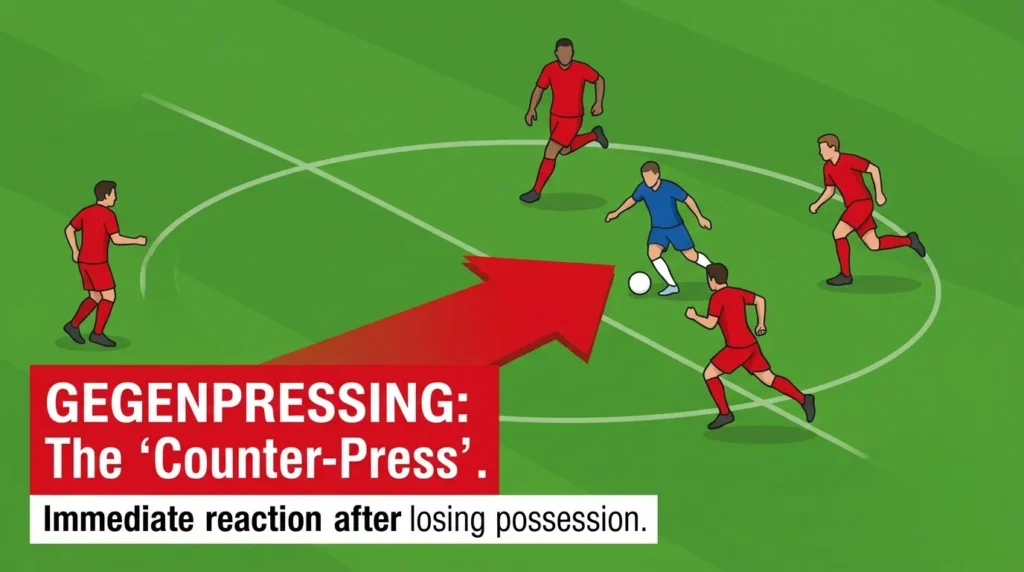

Imagine a football team losing possession near the opponent’s penalty area. Instead of dropping back to defend, every nearby player immediately rushes toward the ball, putting intense pressure on the opposition. Within a few seconds, they win the ball back and score before the defenders can reorganize. This exciting tactical approach is known as gegenpressing, one of the most influential strategies in modern football.
If you’ve watched teams like Liverpool under Jürgen Klopp, Borussia Dortmund during Klopp’s early years, or modern German national teams, you’ve likely seen gegenpressing in action. It combines aggressive pressing, teamwork, quick decision-making, and excellent fitness to regain possession as quickly as possible.
But what is gegenpressing, how does it work, and why has it become such an important part of elite football? Whether you’re a football fan, beginner, coach, player, student, or sports blogger, understanding this tactical philosophy will help you appreciate the game on a deeper level.
In this guide, you’ll learn the definition of gegenpressing, its history, working principles, advantages, disadvantages, key skills, tactical examples, training methods, common mistakes, and future trends in football.
What Is Gegenpressing?
Gegenpressing, also called counter-pressing, is a football tactic where a team immediately presses the opponent after losing possession instead of retreating into a defensive shape.
The word “Gegenpressing” comes from German:
- Gegen = Counter or Against
- Pressing = Applying pressure
In simple terms, gegenpressing means trying to win the ball back within a few seconds after losing it.
Rather than giving opponents time to build an attack, players work together to force mistakes, recover possession, and launch another attack immediately.
Simple Example
A midfielder loses the ball near the edge of the opponent’s penalty area. Instead of jogging back, the nearest three teammates quickly close down the ball carrier, block passing options, and force a poor pass. The ball is recovered within moments, creating another scoring opportunity.
This immediate reaction is the essence of gegenpressing.
The History of Gegenpressing
Although pressing has existed in football for decades, modern gegenpressing became widely recognized through German football.
Early Tactical Development
Earlier teams used pressing mainly to disrupt play, but they often pressed only in selected areas of the pitch.
Ralf Rangnick’s Influence
German coach Ralf Rangnick is widely regarded as one of the pioneers of modern gegenpressing. He emphasized coordinated pressing immediately after losing possession and inspired many future managers.
Jürgen Klopp’s Revolution
Jürgen Klopp brought gegenpressing to worldwide attention with Borussia Dortmund. His teams played with incredible intensity, winning possession quickly and attacking before opponents could recover.
Later, Klopp successfully applied the same philosophy at Liverpool, winning major domestic and European trophies.
Modern Football
Today, many top clubs use elements of gegenpressing, even if they combine it with possession-based football or other tactical systems.
How Does Gegenpressing Work?
The gegenpressing tactic relies on immediate teamwork and fast reactions.
Step 1: Lose Possession
The team loses the ball during an attack or while building play.
Step 2: Immediate Pressure
The nearest players sprint toward the ball instead of retreating.
Step 3: Close Passing Lanes
Teammates block nearby passing options, making it difficult for the opponent to escape.
Step 4: Force a Mistake
The opponent may:
- Misplace a pass
- Lose control
- Clear the ball under pressure
- Be tackled
Step 5: Win Possession
Once the ball is recovered, the attacking team immediately looks to exploit the opponent’s disorganized defensive shape.
Why Is Gegenpressing So Effective?
Gegenpressing is successful because it attacks opponents at their most vulnerable moment—just after they have won possession.
Key Reasons
- Opponents often have poor positioning.
- Defenders may be spread out.
- Midfielders need time to reorganize.
- Quick pressure forces rushed decisions.
- Fast recoveries create dangerous attacking opportunities.
Winning the ball close to the opponent’s goal usually leads to higher-quality scoring chances.
Key Principles of Gegenpressing
Several tactical ideas make gegenpressing successful.
Immediate Reaction
Players react instantly after losing possession.
Team Coordination
Everyone presses together rather than individually.
Compact Shape
The team stays close together, reducing space for opponents.
Aggressive Mentality
Players actively hunt the ball instead of waiting.
Controlled Pressure
Pressing is organized, not reckless.
Essential Skills for Gegenpressing
Successful gegenpressing requires both technical ability and physical fitness.
High Fitness Levels
Players must repeatedly sprint throughout the match.
Communication
Teammates constantly communicate to organize pressing movements.
Tactical Awareness
Players need to recognize pressing triggers and understand positioning.
Quick Decision-Making
Every second matters after possession is lost.
Strong Tackling
Winning the ball cleanly is essential.
Speed and Acceleration
Fast reactions allow players to close opponents before they can escape pressure.
Advantages of Gegenpressing
Many top coaches prefer gegenpressing because it offers several tactical benefits.
Creates More Scoring Opportunities
Winning possession near the opponent’s goal often leads to quick chances.
Prevents Counterattacks
Recovering the ball immediately reduces dangerous transitions.
Keeps Opponents Under Pressure
Constant pressing forces mistakes throughout the game.
Controls Territory
Teams spend more time attacking than defending.
Improves Teamwork
Players move together with clear tactical responsibilities.
Excites Supporters
High-energy football creates entertaining matches.
Disadvantages of Gegenpressing
Despite its effectiveness, gegenpressing also presents challenges.
High Physical Demands
Players require exceptional endurance and recovery.
Risk of Fatigue
Constant pressing can reduce energy later in matches.
Vulnerable if Broken
If opponents escape the first press, they may attack open spaces quickly.
Requires Tactical Discipline
Poor coordination makes pressing ineffective.
Difficult to Maintain
Few teams can execute gegenpressing consistently for an entire season.
Gegenpressing vs Traditional Defending
| Feature | Gegenpressing | Traditional Defending |
|---|---|---|
| Reaction After Losing Ball | Immediate pressure | Retreat and reorganize |
| Main Objective | Recover possession quickly | Protect defensive shape |
| Defensive Line | Usually higher | Usually deeper |
| Physical Demand | Very high | Moderate |
| Counterattack Prevention | Excellent | Moderate |
| Risk Level | Higher | Lower |
The biggest difference is timing. Gegenpressing attacks immediately, while traditional defending prioritizes defensive organization.
Tactical Formations That Suit Gegenpressing
Several formations work particularly well with this strategy.
4-3-3
Ideal for coordinated pressing with three forwards.
4-2-3-1
The attacking midfielder supports pressing in central areas.
4-4-2
Two forwards can press central defenders effectively.
3-4-3
Wing-backs support aggressive pressing while maintaining width.
The formation matters less than teamwork and coordinated movement.
Step-by-Step Guide to Effective Gegenpressing
- Lose possession.
- React immediately.
- Nearest player pressures the ball.
- Teammates close passing lanes.
- Defenders move higher to reduce space.
- Force a mistake or win the ball.
- Attack immediately after regaining possession.
Timing is the key to successful counter-pressing.
Famous Teams Known for Gegenpressing
Several teams have become famous for this tactical style.
Borussia Dortmund (Jürgen Klopp)
One of the earliest successful examples of modern gegenpressing.
Liverpool
Klopp refined the system, combining pressing with quick transitions and attacking football.
RB Leipzig
The club developed an aggressive pressing identity influenced by German coaching principles.
German National Team
Several German squads have successfully used pressing-based football in major tournaments.
These teams demonstrate how disciplined pressing can dominate elite competitions.
Common Mistakes in Gegenpressing
Many teams struggle because they make simple tactical errors.
- Pressing individually instead of together.
- Leaving large spaces between players.
- Chasing the ball without structure.
- Failing to recover quickly after the press.
- Poor communication.
- Losing concentration late in games.
Effective gegenpressing depends on teamwork rather than individual effort.
Coaching Tips for Improving Gegenpressing
Train Small-Sided Games
Small-sided matches improve pressing intensity and quick reactions.
Improve Fitness
Players need excellent aerobic and anaerobic conditioning.
Practice Pressing Triggers
Coaches should teach players when to press rather than pressing continuously.
Develop Communication
Constant communication keeps pressing organized.
Review Match Footage
Video analysis helps players understand positioning and pressing decisions.
Interesting Facts About Gegenpressing
- The term originated in Germany.
- It is also called counter-pressing.
- Jürgen Klopp famously described it as one of the best playmakers because winning the ball high creates instant attacking opportunities.
- Many modern clubs combine gegenpressing with possession football.
- Pressing intensity is now measured using advanced football analytics.
- Youth academies increasingly teach pressing concepts from an early age.
Future Trends of Gegenpressing
Football tactics continue to evolve, and gegenpressing remains an important part of modern coaching.
Future developments include:
- Greater use of performance data.
- AI-assisted tactical analysis.
- Individual pressing metrics.
- Improved player load management.
- More flexible pressing systems.
- Better integration with possession-based football.
Rather than disappearing, gegenpressing is likely to become even more refined and adaptable.
Frequently Asked Questions
What is gegenpressing in football?
Gegenpressing is a tactical approach where a team immediately presses the opponent after losing possession to regain the ball as quickly as possible.
Who invented gegenpressing?
Modern gegenpressing is closely associated with German coach Ralf Rangnick, while Jürgen Klopp popularized it at the highest level.
Why is gegenpressing effective?
It prevents counterattacks, forces mistakes, and creates scoring opportunities by recovering possession near the opponent’s goal.
Is gegenpressing physically demanding?
Yes. Players need excellent fitness, speed, endurance, and concentration to maintain high-intensity pressing throughout a match.
Which formations work best for gegenpressing?
Common formations include 4-3-3, 4-2-3-1, 4-4-2, and 3-4-3, provided the team presses together effectively.
Can youth teams use gegenpressing?
Yes. Young players can learn simplified pressing principles, focusing on teamwork, communication, and proper positioning rather than constant high intensity.
What is the difference between pressing and gegenpressing?
General pressing can occur at any stage of play, while gegenpressing specifically refers to immediate pressure after losing possession.
Conclusion
Gegenpressing has transformed modern football by turning defense into attack within seconds. Instead of retreating after losing possession, teams using this tactic react immediately, applying coordinated pressure to recover the ball before opponents can organize. While gegenpressing demands exceptional fitness, tactical discipline, communication, and teamwork, its rewards include more scoring opportunities, fewer counterattacks, and greater control of matches. Coaches such as Ralf Rangnick and Jürgen Klopp have shown how effective this philosophy can be at the highest level, inspiring teams around the world to adopt similar approaches. Whether you’re a player looking to improve your understanding of tactics, a coach developing a pressing system, or a football fan eager to appreciate the strategic side of the game, mastering the principles of gegenpressing offers valuable insight into one of football’s most exciting and influential tactical innovations.