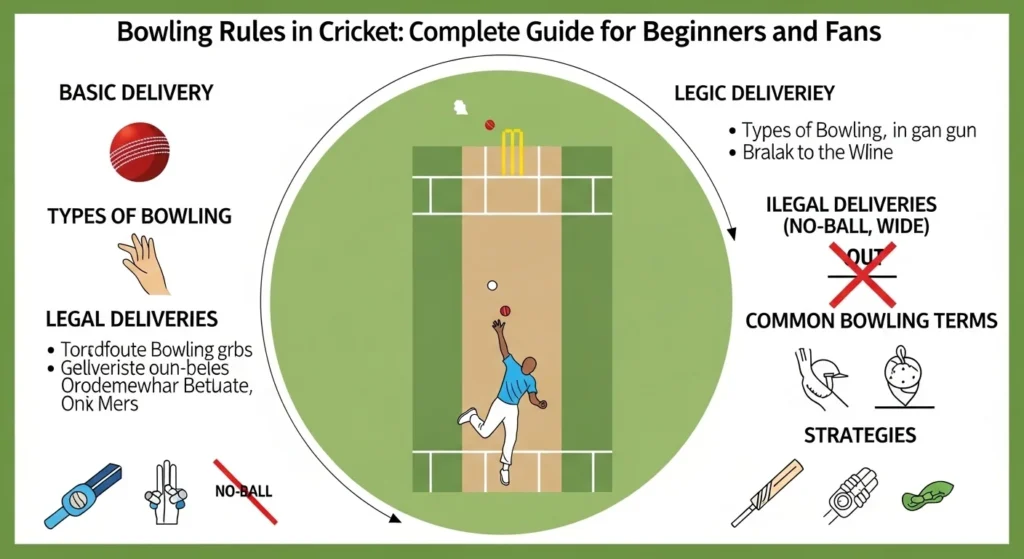

Cricket is one of the most popular sports in the world, played by millions of people across countries such as India, England, Australia, Pakistan, and South Africa. While batting and fielding are important parts of the game, bowling plays a crucial role in controlling the match and taking wickets. Without effective bowling, it would be almost impossible to stop the opposing team from scoring runs.
The bowling rules in cricket are designed to ensure fairness, safety, and balanced competition between the bowler and the batsman. These rules define how a bowler must deliver the ball, the legal actions allowed during bowling, and penalties for illegal deliveries. Over the years, cricket authorities have refined these rules to make the game more competitive and entertaining.
Understanding bowling rules is essential for beginners, players, coaches, and sports fans who want to fully enjoy the sport. Knowing the rules also helps bowlers improve their technique and avoid penalties such as no-balls or wides.
In this article, you will learn everything about bowling rules in cricket, including the history of bowling, types of bowlers, gameplay rules, bowling techniques, equipment used, and interesting facts about cricket bowling.
History of Bowling in Cricket
Cricket has a long history that dates back to the 16th century in England. In the early days of cricket, bowling was very different from the modern style we see today.
Originally, bowlers used an underarm bowling technique, where the ball was rolled or delivered along the ground toward the batsman. This style was simple but limited the bowler’s ability to challenge the batsman.
Evolution of Bowling Styles
Over time, bowling techniques evolved:
- Underarm bowling was replaced by round-arm bowling in the 18th century.
- Later, overarm bowling became the standard method.
- Modern cricket now allows only overarm bowling, which gives bowlers better control, speed, and spin.
The introduction of different bowling styles, such as fast bowling and spin bowling, made cricket more strategic and exciting.
Basic Bowling Rules in Cricket
The bowling rules in cricket define how a bowler must legally deliver the ball to the batsman.Bowling is one of the most important parts of cricket, and understanding the basic bowling rules in cricket is essential for players and beginners. In cricket, a bowler’s main job is to deliver the ball towards the batsman in a legal and controlled manner with the aim of getting them out or restricting runs. According to the rules, the bowler must deliver the ball with a straight arm; bending the elbow excessively is considered illegal and called “throwing” or “chucking.” Each set of six legal deliveries is called an over. After completing an over, another bowler bowls from the opposite end. A delivery is considered legal only if it follows all rules; otherwise, it is called an extra ball.
There are different types of illegal deliveries in cricket. A no-ball occurs when the bowler oversteps the crease (front foot crosses the line), bowls above waist height (full toss), or uses an illegal action. A no-ball gives one extra run to the batting team and the ball has to be re-bowled. A wide ball is delivered too far from the batsman to hit within a normal reach, and it also results in an extra run plus an additional delivery. Bowlers must also follow fielding restrictions, especially in limited-overs formats, where certain rules apply to how many fielders can be placed outside the boundary circle.
Another important rule is that the bowler must not run on the protected area of the pitch unnecessarily, as this can damage the surface. Bowlers are also expected to maintain discipline and not distract the batsman unfairly during delivery. They can use different techniques such as fast bowling, swing, spin, and seam movement to challenge the batsman, but all must be within legal limits.
In addition, bowlers can dismiss batsmen in several ways, such as bowled, caught, LBW (leg before wicket), or stumped. However, all dismissals must come from legal deliveries except in specific cases like run-outs. Overall, bowling rules ensure fair play, safety, and balance between bat and ball, making cricket a competitive and enjoyable sport for players and fans alike.
Legal Bowling Action
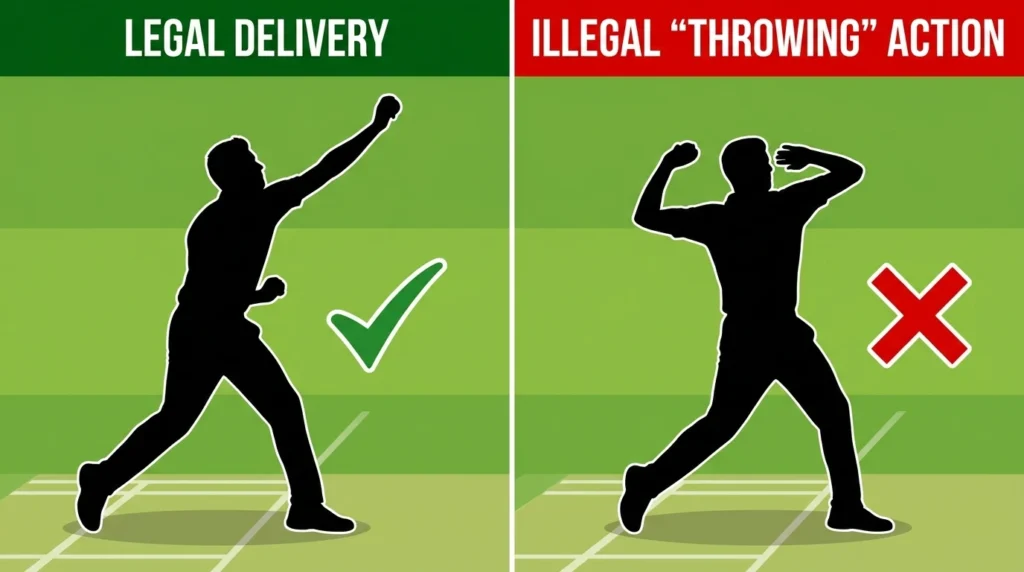
A legal bowling action is an important rule in cricket that ensures fair play for all bowlers. According to the Laws of Cricket, a bowler must deliver the ball with a straight arm. This means that the elbow should not be bent or extended in an unnatural way during the delivery of the ball. The International Cricket Council (ICC) allows a small amount of elbow flex, up to 15 degrees, to account for natural human movement.
If a bowler’s arm bends beyond this permitted limit while releasing the ball, it is considered an illegal action, commonly known as “throwing” or “chucking.” This gives the bowler an unfair advantage and is therefore not allowed in the game.
The main purpose of this rule is to maintain fairness and ensure that no bowler gains an unnatural advantage over the batsman. Both fast bowlers and spin bowlers must follow this rule, although their bowling styles may look different.
Umpires closely observe the bowler’s arm during the delivery to check that the action is legal. If an action appears suspicious, the bowler can be reported and sent for biomechanical testing under ICC regulations. If the action is found illegal, the bowler may be suspended until they correct their bowling action.
Overall, a legal bowling action helps keep cricket fair, balanced, and based on skill.
Bowling Crease and Delivery
The bowler must deliver the ball from behind the bowling crease.
Important points include:
- The bowler’s front foot must not cross the popping crease.
- The back foot must remain within the return crease.
If these conditions are not followed, the delivery is declared a no-ball.
Over in Cricket
An “Over” in cricket is one of the most basic and important units of the game, and it plays a key role in controlling the flow of a match. An over consists of six legal deliveries bowled by a bowler from one end of the pitch to the batsman at the other end. Once these six balls are completed, the over is finished, and a new over begins from the opposite end of the pitch, usually bowled by a different bowler. The concept of the over helps organize the game, set bowling limits, and create structure in both limited-overs and Test cricket formats.
In modern cricket, overs are especially important in formats like One Day Internationals (ODIs) and T20 matches, where each team has a fixed number of overs to score runs. For example, in ODIs each team gets 50 overs, while in T20 matches each team gets 20 overs. This makes every over very valuable because each one directly impacts the final result of the match. A good over by a bowler, where very few runs are given and maybe a wicket is taken, can put pressure on the batting side.
An over can also include extras like wides and no-balls. These deliveries do not count as legal balls, so the bowler must bowl additional deliveries to complete the over. This makes discipline very important for bowlers because extra balls can give batsmen more scoring opportunities.
The idea of the over also helps in planning strategies. Captains decide which bowler should bowl a specific over depending on the match situation, pitch conditions, and batsman’s strength. In this way, overs are not just a counting system but a tactical part of cricket.
Overall, the over is a fundamental building block of cricket that ensures fairness, structure, and excitement in every match.
An over consists of six legal deliveries bowled by a bowler.
If the bowler bowls:
- A no-ball
- A wide ball
These deliveries do not count as part of the six legal balls, and the bowler must bowl extra deliveries.
Types of Bowlers in Cricket
Different bowlers use different techniques to challenge the batsman.
Fast Bowlers
Fast bowlers rely on speed and bounce to trouble the batsman.
Key characteristics:
- High bowling speed
- Aggressive deliveries
- Ability to swing the ball
Fast bowlers aim to surprise the batsman with pace.
Medium Pace Bowlers
Medium pace bowlers combine moderate speed with accuracy.
They focus on:
- Line and length
- Swing movement
- Consistent bowling
These bowlers are often very effective in limited-overs cricket.
Spin Bowling Rules (Cricket)
Spin bowling in cricket is a technique where the bowler delivers the ball with rotation (spin) instead of high speed. The spin causes the ball to change direction after bouncing, making it difficult for the batsman to play.
Spin bowling follows the general rules of cricket bowling, but there are specific guidelines and practical aspects every player should understand.
Basic Rules of Spin Bowling
Spin bowling is one of the most skillful aspects of cricket. Unlike fast bowlers who rely mainly on pace, spin bowlers use finger movement, wrist action, flight, and turn to deceive batsmen. However, regardless of how much spin a bowler can generate, every spinner must follow the official laws of cricket. These rules ensure that the game remains fair and that all deliveries are bowled legally. Understanding these basic rules helps young cricketers develop proper techniques and avoid unnecessary penalties.
1. Legal Bowling Action
One of the most important rules in spin bowling relates to the bowler’s action. The ball must be delivered with a legal bowling action, meaning the bowler cannot straighten the arm excessively during delivery. According to cricket regulations, a small amount of elbow extension is permitted within the allowed limit, but bending and then forcefully straightening the elbow beyond this limit is considered illegal.
An illegal action is commonly known as throwing or chucking. If the umpire suspects that a bowler is using an illegal action, the bowler may be reported and required to undergo testing. If the action is found to be unlawful, the bowler may be suspended from bowling in official matches until the action is corrected.
Why This Rule Matters
- Ensures fairness between bowlers and batsmen.
- Prevents bowlers from gaining an unfair advantage.
- Encourages proper bowling techniques.
- Maintains the integrity of the game.
Spin bowlers should focus on using their fingers and wrists to generate turn rather than relying on illegal arm movements.
2. Over the Shoulder Delivery
Another essential rule is that the ball must be delivered over the shoulder using a recognized bowling action. Underarm bowling is not allowed in standard cricket matches unless special conditions or agreements exist in informal formats.
The bowler must also release the ball before crossing the popping crease. Releasing the ball after completely passing the crease results in an illegal delivery.
Importance of This Rule
- Maintains the traditional structure of cricket.
- Ensures consistency in bowling techniques.
- Prevents unusual delivery methods that could provide unfair advantages.
- Helps umpires judge deliveries accurately.
Even though spin bowlers have shorter run-ups than fast bowlers, they must still pay close attention to their release point.
3. Front Foot Rule (No Ball)
The front foot rule is one of the most commonly enforced laws in cricket. At the moment the ball is delivered, some part of the bowler’s front foot must remain behind the popping crease. If the entire front foot lands beyond the line, the umpire calls a no-ball.
A no-ball benefits the batting side because they receive an extra run. In limited-overs cricket, the next delivery may also become a free hit, giving the batsman a greater opportunity to score without the risk of being dismissed in certain ways.
Consequences of a No Ball
- One extra run awarded to the batting team.
- Possible free hit in white-ball cricket.
- Increased pressure on the bowler.
- Disruption of the bowler’s rhythm.
How Spinners Can Avoid No Balls
- Practice a consistent run-up.
- Focus on balance during delivery.
- Mark the starting position carefully.
- Develop awareness of the crease.
Because spin bowlers usually operate with controlled approaches, overstepping is a mistake that can often be avoided through discipline and practice.
4. Fair Delivery
For a delivery to be considered fair, the ball must follow certain conditions before reaching the batsman.
The ball:
- Must not bounce more than twice before reaching the striker.
- Must not roll along the ground.
- Should travel in a manner consistent with the laws of cricket.
If the ball bounces excessively before reaching the batsman or rolls on the pitch, the umpire may call it a no-ball.
Why Fair Deliveries Are Important
- Ensure that batsmen have a fair chance to play the ball.
- Maintain the quality and competitiveness of the contest.
- Prevent unusual deliveries that violate the spirit of the game.
Spin bowlers often use flight and slower pace to deceive batsmen, but they must still deliver the ball within the boundaries of these regulations.
5. Wide Ball Rule
Accuracy is one of the greatest strengths of successful spin bowlers. If a delivery passes too far from the batsman and is considered out of normal reach, the umpire signals a wide ball.
A wide ball gives the batting team an extra run, and the delivery must be bowled again because it does not count as one of the six legal balls in the over.
This rule also applies to spin bowlers who attempt extreme angles or excessive turn but fail to keep the ball within the batsman’s reasonable playing range.
Effects of Bowling Wides
- Extra runs are awarded to the batting side.
- Additional pressure is placed on the bowler.
- The over becomes longer.
- The bowling team loses momentum.
How to Avoid Wide Deliveries
- Maintain consistent line and length.
- Aim at specific target areas during practice.
- Avoid unnecessary experimentation.
- Understand the strengths and movements of the batsman.
Great spin bowlers attack the batsman while remaining accurate enough to avoid giving away easy runs.
Spin bowling combines creativity, patience, and technical skill, but every spinner must operate within the laws of cricket. Following the rules regarding legal actions, over-the-shoulder deliveries, front foot placement, fair deliveries, and wide balls ensures that the game remains balanced and fair. Young bowlers who develop correct habits early in their careers not only avoid penalties but also build a strong foundation for long-term success. By mastering both the art of spin and the rules that govern it, a bowler can become a reliable match-winner capable of troubling even the best batsmen.
Types of Spin Bowling
1. Off-Spin
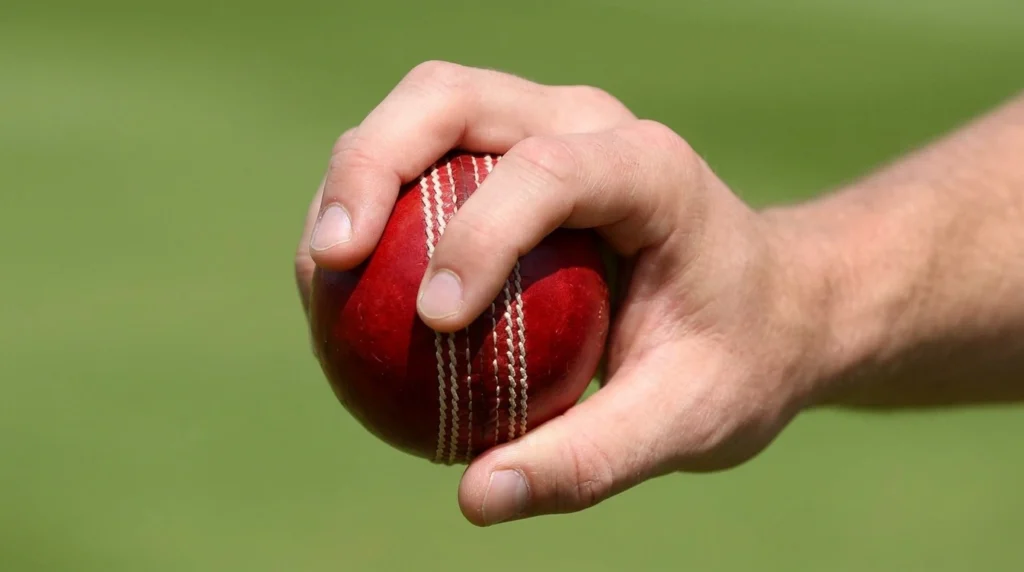
Off-spin is an important spin bowling technique in cricket, mainly used to target right-handed batsmen. In this style, the bowler uses fingers and wrist to spin the ball so that after pitching it turns from the off side to the leg side. In simple words, off-spin means the ball moves from the batsman’s off side towards the leg side, especially when it is bowled by a right-arm off-spinner.
The grip of an off-spin bowler is very important. The bowler holds the ball mainly with the fingers and twists them at the time of release to generate spin. This bowling style has less pace but offers greater control and more variations. Off-spinners often use slower deliveries, flighted balls, and the “doosra” variation to confuse the batsman.
In modern cricket, off-spin plays a very strategic role. In Test matches, off-spinners bowl long spells and maintain pressure on batsmen. In limited-overs cricket like ODIs and T20s, they are used in the middle overs to control the run rate and force batsmen into risky shots.
Pitch conditions are very important for off-spin bowling. On dry or rough pitches, the ball turns more, giving off-spinners a greater advantage. That is why off-spin is especially effective on subcontinent pitches.
Accuracy is crucial in off-spin bowling. If a bowler maintains a good line and length, it becomes very difficult for batsmen to score runs. A good off-spinner does not rely only on spin but also uses smart variations and strong game awareness.
Overall, off-spin is a classic and intelligent bowling style based on experience, control, and strategy.
Off-spin is bowled by a right-arm bowler and the ball spins from the off side to the leg side for a right-handed batsman.
2. Leg-Spin
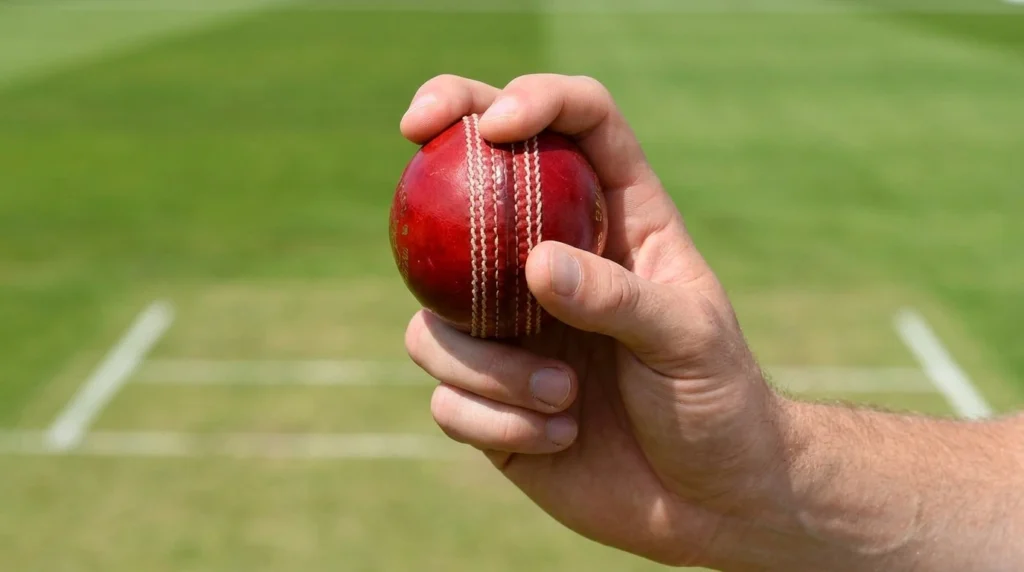
Leg-spin is a highly skillful and attacking spin bowling style in cricket, mainly used by right-arm bowlers. In this technique, the bowler uses the wrist and fingers to spin the ball so that after pitching it turns from the leg side to the off side for a right-handed batsman. In simple terms, leg-spin means the ball moves away from the batsman’s leg stump towards the off side, making it both challenging and unpredictable for the batter.
The most important part of leg-spin bowling is wrist action, which is why it is also called “wrist spin.” The bowler rotates the wrist at the time of release, generating a sharp turn and high level of unpredictability. This style is difficult to control, but it offers a very high wicket-taking ability.
Leg-spinners have many variations such as the googly, flipper, top-spinner, and wrong’un, which are used to confuse the batsman. In modern cricket, leg-spin plays a very important role, especially in T20 and ODI formats where taking wickets can change the course of the game. They create pressure in the middle overs and force batsmen into risky shots.
In Test cricket, leg-spin is also very effective, especially on slow and dry pitches where the ball turns more. The biggest advantage of leg-spin is its unpredictability, as batsmen often struggle to read the direction and amount of turn.
However, the main disadvantage is that if the bowler lacks control over line and length, they can concede a lot of runs. Therefore, a successful leg-spinner needs accuracy, patience, and strong mental strength.
Overall, leg-spin is an exciting and game-changing bowling style that can completely shift the momentum of a match.
Bowled by a right-arm bowler, it spins the ball from the leg side to the off side for a right-handed batsman.
Common Spin Bowling Techniques
- Flight – Throwing the ball higher in the air to deceive the batsman
- Turn – Making the ball change direction after pitching
- Drift – Movement of the ball in the air
- Spin Variation – Using different spins like doosra, googly, etc.
Spin bowling is a very important and technical skill in cricket in which the bowler uses spin, control, and deception rather than speed to bowl the ball. The most common spin bowling techniques include off-spin and leg-spin. In off-spin (finger spin), the bowler uses the fingers to rotate the ball so that it turns from the off side to the leg side for a right-handed batsman. This style offers more control, and maintaining line and length is relatively easier.
In contrast, leg-spin (wrist spin) uses the wrist to generate spin, producing a sharper turn and greater unpredictability. Leg-spin is considered a more attacking style because it has a higher wicket-taking potential, although it is more difficult to control.
Apart from these basic styles, modern cricket includes many variations that make spin bowling even more dangerous. For example, the googly is a delivery used by leg-spinners that turns in the opposite direction, confusing the batsman. Similarly, the doosra is an off-spinner’s variation that spins the other way, creating deception. The top-spinner is a delivery that produces extra bounce after pitching, while the arm ball or straight delivery has less spin and goes on straight, potentially beating the batsman. The carrom ball is a modern variation where the bowler flicks the ball with the fingers to generate unpredictable movement.
Spin bowling is not only about variations but also about concepts like flight, loop, and drift. Flight refers to bowling the ball in a slow, high arc through the air to disturb the batsman’s timing, while loop describes the curved trajectory of the ball that confuses the batter. Drift is the sideways movement of the ball in the air caused by wind, making spin even more effective.
A good spinner does not rely only on spin but also uses deception, changes in pace, and smart field placements. In modern cricket, spin bowling is widely used in the middle overs to control the game and take wickets, especially in limited-overs formats where building pressure is a key factor.
Overall, the combination of common spin bowling techniques makes cricket more interesting, strategic, and unpredictable.
Fielding Rules for Spin Bowlers
- Field placements must follow standard cricket rules.
- In limited overs cricket:
- Fielding restrictions apply (powerplay rules).
- Spinners often use close fielders like slips, silly point, and short leg.
Fielding rules for spin bowlers are part of the laws of cricket that control field placement and maintain balance between batting and bowling. However, these rules do not depend on the type of bowler (spin or fast); instead, they depend on the format of the game, such as Test, ODI, and T20 cricket.
In limited-overs cricket, spin bowlers often bowl during the middle overs, where fielding restrictions are more flexible compared to the powerplay. In ODIs and T20 matches, strict fielding rules apply during the powerplay overs. During this phase, only a limited number of fielders are allowed outside the 30-yard circle, while the remaining fielders must stay inside the inner circle. The purpose of this rule is to maintain a balance between bat and ball and to give batsmen better scoring opportunities in the early overs.
When spin bowlers bowl after the powerplay, they get more flexible field settings, allowing the captain to adjust fielders according to strategy. Spin bowlers often rely on close-catching fielders such as slips, silly point, short leg, and cover positions, as spin bowling creates more chances of edges and bat-pad catches. In addition, deep fielders are also placed to stop boundary shots and control aggressive batting.
In ODIs, usually only four fielders are allowed outside the 30-yard circle, while in T20 cricket the same rule applies but feels more restrictive because of fewer overs. In Test cricket, there are no fixed fielding restrictions, giving captains complete freedom to set fields. This is especially useful for spin bowlers on slow and turning pitches.
Field placement is very important in spin bowling because the right field setup puts pressure on the batsman and increases the chances of mistakes. Therefore, coordination between the captain and the spinner is very important to adjust the field for each delivery.
Advantages of Spin Bowling
- Difficult for batsmen to predict
- Useful on slow and dry pitches
- Requires less physical strength than fast bowling
Spin bowling is a very effective and strategic bowling style in cricket, offering many advantages in both limited-overs and Test formats. One of the biggest advantages of spin bowling is that it creates confusion and pressure on batsmen. Unlike fast bowling, spin bowling is slower but includes turn, flight, and variations that disturb the batsman’s timing and shot selection. As a result, batsmen often make mistakes, increasing the chances of taking wickets.
Another important advantage is that spin bowlers are effective in long spells. Unlike fast bowlers, they do not require as much physical effort, allowing them to maintain control and consistency over longer periods. In Test matches, spin bowlers play a crucial role in the middle and later stages of an innings when the pitch becomes slow and rough.
Spin bowling is also very useful for controlling the run rate. In limited-overs cricket, especially ODIs and T20s, spin bowlers restrict free scoring during the middle overs and build pressure on the batting side, increasing the likelihood of mistakes.
Spin bowlers also have a wide range of variations such as off-spin, leg-spin, doosra, googly, top-spin, and arm ball, which make it difficult for batsmen to read their deliveries. This unpredictability makes spin bowling even more dangerous.
In addition, spin bowling is highly dependent on pitch conditions. On dry and dusty pitches, spin becomes more effective as the ball turns more. This gives spin bowlers a natural advantage in subcontinent conditions.
Field settings also add to the effectiveness of spin bowling, as captains can place close fielders to trap batsmen. Overall, spin bowling is an intelligent and tactical weapon that can change the flow of a match and put a team in a winning position.
Common Mistakes in Spin Bowling (and the Rules Related to Them)
Spin bowling is not just about turning the ball. It requires accuracy, patience, and excellent control. Even skilled spinners can make mistakes that reduce their effectiveness and give easy scoring opportunities to the batsmen. Understanding these common errors and the rules associated with them helps bowlers improve their performance and maintain discipline on the field.
Overstepping (No Ball)
One of the most avoidable mistakes in cricket is bowling a no ball due to overstepping. According to the laws of the game, the bowler’s front foot must land with some part of it behind the popping crease at the moment of delivery. If the entire front foot crosses the crease, the umpire signals a no ball.
A no ball gives the batting side an extra run and, in limited-overs cricket, often results in a free hit on the next delivery. This not only increases pressure on the bowler but also gives the batsman an excellent scoring opportunity.
How to Avoid It
- Practice your run-up regularly to develop consistency.
- Mark your starting point accurately.
- Focus on your final stride during delivery.
- Avoid rushing your approach to the crease.
- Maintain balance throughout the bowling action.
For spin bowlers, who generally rely more on accuracy than speed, controlling the run-up is usually easier, making overstepping an unnecessary mistake.
Bowling Too Short or Too Full
Length is one of the most important aspects of successful spin bowling. Delivering the ball too short allows the batsman extra time to move back and play attacking shots. On the other hand, bowling too full gives the batsman the chance to drive comfortably through the gaps.
A good spinner aims to bowl on a consistent length that encourages uncertainty. The ideal delivery tempts the batsman to play forward while creating the possibility of turn, bounce, or deception after pitching.
Effects of Incorrect Length
Bowling Too Short:
- Gives the batsman time to judge the spin.
- Creates opportunities for cut and pull shots.
- Reduces the threat of stumping and LBW.
Bowling Too Full:
- Allows easy drives down the ground.
- Makes scoring simpler for aggressive batsmen.
- Reduces the effectiveness of spin.
How to Improve Length
- Practice hitting the same spot repeatedly.
- Use cones or markers during training sessions.
- Study different pitch conditions.
- Adjust your length according to the batsman’s movements.
Consistent length is often what separates an average spinner from a world-class one.
Lack of Control
Many developing spin bowlers focus only on turning the ball and forget the importance of control. Excessive experimentation without accuracy often results in wides, full tosses, and loose deliveries.
Control means consistently maintaining the correct line and length while applying spin. Even a ball that turns only slightly can be dangerous if delivered accurately.
Problems Caused by Poor Control
- Extra runs through wides.
- Loss of pressure on the batsman.
- Difficulty building dot-ball sequences.
- Reduced confidence from teammates and captains.
- Increased chances of being attacked by the batting side.
How to Develop Better Control
- Practice with a clear target area.
- Bowl long spells to build rhythm.
- Focus on repeatable actions.
- Improve wrist and finger positioning.
- Avoid trying too many variations too early.
Captains value spinners who can contain runs as much as those who regularly take wickets.
Simple Example
Imagine a spinner bowling to a batsman who is expecting the ball to travel straight after pitching. The bowler delivers the ball with revolutions using the fingers or wrist. The ball lands on a good length outside the batsman’s off stump.
As the batsman moves forward to defend, the ball grips the surface and turns sharply after bouncing. The unexpected movement beats the outside edge of the bat and passes close to the stumps or reaches the wicketkeeper.
This situation perfectly demonstrates the main objective of spin bowling: to deceive the batsman through turn, flight, bounce, and variation rather than pure pace. A successful spinner uses skill, patience, and accuracy to create uncertainty, force mistakes, and ultimately take wickets.
Spin bowling is an essential skill in cricket that combines control, technique, and intelligence. While it follows general cricket rules like fair delivery, no-ball, and wide rules, the real challenge lies in mastering spin, flight, and variation.
Understanding spin bowling rules helps beginners improve their game and allows bowlers to use strategy and skill to outsmart batsmen effectively.
Spin bowlers rely on spin and flight rather than speed.
There are two main types:
- Off-spin bowlers
- Leg-spin bowlers
Spin bowlers try to deceive the batsman by changing the direction of the ball after it bounces.
Important Bowling Rules and Terms
Several key rules help maintain fairness during bowling.
No-Ball
A no-ball occurs when a bowler makes an illegal delivery.
Common reasons include:
- Overstepping the crease
- Throwing the ball instead of bowling
- Dangerous or high full toss deliveries
Consequences of a no-ball:
- The batting team receives one extra run
- The batsman gets a free hit in limited-overs formats
Wide Ball
A wide ball is declared when the ball is bowled too far from the batsman for a normal shot.
Effects of a wide ball:
- The batting team receives one extra run
- The delivery must be bowled again
Bouncer Rule
A bouncer is a short-pitched delivery that rises toward the batsman’s head or chest.
Rules for bouncers:
- Limited number allowed per over
- Umpire may warn the bowler for excessive short balls
This rule protects player safety.
Beamer
A beamer is a dangerous delivery that reaches the batsman above waist height without bouncing.
This is considered unsafe and may result in:
- Immediate no-ball
- Warning to the bowler
- Possible removal from bowling
Bowling Techniques and Strategies
Successful bowlers use different techniques to outsmart the batsman.
Swing Bowling
Swing bowling causes the ball to move sideways in the air.
There are two types:
- Inswing – ball moves toward the batsman
- Outswing – ball moves away from the batsman
Swing bowling is very effective with new balls.
Seam Bowling
Seam bowlers use the seam position of the cricket ball to create unpredictable movement after bouncing.
This technique works best on grassy or uneven pitches.
Spin Bowling Techniques
Spin bowlers use wrist or finger movements to spin the ball.
Common spin techniques include:
- Leg spin
- Off spin
- Doosra
- Googly
These deliveries confuse batsmen by changing direction suddenly.
Player Roles in Cricket Bowling
Bowling in cricket involves different player roles.
Opening Bowlers
Opening bowlers are usually fast bowlers who start the innings.
Their goal is to:
- Take early wickets
- Build pressure on the batting team
Change Bowlers
Change bowlers are introduced after opening bowlers.
They provide:
- Variation in pace
- Different bowling angles
Spin Bowlers
Spin bowlers often bowl during the middle overs.
They try to:
- Slow down scoring
- Force mistakes from batsmen
Equipment Used by Bowlers
Several pieces of equipment are important for cricket bowlers.
Cricket Ball
The cricket ball is made from:
- Cork core
- Leather outer covering
- Raised seam
The seam helps bowlers control swing and spin.
Cricket Shoes
Bowlers use special shoes with spikes for better grip while running and delivering the ball.
Protective Gear
Although bowlers do not need as much protection as batsmen, they may use:
- Sunglasses
- Finger tape
- Support bands
These help improve performance and comfort.
Major Cricket Tournaments Featuring Bowling Talent
Many international cricket tournaments showcase excellent bowling performances.
ICC Cricket World Cup
The ICC Cricket World Cup is the biggest international tournament where bowlers compete at the highest level.
ICC T20 World Cup
This shorter format requires bowlers to use clever strategies because batsmen play more aggressive shots.
Test Cricket Championships
Test matches are the longest format of cricket and highlight the skills of both fast bowlers and spin bowlers.
Legendary bowlers often build their reputation in Test cricket.
Benefits of Playing Bowling in Cricket
Bowling offers several physical and mental benefits.
Physical Benefits
Bowling improves:
- Strength and stamina
- Arm and shoulder power
- Coordination and balance
- Overall fitness
Fast bowlers especially require strong physical conditioning.
Mental Benefits
Bowling also strengthens mental skills such as:
- Strategic thinking
- Concentration
- Decision-making
- Confidence
Bowlers must constantly plan how to dismiss batsmen.
Interesting Facts About Cricket Bowling
Here are some interesting facts related to bowling in cricket.
- The fastest recorded cricket delivery was over 160 km/h.
- Some bowlers specialize only in spin bowling.
- A bowler who takes three wickets in three balls achieves a hat-trick.
- Famous bowlers have taken over 800 wickets in Test cricket.
- Bowling strategies often depend on pitch conditions and weather.
These facts highlight how important bowling is in cricket.
Conclusion
Bowling is one of the most important aspects of cricket and plays a major role in deciding the outcome of a match. The bowling rules in cricket ensure that bowlers deliver the ball fairly and safely while maintaining balance between bowlers and batsmen.
From understanding legal deliveries and overs to learning about swing, seam, and spin bowling techniques, mastering bowling requires both skill and discipline. Different types of bowlers contribute unique strategies to the game, making cricket more exciting and competitive.
For beginners, learning the bowling rules helps build a strong foundation in cricket. Whether you are a player, fan, student, or sports enthusiast, understanding bowling rules allows you to appreciate the skill and strategy involved in every delivery.
Cricket continues to evolve, but bowling will always remain a key element that defines the beauty and challenge of the sport.

Jon Smith is a passionate sports writer specializing in cricket and global sporting events. With a keen eye for match analysis and player performance, he creates clear, engaging, and informative content. His work focuses on simplifying complex sports insights, making them accessible for beginners and experienced fans alike worldwide.