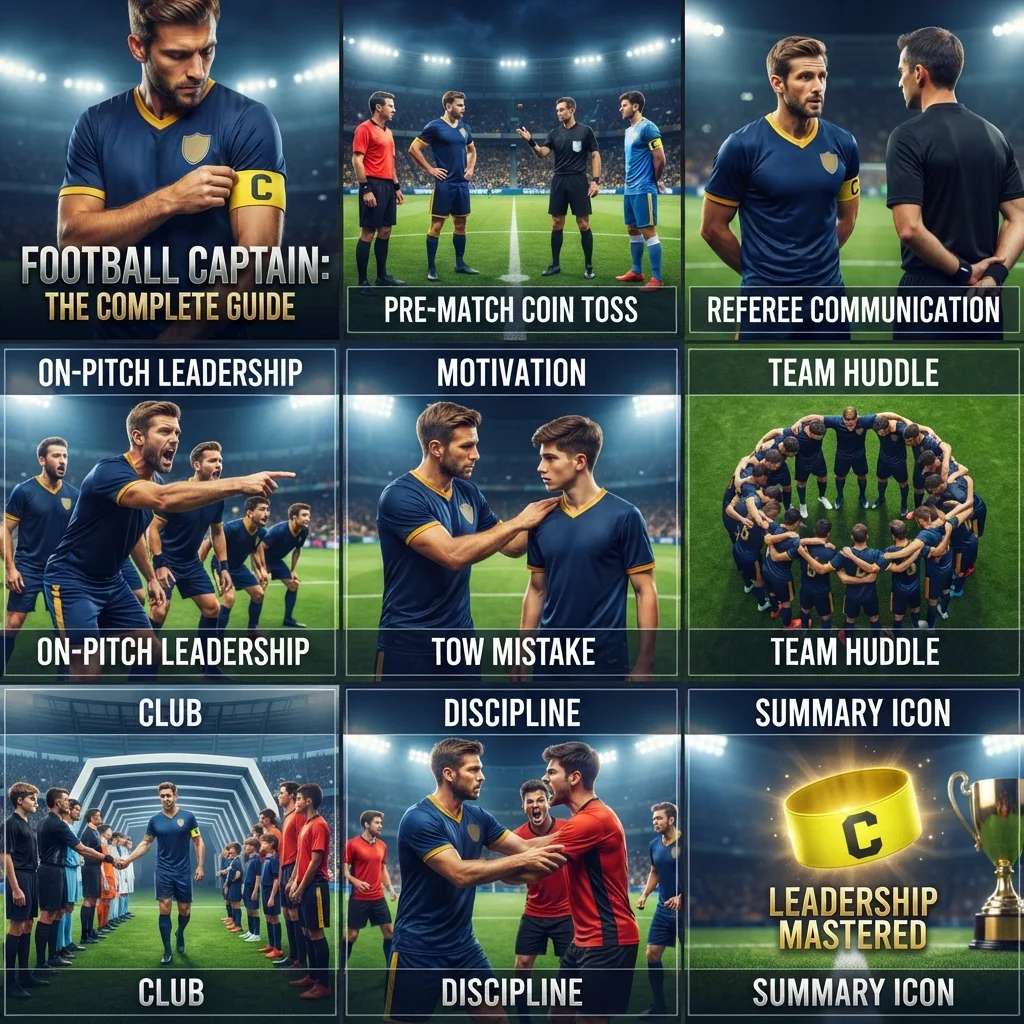

When a football match becomes tense, players often look toward one person for direction—the team captain. A captain may wear an armband, lead the team onto the pitch, speak with the referee, and help teammates stay focused. However, being captain is about much more than having a visible symbol on the arm.
Football captain responsibilities include leadership, communication, motivation, discipline, teamwork, and helping the team respond to difficult situations. A good captain does not simply give instructions. They set an example through their behavior, support teammates, communicate calmly, and help the team follow the coach’s tactical plan.
The captain also has an important relationship with the referee and opposing team. Before the match, the captain may participate in the coin toss, while during the game, they can communicate respectfully with match officials when appropriate. However, the captain does not have special authority to change the Laws of the Game or overrule the referee.
This guide explains the main responsibilities of a football captain, the qualities of an effective leader, common mistakes, match-day duties, communication techniques, and practical advice for becoming a better captain.
What Is a Football Captain?
A football captain is a player selected to provide leadership and represent the team during a match. The captain usually wears an armband to identify their role.
The captain can be an experienced player, but experience alone does not automatically make someone a good leader. A successful captain understands the game, communicates clearly, stays composed under pressure, and earns the trust of teammates.
A captain may play any position. Goalkeepers, defenders, midfielders, and forwards can all become team captains depending on their leadership qualities and the team’s needs.
Does a Captain Have Special Powers?
No. Under the Laws of the Game, the captain has no special status or privileges. The captain cannot order the referee to change a decision or give teammates permission to ignore the rules.
The captain’s importance comes mainly from leadership and communication rather than official authority.
Main Football Captain Responsibilities
A captain has responsibilities before, during, and after a match. Some are official match duties, while many involve leadership within the team.
The most important responsibilities include:
- Leading by example
- Communicating with teammates
- Supporting the coach’s instructions
- Motivating players
- Maintaining team discipline
- Helping teammates stay focused
- Communicating respectfully with officials
- Managing pressure
- Encouraging teamwork
- Supporting younger or less experienced players
- Helping the team respond to setbacks
A captain does not need to perform every responsibility alone. The best captains work closely with coaches, senior players, and the entire squad.
Captain Responsibilities Before the Match
Leadership begins before the referee blows the opening whistle.
Preparing the Team Mentally
A captain should help teammates enter the match with the right attitude. This does not necessarily mean giving a long speech.
A few clear words can remind players to stay focused, work together, and follow the game plan.
For example, a captain might remind the team to:
- Start with concentration
- Communicate constantly
- Respect the opposition
- Stay organized
- Fight for every ball
- Follow the tactical plan
Checking Team Readiness
A captain can also help create a professional match-day environment.
They may remind teammates about:
- Match equipment
- Warm-up routines
- Positions
- Set-piece responsibilities
- Defensive organization
- Important tactical instructions
The coach remains responsible for coaching decisions, but the captain can help make sure players understand and follow those instructions.
Representing the Team at the Coin Toss
The captain commonly represents the team at the pre-match coin toss.
The referee conducts the toss according to the Laws of the Game, and the captain participates as the team’s representative.
This is a small responsibility, but it is one of the most recognizable official roles associated with being captain.
Captain Responsibilities During the Match
Once the match starts, the captain’s leadership becomes even more important.
Communicating With Teammates
Communication is one of the most valuable football captain responsibilities.
A captain should communicate information that helps teammates make better decisions. This can include reminders about marking, positioning, defensive pressure, or tactical changes.
Useful communication should be:
- Clear
- Short
- Positive
- Timely
- Easy to understand
Instead of shouting several instructions at once, a captain can use simple calls such as:
- “Drop!”
- “Man on!”
- “Stay compact!”
- “Press!”
- “Hold the line!”
- “Switch!”
- “Time!”
Good communication can prevent confusion and improve team organization.
Keeping Players Organized
Football can become chaotic, especially when possession changes quickly.
The captain can help maintain the team’s shape by reminding teammates where they need to be. This is particularly important during defensive transitions and set pieces.
For example, after losing possession, the captain may encourage the team to recover its defensive shape rather than allowing players to chase the ball individually.
Supporting the Coach’s Tactics
The coach creates the tactical plan, but the captain helps communicate and reinforce it on the pitch.
If the coach asks the team to press higher, the captain can encourage teammates to move together.
If the team needs to defend deeper, the captain can remind players to maintain their positions.
This makes the captain an important link between the coaching staff and players.
Motivating Teammates
Football matches rarely go exactly according to plan. Teams may concede early goals, miss chances, lose possession, or face difficult decisions.
A strong captain helps teammates remain mentally focused.
After Conceding a Goal
When a team concedes, players can become frustrated or lose concentration.
Instead of blaming someone, the captain should help the team reset.
Useful leadership might involve:
- Encouraging teammates to stay calm.
- Identifying what needs to improve.
- Reminding players that the match is still in progress.
- Refocusing on the next opportunity.
The goal is not to pretend that mistakes did not happen. The goal is to prevent one mistake from becoming several more.
When the Team Is Winning
Leadership is also important when a team is ahead.
A captain should remind players not to become careless or disrespectful.
The team may need to:
- Maintain concentration
- Manage the tempo
- Keep defensive organization
- Avoid unnecessary fouls
- Continue following the game plan
A good captain understands that a one-goal lead does not guarantee victory.
Maintaining Discipline and Sportsmanship
A captain should set a strong example of professional behavior.
This includes respecting:
- Referees
- Opponents
- Teammates
- Coaches
- Match officials
- Competition rules
A captain should avoid unnecessary arguments, aggressive behavior, or actions that could damage the team’s reputation.
Dealing With Frustration
Players may become frustrated after a foul or controversial decision.
The captain can help prevent emotional reactions from becoming bigger problems. Instead of encouraging confrontation, the captain should promote calm and controlled behavior.
This does not mean a captain can never question a decision. Communication with officials should remain respectful and within the Laws of the Game.
Communicating With the Referee
The captain is often the most visible player when communication with the referee is needed.
However, the captain should understand the difference between respectful communication and confrontation.
How Captains Should Approach Officials
A professional captain should:
- Speak calmly
- Listen to the referee
- Ask questions respectfully when appropriate
- Avoid surrounding or intimidating officials
- Accept decisions once they have been explained
- Encourage teammates to maintain discipline
A captain cannot demand that the referee reverse a decision simply because the team disagrees.
Good communication with officials can help keep the match under control and reduce unnecessary conflict.
Leading by Example
One of the most powerful responsibilities of a football captain is leading by example.
Teammates notice what the captain does more than what the captain says.
A captain should demonstrate:
- Effort
- Discipline
- Respect
- Determination
- Professionalism
- Positive body language
- Teamwork
For example, if a captain expects teammates to track back and defend, they should be willing to do the same.
If a captain asks players to remain calm, they should also remain calm after a controversial decision.
Supporting Younger Players
Experienced captains can play an important role in helping younger or less experienced teammates.
A young player may become nervous after making an error. A supportive captain can provide encouragement rather than criticism.
Helpful actions include:
- Giving simple instructions
- Offering encouragement
- Explaining positioning
- Praising good decisions
- Helping players recover from mistakes
This creates a stronger team environment and can improve player confidence.
Captain Responsibilities During Set Pieces
Set pieces require organization, and the captain can help make sure everyone understands their assignment.
Defensive Set Pieces
During corners and free kicks, the captain may help organize:
- Marking assignments
- Defensive positions
- Player communication
- Wall organization
- Tracking attacking runners
The goalkeeper may take primary responsibility for defensive organization in many situations, but the captain can still provide useful support.
Attacking Set Pieces
For attacking corners and free kicks, the captain can help teammates understand their roles.
Players may need to know:
- Who attacks the near post
- Who attacks the far post
- Who stays outside the penalty area
- Who provides defensive cover
- Who takes the set piece
Clear organization can make a planned routine much more effective.
Captain Responsibilities When the Team Is Under Pressure
Pressure is where leadership becomes especially visible.
A team may be defending a narrow lead, playing against a stronger opponent, or dealing with a difficult atmosphere.
The captain should help teammates remain composed.
Stay Calm
Players often copy the emotional behavior of influential teammates.
If the captain becomes frustrated, teammates may also lose focus. If the captain remains composed, it can help the team stay mentally stable.
Focus on the Next Action
Instead of worrying about the previous mistake, the captain can direct attention toward the next task.
For example:
“Reset. Defend together. Stay focused.”
Short, positive communication can be more effective than criticism.
Qualities of a Great Football Captain
Not every captain has the same personality. Some are vocal leaders, while others lead quietly through their actions.
However, several qualities are commonly associated with effective football leadership.
| Quality | Why It Matters |
|---|---|
| Communication | Keeps teammates organized |
| Confidence | Helps players remain composed |
| Discipline | Sets a professional example |
| Responsibility | Encourages accountability |
| Teamwork | Builds unity |
| Decision-making | Helps during difficult moments |
| Emotional control | Prevents unnecessary conflict |
| Motivation | Keeps players engaged |
| Respect | Builds trust |
| Courage | Helps during pressure situations |
A great captain does not need to be the loudest player. They need to be someone teammates trust.
Common Mistakes Football Captains Make
Even experienced captains can make leadership mistakes.
Trying to Control Everything
A captain should not attempt to replace the coach.
Tactical decisions belong to the coaching staff, while the captain helps execute and communicate the plan on the pitch.
Blaming Teammates
Publicly blaming a teammate after an error can damage confidence and team unity.
Constructive feedback is much more useful.
Arguing Constantly With the Referee
Repeated arguments can distract the captain from the game and may increase disciplinary problems.
Becoming Too Emotional
Passion is valuable, but uncontrolled emotions can negatively affect the entire team.
Giving Too Many Instructions
Constant shouting can create confusion. Good captains communicate important information at the right moment.
How to Become a Better Football Captain
Leadership is a skill that can be developed through practice and experience.
Improve Communication
Practice giving short, clear instructions during training sessions.
Learn the Laws of the Game
Understanding football rules helps captains make better decisions and communicate confidently with teammates and officials.
Study the Game
Watch matches and observe how successful captains manage different situations.
Pay attention to what they do after:
- Conceding a goal
- Receiving a yellow card
- Losing possession
- Winning an important challenge
- Facing referee decisions
- Protecting a narrow lead
Build Trust
Trust develops when teammates see that the captain is consistent, reliable, and supportive.
Control Your Emotions
Work on staying calm during difficult moments. Emotional control is one of the most valuable leadership skills in football.
Captain vs Coach: What Is the Difference?
The captain and coach have different responsibilities.
| Captain | Coach |
|---|---|
| Leads players on the pitch | Leads the team from a coaching perspective |
| Communicates with teammates | Develops tactical plans |
| Helps maintain organization | Selects and prepares the squad |
| Represents the team in certain match situations | Manages training and tactical preparation |
| Encourages players | Analyzes performance |
| Sets an example | Makes coaching decisions |
The strongest teams usually have a good relationship between captain and coach.
What Makes a Captain Respected by Teammates?
Respect cannot be created simply by wearing an armband.
Players usually respect captains who:
- Work hard
- Keep promises
- Treat everyone fairly
- Accept responsibility
- Admit mistakes
- Support teammates
- Remain consistent
- Stay calm under pressure
- Put the team before personal interests
A captain who demands respect without earning it may struggle to influence the team.
Interesting Facts About Football Captains
- A captain is normally identified by a captain’s armband.
- The captain often represents the team during the pre-match coin toss.
- A captain has no special status or privileges under the Laws of the Game.
- Captains can play in any position.
- Leadership can come from actions as well as words.
- A captain’s role is especially important during difficult moments.
- The best captains help connect the coach’s instructions with players on the field.
- A captain should promote respect toward referees and opponents.
- Being the team’s best player does not automatically make someone the best captain.
- Leadership skills can be developed through experience, communication, and practice.
Frequently Asked Questions About Football Captain Responsibilities
1. What are the main responsibilities of a football captain?
The main responsibilities include leading by example, communicating with teammates, maintaining discipline, motivating players, supporting tactical instructions, and helping the team stay organized.
2. Does a football captain have special powers?
No. The captain has no special status or privileges under the Laws of the Game. They cannot overrule the referee or change match decisions.
3. What does a captain do during the coin toss?
The captain commonly represents their team during the pre-match coin toss conducted by the referee.
4. Can a goalkeeper be a football captain?
Yes. A goalkeeper can be appointed captain. However, the captain can play in any position.
5. Should a captain argue with the referee?
A captain should communicate respectfully when appropriate but should avoid aggressive or unnecessary arguments. The referee’s decisions must be respected.
6. How does a captain motivate teammates?
A captain can motivate teammates through encouragement, positive communication, hard work, and strong body language, especially after mistakes or difficult moments.
7. What makes someone a good football captain?
A good captain is responsible, calm, confident, disciplined, communicative, supportive, and willing to put the team’s interests ahead of personal interests.
8. Is the captain responsible for all player behavior?
No. Every player is individually responsible for their conduct. The captain can encourage discipline and good behavior but does not have authority over other players’ decisions.
Conclusion
Football captain responsibilities go far beyond wearing an armband or participating in the coin toss. A captain is an important leader who helps teammates communicate, stay organized, remain motivated, and respond positively to difficult situations.
The best captains lead through both words and actions. They work hard, respect officials and opponents, support younger players, follow the coach’s tactical instructions, and remain composed when the match becomes difficult. They also understand that being captain does not give them special authority over referees or the Laws of the Game.
A successful captain does not need to be the loudest or most talented player on the team. What matters most is trust, consistency, responsibility, communication, and teamwork. By developing these qualities, players can become stronger leaders and help create a more organized, confident, and united football team.