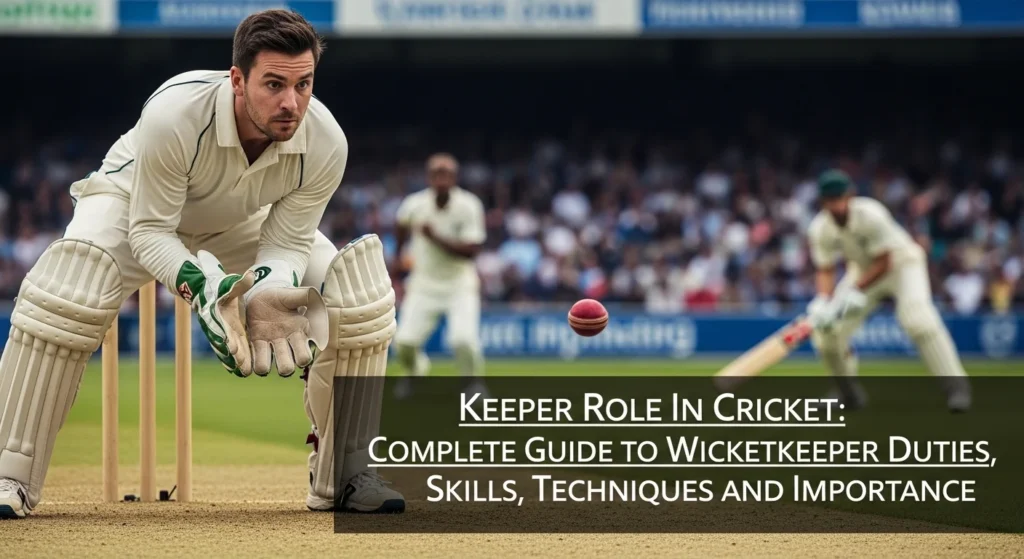

In cricket, every player has a specific role, but one of the most crucial and demanding positions is that of the wicketkeeper. Imagine a fast bowler delivering the ball at high speed, the batter missing it, and the ball flying behind—this is where the wicketkeeper comes into action. The keeper must react in a split second to catch, stop, or stump the batter.
The keeper role in cricket is not just about catching the ball; it involves concentration, quick reflexes, and strong game awareness. A skilled wicketkeeper can change the outcome of a match through sharp catches, lightning-fast stumpings, and effective communication with the team.
Modern cricket, played under rules set by the Marylebone Cricket Club and governed globally by the International Cricket Council, has increased the importance of wicketkeepers, especially in fast-paced formats like T20.
In this article, you will learn everything about the keeper role, including responsibilities, techniques, equipment, strategies, and benefits.
What is the Keeper Role in Cricket?
Definition
The keeper role in cricket refers to the position of the wicketkeeper, a player who stands behind the stumps and is responsible for catching, stopping, and assisting in dismissals.
Simple Explanation
The wicketkeeper is the only fielder allowed to wear gloves and stand directly behind the batter to collect the ball.
Practical Example
If a batter misses the ball, the keeper catches it. If the batter steps out of the crease, the keeper can remove the bails for a stumping.
History and Evolution of the Wicketkeeper Role
In early cricket, wicketkeepers had limited responsibilities due to slower bowling speeds. As cricket evolved and fast bowling became more common, the role of the wicketkeeper became more important.
Today, wicketkeepers are not only fielding specialists but also key batters in many teams. Famous modern players have redefined the role by contributing in both batting and keeping.
Keeper Role Working Principle
The keeper role working principle is based on positioning, reflexes, and anticipation.
Step-by-Step Working
- Stand behind the stumps
- Watch the bowler and batter carefully
- React quickly to the ball
- Catch or stop the ball
- Attempt stumping or run-out when possible
Simple Analogy
Think of the wicketkeeper as a goalkeeper in football—always alert and ready to stop anything coming their way.
Main Responsibilities of a Wicketkeeper
Catching the Ball
- Catch edges from the bat
- Take high catches from deflections
Stumping
- Remove bails when batter leaves crease
- Requires quick hands and timing
Stopping the Ball
- Prevent runs by blocking balls
- Especially important in fast bowling
Run-Out Assistance
- Collect ball and break stumps quickly
Team Communication
- Guide fielders
- Motivate bowlers
Important Techniques for Wicketkeepers
1. Standing Position
- Slightly crouched stance
- Balanced body weight
2. Hand Positioning
- Soft hands for catching
- Fingers pointing down
3. Footwork
- Quick side movements
- Maintain balance
4. Anticipation Skills
- Read batter’s movement
- Predict ball direction
Types of Wicketkeeping Styles
Standing Back
Used for fast bowlers.
- More distance from stumps
- Focus on catching edges
Standing Up
Used for spinners.
- Close to stumps
- Quick stumpings
Player Role and Position
Wicketkeeper’s Position
- Directly behind the stumps
- Central to fielding setup
Role in Team
- Defensive and attacking support
- Key player in dismissals
Equipment Used by Wicketkeepers
Wicketkeepers use specialized gear:
- Wicketkeeping gloves
- Leg pads
- Helmet (optional)
- Inner gloves
- Protective guards
These tools protect the keeper and improve performance.
Major Tournaments and Keeper Role
In tournaments like the ICC Cricket World Cup, wicketkeepers play a major role in match-winning moments.
Their quick actions can turn games in seconds.
Keeper Role in Modern Cricket
Today’s wicketkeepers are multi-skilled players.
- Batting contribution
- Match awareness
- Leadership role
Many teams prefer wicketkeeper-batters for balance.
Keeper Role Applications
The keeper role applications are important in:
Professional Cricket
- Match-winning performances
- Key dismissals
Training and Coaching
- Teaching reflex skills
- Improving coordination
Team Strategy
- Field placement guidance
- Game awareness
Comparison Section
Difference Between Wicketkeeper and Other Fielders
| Feature | Wicketkeeper | Other Fielders |
|---|---|---|
| Position | Behind stumps | Anywhere on field |
| Equipment | Gloves & pads | Basic gear |
| Role | Catch, stump | Field and throw |
| Involvement | High | Moderate |
Selection Guide for Beginners
How to Become a Good Wicketkeeper
- Practice catching daily
- Improve reflex speed
- Learn correct stance
- Train footwork
- Watch professional players
Tips
- Stay focused every ball
- Keep body relaxed
- Communicate with team
Common Problems & Solutions
Problem: Dropping Catches
Solution: Practice soft hands and timing
Problem: Slow Stumping
Solution: Improve reaction speed
Problem: Poor Balance
Solution: Work on stance and footwork
Benefits of Playing as a Wicketkeeper
Physical Benefits
- Improves reflexes
- Enhances agility
- Builds stamina
Mental Benefits
- Sharpens focus
- Improves decision-making
- Builds confidence
Interesting Facts About Wicketkeepers
- Only player allowed to wear gloves
- Always involved in every ball
- Requires highest concentration
- Often acts as team motivator
Future Trends in Wicketkeeping
- Advanced training techniques
- Video analysis tools
- Fitness-focused training
- Multi-role players (keeper + batter)
Conclusion
The keeper role in cricket is one of the most challenging and important positions in the game. A wicketkeeper must combine skill, focus, and quick thinking to perform effectively. From catching fast deliveries to executing sharp stumpings, the keeper plays a key role in every match.
Modern cricket has made wicketkeepers even more valuable, as they contribute both behind the stumps and with the bat. For beginners and aspiring players, mastering wicketkeeping skills can open many opportunities in cricket.
Understanding this role not only improves gameplay but also increases appreciation for the effort and talent required to be a successful wicketkeeper.

Jon Smith is a passionate sports writer specializing in cricket and global sporting events. With a keen eye for match analysis and player performance, he creates clear, engaging, and informative content. His work focuses on simplifying complex sports insights, making them accessible for beginners and experienced fans alike worldwide.