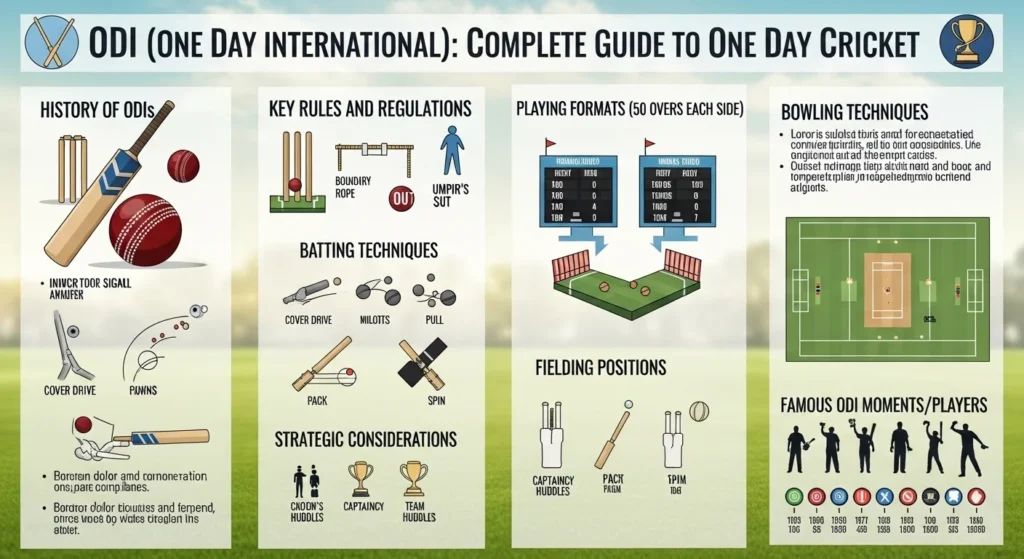

ODI (One Day International) is one of the most popular formats of cricket played around the world. It offers a perfect balance between the long format of Test cricket and the fast-paced excitement of T20 matches. In an ODI match, each team gets a fixed number of overs, making the game structured, competitive, and result-oriented.
ODIs are loved by fans because they provide enough time for strategy, skill, and performance while still being completed in a single day. This format is widely played in international tournaments and is considered one of the most important forms of cricket.
In this complete guide, you will learn everything about ODI cricket, including its history, rules, gameplay, strategies, player roles, equipment, major tournaments, and interesting facts.
History and Origin of ODI Cricket
Early Beginnings
ODI cricket started in the early 1970s. The first official ODI match was played in 1971 between Australia and England after a Test match was abandoned due to rain.
Growth of the Format
- The format quickly became popular due to its shorter duration
- The first Cricket World Cup was held in 1975
- Colored clothing and white balls were introduced later
Modern Evolution
ODIs have evolved with new rules such as:
- Powerplays
- Fielding restrictions
- Use of technology like DRS (Decision Review System)
Today, ODI cricket is a major part of international cricket schedules.
Basic Rules of ODI (One Day International)
Match Structure
- Each team plays 50 overs
- Each over consists of 6 balls
- Total of 300 balls per innings
Innings Format
- Two innings are played
- Each team bats once
- The team with the highest runs wins
Fielding Restrictions
ODIs include powerplays that limit field placements:
- First 10 overs: Only 2 fielders allowed outside the circle
- Middle overs: 4 fielders outside
- Final overs: 5 fielders outside
Extras
- No-balls and wides give extra runs
- These deliveries must be re-bowled
Gameplay and Format of ODI Matches
Toss and Decision
- Captains toss a coin
- Winner chooses to bat or bowl first
Batting Phase
- Aim is to score maximum runs in 50 overs
- Build partnerships and manage wickets
Bowling Phase
- Bowlers aim to restrict runs and take wickets
- Each bowler can bowl a maximum of 10 overs
Result
- Team with more runs wins
- Match can end in a tie or no result (due to rain)
Types of Overs in ODI Cricket
Powerplay Overs
- First 10 overs
- Aggressive batting encouraged
Middle Overs (11–40)
- Focus on stability
- Rotate strike and build innings
Death Overs (41–50)
- Final overs
- Maximum scoring with big shots
Batting Techniques and Strategies in ODI
Building an Innings
- Start carefully in early overs
- Increase scoring rate gradually
Shot Selection
- Play according to field placement
- Use gaps effectively
Strike Rotation
- Take singles and doubles
- Keep scoreboard moving
Finishing Strong
- Use power hitting in last overs
- Take calculated risks
Bowling Strategies in ODI Cricket
Fast Bowling
- Use swing and pace in early overs
- Target wickets early
Spin Bowling
- Control runs in middle overs
- Create pressure on batsmen
Death Bowling
- Use yorkers and slower balls
- Avoid boundaries
Player Roles in ODI Matches
Batsmen
- Openers: Start innings
- Middle order: Build partnerships
- Finishers: Score quickly at the end
Bowlers
- Fast bowlers: Early breakthroughs
- Spinners: Middle overs control
All-Rounders
- Contribute in both batting and bowling
Wicketkeeper
- Key role behind the stumps
- Helps in fielding and communication
Equipment Used in ODI Cricket
Essential Equipment
- Cricket bat
- Cricket ball (white ball)
- Stumps and bails
- Protective gear (helmet, gloves, pads)
Clothing
- Colored jerseys
- Comfortable sports shoes
Major ODI Tournaments and Competitions
ICC Cricket World Cup
- Held every 4 years
- Most prestigious ODI tournament
ICC Champions Trophy
- Features top-ranked teams
Bilateral Series
- Played between two countries
- Includes multiple ODI matches
Benefits of Playing ODI Cricket
Physical Benefits
- Improves stamina and endurance
- Enhances coordination and fitness
- Develops strength and agility
Mental Benefits
- Boosts focus and concentration
- Encourages teamwork
- Improves decision-making skills
Interesting Facts About ODI Cricket
- First ODI was played in 1971
- A perfect score of 300 balls per innings
- Double centuries have been scored in ODIs
- Powerplays changed game strategies significantly
- ODI matches are day-night games with floodlights
Common Mistakes in ODI Matches
Poor Shot Selection
- Leads to early wickets
Over-Aggression
- Can result in collapse
Weak Bowling Plans
- Allows high scoring
Fielding Errors
- Missed catches can change the match
Tips for Beginners in ODI Cricket
- Focus on basics like batting and bowling technique
- Practice regularly
- Understand match situations
- Watch professional matches to learn strategies
- Improve fitness and teamwork
Conclusion
ODI (One Day International) cricket is a balanced and exciting format that combines skill, strategy, and entertainment. With 50 overs per side, it allows players to showcase both patience and aggression, making it a favorite among fans worldwide.
From its origin in the 1970s to becoming one of the biggest formats in international cricket, ODI cricket has evolved significantly. Understanding its rules, gameplay, and strategies helps players and fans enjoy the game at a deeper level.
Whether you are a beginner or a cricket enthusiast, learning about ODI cricket will enhance your knowledge and appreciation of this amazing sport. It is not just a game but a combination of teamwork, planning, and performance under pressure.

Jon Smith is a passionate sports writer specializing in cricket and global sporting events. With a keen eye for match analysis and player performance, he creates clear, engaging, and informative content. His work focuses on simplifying complex sports insights, making them accessible for beginners and experienced fans alike worldwide.