
Cricket is an exciting sport, but players can sometimes suffer serious injuries during a match. Fast bowlers deliver balls at speeds exceeding 140 km/h (87 mph), and batters, fielders, and wicketkeepers are always at risk of being struck by the ball. One of the most concerning injuries in cricket is a concussion, a type of brain injury caused by a blow to the head or body. To protect players, cricket introduced the Concussion Substitute rule.
Many fans, beginners, students, and even experienced followers ask, “What is Concussion Substitute?” This rule allows a player who has suffered a concussion or suspected concussion during a match to be replaced by another player without putting the team at a disadvantage. The substitute can take a full part in the game, including batting, bowling, and fielding, provided the replacement is approved by the match referee.
This guide explains what a concussion substitute is, why the rule was introduced, how it works, player eligibility, important strategies, equipment used in cricket, major tournaments that follow the rule, benefits, interesting facts, and frequently asked questions. By the end, you will understand why the Concussion Substitute rule has become one of the most important player safety measures in modern cricket.
History of the Concussion Substitute Rule
Player safety has become a major focus in modern sports. In cricket, serious head injuries highlighted the need for stronger protection and better medical protocols.
The International Cricket Council (ICC) introduced the Concussion Substitute Rule in 2019. Before this rule, a player suffering a concussion could leave the field, but the team was not allowed a like-for-like replacement who could fully participate in the match. This often left teams at a competitive disadvantage.
The new rule was created to encourage teams to prioritize player health rather than keeping injured players on the field. Today, concussion substitutes are used in international cricket and many domestic competitions under ICC playing conditions.
What is Concussion Substitute?
A Concussion Substitute is a replacement player who takes the place of a cricketer diagnosed with a concussion or suspected concussion during a match.
Unlike a normal substitute fielder, a concussion substitute can fully participate in the game after receiving approval from the match referee.
The substitute may:
- Bat
- Bowl
- Field
- Keep wickets (if approved)
The replacement must be a like-for-like substitute, meaning their skills should be similar to those of the injured player.
Simple Example
Imagine a batter is struck on the helmet by a fast delivery and is diagnosed with a concussion. The team may replace that batter with another specialist batter who is approved as a concussion substitute.
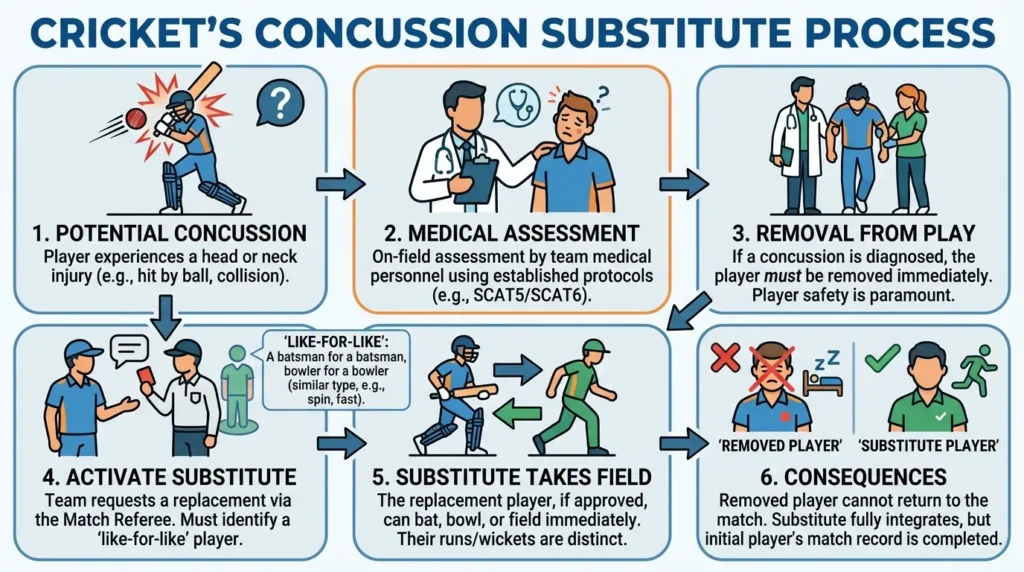
How Does the Concussion Substitute Rule Work?
The rule follows a clear process to protect player safety and maintain fair competition.
Head Injury Occurs
A player receives a blow to the head or body that may cause a concussion.
Medical Assessment
The team’s medical staff examines the player and determines whether they have a concussion or a suspected concussion.
Team Requests a Replacement
If the medical team recommends a replacement, the captain or team management submits a request to the match referee.
Match Referee Approval
The match referee reviews the request and decides whether the proposed replacement is a suitable like-for-like substitute.
Substitute Joins the Match
Once approved, the concussion substitute becomes a full member of the playing side for the remainder of the match.
Rules of the Concussion Substitute
Like-for-Like Replacement
The substitute should have a similar playing role to the injured player.
Match Referee Approval
Every concussion substitute must be approved before entering the match.
Full Participation
The replacement player can:
- Bat
- Bowl
- Field
- Keep wickets (if appropriate)
Player Cannot Return
Once replaced because of concussion, the injured player cannot re-enter the match.
Player Safety Comes First
Medical advice always takes priority over competitive considerations.
Why Was the Concussion Substitute Rule Introduced?
The rule was introduced to improve player welfare and reduce the risk of serious head injuries.
Protect Player Health
Players should not continue after suffering a concussion.
Encourage Honest Reporting
Teams are more willing to report injuries because they can replace the injured player.
Maintain Fair Competition
Teams are not unfairly disadvantaged when losing a player to concussion.
Improve Medical Standards
The rule supports modern concussion management protocols.
Concussion Recognition and Management
Common Signs of Concussion
Players may experience:
- Headache
- Dizziness
- Confusion
- Balance problems
- Memory loss
- Blurred vision
- Nausea
Immediate Response
Medical staff should assess the player immediately.
Return-to-Play Process
Players should only return after completing appropriate medical evaluation and recovery protocols.
Player Roles in the Concussion Substitute Rule
Batter
A specialist batter may replace an injured batter.
Bowler
A pace or spin bowler may replace a similarly skilled bowler.
Wicketkeeper
A wicketkeeper may replace an injured wicketkeeper if approved.
All-Rounder
An all-rounder can replace another all-rounder with similar abilities.
Match Referee
Ensures the replacement is fair and follows ICC regulations.
Equipment Used in Cricket for Head Protection
Proper equipment reduces the risk of head injuries.
Cricket Helmet
Provides essential protection against fast bowling.
Helmet Grill
Protects the face while maintaining visibility.
Batting Gloves
Protect the hands from impact.
Batting Pads
Reduce injury from fast deliveries.
Chest Guard
Protects the upper body.
Arm Guard
Protects the forearm during batting.
Abdominal Guard
Protects sensitive body areas.
Although safety equipment lowers injury risk, it cannot completely prevent concussions.
Major Tournaments Using the Concussion Substitute Rule
The Concussion Substitute Rule is used in many professional competitions.
ICC Test Championship
Player safety protocols apply throughout the competition.
ICC Cricket World Cup
Concussion substitutes may be approved according to ICC playing conditions.
ICC Champions Trophy
Teams follow concussion replacement regulations.
International T20 Matches
The rule protects players in the shortest format.
Domestic First-Class Cricket
Many domestic competitions also follow ICC concussion guidelines.
Benefits of the Concussion Substitute Rule
Physical Benefits
- Protects player health
- Reduces the risk of further brain injury
- Encourages proper recovery
Team Benefits
- Maintains competitive balance
- Provides fair replacements
- Supports better squad management
Mental Benefits
- Gives players confidence to report symptoms
- Reduces pressure to continue playing while injured
- Promotes a safer sporting environment
Strategies for Teams
Prepare Suitable Replacements
Teams often include players capable of serving as like-for-like substitutes.
Prioritize Medical Advice
Health decisions should never be influenced by match situations.
Monitor Head Impacts
Coaches and medical staff should carefully observe players after heavy blows.
Follow Return-to-Play Guidelines
Proper recovery reduces the risk of repeated injury.
Interesting Facts About the Concussion Substitute Rule
- The ICC officially introduced the rule in 2019.
- Cricket was one of the first major sports to allow full concussion replacements during a match.
- The replacement must be approved by the match referee.
- The substitute must generally be a like-for-like replacement.
- The rule encourages teams to prioritize player welfare.
- Medical staff play an important role in identifying concussion symptoms.
- Many other sports have strengthened concussion protocols in recent years.
Frequently Asked Questions
What is a concussion substitute?
A concussion substitute is a player who replaces a teammate diagnosed with a concussion or suspected concussion during a match after approval from the match referee.
Can a concussion substitute bat and bowl?
Yes. Once approved, the substitute can fully participate in the match according to their playing role.
Who approves the concussion substitute?
The match referee approves the replacement after reviewing the request.
Can the injured player return later?
No. A player replaced because of concussion cannot re-enter the match.
What does “like-for-like” mean?
It means the replacement should have similar playing skills and responsibilities as the injured player.
Does every cricket match allow concussion substitutes?
Many international matches and competitions played under ICC regulations allow concussion substitutes. Tournament playing conditions determine whether the rule applies.
Why is the concussion substitute rule important?
It protects player health while ensuring that teams remain competitive after losing a player to a concussion.
Conclusion
The Concussion Substitute Rule is one of the most significant safety improvements in modern cricket. It allows teams to replace a player who suffers a concussion with a suitable like-for-like substitute, ensuring that player welfare comes before competition. By encouraging immediate medical assessment and preventing injured players from continuing, the rule helps reduce the risks associated with head injuries while maintaining fairness in the game. Combined with protective equipment, trained medical staff, and proper concussion management protocols, this rule reflects cricket’s commitment to player safety. As awareness of sports-related concussions continues to grow, the Concussion Substitute Rule will remain an essential part of protecting athletes at every level of the game.

Jon Smith is a passionate sports writer specializing in cricket and global sporting events. With a keen eye for match analysis and player performance, he creates clear, engaging, and informative content. His work focuses on simplifying complex sports insights, making them accessible for beginners and experienced fans alike worldwide.