Cricket has changed significantly over the years, not only in terms of technology and gameplay but also in player safety. One of the most important modern developments in the sport is the introduction of the concussion substitute rule. This rule was created to protect players who suffer head injuries during a match and ensure that teams are not unfairly disadvantaged when a player cannot continue.
In recent years, awareness about head injuries and concussions has increased across many sports in the United States and around the world. Sports organizations now understand that brain injuries can have serious long-term effects if ignored. Cricket, like football, rugby, and hockey, involves high-speed balls, diving catches, collisions, and other situations where players may suffer head impacts.
The concussion substitute rule has become an important part of modern cricket because it focuses on player health while maintaining fairness in competition. Whether you are a beginner learning cricket rules, a student studying sports regulations, or a passionate cricket fan, understanding concussion substitutes helps explain how the game prioritizes athlete safety today.
This complete guide explains everything about concussion substitutes, including their history, rules, player replacement process, safety importance, controversies, gameplay effects, player roles, equipment, major tournaments, and interesting facts.
What Is a Concussion Substitute?
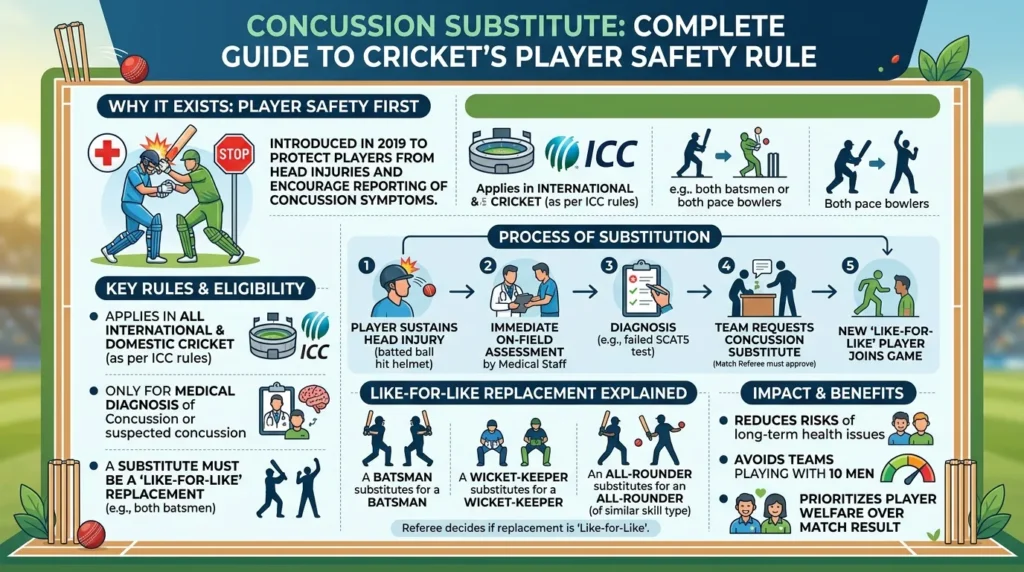
A concussion substitute is a replacement player allowed to enter a cricket match when a player suffers a concussion or suspected head injury during the game.
Before this rule existed, injured players could leave the field temporarily, but teams usually could not fully replace them with another player who could bat or bowl. This sometimes created unfair situations where teams had to continue with fewer active players.
The concussion substitute rule changed that by allowing a like-for-like replacement if a player is diagnosed with a concussion.
Simple Definition of Concussion
A concussion is a brain injury caused by a sudden blow or impact to the head. It can happen when a player:
- Gets hit by the cricket ball
- Collides with another player
- Falls heavily on the ground
- Suffers impact while fielding or batting
Symptoms may include:
- Dizziness
- Headache
- Confusion
- Blurred vision
- Nausea
- Loss of balance
Because brain injuries are serious, medical staff carefully monitor players after any head impact.
History of the Concussion Substitute Rule
Cricket did not always have concussion substitutes. For many years, injured players could only leave the field temporarily while another teammate fielded as a substitute fielder. However, substitute fielders were not allowed to bat or bowl.
Early Concerns About Player Safety
As cricket became faster and more competitive, concerns about player injuries increased. Modern cricket features:
- Faster bowlers
- More aggressive batting
- High-pressure fielding
- Intense fitness standards
Several serious head injury incidents raised awareness about concussion dangers in cricket.
ICC Introduces the Rule
The International Cricket Council introduced the concussion substitute rule officially in 2019. The goal was to improve player safety while maintaining competitive fairness.
The rule first became active during international cricket matches and was later adopted in domestic competitions worldwide.
Why the Concussion Substitute Rule Is Important
The concussion substitute rule protects players physically and mentally.
Protecting Long-Term Health
Brain injuries can become dangerous if athletes continue playing immediately after a concussion. Rest and medical evaluation are critical for recovery.
Encouraging Honest Reporting
In older cricket systems, players sometimes continued playing despite injuries because teams could not fully replace them. The new rule encourages players to report symptoms honestly.
Maintaining Fair Competition
Without replacement options, teams would unfairly lose a batting or bowling resource after a concussion injury.
The concussion substitute rule balances safety with competitive fairness.
How the Concussion Substitute Rule Works
The concussion substitute process follows official cricket regulations.
Medical Assessment
When a player suffers a head impact, team medical staff evaluate the player immediately.
If doctors suspect a concussion, the player is removed from the game for safety reasons.
Requesting a Replacement
The team submits a request to the match referee for a concussion substitute.
Like-for-Like Replacement
The replacement player should be as similar as possible to the injured player.
For example:
- A batter is usually replaced by another batter
- A fast bowler is replaced by another bowler
- An all-rounder is replaced by another all-rounder
The match referee reviews the request to ensure fairness.
Approval Process
The match referee has the final authority to approve or reject the replacement player.
Rules and Restrictions of Concussion Substitutes
The concussion substitute rule includes several important restrictions.
Replacement Must Be Similar
The substitute cannot give the team an unfair advantage.
Substitute Can Fully Participate
Unlike regular substitute fielders, concussion substitutes can:
- Bat
- Bowl
- Field
- Keep wicket if approved
Permanent Replacement
Once approved, the injured player cannot return to the match.
Match Referee Authority
Officials carefully evaluate whether the substitute fits the “like-for-like” requirement.
Player Roles Affected by Concussion Substitutes
Every cricket role may be affected by concussion injuries.
Batters
Batters face fast bowling regularly and are at risk from short-pitched deliveries.
Common Risks for Batters
- Ball striking the helmet
- Collisions while running
- Diving accidents
Modern helmets have improved player protection significantly.
Bowlers
Fast bowlers often field near the batter after delivering the ball, creating reaction-time challenges.
Risks for Bowlers
- Hard-hit return shots
- Fielding collisions
- Falls during bowling follow-through
Wicketkeepers
Wicketkeepers stand close to the batter and face constant impact risks.
Wicketkeeper Safety Challenges
- Edged balls
- Deflections
- Close-range catches
Fielders
Fielders frequently dive, slide, and attempt difficult catches.
Common Fielding Injuries
- Head collisions
- Ground impact
- Ball strikes during catches
Equipment Used for Player Safety
Modern cricket equipment plays a major role in reducing concussion risks.
Cricket Helmets
Helmets are the most important protective gear for preventing serious head injuries.
Modern helmets include:
- Strong outer shells
- Face guards
- Neck protection
- Impact absorption systems
Chest Guards and Arm Guards
Protective padding helps reduce injury from fast bowling.
Gloves and Leg Pads
Batting gloves and pads improve player safety and confidence.
Mouth Guards
Some players use mouth guards for additional facial protection.
Impact of Concussion Substitutes on Gameplay
The concussion substitute rule affects team strategies and match decisions.
Tactical Balance
Teams now feel more secure knowing injured players can be replaced fairly.
Improved Safety Decisions
Medical teams can prioritize health without worrying as much about weakening the team.
Strategic Replacement Discussions
Captains and officials often discuss whether a replacement truly qualifies as “like-for-like.”
Famous Concussion Substitute Incidents
Several high-profile international matches have involved concussion substitutes.
Growing Public Awareness
Television coverage and social media discussions have increased fan understanding of concussion management in cricket.
Debates and Controversies
Some fans and experts occasionally debate whether certain replacements provided teams with unfair advantages.
However, the rule’s main purpose remains player safety.
Major Cricket Tournaments Using Concussion Substitute Rules
Today, concussion substitute rules apply in many major competitions worldwide.
International Cricket Matches
The rule is used in:
- Test matches
- One Day Internationals
- T20 Internationals
Domestic Tournaments
Many domestic leagues also follow concussion substitute regulations.
Popular Competitions
Major tournaments include:
- ICC Cricket World Cup
- ICC T20 World Cup
- International bilateral series
- Domestic T20 leagues
Benefits of Cricket and Sports Participation
Cricket offers many physical and mental benefits beyond competition.
Physical Benefits
Playing cricket improves:
- Fitness
- Hand-eye coordination
- Strength
- Agility
- Stamina
Mental Benefits
Sports participation also supports:
- Teamwork
- Discipline
- Confidence
- Stress relief
- Decision-making skills
Safety Awareness in Modern Sports
Concussion awareness is increasing across many sports worldwide.
Sports Science and Technology
Modern sports medicine now focuses heavily on:
- Injury prevention
- Recovery monitoring
- Brain health research
- Player safety equipment
Education and Training
Coaches and medical staff receive concussion management training regularly.
Important Techniques to Reduce Concussion Risks
Players use several techniques to improve safety.
Proper Batting Technique
Good batting technique helps players avoid dangerous ball impacts.
Safe Fielding Skills
Fielders practice catching and diving methods to reduce collisions.
Communication Between Players
Clear communication prevents many on-field accidents.
Fitness and Conditioning
Strong physical conditioning improves balance and reaction time.
Interesting Facts About Concussion Substitutes
- The ICC officially introduced concussion substitutes in 2019.
- Cricket was one of the first major sports to allow full injury replacements for concussion cases.
- Modern cricket helmets are tested using advanced safety standards.
- Concussion awareness has increased dramatically over the last decade.
- Medical staff now play a major role during cricket matches.
Common Misunderstandings About the Rule
Some fans misunderstand how concussion substitutes work.
Myth: Any Injured Player Can Be Replaced
Only concussion or suspected head injury cases qualify.
Myth: Teams Can Choose Any Player
The replacement must closely match the injured player’s role.
Myth: Players Can Return Later
Once replaced, the injured player cannot rejoin the match.
Future of Player Safety in Cricket
Cricket continues improving safety standards every year.
Better Helmet Technology
Equipment manufacturers constantly develop stronger protective gear.
Improved Medical Protocols
Teams now follow strict concussion assessment procedures.
Greater Awareness Among Fans
Fans increasingly support player safety decisions, even during important matches.
Conclusion
The concussion substitute rule has become one of the most important player safety developments in modern cricket. By allowing teams to replace players who suffer concussions, the sport protects athletes while maintaining competitive fairness. The rule reflects cricket’s growing focus on health, medical science, and long-term player welfare.
From batters and bowlers to wicketkeepers and fielders, every player benefits from improved concussion awareness and modern safety regulations. Combined with better helmets, medical assessments, and stricter injury protocols, concussion substitutes help create a safer environment for professional and amateur cricket alike.
As cricket continues evolving globally, player safety will remain a top priority. Understanding concussion substitutes not only helps fans appreciate the rules of the game but also highlights the importance of protecting athletes at every level of sport.

Green Benn is a dedicated sports writer specializing in cricket, including IPL and international formats. Known for clear, engaging, and informative content, Green simplifies complex match analysis and player statistics for all readers. Passionate about sports storytelling, Green delivers reliable, SEO-friendly articles that keep fans updated and informed