
Cricket is one of the world’s most popular sports, followed by millions of fans across countries like India, Australia, England, Pakistan, South Africa, and increasingly the United States. Over time, the game has evolved not only through new playing styles and tournaments but also through advanced technology that improves fairness and accuracy. One of the biggest technological innovations in modern cricket is the DRS Rule, also known as the Decision Review System.
The Decision Review System was introduced to reduce umpiring mistakes and help teams challenge close decisions during matches. Cricket is a fast-paced sport where umpires often make split-second judgments involving LBW appeals, catches, edges, and run-outs. Even experienced umpires can occasionally make errors because the ball moves at extremely high speeds.
The DRS system allows players to request a technology-based review when they believe an umpire’s decision may be incorrect. Today, DRS has become a major part of international cricket and is widely discussed by players, coaches, commentators, and fans.
This complete guide explains everything about the DRS Rule in cricket, including its history, rules, technology, gameplay impact, player strategies, major tournaments, benefits, controversies, and interesting facts.
What Is the DRS Rule in Cricket?
The DRS Rule stands for Decision Review System. It is a technology-assisted system used in cricket to review umpire decisions during a match.
If players believe an on-field umpire has made an incorrect decision, they can request a review using DRS. The third umpire then checks video footage and ball-tracking technology to make a final decision.
The system helps improve fairness and reduce major umpiring mistakes.
Main Purpose of DRS
The DRS system was introduced to:
- Improve decision accuracy
- Reduce human error
- Increase fairness in matches
- Use modern technology effectively
- Give teams a chance to challenge close calls
Today, DRS is considered one of the most important technologies in modern cricket.
History of the Decision Review System
Cricket relied completely on human umpires for many decades. While most decisions were accurate, controversial mistakes occasionally affected important matches.
Early Use of Technology in Cricket
Television replays first became common in cricket during the 1990s. Third umpires initially reviewed only simple decisions like:
- Run-outs
- Stumpings
- Boundary checks
As technology improved, cricket authorities explored ways to review more complex decisions.
Official Introduction of DRS
The International Cricket Council officially introduced the Decision Review System in Test cricket in 2008.
Over time, DRS expanded into:
- One Day Internationals (ODIs)
- T20 Internationals
- Major global tournaments
Today, DRS is widely used in international cricket and many professional domestic leagues.
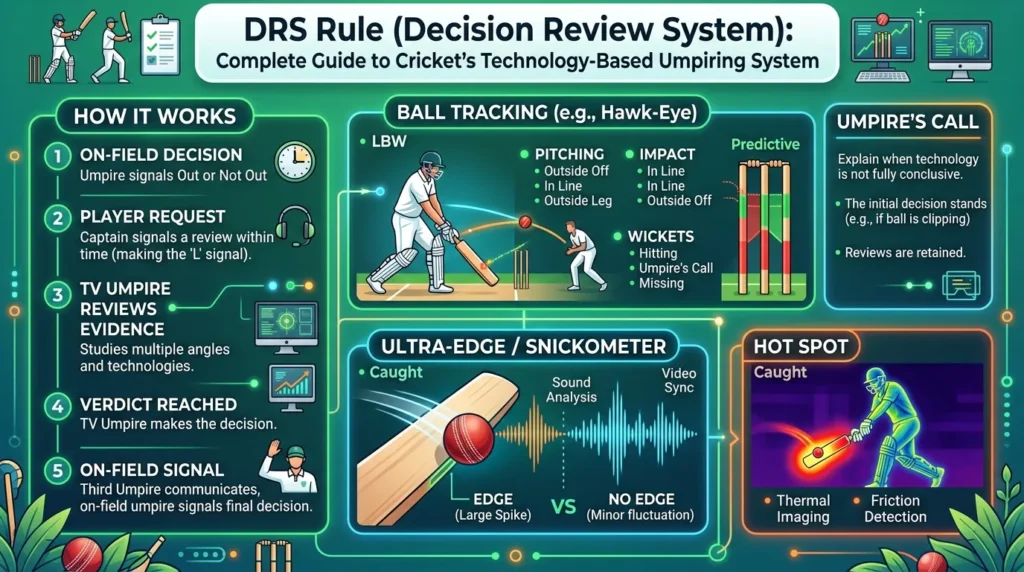
How the DRS Rule Works
The DRS process follows specific cricket regulations.
Player Review Requests
Teams can challenge certain umpire decisions by signaling for a review immediately after the decision.
The captain or dismissed batter usually requests the review.
Time Limit for Reviews
Players must request a review within a short time after the umpire’s decision, usually within 15 seconds.
Third Umpire Involvement
Once the review is requested, the third umpire analyzes technology and replay footage before making the final decision.
Possible Outcomes
The original decision may:
- Stay the same
- Be overturned
- Be partially confirmed using umpire’s call
Technology Used in DRS
Several advanced technologies work together in the Decision Review System.
Hawk-Eye Technology
Hawk-Eye tracks the ball’s movement and predicts its path after impact.
Uses of Hawk-Eye
Hawk-Eye helps determine:
- LBW decisions
- Ball trajectory
- Pitching location
- Impact point
- Future ball path
This technology is especially important in close LBW appeals.
UltraEdge Technology
UltraEdge detects tiny sounds when the ball touches the bat or gloves.
How UltraEdge Works
Sensitive microphones and visual waveforms help identify edges that may not be visible on video replay.
UltraEdge is commonly used for:
- Caught behind appeals
- Bat-pad catches
- Glove edges
Hot Spot Technology
Hot Spot uses infrared imaging to detect contact between the ball and bat.
Purpose of Hot Spot
When the ball touches the bat, friction creates a heat mark visible through infrared cameras.
Not every cricket series uses Hot Spot because it can be expensive.
Slow-Motion Replay Cameras
High-speed cameras allow officials to review close moments in detail.
Common Replay Situations
Replay cameras help analyze:
- Catches
- Run-outs
- Stumpings
- Boundary saves
Types of Decisions Reviewed in DRS
The Decision Review System can review several important cricket decisions.
LBW Decisions
LBW, or Leg Before Wicket, is one of the most common DRS situations.
DRS Checks for LBW
Officials review:
- Where the ball pitched
- Impact location
- Ball trajectory
- Whether the ball would hit the stumps
Caught Behind Appeals
DRS helps determine whether the batter edged the ball before the wicketkeeper or fielder caught it.
Technology Used
UltraEdge and replay footage are especially useful here.
Bat-Pad and Close Catches
The system checks whether the ball touched the bat before fielders completed the catch.
Run-Outs and Stumpings
Although third umpires handled these before DRS officially existed, technology remains critical for these decisions.
Understanding Umpire’s Call
One of the most discussed parts of DRS is “umpire’s call.”
What Is Umpire’s Call?
If technology shows only a marginal decision difference, the original umpire decision remains.
Why Umpire’s Call Exists
Ball-tracking technology predicts future ball movement but cannot be 100 percent perfect.
The rule respects the on-field umpire’s judgment in extremely close situations.
Team Review Rules
Teams receive a limited number of unsuccessful reviews during matches.
Test Cricket Reviews
In Test matches, teams usually receive:
- Two unsuccessful reviews per innings
Limited-Overs Reviews
In ODIs and T20 matches, teams usually receive:
- One or two unsuccessful reviews depending on tournament rules
Successful Reviews
If the review overturns the decision, the team keeps its review.
Impact of DRS on Modern Cricket
The Decision Review System has changed cricket significantly.
Improved Fairness
DRS reduces major umpiring mistakes and increases confidence in match results.
Strategic Thinking
Captains and players now think carefully before using reviews.
Smart Review Decisions
Teams consider:
- Match situation
- Player confidence
- Available reviews
- Replay evidence
Increased Drama and Excitement
DRS reviews create suspense and excitement for fans watching live matches.
Crowds often react emotionally during close review moments.
Player Roles and DRS Strategies
Different cricket players interact with DRS differently.
Batters
Batters may review LBW or caught-behind decisions if they believe they are not out.
Batter Awareness
Experienced batters often rely on:
- Sound
- Ball contact feeling
- Visual judgment
Bowlers
Bowlers frequently encourage captains to review close LBW appeals.
Aggressive Bowling Strategies
Fast bowlers and spinners use DRS strategically during pressure situations.
Wicketkeepers
Wicketkeepers play a major role because they stand closest to the batter.
Wicketkeeper Contributions
They help judge:
- Edges
- Bat contact
- Close catches
Captains
Captains usually make the final review decision after consulting teammates.
Good captains manage reviews carefully throughout the match.
Equipment and Technology in Modern Cricket
The DRS system highlights the growing role of technology in sports.
Cameras and Tracking Systems
Modern cricket stadiums use advanced camera systems and computer tracking software.
Communication Equipment
Third umpires communicate directly with on-field officials using audio systems.
Giant Screens
Fans inside stadiums can watch DRS replays on large screens.
Major Tournaments Using DRS
The Decision Review System is now common in major cricket competitions worldwide.
ICC Cricket World Cup
DRS plays an important role during World Cup matches.
ICC T20 World Cup
Fast-paced T20 cricket often produces dramatic review moments.
Test Championship Matches
Long-format Test cricket heavily relies on DRS for close decisions.
International Bilateral Series
Most international cricket series now include DRS technology.
Benefits of Playing Cricket
Beyond technology and competition, cricket offers many physical and mental benefits.
Physical Benefits
Playing cricket improves:
- Fitness
- Reflexes
- Coordination
- Strength
- Agility
Mental Benefits
Cricket also develops:
- Teamwork
- Focus
- Discipline
- Leadership skills
- Strategic thinking
Common Criticism and Controversies Around DRS
Although DRS improves accuracy, it still faces criticism occasionally.
Umpire’s Call Debates
Some fans dislike umpire’s call because very close decisions sometimes remain unchanged.
Technology Limitations
No technology system is completely perfect.
Factors like camera angles and ball prediction can still create debate.
Review Misuse
Teams sometimes waste reviews on emotional appeals instead of clear mistakes.
Interesting Facts About the DRS Rule
- DRS was officially introduced in Test cricket in 2008.
- Hawk-Eye technology is also used in tennis and other sports.
- The term “umpire’s call” is one of the most debated cricket phrases today.
- DRS reviews often become viral moments on social media.
- Wicketkeepers frequently influence review decisions more than other fielders.
Future of DRS in Cricket
Technology in cricket continues improving every year.
Better Accuracy
Future tracking systems may become even more precise.
Faster Reviews
Officials aim to reduce review delays to maintain game flow.
Expanded Technology
More domestic leagues and smaller tournaments may adopt full DRS systems in the future.
Greater Fan Engagement
Advanced graphics and stadium displays help fans better understand review decisions.
Conclusion
The DRS Rule, or Decision Review System, has transformed modern cricket by combining technology with traditional umpiring. It improves fairness, reduces human error, and adds excitement to the game while protecting the integrity of important match decisions.
From Hawk-Eye and UltraEdge to replay cameras and umpire’s call, DRS has become an essential part of international cricket. Players, captains, umpires, and fans now rely heavily on technology to handle difficult decisions during high-pressure moments.
Although debates and controversies still exist, the Decision Review System continues improving the sport and making cricket more accurate, professional, and engaging for audiences worldwide. As technology evolves further, DRS will likely remain one of cricket’s most important innovations for years to come.

Jon Smith is a passionate sports writer specializing in cricket and global sporting events. With a keen eye for match analysis and player performance, he creates clear, engaging, and informative content. His work focuses on simplifying complex sports insights, making them accessible for beginners and experienced fans alike worldwide.