Cricket is a game of strategy, skill, and quick decision-making. Every run, wicket, and tactical move can influence the outcome of a match. While most batters leave the field after getting out in one of the traditional ways, modern cricket has introduced another rare but legal method called Retired Out. This rule has become more noticeable in T20 cricket, where teams constantly look for ways to maximize scoring during the final overs.
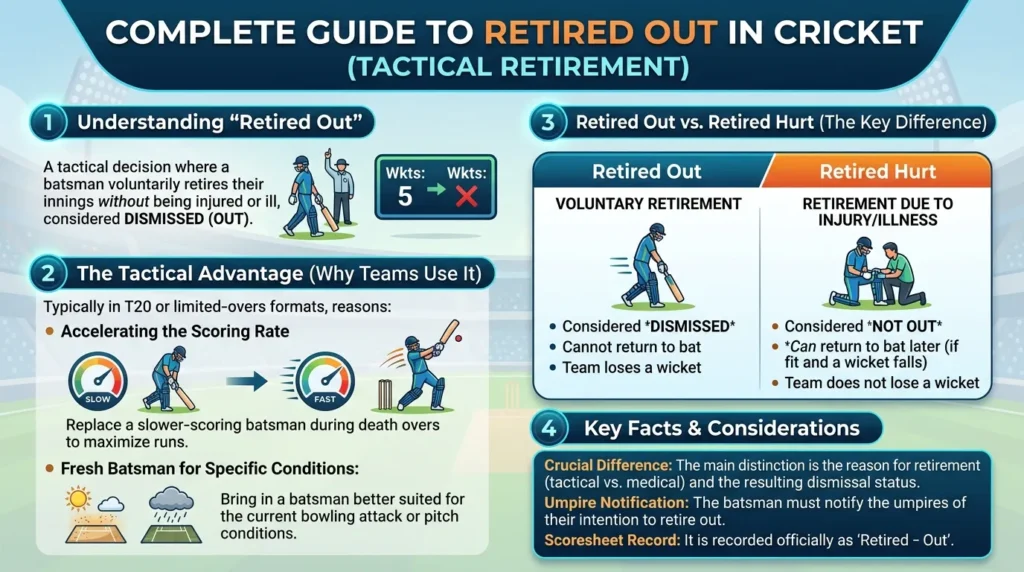
Many cricket fans, beginners, and even experienced viewers ask, “What is Retired Out?” Unlike Retired Hurt, where a batter leaves the field because of injury or illness, Retired Out is a tactical decision. A batter voluntarily leaves the field without being injured, allowing another player to take their place. According to the Laws of Cricket, the batter is considered out and cannot return to continue their innings.
Understanding the Retired Out rule helps fans appreciate modern cricket tactics and explains why teams occasionally sacrifice one batter to improve their chances of winning. This guide covers the history, rules, strategies, player roles, equipment, major tournaments, benefits, interesting facts, and frequently asked questions in simple, beginner-friendly language.
History of the Retired Out Rule
The concept of retirement has existed in cricket for many years. Traditionally, players retired because of injury, illness, or unavoidable circumstances.
However, the Retired Out provision has long existed in the Laws of Cricket, allowing a batter to retire for reasons other than injury. If the player leaves without the opposing captain’s consent and does not return, they are recorded as Retired Out.
Although the law has existed for decades, Retired Out became widely discussed after teams in professional T20 leagues began using it as a tactical strategy to improve scoring during the final overs of an innings.
What is Retired Out?
Retired Out is a cricket rule where a batter voluntarily leaves the field during an innings for tactical or personal reasons rather than because of injury or illness.
Once a batter is Retired Out, they are counted as out and cannot return to continue batting.
Simple Example
A batter scores 30 runs from 28 balls but struggles to increase the scoring rate during the final overs. The team decides to replace the batter with a more aggressive hitter. The original batter retires voluntarily and is recorded as Retired Out.
How Does the Retired Out Rule Work?
The rule is straightforward.
Batter Chooses to Leave
The batter voluntarily leaves the field.
No Injury Is Involved
The retirement is not due to illness or injury.
New Batter Arrives
Another batter enters the field to continue the innings.
Batter Is Counted as Out
The scorecard records the player as Retired Out.
No Return Allowed
The retired batter cannot resume the innings later.
Rules of Retired Out
Voluntary Retirement
The batter chooses to leave without suffering an injury.
Counts as a Dismissal
The batter is officially recorded as Retired Out.
Cannot Return
Unlike Retired Hurt, the batter cannot resume batting.
Team Strategy
Retired Out is often used for tactical reasons.
Laws of Cricket
The rule is recognized under the official Laws of Cricket and can be applied in all formats where playing conditions allow.
Difference Between Retired Out and Retired Hurt
Many people confuse these two rules because both involve a batter leaving the field before being dismissed in a traditional way.
| Feature | Retired Out | Retired Hurt |
|---|---|---|
| Reason | Tactical decision | Injury or illness |
| Counted as Out | Yes | No |
| Can Return | No | Yes, if fit |
| Medical Reason | Not required | Required |
| Strategy | Yes | No |
Understanding this difference is important for both players and cricket fans.
Why Do Teams Use Retired Out?
Increase Run Rate
An aggressive batter may score faster in the final overs.
Match Situation
The team adjusts its strategy according to the target or remaining overs.
Maximize Batting Depth
Fresh batters may attack bowlers more effectively.
Tactical Flexibility
Captains and coaches can adapt to changing match situations.
Player Roles During a Retired Out Situation
Batter
May voluntarily retire to improve the team’s chances.
Captain
Discusses the tactical decision with coaches and players.
Coach
Analyzes match conditions and recommends strategies.
Incoming Batter
Attempts to score quickly or stabilize the innings.
Umpires
Record the retirement according to the Laws of Cricket.
Retired Out Strategies in Modern Cricket
Death Overs Acceleration
Teams may replace a slower batter with a power hitter during the final overs.
Chasing Large Targets
An aggressive batter can increase the scoring rate when required.
Match Awareness
Captains evaluate the batting conditions before making the decision.
Team Balance
The strategy depends on available batters and match requirements.
Equipment Used in Cricket
Retired Out is a tactical rule and does not require any special equipment. Players continue using standard cricket equipment.
Cricket Bat
Used to score runs.
Cricket Ball
Used by bowlers to dismiss batters.
Helmet
Protects against fast deliveries.
Batting Gloves
Provide grip and hand protection.
Batting Pads
Protect the legs.
Thigh Guard
Reduces injury risk from fast bowling.
Cricket Shoes
Provide grip while batting and running.
Major Cricket Tournaments Where Retired Out May Be Seen
The rule can apply in various forms of cricket, although it is most noticeable in shorter formats.
Indian Premier League (IPL)
Teams have occasionally used Retired Out as a tactical option.
Domestic T20 Leagues
Several franchise tournaments allow teams to apply this strategy.
T20 International Cricket
The law exists, although its use is rare.
One Day Cricket
Possible but uncommon.
Test Cricket
Extremely rare because of the different nature of the format.
Benefits of Cricket
Physical Benefits
- Improves endurance
- Builds coordination
- Increases agility
- Develops strength
- Enhances reflexes
Mental Benefits
- Improves concentration
- Builds confidence
- Encourages teamwork
- Develops leadership
- Strengthens decision-making
Advantages of the Retired Out Rule
Encourages Tactical Innovation
Teams have another strategic option.
Makes T20 Cricket More Exciting
Fans often enjoy unexpected tactical decisions.
Improves Team Flexibility
Captains can respond to changing match situations.
Rewards Aggressive Batting
Teams can maximize scoring opportunities.
Limitations of Retired Out
Rarely Used
The strategy is uncommon.
High Risk
Replacing a settled batter may backfire.
Public Debate
Fans and experts sometimes disagree with its use.
Not Suitable for Every Situation
The tactic depends heavily on match conditions.
Interesting Facts About Retired Out
- Retired Out is recognized under the Laws of Cricket.
- The batter is officially counted as out.
- The player cannot return later in the innings.
- The rule became widely discussed after its use in professional T20 leagues.
- It is much rarer than Retired Hurt.
- Teams usually use it only in unusual tactical situations.
- Many cricket fans still confuse Retired Out with Retired Hurt.
Frequently Asked Questions
What is Retired Out in cricket?
Retired Out is when a batter voluntarily leaves the field for reasons other than injury and is recorded as out.
Is Retired Out considered a wicket?
Yes. It counts as a dismissal in the team’s innings.
Can a Retired Out batter return later?
No. Once recorded as Retired Out, the batter cannot resume batting.
Why do teams use Retired Out?
Teams may use the rule to introduce a more aggressive batter or improve their tactical position.
Is Retired Out the same as Retired Hurt?
No. Retired Hurt is caused by injury or illness and does not count as a dismissal, while Retired Out is a tactical retirement that counts as out.
Does Retired Out apply in all cricket formats?
Yes. The Laws of Cricket recognize the rule, although it is used far more often in T20 cricket than in Test or One Day matches.
Who records Retired Out?
The umpires and official scorers record the batter as Retired Out according to the Laws of Cricket.
Conclusion
Understanding what is Retired Out helps cricket fans appreciate the tactical side of the modern game. Unlike Retired Hurt, which protects injured players, Retired Out is a voluntary decision that allows a team to change its batting strategy. The batter is officially counted as out and cannot return to continue the innings. Although the rule is rarely used, it has gained attention in T20 cricket, where aggressive tactics and quick scoring often determine match results. Captains and coaches carefully consider the risks and rewards before using this option. As cricket continues to evolve, Retired Out remains an interesting example of how strategy and innovation can influence the outcome of a match while staying within the Laws of Cricket.

Green Benn is a dedicated sports writer specializing in cricket, including IPL and international formats. Known for clear, engaging, and informative content, Green simplifies complex match analysis and player statistics for all readers. Passionate about sports storytelling, Green delivers reliable, SEO-friendly articles that keep fans updated and informed