
Football is a game of strategy, teamwork, and intelligent positioning. While goals often grab the headlines, strong defending is equally important for winning matches. Throughout football history, teams have developed different defensive systems to stop opponents from scoring. One of the most famous defensive roles is the sweeper, also known as the libero. Although this position is less common in modern football, it played a vital role in shaping defensive tactics and is still studied by players, coaches, and football enthusiasts.
A sweeper is much more than an extra defender. Unlike center-backs who mark opposing strikers, the sweeper operates behind the defensive line, reading the game, intercepting passes, clearing dangerous balls, and organizing teammates. This unique role requires excellent positioning, anticipation, composure, and leadership.
In this guide, you’ll learn what a sweeper in football is, how the position works, its history, responsibilities, advantages, disadvantages, and the skills needed to become an effective sweeper.
What Is a Sweeper in Football?
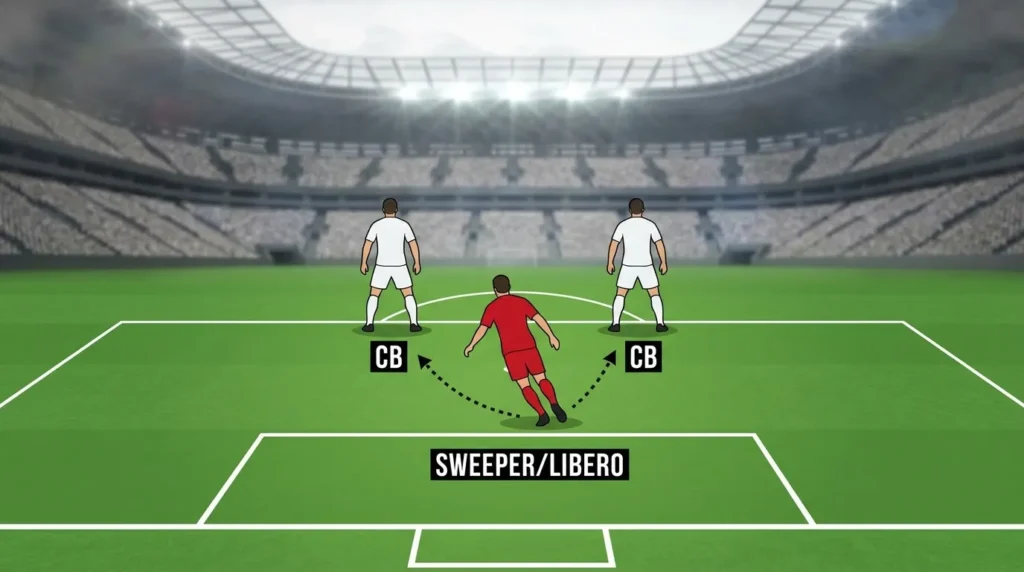
A sweeper in football is a defensive player who plays behind the center-backs and acts as the last line of defense before the goalkeeper. Instead of marking one specific attacker, the sweeper moves freely across the defensive area to intercept passes, clear loose balls, and provide cover whenever teammates are beaten.
The main objective of a sweeper is to prevent dangerous attacks before they become goal-scoring opportunities. Because the sweeper has a clear view of the field, they often organize the defense and communicate with teammates throughout the match.
This role is also commonly known as the libero, an Italian word meaning “free,” because the player is free from direct marking responsibilities.
Simple Example
Imagine an opposing striker dribbles past one of your center-backs. Before the striker reaches the goalkeeper, the sweeper quickly moves across, wins the ball, and clears the danger. Without the sweeper, the striker might have had a clear chance to score.
History of the Sweeper Position
The sweeper role became popular during the 1960s and 1970s when many teams used defensive formations with man-marking systems. Coaches introduced a free defender behind the back line to cover mistakes made by teammates and protect against fast counterattacks.
Over time, the position evolved from simply clearing danger to helping start attacks from defense. Some sweepers became excellent passers who could launch counterattacks with accurate long balls or dribble forward to support midfield play.
Although modern football has shifted toward ball-playing center-backs and high defensive lines, the sweeper remains one of the most influential tactical positions in football history.
How Does a Sweeper Work?
The sweeper constantly reads the game instead of marking one player.
Step 1: Stay Behind the Defense
The sweeper positions themselves a few meters behind the center-backs, providing extra protection.
Step 2: Read the Attack
They carefully observe the movement of attackers and anticipate dangerous passes.
Step 3: Cover Defenders
If a defender loses possession or is beaten, the sweeper immediately moves into the open space.
Step 4: Win the Ball
The sweeper intercepts passes, tackles attackers, or clears loose balls before they become serious threats.
Step 5: Start the Attack
After winning possession, the sweeper often begins a new attack with calm passing or accurate long balls to teammates.
Key Responsibilities of a Sweeper
The sweeper performs several important defensive and leadership duties.
Cover Defensive Mistakes
The primary responsibility is protecting the defense whenever teammates are out of position.
Intercept Passes
Instead of waiting for attackers to receive the ball, the sweeper anticipates passes and intercepts them early.
Clear Dangerous Balls
Loose balls inside or near the penalty area are quickly cleared to safety.
Organize the Defense
Because the sweeper sees the entire defensive line, they constantly guide teammates with communication and positioning.
Build Attacks
Modern sweepers are expected to pass accurately and help their team maintain possession after recovering the ball.
Characteristics of a Good Sweeper
Not every defender can successfully play this demanding position.
Excellent Positioning
A sweeper must always be in the right place at the right time.
Tactical Awareness
Reading the game and predicting attacking movements are essential qualities.
Composure
The sweeper often faces high-pressure situations and must remain calm when making decisions.
Passing Ability
Accurate short and long passes help the team transition from defense to attack.
Leadership
Strong communication keeps the defensive line organized throughout the match.
Decision-Making
Quick and intelligent decisions prevent dangerous situations from developing.
Why Do Teams Use a Sweeper?
Although less common today, many teams have successfully used a sweeper because of the tactical advantages the role provides.
Some of the main reasons include:
- Adding an extra layer of defensive security.
- Covering defenders who are beaten by attackers.
- Stopping through balls behind the defense.
- Improving defensive organization.
- Helping build attacks from deep positions.
- Providing leadership at the back.
Teams facing quick strikers or playing with aggressive full-backs often benefit from the additional protection a sweeper provides.
Advantages of Playing with a Sweeper
The sweeper offers several important benefits.
Stronger Defensive Cover
The extra defender reduces the chances of opponents creating one-on-one situations with the goalkeeper.
Better Organization
A sweeper helps maintain the defensive shape by directing teammates and identifying potential dangers.
Faster Ball Recovery
Because the sweeper reads the game well, they often recover possession before attackers can create clear chances.
Smooth Transition to Attack
A technically skilled sweeper can immediately start attacking moves after winning the ball.
Increased Confidence
Knowing an experienced sweeper is covering behind them allows defenders to challenge attackers more confidently.
Disadvantages of the Sweeper System
Despite its strengths, using a sweeper also has some disadvantages.
Less Common in Modern Football
Most modern teams prefer zonal defending with two center-backs instead of a dedicated sweeper.
Requires an Exceptional Player
The position demands intelligence, leadership, positioning, and excellent passing ability.
Risk Against High Pressing Teams
Teams that press aggressively may prevent the sweeper from building attacks comfortably.
Can Reduce Midfield Numbers
Using an additional defender may leave fewer players available in midfield, making it harder to control possession.
Essential Skills for a Sweeper
Players hoping to become successful sweepers should develop these important abilities:
- Excellent positioning
- Tactical intelligence
- Reading the game
- Accurate tackling
- Strong communication
- Leadership qualities
- Calmness under pressure
- Short and long passing
- Ball control
- Quick decision-making
Mastering these skills allows a sweeper to become the defensive leader and one of the most reliable players on the field.
Famous Sweepers in Football History
Several legendary defenders helped make the sweeper position one of the most respected roles in football. Their intelligence, composure, and leadership inspired future generations of defenders.
Franz Beckenbauer
Franz Beckenbauer is widely regarded as the greatest sweeper in football history. Nicknamed “Der Kaiser,” he revolutionized the role by combining excellent defending with elegant passing and attacking runs. Instead of simply clearing the ball, he often carried it forward to start attacks.
Franco Baresi
Franco Baresi was another outstanding sweeper known for his tactical awareness and exceptional reading of the game. His leadership and positioning made him one of the finest defenders of his generation.
Gaetano Scirea
Gaetano Scirea played as a calm and intelligent sweeper who rarely relied on physical challenges. His ability to intercept passes and distribute the ball accurately made him a key player for both club and country.
Matthias Sammer
Matthias Sammer successfully adapted the sweeper role to modern football. He combined defensive discipline with attacking support, proving that sweepers could influence every phase of the game.
These players showed that a sweeper is much more than a defender—they are often the leader of the entire defensive unit.
Sweeper vs Centre-Back
Although both positions play in defense, their responsibilities are different.
| Feature | Sweeper | Centre-Back |
|---|---|---|
| Position | Behind the defensive line | In the defensive line |
| Main Role | Cover defenders and intercept attacks | Mark attackers directly |
| Marking | Usually free from man-marking | Marks opposing forwards |
| Ball Distribution | Frequently starts attacks | Mainly clears or passes the ball |
| Tactical Freedom | High | Moderate |
| Leadership | Organizes the defense | Supports the defensive shape |
A centre-back focuses on stopping attackers directly, while a sweeper provides cover and reads the game from behind the defense.
Best Formations for a Sweeper
Certain formations naturally suit the sweeper role better than others.
1-3-5-2 Formation
This classic formation places one sweeper behind three defenders, providing excellent defensive security and allowing wing-backs to attack confidently.
1-4-3-2 Formation
The sweeper stays behind four defenders and provides additional protection against fast counterattacks.
Traditional Libero System
Some older tactical systems use a dedicated libero behind man-marking defenders. Although uncommon today, this system remains an important part of football history.
Common Mistakes Made by Sweepers
Playing as a sweeper requires discipline and excellent judgment. These common mistakes can weaken the entire defense.
Poor Positioning
Standing too close to the defenders or too far behind them reduces the sweeper’s ability to cover dangerous spaces.
Slow Decision-Making
Hesitation often allows attackers to create scoring opportunities.
Overcommitting
Leaving the defensive position too early can expose the goalkeeper to one-on-one situations.
Weak Communication
Failing to organize teammates often results in confusion and defensive gaps.
Risky Passing
Attempting difficult passes near the penalty area can lead to dangerous turnovers.
Training Drills for a Sweeper
Players can improve their sweeping ability through focused practice.
Interception Drill
Practice reading passes and intercepting them before attackers receive the ball.
Defensive Positioning Exercise
Work on maintaining the correct distance behind the defensive line during different attacking situations.
Passing Under Pressure
Improve short and long passing while being closed down by opponents.
One-on-One Defending
Practice timing tackles and forcing attackers away from dangerous areas.
Defensive Communication Drill
Train with teammates while constantly giving instructions to improve organization and teamwork.
Tips for Beginners
If you want to become an effective sweeper, keep these tips in mind.
- Stay calm under pressure.
- Watch the entire field instead of only the ball.
- Anticipate attacks before they develop.
- Communicate clearly with defenders.
- Improve passing accuracy with both feet.
- Study professional defenders and their positioning.
- Build confidence through regular defensive drills.
- Focus on decision-making rather than unnecessary tackles.
With patience and practice, players can develop the awareness and leadership needed to excel in this position.
Interesting Facts About Sweepers
- The sweeper is also known as the libero, meaning “free player.”
- Franz Beckenbauer helped transform the sweeper into an attacking playmaker.
- Many legendary sweepers were excellent passers as well as defenders.
- The position became famous in European football during the 1960s and 1970s.
- Modern football has reduced the use of traditional sweepers due to zonal defending.
- Today’s ball-playing centre-backs perform some responsibilities once associated with sweepers.
Future Trends of the Sweeper Position
Although traditional sweepers are less common today, many of their responsibilities continue to influence modern football.
Ball-Playing Defenders
Modern centre-backs are expected to build attacks from the back, similar to classic sweepers.
Sweeper-Keepers
Goalkeepers increasingly leave their penalty area to clear danger, taking on some of the traditional sweeper’s responsibilities.
Tactical Flexibility
Modern coaches encourage defenders to adapt to multiple roles during a match, combining the qualities of sweepers and centre-backs.
Advanced Performance Analysis
Video technology, GPS tracking, and tactical software help coaches improve defensive positioning and decision-making more effectively than ever before.
Frequently Asked Questions
What is a sweeper in football?
A sweeper is a defender who plays behind the defensive line, covering teammates, intercepting passes, and clearing dangerous attacks.
What is another name for a sweeper?
The sweeper is also called a libero, an Italian term meaning “free player.”
Is the sweeper position still used today?
Traditional sweepers are rare in modern football, but many ball-playing defenders and sweeper-keepers perform similar responsibilities.
What skills does a sweeper need?
A sweeper needs excellent positioning, anticipation, leadership, communication, tackling, passing, and decision-making.
Who is the greatest sweeper in football history?
Many football experts consider Franz Beckenbauer the greatest sweeper because he transformed the position with his intelligence and technical ability.
What is the difference between a sweeper and a centre-back?
A centre-back marks attackers directly, while a sweeper plays behind the defense to provide cover and organize teammates.
Conclusion
The sweeper in football is one of the most influential defensive roles ever created. Acting as the final line of defense before the goalkeeper, the sweeper protects teammates, reads the game, intercepts attacks, and often begins new attacking moves with intelligent passing. Although modern tactics have reduced the use of the traditional sweeper, the position continues to influence today’s ball-playing defenders and sweeper-keepers.
For players and coaches, understanding the sweeper role provides valuable insight into football tactics and defensive organization. Success in this position requires intelligence, composure, leadership, and excellent technical skills. Whether you are learning football for the first time or improving your tactical knowledge, studying the sweeper helps you appreciate the importance of defensive awareness and teamwork in the beautiful game.