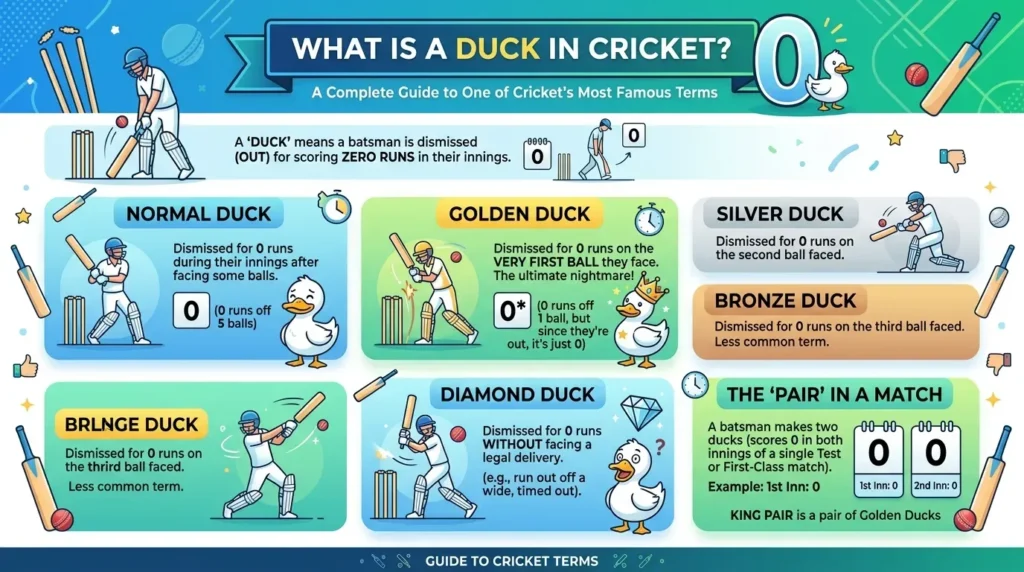
Cricket is a sport filled with unique terms, records, and statistics that make the game fascinating for players and fans alike. One of the most well-known and often dreaded terms in cricket is the golden duck. Every batter dreams of scoring runs and helping their team win, but sometimes their innings can end before it even begins. When a batter is dismissed on the very first ball they face without scoring a run, it is called a golden duck.
A golden duck is considered one of the most disappointing outcomes for a batter because there is no opportunity to settle at the crease or contribute to the team’s score. It can happen to anyone, from amateur cricketers to some of the greatest players in cricket history. Even world-class batters have experienced golden ducks during international matches.
Understanding what a golden duck is helps fans better appreciate cricket statistics and batting performances. It also highlights the importance of concentration, technique, and handling pressure from the very first delivery.
In this comprehensive guide, you will learn everything about the golden duck in cricket, including its definition, history, rules, types, causes, prevention strategies, player roles, famous examples, major tournaments, benefits of cricket, and interesting facts.
What Is Golden Duck in Cricket?
A golden duck in cricket occurs when a batter is dismissed on the first ball they face without scoring a run.
The batter’s score remains zero, and their innings ends immediately after facing a single delivery.
Examples include:
- Bowled first ball for 0
- Caught first ball for 0
- LBW first ball for 0
- Stumped first ball for 0
Regardless of the dismissal method, if the batter is out on the first ball faced without scoring, it is recorded as a golden duck.
Quick Definition of a Golden Duck
A golden duck means:
- The batter faces one ball
- Scores zero runs
- Gets dismissed immediately
It is one of the most unfortunate statistics in cricket.
Origin of the Term Golden Duck
Understanding the Word “Duck”
The term “duck” comes from the phrase “duck’s egg.”
A duck’s egg resembles the number zero, which represents a batter’s score when dismissed without scoring.
Why “Golden” Duck?
The word “golden” refers to the batter being dismissed on the very first ball faced.
It distinguishes this dismissal from other ducks where the batter may have survived several deliveries before getting out.
Historical Usage
The term became popular among commentators and cricket fans as cricket statistics became more detailed.
Today, golden duck is recognized worldwide across all cricket formats.
Why Is a Golden Duck Important?
Although it represents a score of zero, a golden duck carries special significance.
Immediate Impact on the Team
The team loses a wicket without scoring any runs from that batter.
Psychological Effect
A golden duck can affect a player’s confidence.
Statistical Importance
Golden ducks are recorded separately in many cricket databases.
Match Momentum
Early wickets often shift momentum toward the bowling side.
How Does a Golden Duck Occur?
A golden duck can happen through several forms of dismissal.
Bowled
The bowler hits the stumps with the batter’s first delivery faced.
Caught
The batter edges or mistimes the first ball and is caught.
LBW (Leg Before Wicket)
The batter is trapped in front of the stumps on the first ball.
Stumped
The wicketkeeper removes the bails before the batter returns to the crease.
Run Out
A batter can also be run out after facing their first ball without scoring.
All these dismissals qualify as a golden duck if no runs are scored.
Difference Between Duck and Golden Duck
Duck
A batter:
- Scores zero runs
- Gets dismissed
The dismissal may occur after facing several balls.
Golden Duck
A batter:
- Scores zero runs
- Gets dismissed on the very first ball faced
Therefore, every golden duck is a duck, but not every duck is a golden duck.
Other Types of Ducks in Cricket
Silver Duck
A batter is dismissed on the second ball faced without scoring.
Bronze Duck
A batter is dismissed on the third ball faced without scoring.
Diamond Duck
A batter gets out without facing a ball.
Examples include:
- Run out at the non-striker’s end
- Timed out
Pair
A batter scores ducks in both innings of a Test match.
King Pair
A batter records golden ducks in both innings of a Test match.
This is considered particularly unfortunate.
Golden Duck in Different Formats
Test Cricket
A golden duck can occur in either innings.
The batter may receive another opportunity if the team bats again.
One Day Internationals (ODIs)
A golden duck can severely impact team performance because there is only one innings.
T20 Cricket
Golden ducks are especially damaging in T20 cricket due to the limited number of overs.
Every wicket and run is extremely valuable.
Common Reasons for Golden Ducks
Excellent Bowling
A high-quality delivery may be impossible to defend.
Lack of Concentration
Batters must be fully focused from the first ball.
Match Pressure
Important games can increase nervousness.
Poor Shot Selection
Attempting an aggressive shot too early often leads to dismissal.
Difficult Pitch Conditions
Swing, seam movement, or spin can create challenging situations.
Strategies to Avoid a Golden Duck
Watch the Ball Closely
Tracking the ball from the bowler’s hand is essential.
Play Defensively Early
Many successful batters begin cautiously.
Assess Conditions
Understanding pitch and weather conditions helps decision-making.
Build Confidence Gradually
A single run often relieves pressure.
Stay Calm
Remaining relaxed improves concentration and shot execution.
Player Roles and Golden Ducks
Opening Batters
Openers face the new ball and are more vulnerable to golden ducks.
Top-Order Batters
Early dismissals from top-order players can hurt team stability.
Middle-Order Batters
Middle-order players may face challenging situations and pressure.
Finishers
Finishers often play aggressively and risk golden ducks while trying to score quickly.
Equipment Used by Batters
Proper equipment helps batters perform confidently.
Cricket Bat
Used to score runs and defend the wicket.
Helmet
Protects against fast deliveries.
Batting Gloves
Improve grip and provide protection.
Batting Pads
Protect the legs from injury.
Cricket Shoes
Support movement and balance.
Protective Guards
Enhance player safety.
While equipment cannot prevent golden ducks entirely, it helps players perform at their best.
Major Cricket Tournaments Where Golden Ducks Matter
ICC Cricket World Cup
A golden duck can influence the outcome of crucial matches.
ICC T20 World Cup
Every wicket is valuable in this fast-paced format.
ICC World Test Championship
Batting consistency is critical throughout the tournament.
Indian Premier League (IPL)
Golden ducks often become major talking points among fans and commentators.
The Ashes
One of cricket’s most historic rivalries where early wickets can change momentum dramatically.
Benefits of Playing Cricket
Physical Benefits
Cricket improves:
- Fitness
- Coordination
- Agility
- Stamina
Mental Benefits
Players develop:
- Concentration
- Strategic thinking
- Decision-making
- Mental toughness
Social Benefits
Cricket encourages:
- Teamwork
- Leadership
- Communication
- Sportsmanship
Interesting Facts About Golden Ducks
- A golden duck occurs on the first ball faced.
- Many legendary cricketers have recorded golden ducks.
- A king pair consists of two golden ducks in a Test match.
- Golden ducks are more common among opening batters.
- Fast bowlers often aim to create golden ducks with the new ball.
- Commentators frequently highlight golden ducks because of their dramatic nature.
- Even batters with thousands of international runs have experienced golden ducks.
Famous Golden Duck Scenarios
Early Match Shock
A star batter dismissed first ball can immediately change team morale.
Tournament Pressure
Golden ducks in major tournaments often receive significant media attention.
Rivalry Matches
Golden ducks in high-profile rivalries become memorable moments for fans.
Championship Finals
An early wicket in a final can influence the entire match.
Common Misconceptions About Golden Ducks
Only Weak Players Get Golden Ducks
Incorrect. Even world-class batters experience golden ducks.
Golden Ducks Are Rare
While memorable, golden ducks occur regularly across professional cricket.
A Golden Duck Ruins a Career
Many great players have recovered from golden ducks and achieved outstanding success.
Golden Ducks Only Happen to Openers
Any batter can receive a golden duck regardless of batting position.
Why Coaches Focus on Preventing Golden Ducks
Coaches encourage players to:
- Stay focused from ball one
- Assess conditions carefully
- Avoid unnecessary risks
- Build their innings gradually
These habits reduce the likelihood of early dismissals.
Conclusion
Understanding what a golden duck is in cricket helps fans appreciate one of the game’s most famous statistics. A golden duck occurs when a batter is dismissed on the first ball faced without scoring a run. Although it is one of the most disappointing outcomes for a batter, it remains a natural part of cricket and can happen to players at every level. From Test matches and ODIs to T20 cricket, golden ducks often create dramatic moments and highlight the importance of concentration, technique, and preparation. Whether you are a new fan or an experienced follower of the sport, understanding the golden duck provides valuable insight into cricket’s rich terminology and competitive nature.

Green Benn is a dedicated sports writer specializing in cricket, including IPL and international formats. Known for clear, engaging, and informative content, Green simplifies complex match analysis and player statistics for all readers. Passionate about sports storytelling, Green delivers reliable, SEO-friendly articles that keep fans updated and informed